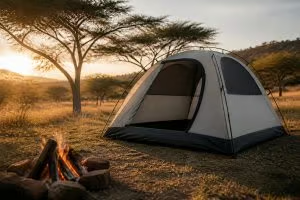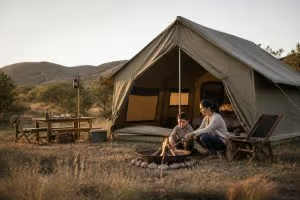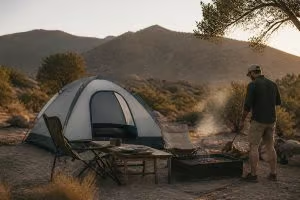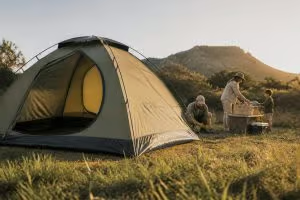

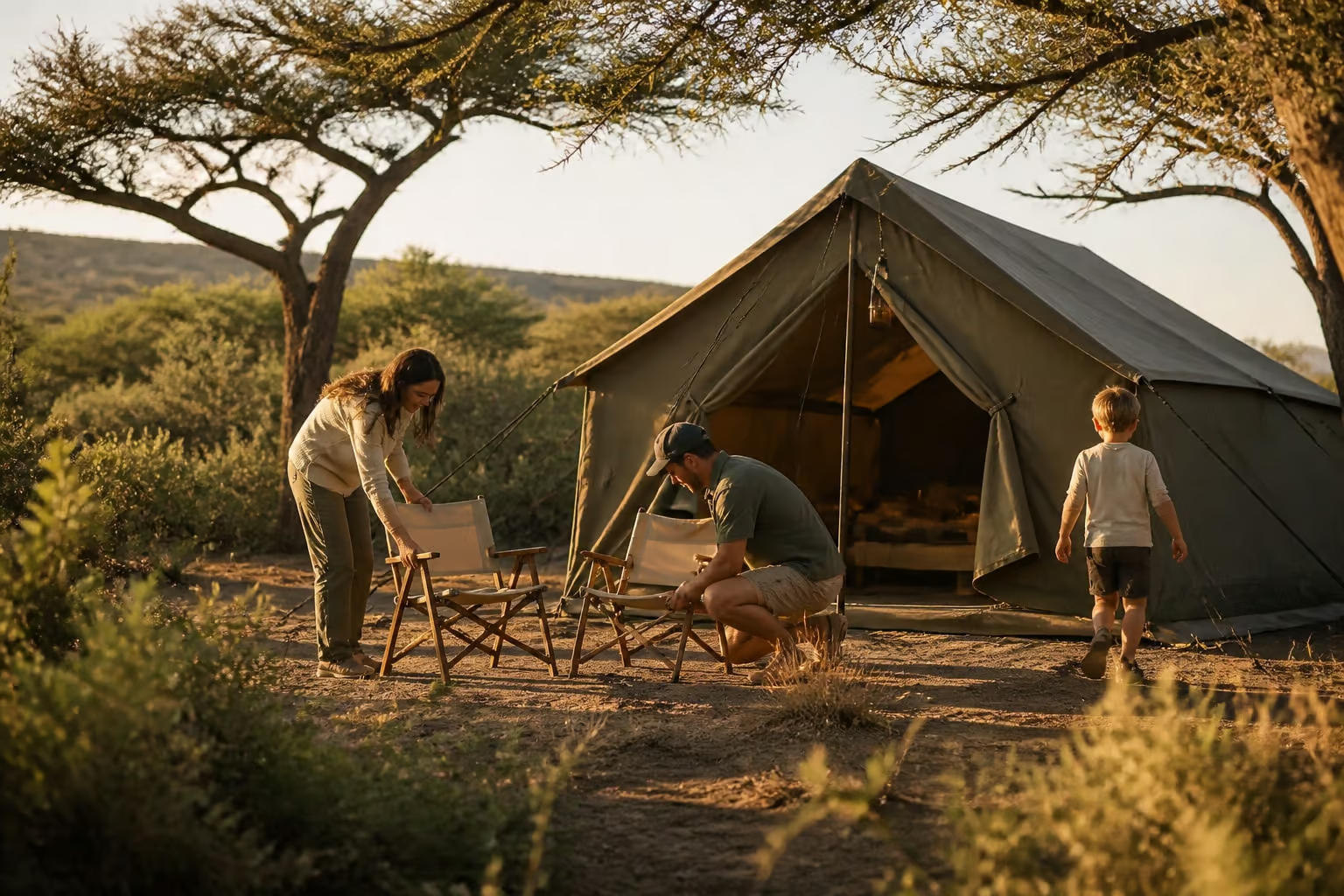
When you see a tent camp for sale, you are usually looking at a semi-permanent canvas shelter built for long stays, not a pop-up dome for one weekend. The right choice comes down to fabric weight, waterproofing, layout and how well the structure handles South African sun, wind and summer storms.
This guide walks through what a tent camp is, which types exist, what to check before paying, and how to set up and look after your purchase so it lasts several seasons.
A tent camp is a larger, sturdier shelter, or a group of shelters, designed to stay pitched for days, weeks or entire seasons. A regular camping tent is built to go up and come down quickly, often in under fifteen minutes.
The practical differences show up in four places:
If you camp at the same spot every school holiday, or want to host guests on your property, a tent camp makes more sense than replacing a flimsy tent every second year. If you only camp for a night or two at a time, a smaller family tent is the better fit, and our guide to camping tents for families covers that side of the range.
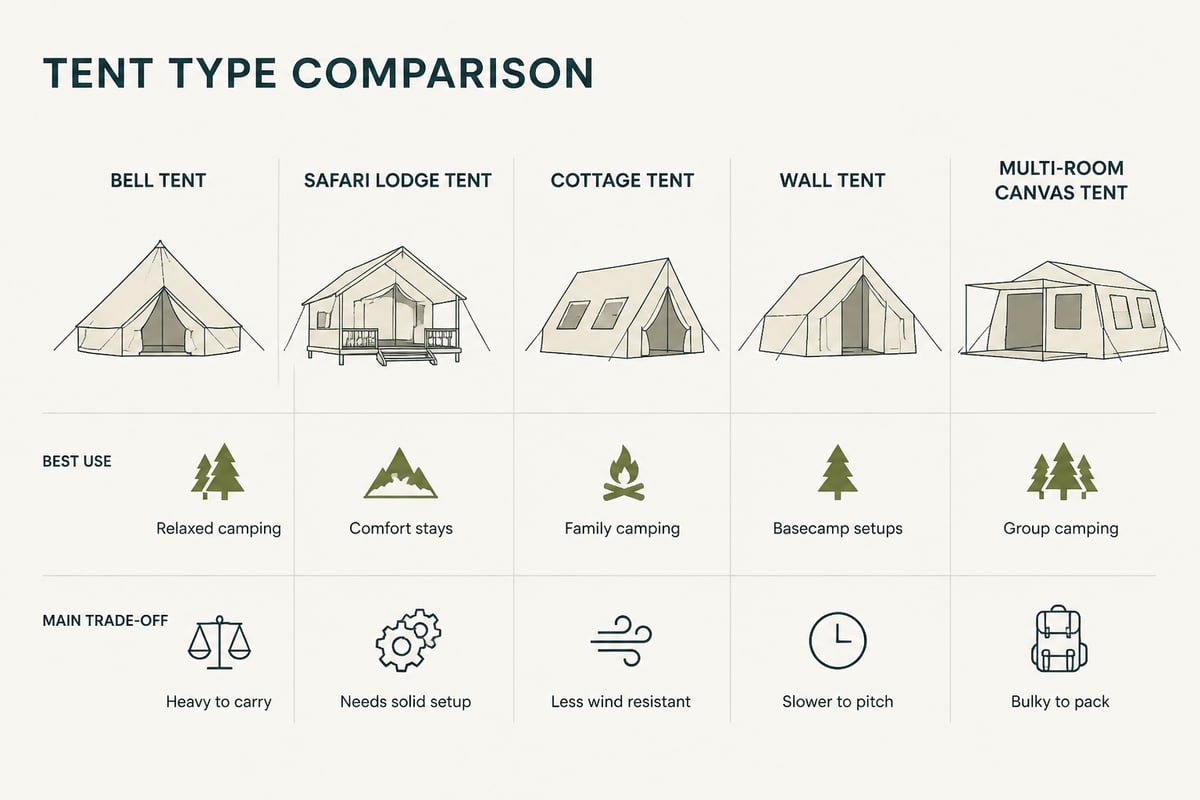
Most tent camps for sale in South Africa fall into five styles: bell tents, safari lodge tents, cottage or cabin tents, wall tents and large multi-room canvas tents. Each suits a different way of camping.
| Type | Typical use | Strength | Trade-off |
|---|---|---|---|
| Bell tent | Couples, small families, glamping | Quick to pitch, roomy centre height | Round floor wastes some space |
| Safari lodge tent | Multi-night family camps, lodges | Separate rooms, good airflow | Heavier, needs a bigger site |
| Cottage tent | Weekend and holiday bases | Straight walls, easy to furnish | Needs solid anchoring in wind |
| Wall tent | Hunting camps, long stays | Steep walls, stove-ready designs | More poles and setup time |
| Multi-room canvas tent | Large families, group camps | Privacy and storage | Needs a flat, spacious site |
You can browse examples of each style in our tents for sale range, including a canvas bell tent and a canvas cottage tent.
Size the tent by how many people sleep in it, then add space for gear, because the stated capacity usually assumes everyone lies shoulder to shoulder with nothing else inside.
A workable rule is to count the beds or stretchers you plan to use, then add floor area for a table, chairs and bags. A family of four with camp beds and a small kitchen table will be much happier in a tent rated for six to eight people than one rated for four.
Think about these questions before choosing:
The packed weight question matters. Heavy-duty canvas is far heavier than synthetic fabric, so check what your vehicle can carry before buying.
For a tent camp that stays pitched, choose heavy canvas or ripstop that is waterproof and UV-treated. Fabric is the single biggest factor in how long the tent lasts.
Canvas is woven cotton or a cotton blend. It breathes, which reduces condensation inside, and it handles heat better than thin synthetics. Quality canvas is measured in GSM (grams per square metre); a higher number means a thicker, more durable cloth.
Ripstop is a weave with reinforcing threads that stop a small tear from spreading. It suits tents that face wind, branches and rough handling.
UV treatment matters more in South Africa than many buyers expect. Strong sun breaks down untreated fabric, weakening seams and fading colour long before the tent wears out from use.
Check these points on any tent camp for sale:
Ejenti Outdoor manufactures its own tents from heavy-duty canvas and ripstop fabrics that are waterproof and UV-treated, which gives you a clear starting point when comparing materials.
A tent that stays dry and liveable depends on waterproof fabric, a sealed floor, good ventilation and a roof pitched so water runs off. Skipping any one of these is how a "waterproof" tent ends up with a damp interior.
Look for taped or double-stitched seams, a sewn-in groundsheet that rises up the walls, and a rainfly or roof design that sheds water away from the walls. Highveld summer storms arrive with heavy downpours and sudden wind, so a tent that handles ordinary showers may still struggle in a thunderstorm.
Canvas breathes, but you still need windows, mesh panels and door vents. Without airflow, condensation drips from the roof and the tent feels stuffy by mid-morning. Mesh also keeps mosquitoes out on warm nights.
Two-room designs give you a private sleeping space and a separate living area, which makes long stays far more comfortable. Our 2-room tents for camping page shows how this layout works in practice.
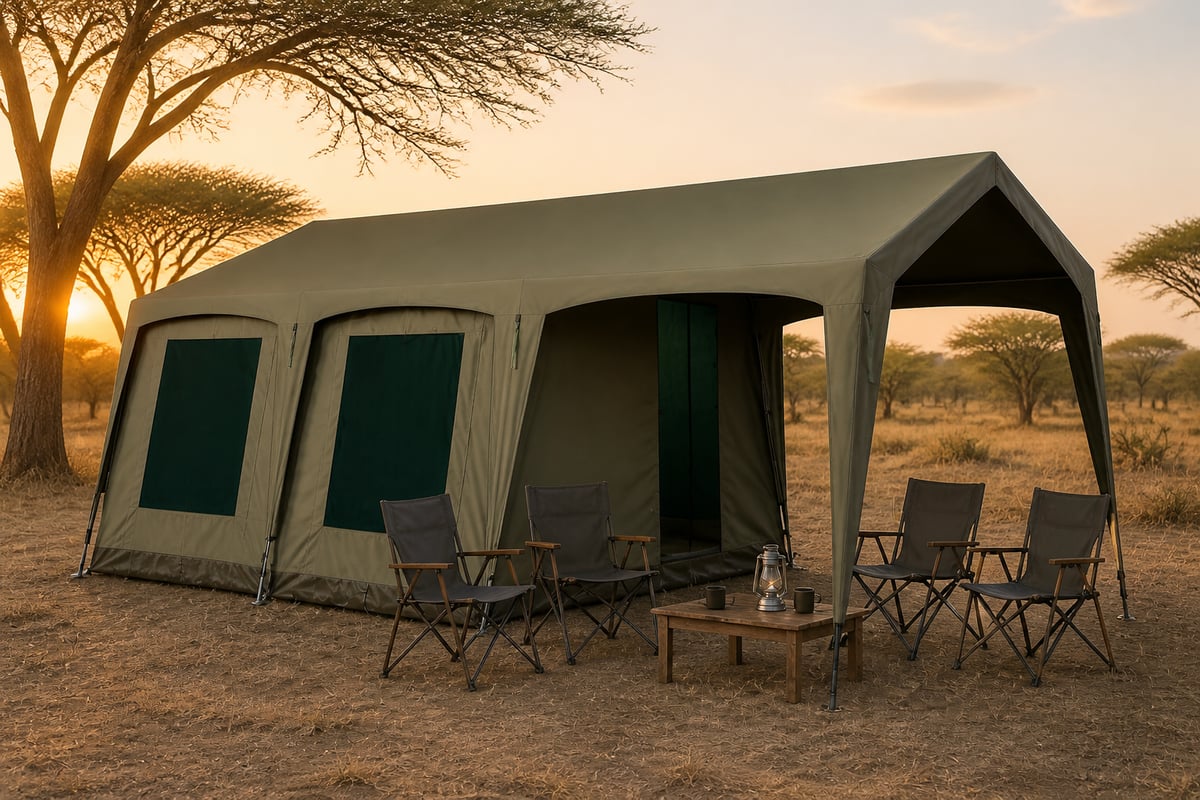
One example is the 3m x 6m Safari Lodge Tent Two Room Waterproof Canvas Tent, made from heavy-duty ripstop canvas that is waterproof and made in South Africa. Its two-room layout gives better privacy and more organised living space during longer stays, which suits the kind of semi-permanent camp this guide describes.
Yes, custom builds are common for tent camps, because lodges, farms and event sites rarely match a standard catalogue size. Ordering a made-to-measure tent lets you set the dimensions, door positions, windows and room divisions.
Ejenti Outdoor is a proudly South African company based in Pretoria that builds custom tents to your exact requirements. For limits, lead times and pricing on a custom order, check the product pages or contact Ejenti Outdoor directly rather than assuming a standard answer.
Before you request a custom tent, prepare this information:
Compare a tent camp by cost per season of use, not by sticker price alone. A cheaper tent that needs replacing after two summers costs more than a heavier canvas tent that lasts many seasons.
Weigh these value factors:
If budget is tight, our pages on cheap camping tents and low-priced camping tents show what you get at the lower end, and what you give up.
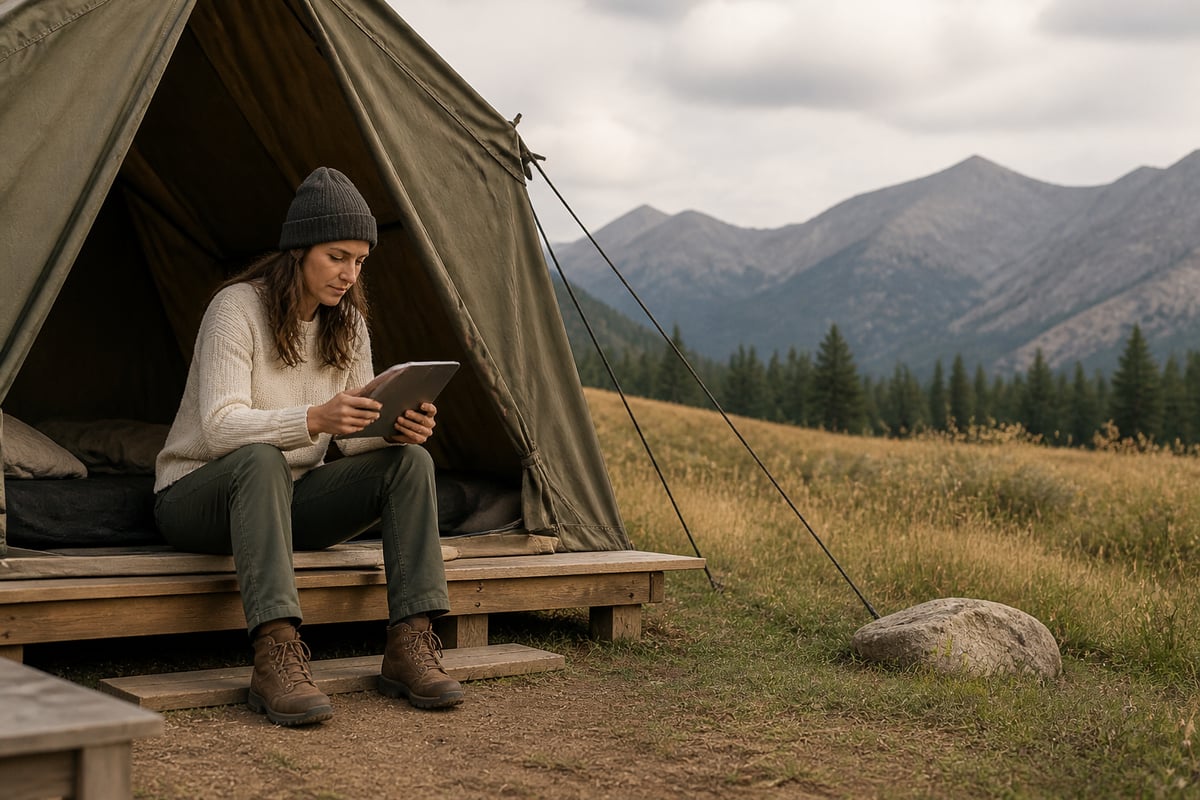
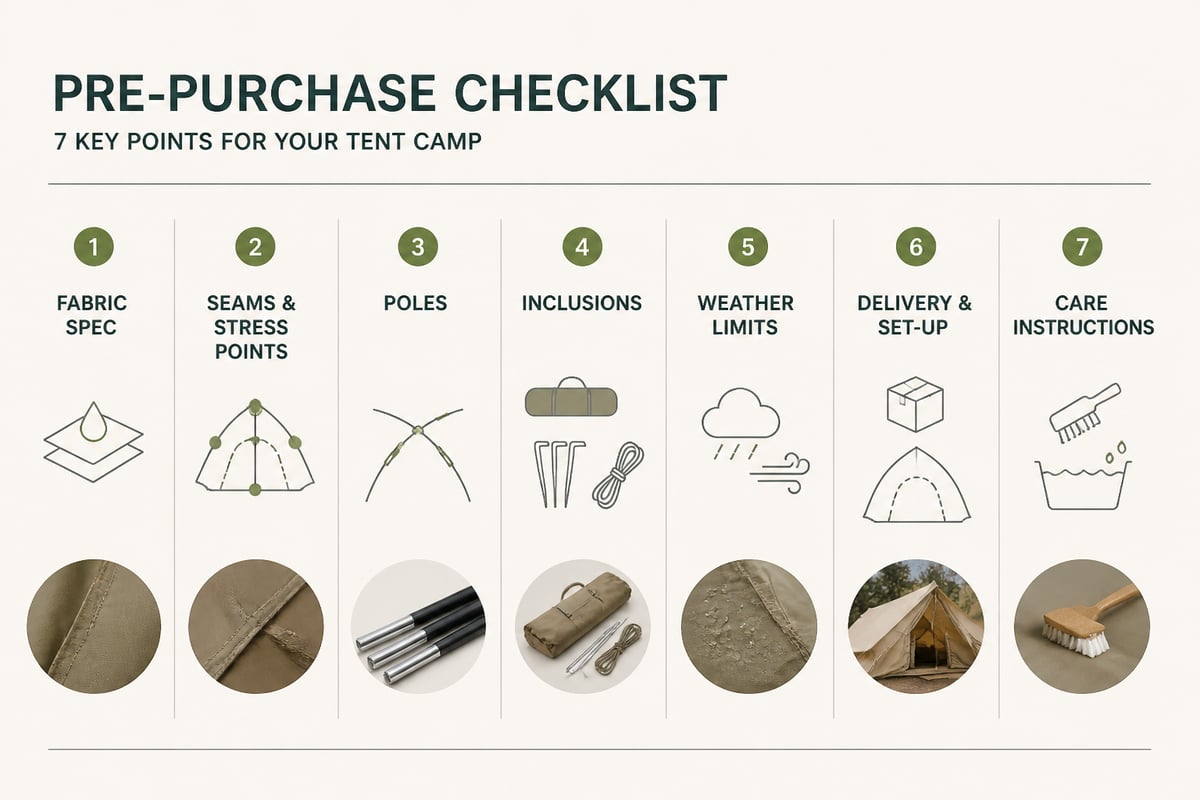
Before paying for any tent camp, run through a short checklist covering fabric, seams, poles, warranty details and delivery. Most buyer regret comes from skipping one of these checks.
If you are still unsure which tent suits your trips, our guide on how to choose the right tent for your needs breaks the decision down further.
Set up on flat, well-drained ground with enough clearance around the tent for safe cooking, fires and emergency exits. Good site choice prevents most weather and fire problems before they start.
Pick the ground first. Avoid dry riverbeds and low spots where water gathers. Clear sharp stones and sticks, and check overhead for dead branches.
Keep distance from fire. Halifax Fire recommends keeping outdoor fires at least 15 feet from buildings, tents, vehicles or combustible materials, so plan your braai or fire pit well away from canvas, which burns readily.
Space your tents. Cheshire Fire and Rescue Service recommends keeping at least six metres between tents and caravans, which also limits how quickly a fire can spread between shelters.
Never cook or heat inside. Cheshire Fire and Rescue Service says never to use fuel-burning devices, including stoves, heaters, lanterns and barbecues, inside a tent. Burning fuel or charcoal in enclosed spaces is also dangerous because of carbon monoxide poisoning.
Handle power carefully. If your camp has electricity, Halifax Fire advises using outdoor-rated extension cords, inspecting cords for damage, and never connecting multiple extension cords together.
A canvas tent camp lasts for years when you dry it fully before storage, keep it clean and re-proof it when water stops beading. Most early failures come from storing damp canvas.
Check the tent after each trip for worn pegs, stretched ropes and frayed edges. Replacing a small part costs far less than replacing a damaged tent.
You can buy a tent camp from local manufacturers, outdoor retailers and online shops, but a South African maker gives you the advantage of weather-appropriate design and local support. Buying from the maker also makes custom sizes, repairs and advice easier to arrange.
Start with the main heavy-duty canvas tents for sale range, which gathers the heavier canvas options in one place. If you are not ready to buy, you can also look at renting tents for camping first to test a layout before you commit.
When you compare sellers, ask the same questions each time: fabric spec, build location, what is included, and who handles repairs. The answers tell you more than a price tag does.
Allow the tent's footprint plus about two metres around it for guy ropes, walkways and safe fire distance. Larger multi-room tents need a flat site, so measure your ground before ordering.
For long stays, usually yes. Canvas breathes, handles heat and can be repaired and re-proofed, while polyester is lighter and cheaper but wears faster in strong sun.
Some canvas tents need to be wetted and dried before first use so the fibres swell and seal. Follow the maker's care instructions for your specific tent.
A well-built tent with heavy canvas, a sealed floor, strong poles and properly staked guy lines can handle heavy rain. In severe wind or lightning, take the tent's limits seriously and shelter in a vehicle or building.
Yes, many lodges and farm stays use canvas tents with two-room layouts for guest accommodation. Custom builds let you match the layout to your guests' needs.
Start by measuring the flat area where your tent will stand and writing down how many people will sleep inside, because those two numbers narrow the choice faster than anything else. If you want a tent built for South African sun and storms, Ejenti Outdoor manufactures its own heavy-duty canvas and ripstop tents in Pretoria, including the 3m x 6m Safari Lodge Tent and custom builds to your exact requirements. When you are ready to compare options, Ejenti Outdoor makes it easy to shop now and find a tent camp that suits your family and your site.