
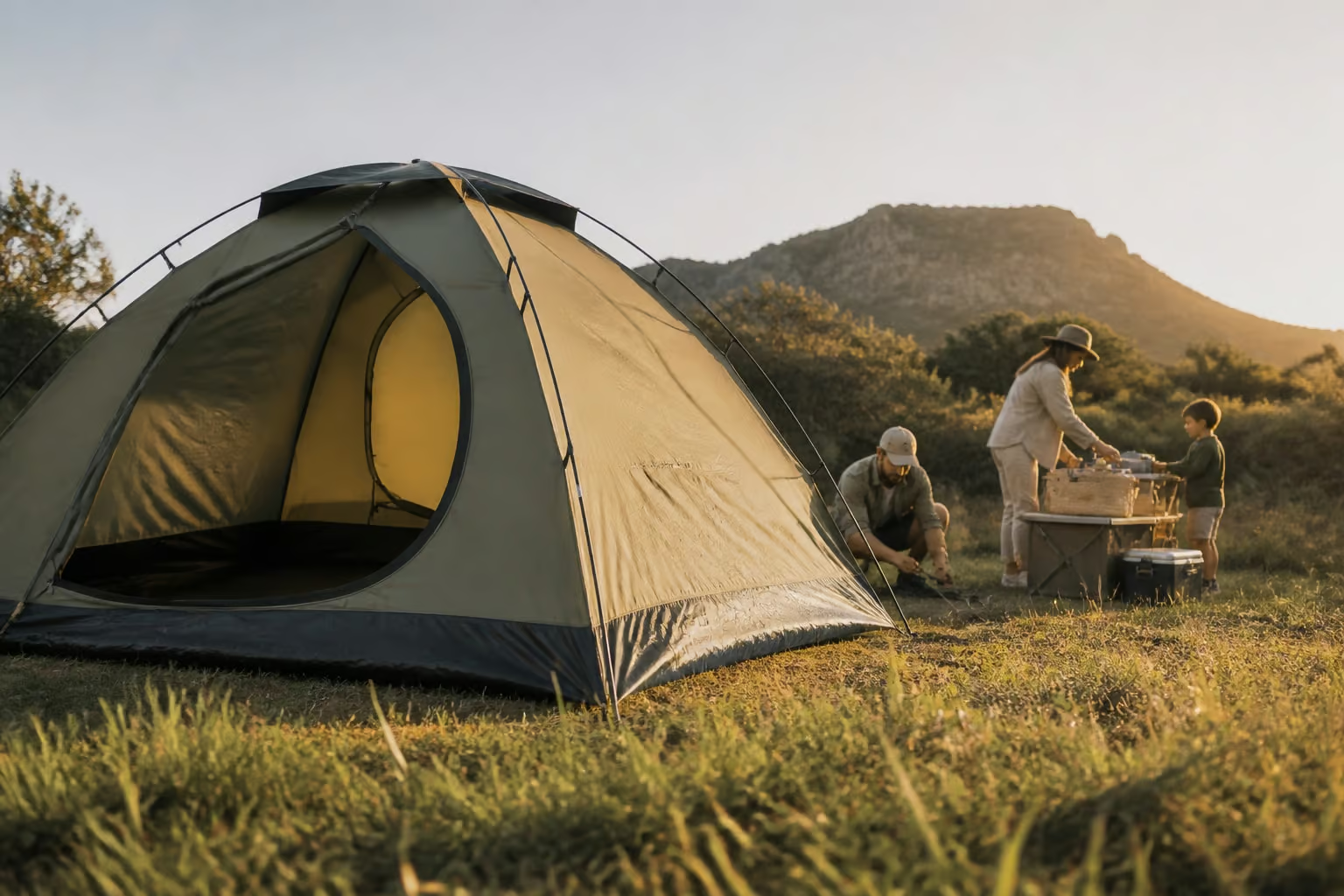
A camping tent dome is a tent whose flexible poles cross over the top to form a rounded, self-supporting shape, which makes it quick to pitch, stable in wind and easy to move around a site. For South African campers who want a shelter that stays dry and lasts several seasons, the right choice comes down to fabric, pole design, floor area and how well the tent handles rain, heat and UV.
This guide walks through how dome tents work, how to size one, which materials hold up, and how to set up and maintain your tent so it keeps performing.
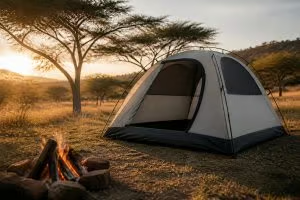
A dome tent is a self-supporting shelter held up by two or more crossing poles that bend into an arch, so it stands without relying on guy ropes or a fixed frame.
Because the structure carries its own weight, you can pitch it on hard ground, pick it up and shift it before staking it down, and set it up with minimal fuss. The rounded profile also sheds rain and lets wind slide around the tent instead of pushing flat against a wall.
Here is what draws most families to the dome shape:
The trade-off is that a dome's sloping walls reduce standing room at the sides compared with a straight-walled cabin tent. If you plan to stand and dress comfortably, look at the height of the centre point rather than the headline floor size.
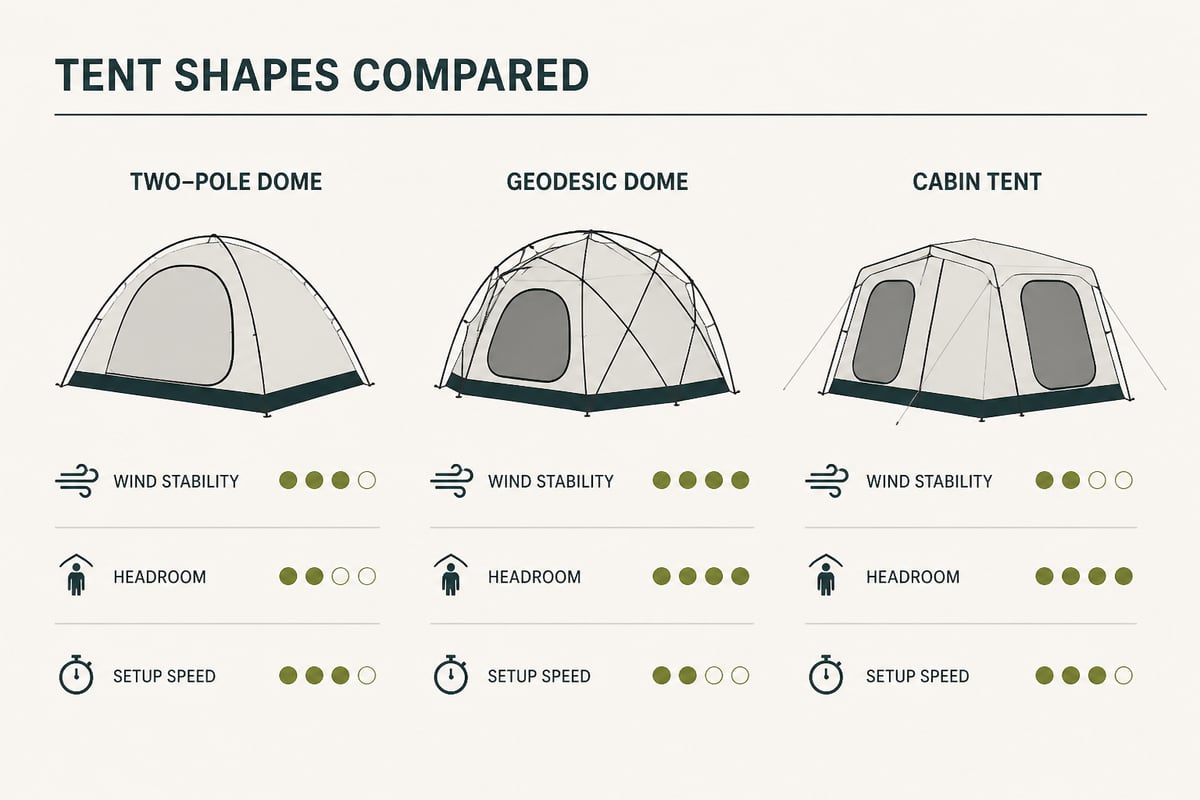
A simple dome uses two crossing poles, a geodesic dome uses several poles that intersect multiple times for extra strength, and a cabin tent uses near-vertical walls for more living space.
Choosing between them depends on where and how you camp.
| Tent type | Pole layout | Strengths | Limits |
|---|---|---|---|
| Simple dome | Two crossing poles | Quick pitch, light, affordable | Less headroom at the sides |
| Geodesic dome | Three or more poles that cross repeatedly | Strongest in wind and rain loading | More poles, slightly longer setup |
| Cabin tent | Vertical poles and a roof frame | Standing room, family space | Catches more wind, heavier |
Most families who camp in mixed conditions end up happiest with a dome that has at least three poles. The extra crossing points spread wind load across the frame, which matters on exposed sites in the Free State or along the Wild Coast where afternoon gusts can arrive quickly.
Pick a camping tent dome rated for at least one or two more people than will sleep in it, because manufacturer ratings assume sleepers lying shoulder to shoulder with no gear.
A practical way to size your shelter is to work through the points below.
This last point matters for expectations. Heavy-duty dome tents are built for drive-up camping where durability counts more than saving grams, so they are not the right choice if you carry your shelter on your back for days.
Heavy-duty canvas and ripstop fabrics that are waterproof and UV-treated hold up best, because South African sites combine strong sun, summer thunderstorms and dusty, abrasive ground.
Each material behaves differently:
For campers who want shelter that stays dry year after year, fabric treatment matters as much as fabric type. A waterproof coating without UV protection will fade and weaken in a couple of summers, while a UV-treated heavy-duty fabric keeps its strength for far longer.
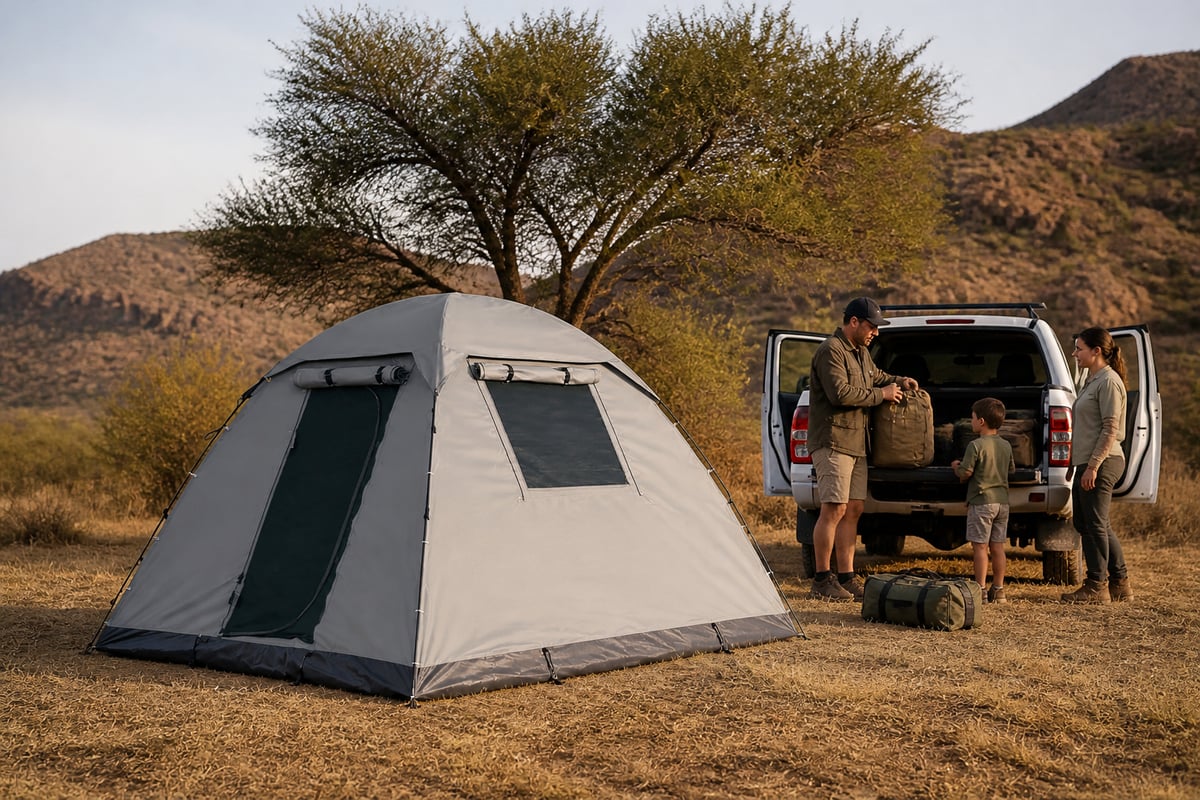
If you want a rugged dome built for local conditions, the Premium Heavy-Duty Canvas Dome Tent is designed for the harsh African climate, whether you are pitching at a SANParks site or on a remote 4×4 trail. Ejenti Outdoor is based in Pretoria and manufactures its own products, so you can also ask about custom builds if your family needs something specific.
A dome tent stays dry when you combine a waterproof fly, taped seams, a raised or well-sealed floor, good ventilation and a groundsheet underneath.
Rain protection works as a system, so check each layer:
One detail worth getting right: tuck the groundsheet edges inside the tent's footprint. If the tarp extends past the walls, rain runs onto it and flows underneath you.
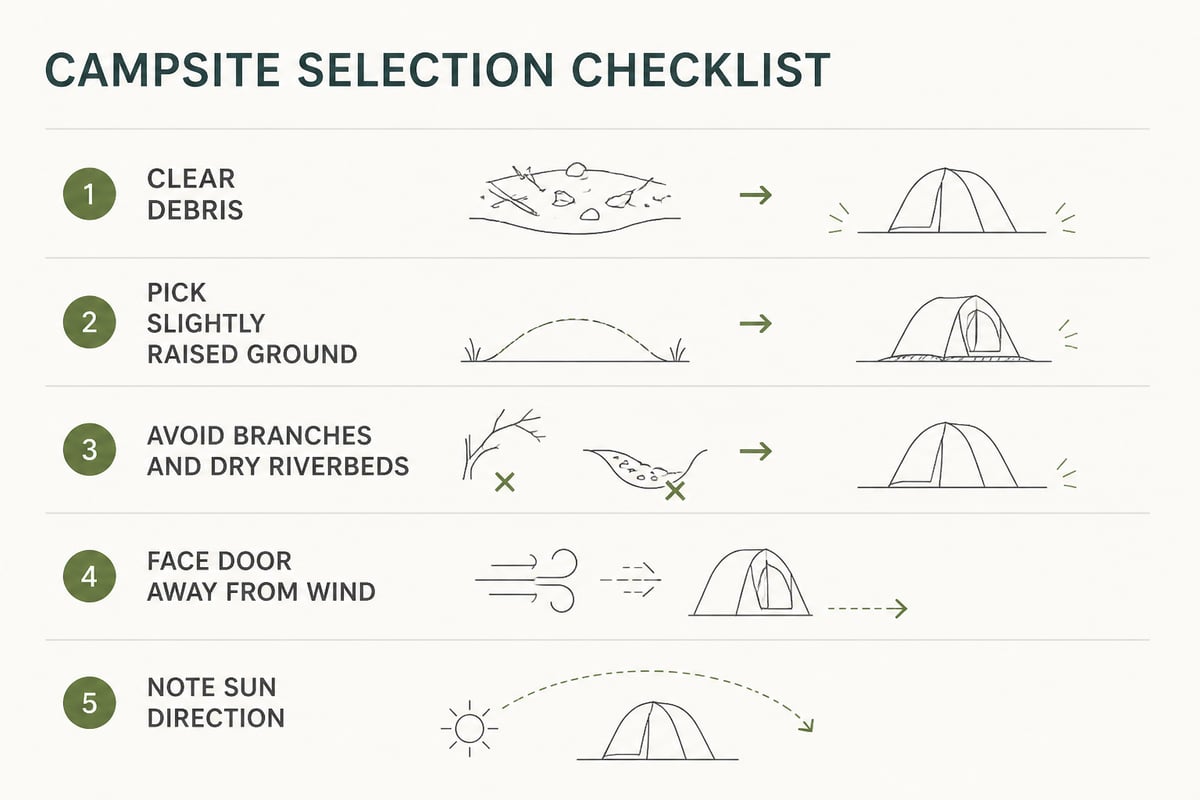
Choose and pitch your dome based on the forecast, the season and the site, because no tent compensates for a poor pitching spot or a storm you could have avoided.
The National Park Service recommends checking the setting, season, trail and site conditions, and possible hazards when choosing equipment for a trip. The same guidance advises bringing extra clothing for cold, precipitation or wind, and carrying an emergency shelter such as a tarp or bivvy. A spare tarp doubles as a rain awning over your cooking area and as a backup if a pole breaks.
The NPS also advises campers to check forecasts and park alerts, including severe weather, before and during a trip. That habit fits South Africa well, where Highveld summer storms build quickly in the afternoon and lightning is a real risk on open ground.
When you arrive at a site:
You set up a dome tent by laying out the groundsheet, assembling and threading the poles, raising the frame, staking the corners and finally tensioning the fly and guy lines.
Follow this order for a clean pitch:
Practice once at home before your first trip. A trial pitch in the garden shows you how the poles fit, where the fabric needs adjusting and whether any parts are missing.
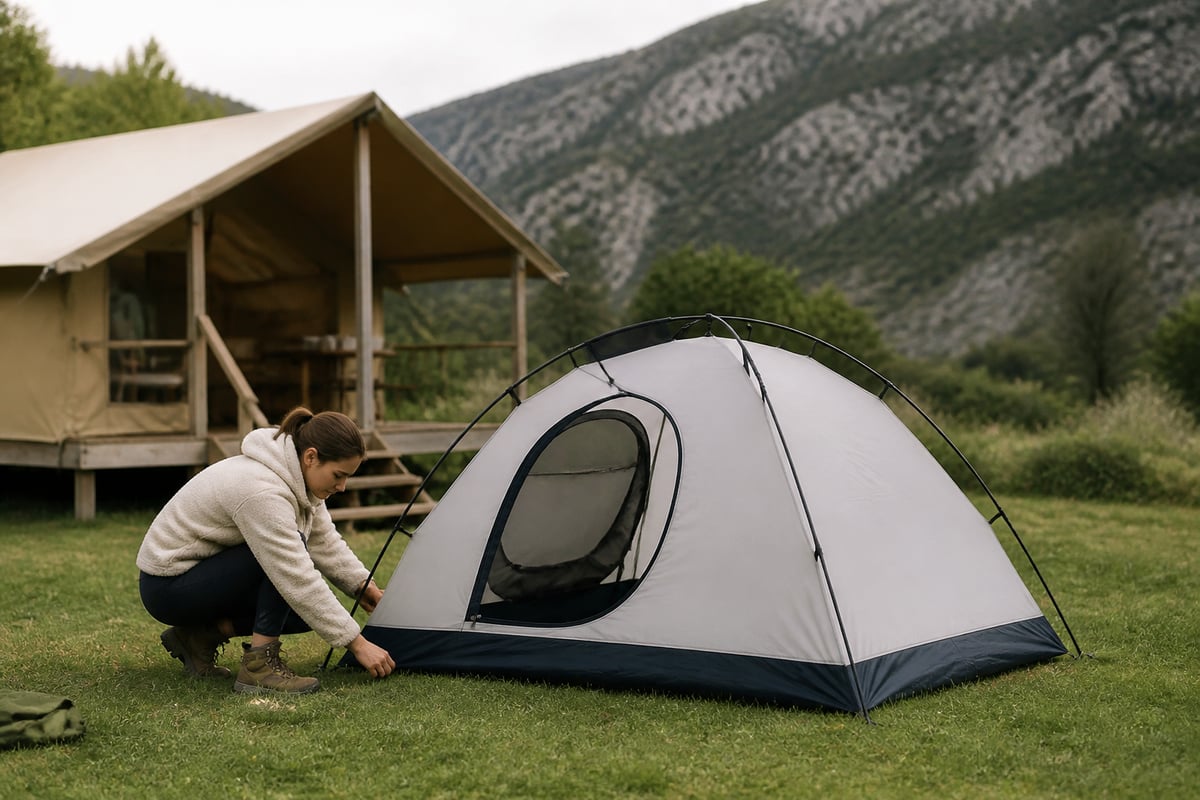
A dome tent lasts several seasons when you keep it dry in storage, clean it gently, protect it from prolonged sun and repair small damage before it spreads.
Build these habits into every trip:
Heavy-duty canvas rewards good care. Treated and stored properly, it can serve a family for many camping seasons, which is why durability often outweighs the lower upfront cost of a flimsy tent that needs replacing.
Before you buy, confirm the fabric, pole strength, seam sealing, floor material, ventilation and size, and ask whether the maker can adapt the design to your needs.
Use this short checklist:
If you want to compare options before deciding, Ejenti Outdoor's pages on nice tents for camping and guide gear tents lay out what to look for in a quality shelter. To understand who builds these products locally, you can also read about tent manufacturers in South Africa.
Dome tents handle wind well because their curved shape lets gusts flow around the frame. Geodesic and multi-pole designs perform best. Always stake every corner and use all guy lines, and pitch with the lowest, narrowest side facing the wind.
A well-made dome works across seasons if you manage ventilation in summer heat and add insulation or a thicker sleeping setup in winter. Canvas breathes better in warm weather, while a sealed fly and groundsheet help in cold, wet conditions.
With sound fabric and regular care, a heavy-duty dome can last many seasons of regular family camping. Lifespan depends on UV exposure, storage, how often you pitch it and how quickly you repair small damage.
No. A bigger tent is heavier, harder to pitch and more exposed to wind. Choose the smallest size that gives your family room to sleep, store gear and move comfortably.
Before your next trip, pitch your current tent in the garden and check the fabric, seams and zips so you know exactly what you need from a replacement. When you are ready for a durable shelter built for local conditions, Ejenti Outdoor offers the Premium Heavy-Duty Canvas Dome Tent and custom builds made in Pretoria, and you can browse the full range and shop now at Ejenti Outdoor to find the right fit for your family.