
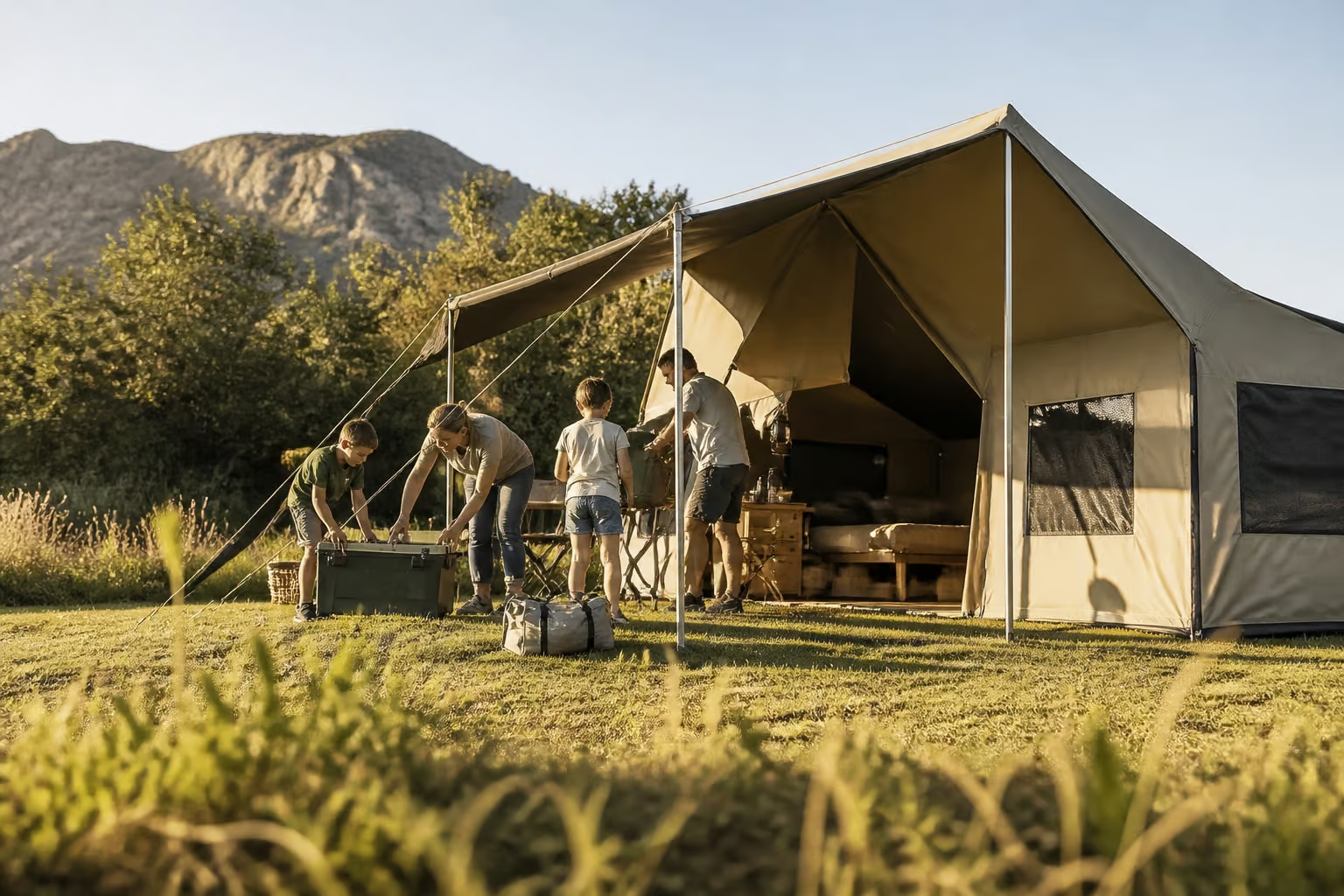
A large tent is generally any shelter that sleeps six or more people, with floor areas from roughly 20 square meters up to event-scale marquees that cover 50 square meters or more. The right size depends on how many people sleep inside, how much gear comes along, and whether you need the space for camping or for hosting a crowd.
This guide walks through the sizing rules, the shapes, the fabrics and the setup habits that decide whether a big tent serves you for one weekend or for many seasons.
A large tent is a shelter that sleeps six or more campers, or a free-standing structure that covers an event or work area for dozens of people. The terms overlap, so it helps to separate the main categories:
What is a large tent called in everyday use? Most people say "family tent," "cabin tent," "lodge tent" or "marquee," depending on the job it does.
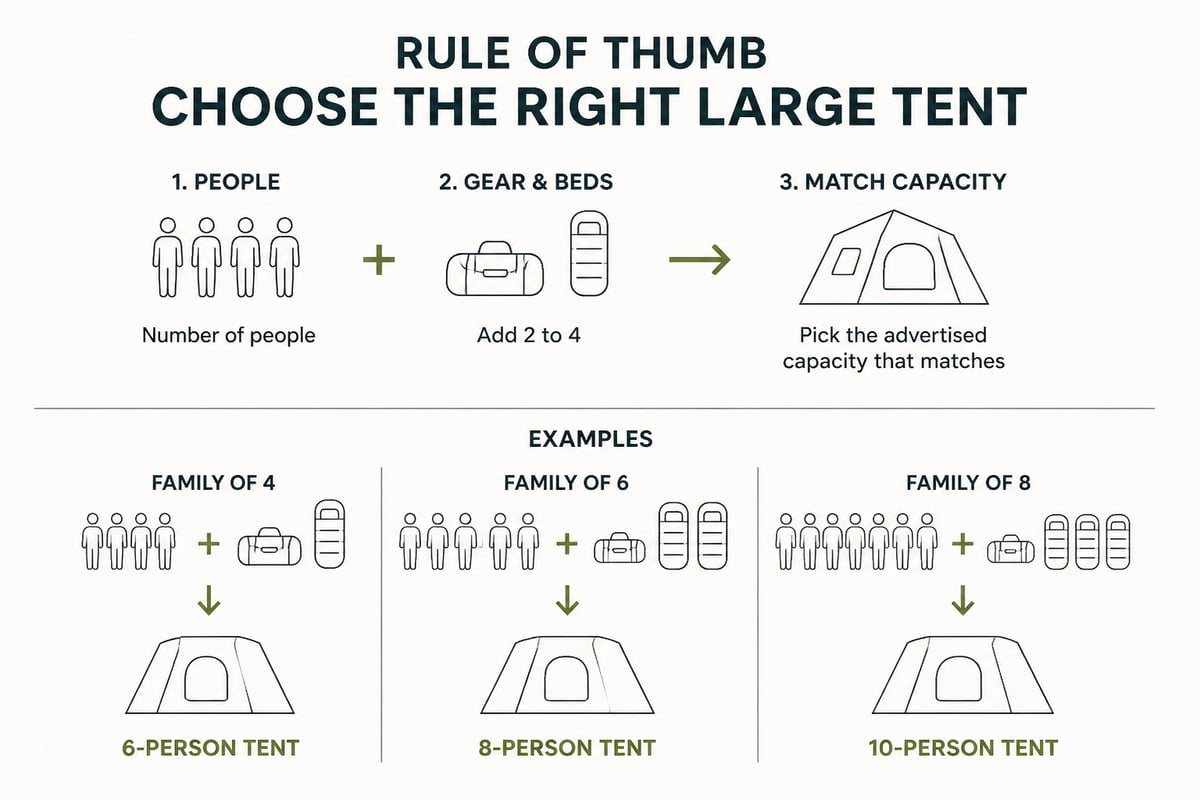
The stated capacity on a large tent is the number of sleeping bodies packed side by side with no gear, so real-world comfort is usually two to four people fewer than the label. The National Park Service makes the same point: a two-person tent has room for two people to sleep, not for two people plus their gear or pets.
A practical rule is to subtract two from the advertised capacity for a relaxed family trip. Subtract three or four if you bring camp beds, duffel bags, a cooler box and dogs.
| Group | Advertised capacity to look for | Why |
|---|---|---|
| Couple with a toddler | 6 person | Space for a cot or mats plus bags |
| Family of four, with beds | 8 person | Camp beds eat floor space fast |
| Family of five or six | 10 to 12 person | Room to stand, change and move around |
| Two families sharing | 12 person or larger, with dividers | Privacy matters over several nights |
The biggest tents you can buy are custom or event-scale structures, since large camping designs are limited in sleeping capacity while marquees can cover far more people. Very high-capacity sleeping tents exist, but they are typically built with extended walls, multi-room designs or frame structures rather than a standard camping tent.
For camping, a 12 person cabin is already big. Beyond that, setup takes more hands, pitching sites need to be larger and wind loads rise sharply. Many safari operators and event hosts therefore go straight to a frame structure or a custom build instead of stretching a camping design.
If you need something outside standard sizes, a manufacturer that builds to order is the practical route. Ejenti Outdoor is a Pretoria-based maker with 400+ custom builds behind it, and its page on tent manufacturers is a sensible place to start when a catalogue size does not fit.
A large round tent is usually called a bell tent when it has a single center pole and sloping canvas walls, or a yurt-style or round marquee tent when it uses a frame. Some retailers also say "pagoda" for a square-roofed relative and "dome" for a pole-flexed round design.
Round designs shed wind well because there are no flat walls for gusts to push against. The trade-off is usable space: sloping sides mean you cannot place beds against the edge, so a round tent that sleeps six on paper may feel more like four for a family with gear.
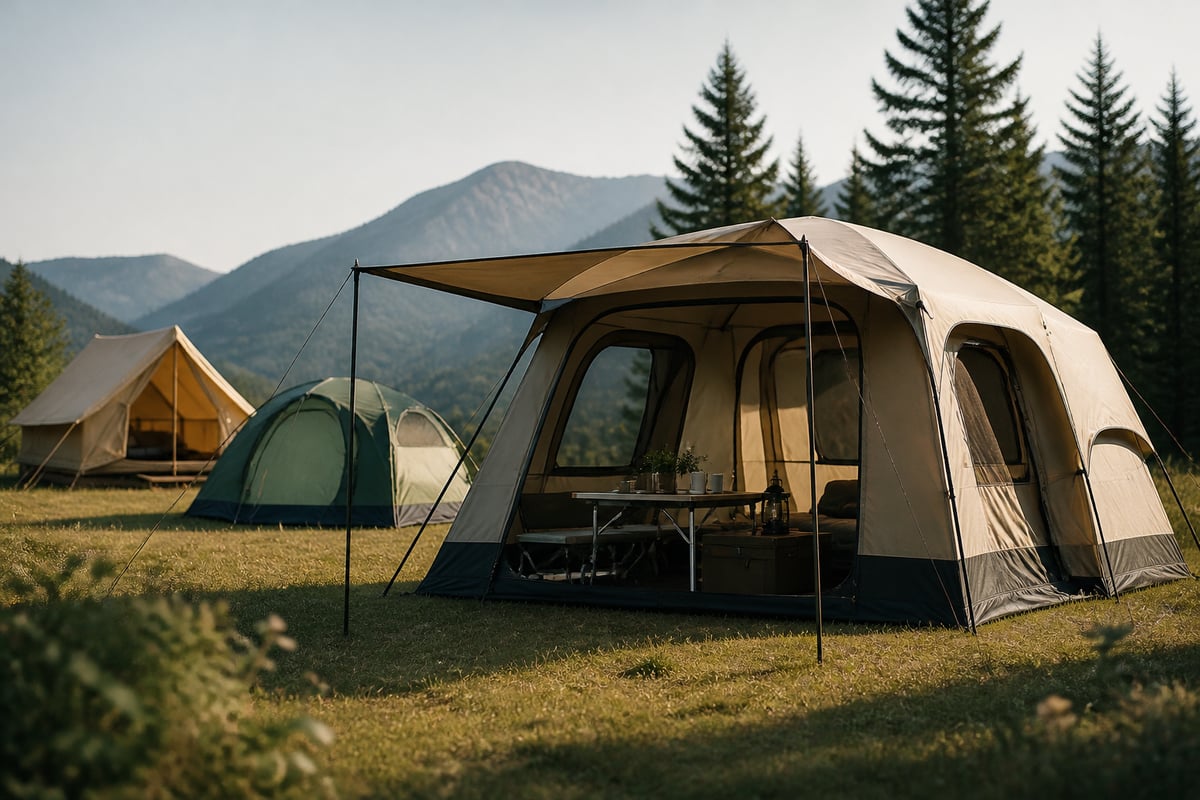
Cabin tents give the most usable floor for families, domes give the easiest pitch, and round tents give the best wind behavior and the most atmosphere. Here is how they compare on the points that matter most for a large tent:
If you camp from a car and stay several nights, a cabin or lodge style is hard to beat. Ejenti Outdoor's lodge tent range follows that straight-walled, roomy approach.
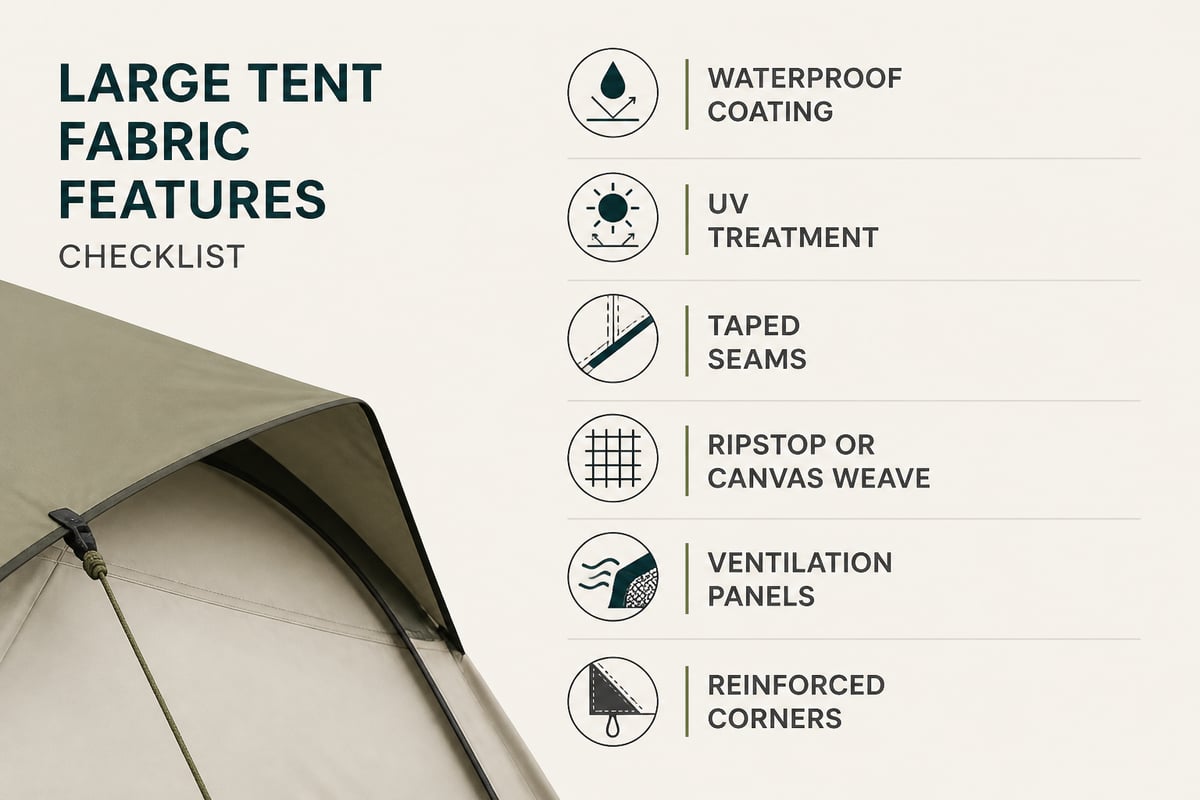
Fabric matters more on a large tent because a bigger roof catches more rain, more sun and more wind, and every weakness in the material is multiplied across a larger surface. A thin polyester that survives a weekend in a small dome can sag, leak at the seams or fade quickly when stretched over a family cabin.
South African conditions add two stresses: intense UV and sudden summer storms. Look for these features:
Ejenti Outdoor works with heavy-duty canvas and ripstop fabrics that are waterproof and UV-treated, which suits families who want shelter that lasts several seasons. If you want to compare material types, its ripstop canvas and heavy-duty tent pages show what is available.
Pitching a large tent well starts with the ground: pick level, well-drained spots and stake every guy line before the weather turns. The National Park Service recommends pitching on level ground that is not in a low spot, and keeping the tent a safe distance from the fire ring and cooking area.
Follow this sequence for a big cabin or lodge style:
Allow roughly double the setup time you would expect from a small tent, especially the first time. Practice in the garden before a long trip.
You keep a large tent dry by combining good pitching, a groundsheet, ventilation and regular checks, because most "leaks" in big tents are actually condensation or seam stress. Sleeping six people in one space adds a lot of breath moisture overnight.
The National Park Service also advises campers to monitor the weather and check equipment throughout a trip, a habit that pays off with a big tent that catches more wind. In summer storm country, loosen nothing and pack down early if lightning is close.
For families who like a separate wash space, accessories such as a camping shower tent keep wet towels and splashes out of the main sleeping area.
A marquee is better than a camping tent when the job is to cover people for an event, market stall, safari reception or worksite rather than to sleep a family. Marquees use a rigid frame, carry more people per square meter and are designed to be erected and reused.
The 5m x 10m PVC Marquee Tent from Ejenti Outdoor is a heavy-duty, waterproof event tent designed for reliable outdoor use in South Africa. It is the kind of shelter event organisers and safari operators turn to when a standard camping tent would be too small or too light.
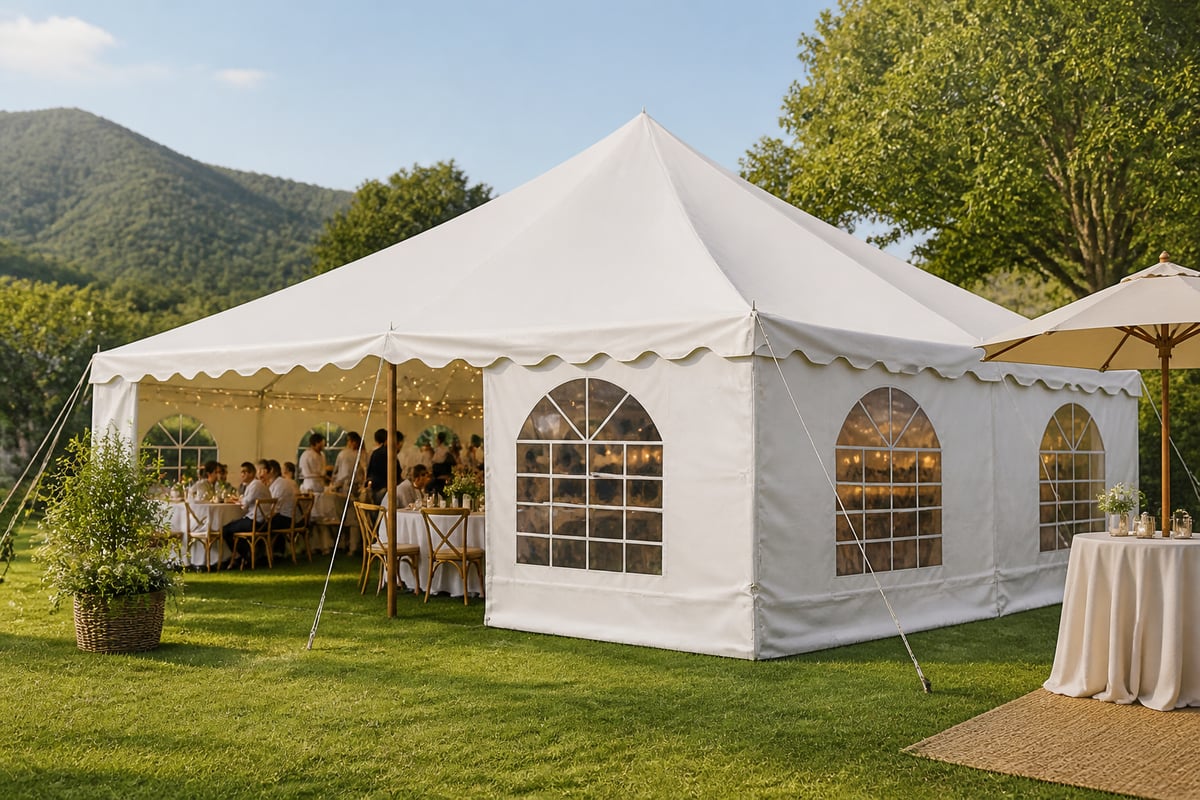
For businesses, a few extra checks apply: confirm the footprint fits your venue, plan how you will anchor the frame on hard surfaces, and ask the manufacturer about branding, side walls and custom sizes through its product pages or contact page.
Choose a large tent by matching group size, trip length, vehicle space and weather exposure, then picking the shape and fabric that fit those limits. Work through these questions in order:
Browsing a manufacturer's range helps you spot options you had not considered. Ejenti Outdoor's pages on group camping tents and nice tents for camping are useful starting points for families comparing styles.
No. A bigger tent gives more space but also takes longer to pitch, needs a larger flat site and catches more wind. For a family of four, an eight person cabin is often the sweet spot.
Yes, if it is a ten to twelve person cabin with a divider so each family has some privacy. Plan on the extra floor space for bags and camp beds, and ask whether the tent accepts dividers before you buy.
With heavy-duty, UV-treated fabric and sensible care, a large tent can serve many seasons. Dry it fully before storing it, repair small tears early and avoid leaving it pitched through months of harsh sun.
Before you buy anything, measure the flat area at your regular campsite or venue and write down your group size plus gear, then use the capacity rule above to set a target. Ejenti Outdoor is a proudly South African company based in Pretoria that manufactures its own tents from heavy-duty, waterproof and UV-treated fabrics, with 400+ custom builds delivered. If your group or event needs covered space, the 5m x 10m PVC Marquee Tent is a good place to start, and you can Shop Now at Ejenti Outdoor to compare the full range or ask about a custom size.