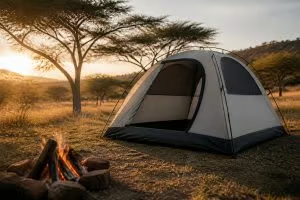

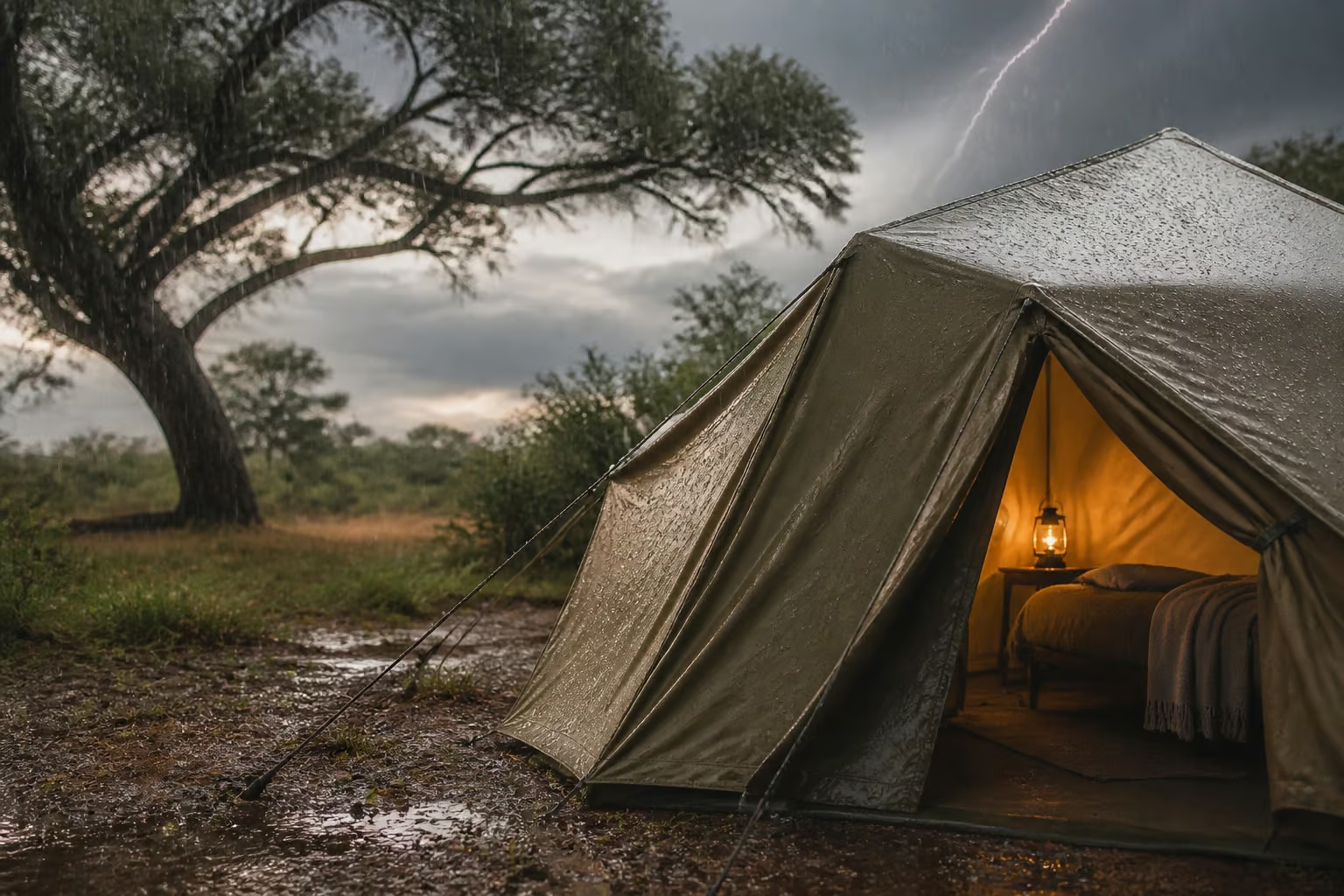
A waterproof tent is one whose fly, floor and seams keep out sustained rain, and yes, such tents exist, but "waterproof" always depends on fabric rating, stitching and how well you pitch it. For South African campers, that means matching the tent to your weather: Highveld afternoon storms, Cape winter fronts and Lowveld downpours all test a shelter differently.
Below are six options that suit campsite and family trips, followed by a guide to reading waterproof ratings, making a tent last, and answering the most common questions.
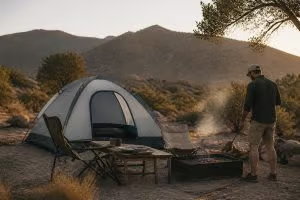
The First Ascent Lunar is a light two-person dome that suits short trips in moderate rain. It is listed at R1,699.
Best for: couples or solo campers who want ventilation and space for gear under the vestibule on dry-season and light-rain trips. Verdict: a sensible entry-level tent with a floor rated higher than the fly.
The Malamoo Xtra is a pop-up tent for campers who value speed over everything else. It is listed at R1,995.
Best for: weekend campsite trips where you arrive late or the weather turns while you pitch. It sleeps two people with bags. Verdict: fast and convenient, though a 2,000 mm rating suits showers better than multi-day storms.
The K-Way Nerolite pairs a compact packed size with a very waterproof floor. It is listed at R2,799.
Best for: trips where the ground gets wet, such as dewy mornings or pooling water after rain, and where boot space is limited. Verdict: the floor rating is the standout, and the fly is adequate for typical summer rain.
The Terra Firma Okovango is a large family tent with a high-rated fly. It is listed at R3,999.
Best for: families or groups driving to a campsite who can carry 18 kg from car to pitch. The 3,000 mm fly handles heavier rain than most budget tents. Verdict: roomy and well-rated on the roof, though the floor is rated lower than the fly, so use a footprint on wet ground.
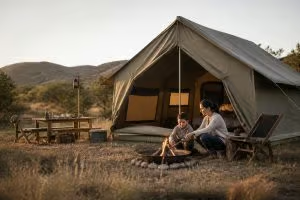
Ejenti Outdoor's Premium Heavy-Duty Canvas Dome Tent is a canvas shelter built for the African climate, from SANParks sites to remote 4×4 trails. Ejenti Outdoor is a Pretoria-based South African company that manufactures its own products, using heavy-duty canvas and ripstop fabrics that are waterproof and UV-treated.
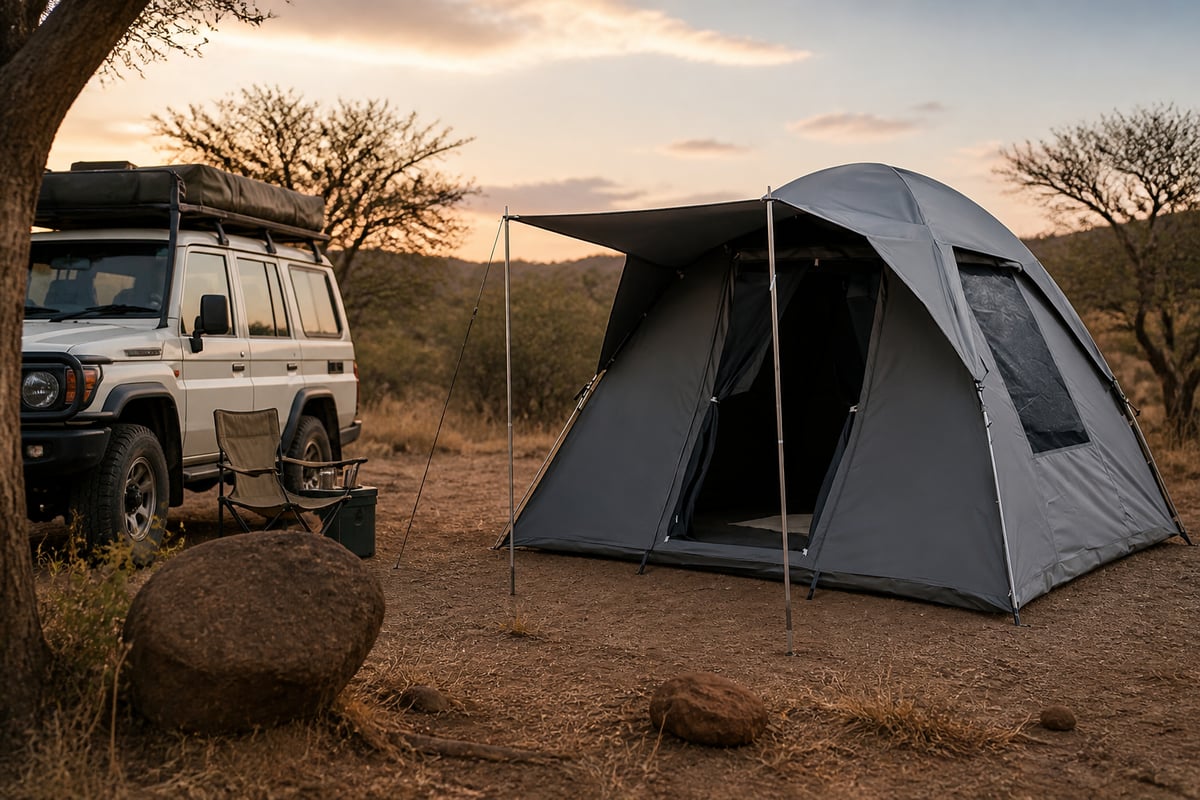
Canvas behaves differently from polyester. It breathes, handles UV well and lasts across many seasons, which suits campers who want one tent for years. Check the product page for sizes, weight and pricing, as these aren't listed here.
Best for: several-season campsite and 4×4 use where durability matters more than pack weight. Verdict: a strong pick for hard-wearing shelter, and not meant for carrying on foot.
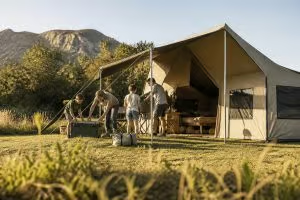
The 3m x 6m Safari Lodge Tent Two Room is a base-camp tent for longer stays, with a two-room layout that separates sleeping and living space. It is made from 300 GSM ripstop canvas, a fully waterproof fabric that is proudly South African made.
Ejenti Outdoor also offers custom builds made to your exact requirements, with more than 400 custom builds completed, which is useful if a standard footprint doesn't fit your site or group. Contact them through the product page for specifics.
Best for: extended family camps, safari-style setups and multi-night stays where privacy and organized space matter. Verdict: more shelter than a weekend dome, aimed at semi-permanent camping.
| Tent | Capacity | Weight | Flysheet rating | Floor rating | Approx. price |
|---|---|---|---|---|---|
| First Ascent Lunar | 2 | 2.59 kg | 2,000 mm | 3,000 mm | R1,699 |
| Malamoo Xtra 3-Second | 2 | 3 kg | 2,000 mm | Not listed | R1,995 |
| K-Way Nerolite | 3 | 3.1 kg | 2,000 mm | 5,000 mm | R2,799 |
| Terra Firma Okovango | 6 | 18 kg | 3,000 mm | 2,000 mm | R3,999 |
| Ejenti Canvas Dome Tent | See product page | See product page | Waterproof canvas | See product page | See product page |
| Ejenti Safari Lodge (two room) | See product page | See product page | 300 GSM waterproof ripstop canvas | See product page | See product page |
Prices are as listed in the research sources.
Reading across the rows shows where each tent spends its budget. The three lightest tents, all under about 3.1 kg, share the same 2,000 mm fly, so the extra rands buy a third sleeper and a 5,000 mm floor in the K-Way, or speed in the Malamoo, which takes about 40 seconds to pitch. The Okovango is the only polyester tent here with a 3,000 mm fly, and it sleeps six, but at 18 kg it is a car-camping tent only. Its floor is rated below its fly, so a footprint is a sensible addition. The Lunar's 3,000 mm floor at R1,699 is the best floor rating per rand in the table. The two canvas tents are described by fabric type, so get sizes and weights from the product pages before comparing.
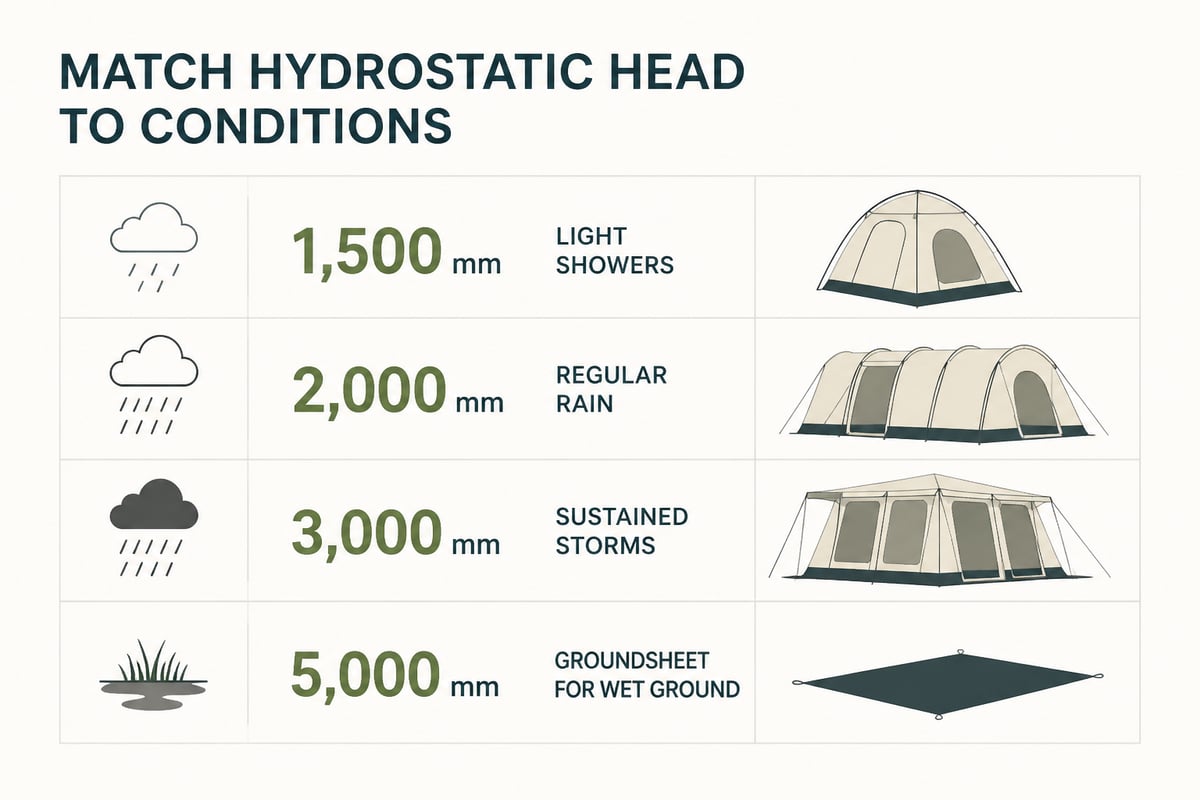
A waterproof rating is measured in millimeters of hydrostatic head, which is the height of a water column fabric can hold before water passes through. According to Top-Notch Outdoor, a 1,500 mm rating corresponds to a 1.5 m column.
A practical way to use the numbers:
Ratings aren't the whole story. Taped seams, a full-coverage fly and good guy-line tension matter as much as the number on the label. Canvas tents are often described by fabric weight (GSM) rather than hydrostatic head, because the cloth swells when wet and tightens its weave.
A tent is fine in the rain when the fabric is rated for it, the seams are sealed and the pitch sheds water rather than collecting it. Condensation inside is a separate issue, solved with ventilation, not more waterproofing. Wet inner walls after a night of rain often come from breath and damp gear, so open vents and crack a door even when it is pouring.
For South African conditions, think seasonally:
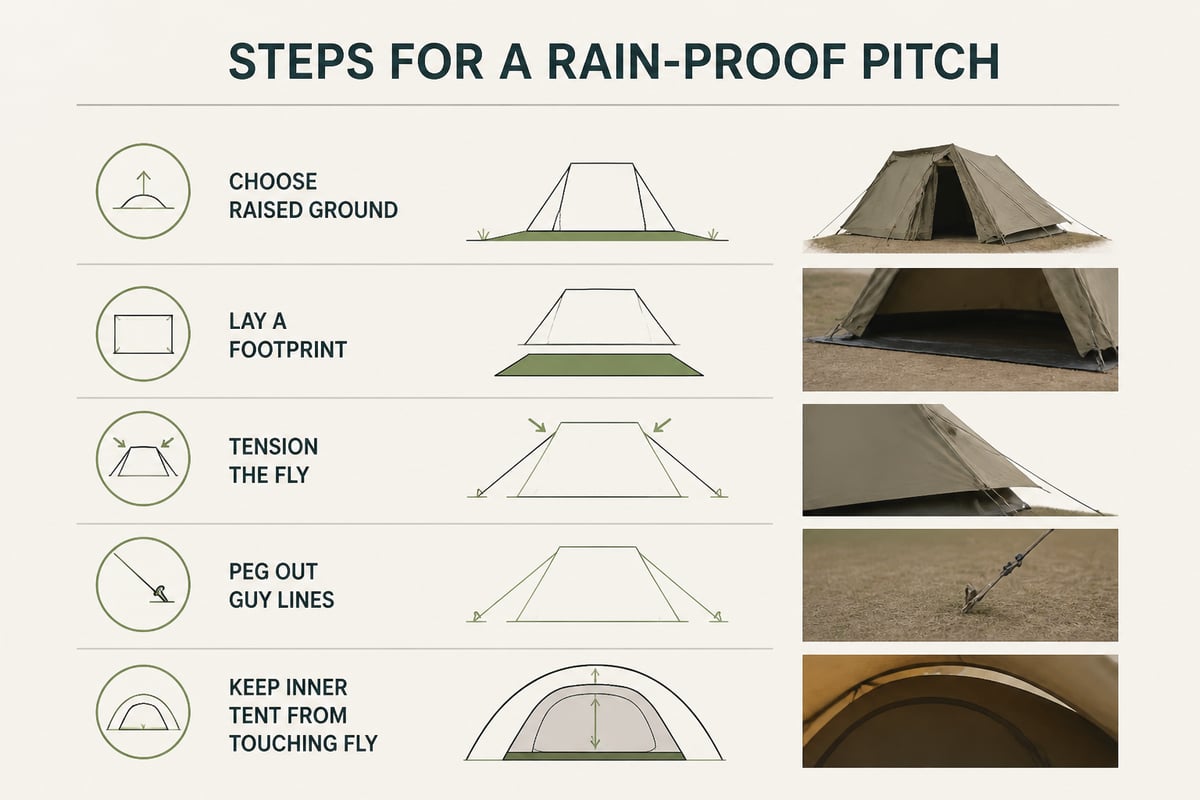
Most polyester tents lose their coating gradually, while canvas tends to last longer with care. How long a tent stays waterproof depends on UV exposure, packing habits and how often it is cleaned.
Canvas rewards this care. The material is heavier, but it handles UV and repeated pitching better than thin coated polyester, which is why heavy-duty canvas suits campers who want several seasons from one purchase.
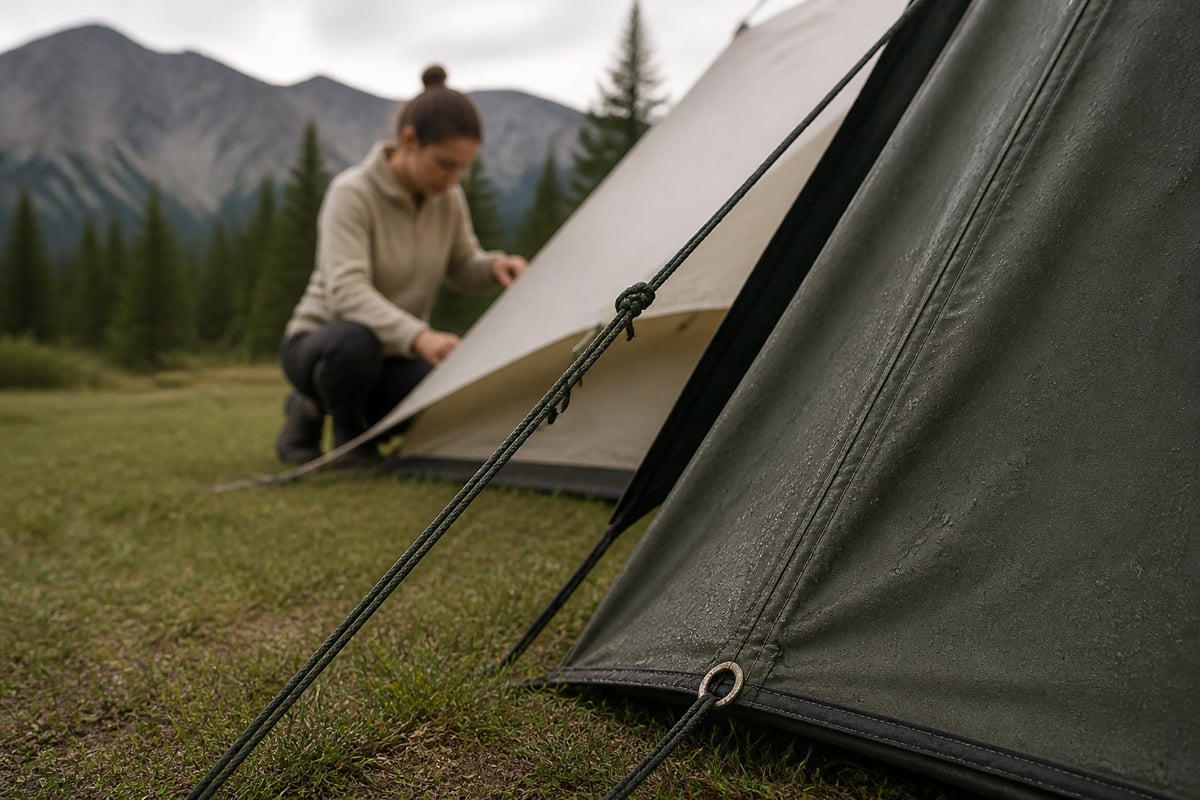
Canopies and gazebos are usually weather shields for shade and light rain, and not full waterproof shelters. Some are water-resistant, some sealed, so check the fabric rating and whether the seams are taped. Open sides are the other limit. Wind-driven rain on the Highveld or a Cape cold front will blow straight under a roof that has no walls, so a canopy keeps the table dry only while the weather stays calm. A flat roof also lets water pool in a sag, and that weight can bend frames or force water through stitching.
For campsite dining or a covered cooking area, a heavy-duty canvas shelter is a better match than a thin canopy. Canvas tightens when it gets wet and sheds water, and it handles repeated UV exposure over many seasons. If you need more covered space, browse Ejenti Outdoor's waterproof camping tent range or the 3000mm waterproof tent collection for ratings that suit sustained rain.
Large international tents show how floor space and vestibules vary. According to Treeline Review, The North Face Wawona 6 is listed at $585 with 86.11 sq ft of floor space, a 76-inch peak height and 44.7 sq ft of vestibule, while the NEMO Aurora Highrise 4 is listed at $500 with 62.5 sq ft of floor space, a 75-inch peak height and two vestibules of 19.5 sq ft each. The Snow Peak Alpha Breeze sits at $549 with 77.3 sq ft of floor, 45 sq ft of vestibule and a 76.8-inch peak. Those numbers are useful as a yardstick. The Wawona and Alpha Breeze offer vestibule space for storing boots, packs and a cooler out of the rain. The Aurora's two vestibules let two people each keep wet gear by their own door. If a tent doesn't list vestibule space, ask how you'll store wet boots and packs. Peak height matters too: around 75 inches means most adults can stand and change clothes during a storm instead of crouching.
Yes, but "waterproof" means the fabric resists water up to a rated pressure, not that it can never leak. A tent with a 3,000 mm fly, sealed seams and a good pitch will keep you dry through most South African storms.
It varies with use, UV exposure and care, with coated polyester tents typically losing performance sooner than canvas. Dry the tent before storage, avoid prolonged sun, and re-seal seams when water stops beading.
Some are, but many only resist light rain. Check the fabric rating and seam construction, and choose a heavy-duty canvas or sealed shelter if you need dependable cover for a camp kitchen or dining area.
Before your next trip, pitch your tent in the garden and spray it with a hose for ten minutes, so you find any leaks at home and not in the bush. If you need a shelter built for several seasons of South African weather, look at the Premium Heavy-Duty Canvas Dome Tent, or talk to the Pretoria team about a custom build. Browse the full range and shop now at Ejenti Outdoor to find a waterproof canvas tent made to your requirements.