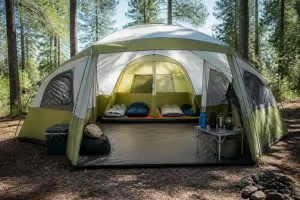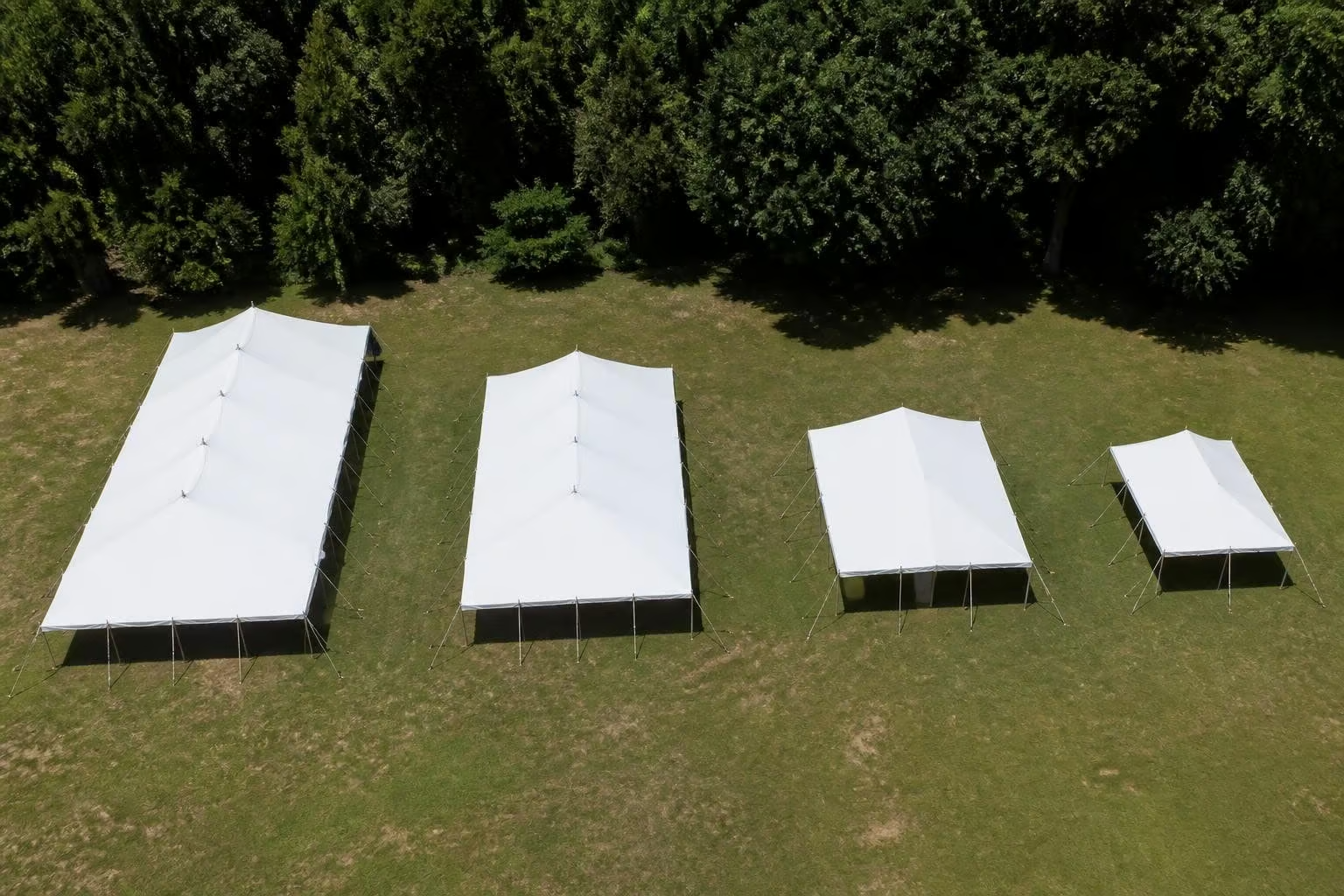
The tent rectangle has become one of the most fundamental and practical shapes in outdoor shelter design. Whether you're planning a camping trip, organizing an outdoor event, or setting up temporary accommodation, understanding the rectangular tent footprint and its advantages helps you make informed decisions about your outdoor shelter needs. This versatile shape offers superior space utilization, easier setup procedures, and adaptable configurations that work across diverse terrains and applications throughout South Africa and beyond.
The rectangular footprint represents the ground area a tent occupies when properly pitched. This geometric shape differs significantly from dome, geodesic, or tunnel tent configurations by offering a straightforward, four-cornered layout that maximizes usable interior space.
A tent rectangle provides several measurable advantages over alternative shapes. The 90-degree corners create functional storage zones and sleeping arrangements that align naturally with human movement patterns. Unlike circular or irregular footprints, the rectangular design eliminates wasted space along walls and corners.
Rectangular tents come in standardized measurements that balance portability with interior volume:
The aspect ratio (length-to-width proportion) significantly impacts both interior functionality and structural stability. A 1:1.5 ratio (such as 4m x 6m) provides balanced proportions that work well for most applications, while longer ratios like 1:2 or 1:3 suit specific needs such as dining spaces or multi-room configurations.
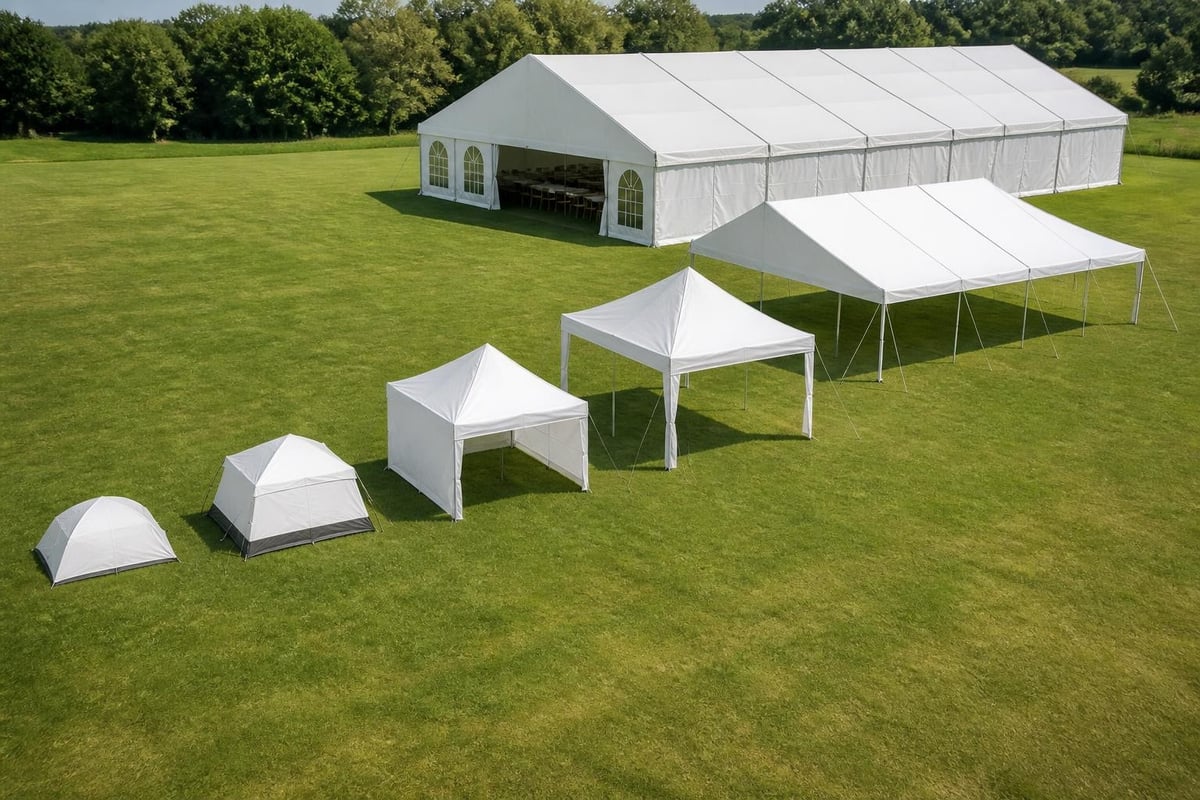
The tent rectangle shape follows engineering principles that date back centuries while incorporating modern materials and construction techniques. Understanding these design fundamentals helps users select appropriate structures and set them up correctly.
Rectangular designs distribute loads predictably across the frame. The parallel side walls allow for vertical or near-vertical construction, maximizing headroom throughout the interior rather than just at the center peak. This geometry creates more livable space per square meter of footprint.
The corner points in a tent rectangle serve as primary stress concentration zones. Quality designs reinforce these areas with strengthened seams, additional guy-line attachment points, and robust corner poles or stakes. Event tent safety standards emphasize proper reinforcement at these critical junctions, particularly for larger structures used in public gatherings.
| Design Element | Function | Benefit in Rectangular Tents |
|---|---|---|
| Vertical walls | Maximize usable floor space | 90%+ of footprint at full height |
| Ridge beam | Primary load distribution | Even tension across length |
| Corner reinforcement | Stress management | Prevents tearing at high-load points |
| Guy-line geometry | Wind resistance | Perpendicular anchoring creates stable base |
The tent rectangle shape influences material requirements differently than curved designs. Flat panels experience different stress patterns than curved surfaces, requiring appropriate fabric weight and weave construction.
Canvas remains the preferred material for larger rectangular tents due to its breathability, durability, and ability to maintain tension across flat planes. PVC-coated fabrics offer superior waterproofing for event applications where moisture control is critical. The product selection at Ejenti Outdoor reflects this material diversity across different tent rectangle applications.
Ripstop weaving adds crucial tear resistance to rectangular panels. When a puncture or cut occurs, the reinforced grid pattern prevents the damage from propagating across the entire panel-a particularly important feature in large, flat surfaces common to tent rectangle designs.
Proper setup transforms a tent rectangle from a bundle of fabric and poles into a secure, functional shelter. The rectangular geometry simplifies many aspects of pitching but requires attention to specific details for optimal performance.
Choose level ground whenever possible. A tent rectangle shows slope and unevenness more obviously than dome tents, potentially creating uncomfortable sleeping surfaces or water pooling issues. The National Park Service campground guidelines recommend tent pads that extend 0.3 meters beyond the tent footprint on all sides.
Ground preparation steps for optimal tent rectangle placement:
Natural windbreaks such as vegetation or terrain features provide valuable protection, but maintain safe clearances. Fire safety codes typically require minimum 3-meter clearances from tent walls to fire sources, vehicles, or other tents in congregate settings.
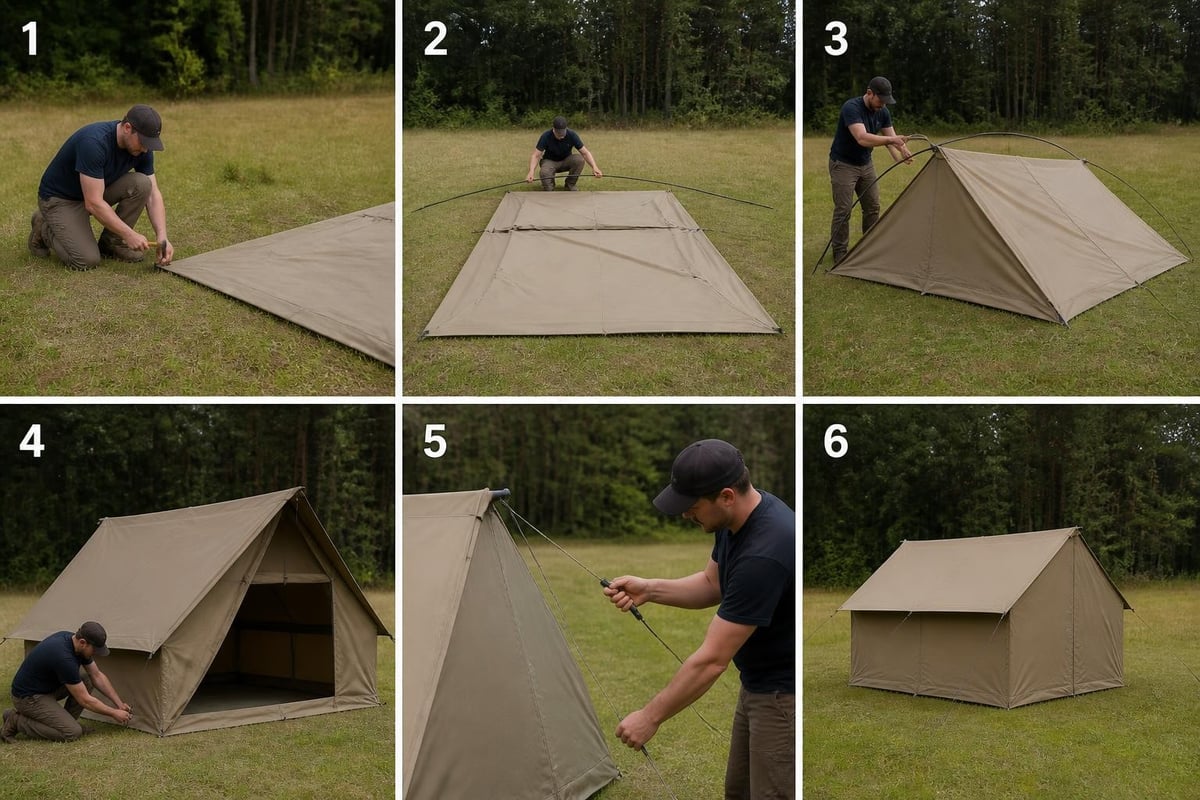
The rectangular frame creates a predictable assembly sequence. Most designs follow this pattern:
Corner poles first: Establish the four corners at their proper spacing, ensuring the rectangle achieves true 90-degree angles. Use the 3-4-5 triangle method to verify square corners: measure 3 meters along one side, 4 meters along the adjacent side, and the diagonal should measure exactly 5 meters.
Ridge installation: Connect the ridge beam or pole that spans the tent's length. This central structural element should be perfectly horizontal and centered between the side walls.
Tensioning sequence: Work progressively from center to corners, creating even fabric tension. Over-tightening one area before addressing others creates wrinkles and stress points that reduce weatherproofing and structural integrity.
Guy-lines on a tent rectangle should extend at 45-degree angles from attachment points. This geometry provides optimal resistance to both lateral and vertical forces. Many professionals appreciate hardware like the quick-release buckle system for easy tension adjustment and secure fastening during setup and throughout the tent's use period.
The tent rectangle serves diverse functions across recreational, commercial, and emergency response scenarios. Understanding these applications helps users select the right specifications for their needs.
Family camping benefits enormously from rectangular tent designs. The shape accommodates rectangular sleeping bags, camping cots, and storage containers efficiently. A 4m x 6m tent rectangle comfortably houses a family of four with dedicated sleeping zones, a central living area, and organized gear storage along the walls.
Safari and extended camping applications often utilize larger tent rectangle configurations. Multi-room layouts become practical with rectangular designs, allowing privacy partitions, separate sleeping chambers, and covered verandah areas. The parallel walls support internal hanging systems for clothing, lanterns, and equipment organization.
Weather protection in rectangular camping tents depends on proper orientation and setup. Position the narrow end toward prevailing wind to minimize broadside exposure. Ensure the floor extends slightly beyond the wall base or use a properly sized groundsheet to prevent water migration underneath.
Large tent rectangle structures dominate the outdoor event industry. These shelters provide predictable, customizable space for weddings, corporate functions, markets, and community gatherings. The rectangular footprint simplifies layout planning for tables, chairs, and equipment placement.
Capacity calculations for event tent rectangles follow standard formulas:
A 10m x 20m tent rectangle (200 square meters) accommodates approximately 130-160 seated guests with room for buffet tables, dance floor, and circulation space. Building code requirements for temporary structures include specific provisions for tent sizes, occupancy limits, and safety features that event planners must address.
| Application Type | Typical Tent Rectangle Size | Key Features Required |
|---|---|---|
| Family camping | 3m x 4m to 4m x 6m | Multi-room option, vestibule, ventilation |
| Safari/glamping | 4m x 6m to 5m x 8m | Vertical walls, mosquito screens, durable canvas |
| Market stall | 3m x 3m to 4m x 6m | Quick setup, side panels, display hooks |
| Wedding/event | 10m x 15m to 15m x 30m | Clear-span frame, lighting points, flooring compatible |
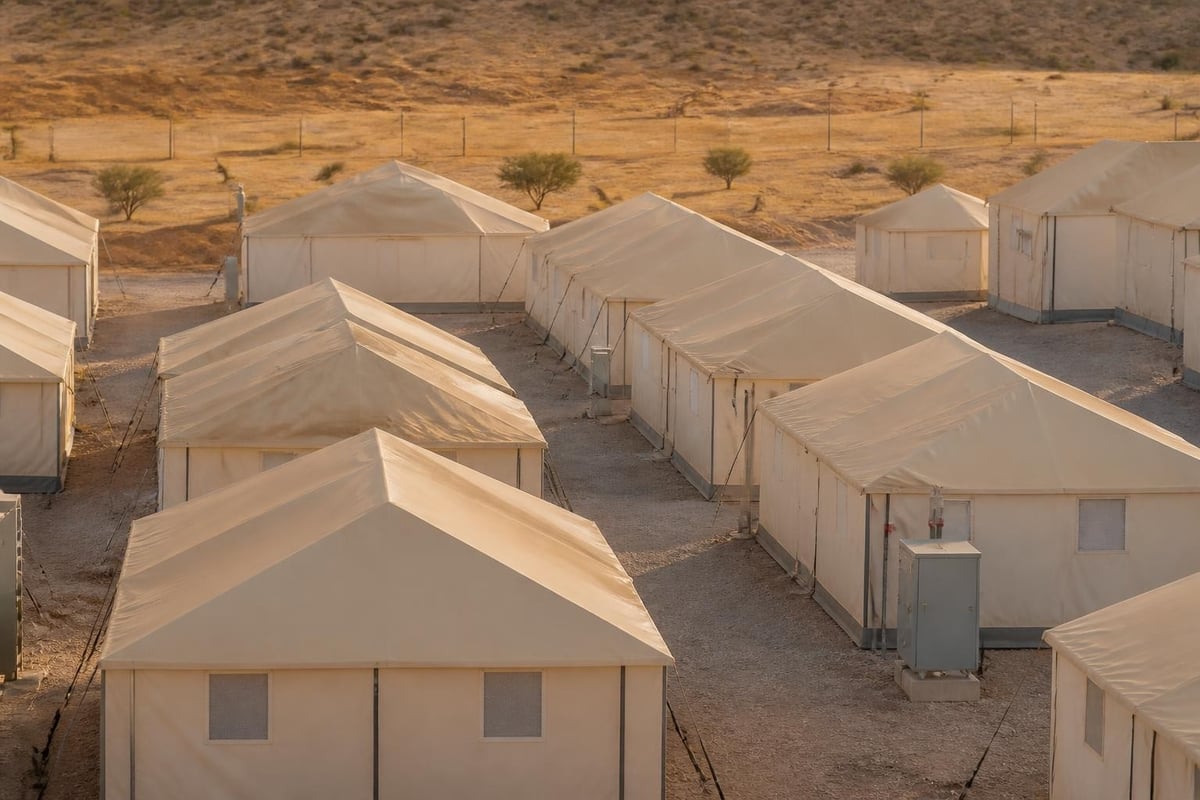
Disaster response and temporary accommodation rely heavily on tent rectangle designs for their efficiency and rapid deployment capabilities. The standardized footprint allows for organized camp layouts with defined pathways, service access, and emergency egress routes.
Relief organizations favor rectangular tent configurations because they maximize the number of shelters within a given land area while maintaining required clearances. The straight walls also facilitate the addition of insulation, lighting, and basic furniture that improves living conditions during extended displacement periods.
Maximizing the performance of a tent rectangle requires understanding how to enhance its inherent design strengths while mitigating potential weaknesses.
The large, flat surfaces of tent rectangle walls face greater wind pressure than curved designs. Proper guy-line configuration becomes essential. Install lines at every available attachment point, maintaining consistent angles and tension. In high-wind environments, add intermediate guy-points along longer walls to prevent fabric flutter and stress concentration.
Rain management begins with proper pitch angle. Rectangular roofs should slope at minimum 15-20 degrees to ensure water runoff. Flat or insufficient pitch leads to water pooling, fabric sagging, and potential collapse under load. The ridge should run along the tent's length, creating two sloped panels that channel water to the sides.
Condensation control in tent rectangle designs benefits from strategic ventilation placement. Position intake vents low on opposing walls to create cross-flow, with exhaust vents at the ridge peak. This arrangement leverages natural convection to move humid air upward and out while drawing fresh air through the living space.
Regular inspection of stress points extends tent rectangle service life significantly. Focus attention on:
Fabric care varies by material. Canvas tent rectangles require periodic reproofing with appropriate waterproofing treatments. Allow complete drying before storage to prevent mildew. PVC materials need UV protection when stored, as prolonged sun exposure degrades the coating even when the tent is not in use.
Frame components benefit from annual inspection and maintenance. Clean pole sections to remove grit that causes wear at joints. Check for stress cracks, particularly in corner connections and pole ends. Replace worn shock cord in sectional poles before it fails in the field.
Selecting the right tent rectangle dimensions requires balancing multiple factors including intended use, transport capacity, site constraints, and budget considerations.
User capacity provides a starting point, but actual space requirements extend beyond simple sleeping area. Calculate total footprint needs by accounting for:
Sleeping zones: 0.6m x 2m per person (minimum)
Gear storage: 0.5-1 square meter per person
Living/activity space: 2-4 square meters for groups under 4, additional 1 square meter per additional person
Entry vestibule: 1-2 square meters for weather protection and boot storage
A family of four needs approximately 12-16 square meters of total tent rectangle area for comfortable camping. This translates to a 3m x 4m or 3m x 5m footprint. Groups planning extended stays or requiring workspace should increase dimensions by 20-30%.
Many tent rectangle manufacturers offer customization options that enhance functionality:
NFPA tent safety requirements specify minimum egress standards for larger tent rectangles used in public occupancy. Structures exceeding certain size and capacity thresholds must provide multiple exits positioned to ensure safe evacuation. Understanding these requirements early in the planning process prevents costly modifications later.
Tent rectangle installations often require permits and must comply with specific codes, particularly when used for commercial purposes or on public lands.
Municipal and regional authorities regulate temporary structures to ensure public safety. Tent rectangle permit thresholds typically trigger at:
NPS requirements for tent use on federal lands include specific provisions for flame resistance, exit capacity, and clearance distances. Similar rules apply on state, provincial, and municipal properties throughout South Africa and internationally.
Professional installation becomes mandatory for larger tent rectangle structures in many jurisdictions. Certified installers understand load calculations, anchoring requirements, and inspection protocols that ensure compliance and safety.
Implementing comprehensive safety measures protects both occupants and operators:
Temporary structure risk management guidance emphasizes documentation throughout the planning, installation, and operational phases. Maintain records of inspections, weather monitoring, and maintenance activities to demonstrate due diligence.
Contemporary tent rectangle designs incorporate technological advances and material innovations that improve performance, sustainability, and user experience.
Advanced fabric engineering delivers tent rectangle materials that outperform traditional options:
Nano-coatings create water and dirt-repellent surfaces at the molecular level. These treatments maintain breathability while preventing moisture penetration, reducing weight compared to older rubber-based waterproofing systems.
Composite weaves combine different fiber types within single fabrics. Polyester provides UV resistance and shape stability, while nylon adds tear strength and flexibility. The resulting material delivers balanced performance across multiple criteria.
Recycled and sustainable materials address environmental concerns. Tent rectangle manufacturers increasingly offer fabrics derived from recycled plastics and renewable sources. While performance matches or exceeds conventional materials, these options reduce environmental impact throughout the product lifecycle.
Frame technology evolution enables larger clear-span tent rectangle designs with fewer internal supports. Aluminum alloy poles achieve superior strength-to-weight ratios compared to traditional steel frames. Computer-aided design optimizes pole diameter, wall thickness, and joint configurations for specific load requirements.
Modular frame systems allow tent rectangle structures to expand or contract by adding or removing sections. A base 5m x 10m configuration extends to 5m x 15m or 5m x 20m by incorporating additional frame modules. This flexibility reduces inventory requirements for rental operations and adapts to varying event sizes.
Quick-connect joint systems eliminate the need for tools during assembly. Color-coded components and intuitive connection mechanisms reduce setup time by 30-50% compared to traditional systems, particularly valuable for commercial applications requiring frequent installation and breakdown.
Whether you're planning a family camping adventure, organizing a large outdoor event, or establishing temporary accommodation, the tent rectangle offers proven versatility and reliable performance. The rectangular footprint's efficient use of space, straightforward setup procedures, and adaptable configurations make it the practical choice for diverse applications across South African landscapes and beyond. Ejenti Outdoor provides expertly designed rectangular tents, premium outdoor fabrics, and professional-grade accessories that deliver durability and performance for your specific needs-browse the complete range to find the perfect solution for your next outdoor project.