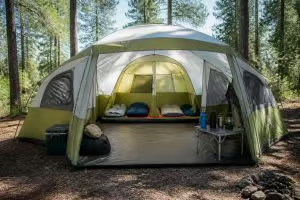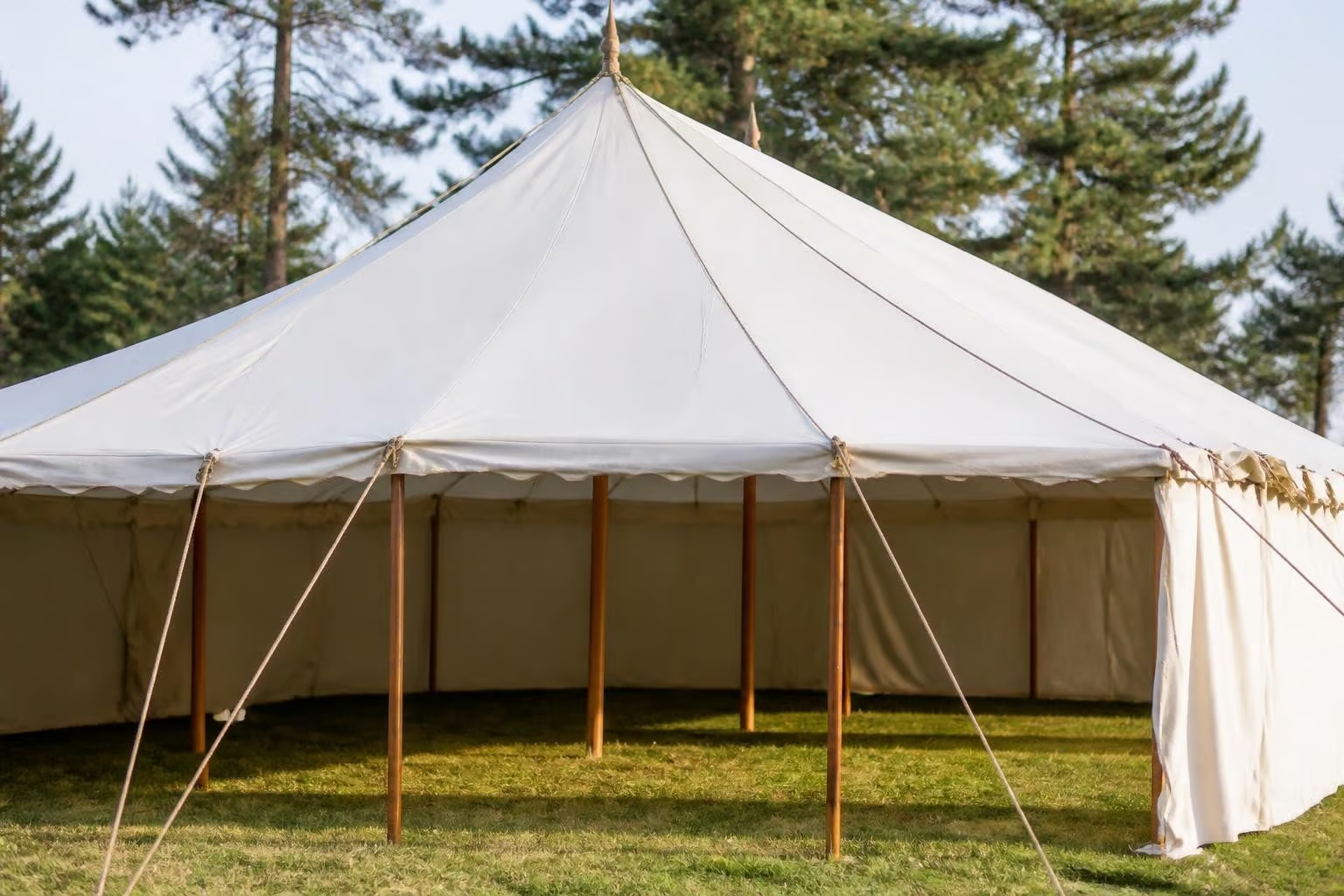
A poled tent represents one of the most time-tested shelter designs in outdoor accommodation history. This classic tent configuration uses vertical or angled poles as the primary structural support system, creating a stable framework that distributes tension across fabric panels. Unlike modern freestanding designs that rely on flexible fiberglass or aluminum arches, the poled tent design emphasizes simplicity, durability, and proven engineering principles. Understanding how these traditional structures work helps outdoor enthusiasts, event organizers, and camping professionals select the right shelter for their specific needs.
The fundamental design of a poled tent centers on rigid vertical supports that create headroom and structural stability. These poles work in combination with guy ropes, stakes, and tensioned fabric to create a weatherproof shelter that can withstand wind, rain, and other environmental stresses. The engineering behind this system dates back centuries, yet remains relevant today because of its mechanical simplicity and reliability.
Every poled tent system relies on several interconnected elements working together:
The relationship between these components creates a balanced tension system. When properly erected, each element supports the others, resulting in a structure that becomes more stable under moderate wind loads as tension increases across the fabric surface.
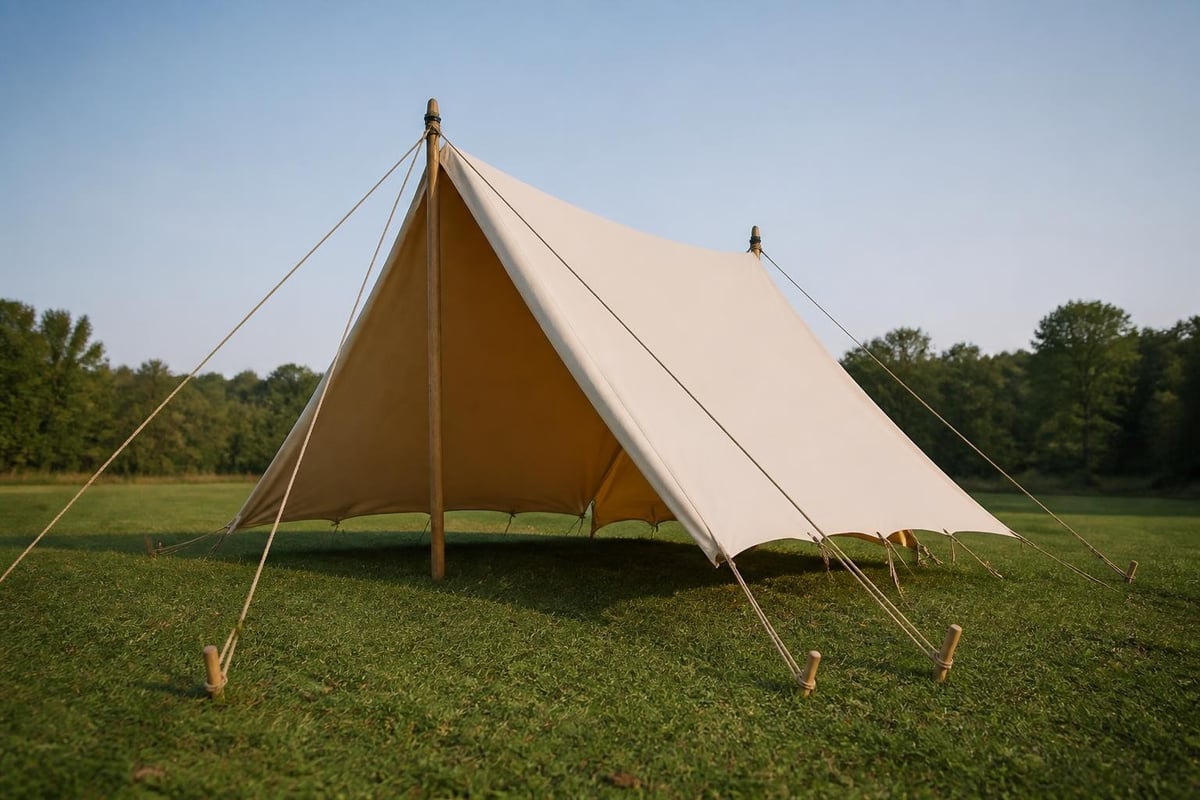
Understanding load distribution separates successful poled tent installations from unstable ones. The center pole bears compressive forces downward while guy ropes convert those forces into horizontal tension. This creates a balanced system where proper tensioning prevents fabric sagging and maintains the tent's shape during weather events.
| Force Type | Structural Element | Function |
|---|---|---|
| Vertical compression | Center and ridge poles | Height and primary support |
| Horizontal tension | Guy ropes and stakes | Stability and wind resistance |
| Surface tension | Fabric envelope | Weather protection and load sharing |
The American Society of Civil Engineers provides engineering standards for calculating wind and snow loads on temporary structures, which directly applies to poled tent design and safety margins.
The poles themselves represent critical decision points in any tent specification. Traditional materials included solid wood, but modern options expand significantly.
Steel poles offer exceptional strength and longevity. Galvanized steel resists rust in outdoor conditions and handles heavy loads without flexing. The weight disadvantage becomes manageable for semi-permanent installations or event tents where frequent relocation isn't required.
Aluminum poles provide an excellent strength-to-weight ratio. These poles transport easily and resist corrosion naturally. For mobile camping operations or temporary event structures, aluminum represents the practical choice that balances performance with portability.
Hardwood poles maintain relevance in traditional canvas tent designs. Properly treated hardwood delivers natural aesthetics, adequate strength, and renewable sourcing. Safari tents and heritage-style camping shelters often specify hardwood poles to preserve authentic appearance and performance.
The diameter and wall thickness of poles matter significantly. Thicker walls resist buckling under compression, while larger diameters increase the pole's resistance to bending moments. Professional-grade poled tent systems specify these dimensions based on the tent's size and expected environmental loads.
The fabric envelope completes the poled tent system, and material selection impacts performance, longevity, and maintenance requirements. Canvas remains the traditional choice for good reasons.
Natural cotton canvas breathes, reducing internal condensation that plagues synthetic tents in humid conditions. This breathability creates more comfortable interior conditions during extended stays. Canvas also develops natural water resistance as fibers swell when wet, filling the fabric's weave and creating a barrier against rain penetration.
Modern canvas specifications typically range from 260 GSM to 450 GSM for camping tents. Higher weights increase durability and weather resistance but add bulk and weight. The ripstop weave pattern reinforces canvas against tear propagation, extending service life significantly compared to plain weave fabrics.
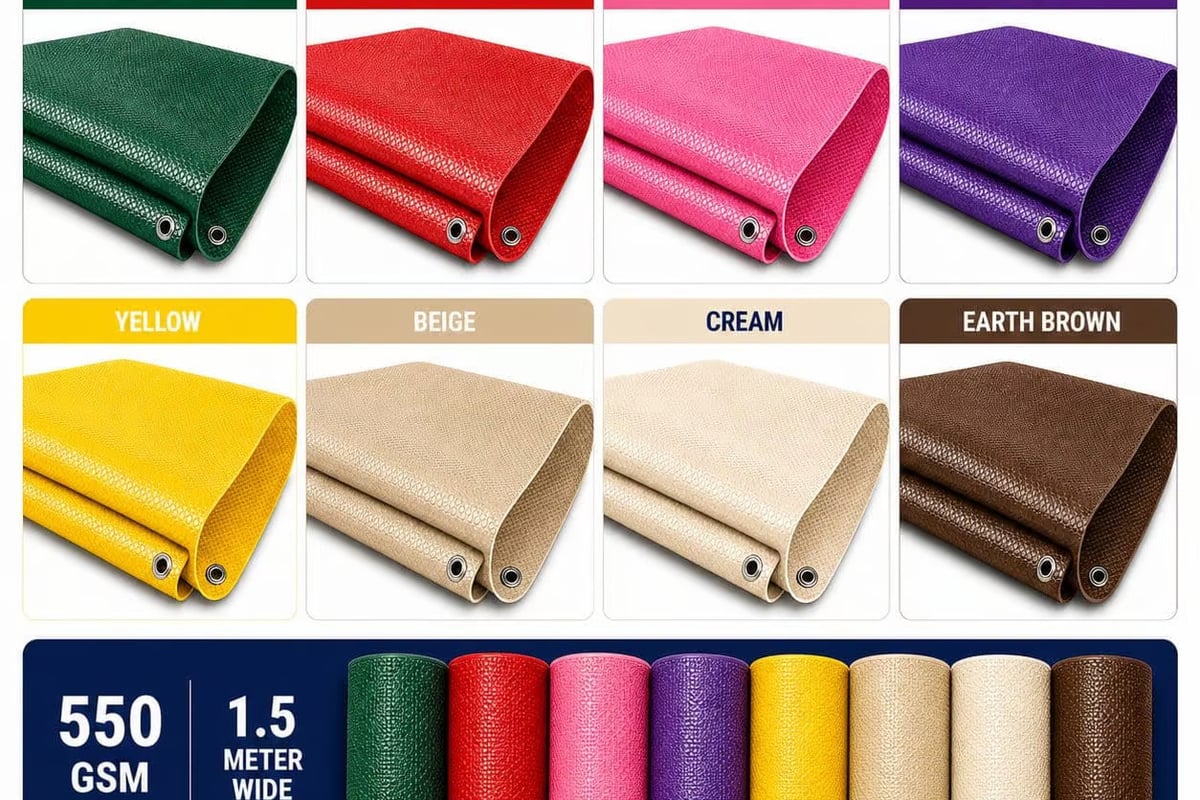
PVC-coated polyester delivers complete waterproofing and exceptional durability. These fabrics excel in event applications where absolute weather protection matters most. A 550 GSM PVC fabric provides excellent tear strength and UV resistance for semi-permanent structures. For projects requiring robust waterproof material that withstands repeated setup and breakdown, PVC Fabric 550 GSM 1.5 Meter Wide Waterproof Ejenti offers reliable performance in demanding South African outdoor conditions.
Polyester-cotton blends combine natural fiber comfort with synthetic durability. These hybrid fabrics reduce weight compared to pure canvas while maintaining better breathability than fully synthetic options. Treatment with water-repellent finishes enhances weather resistance without completely sealing the fabric.
Proper poled tent erection determines structural performance and safety. Following systematic procedures prevents common failures and extends tent lifespan.
Choose level ground with adequate drainage. Slopes cause uneven tension distribution and water accumulation. Remove rocks, sticks, and debris that could damage fabric or create uncomfortable interior conditions. Compact soft soil before staking to improve anchor holding power.
Consider wind direction and natural windbreaks. Position the tent's lowest profile toward prevailing winds to minimize wind loading. Natural features like tree lines reduce wind speeds but maintain adequate clearance to prevent branch damage during storms.
This methodical approach prevents fabric damage and creates proper structural geometry. Rushing the process or skipping steps leads to poor tension distribution and reduced weather resistance.
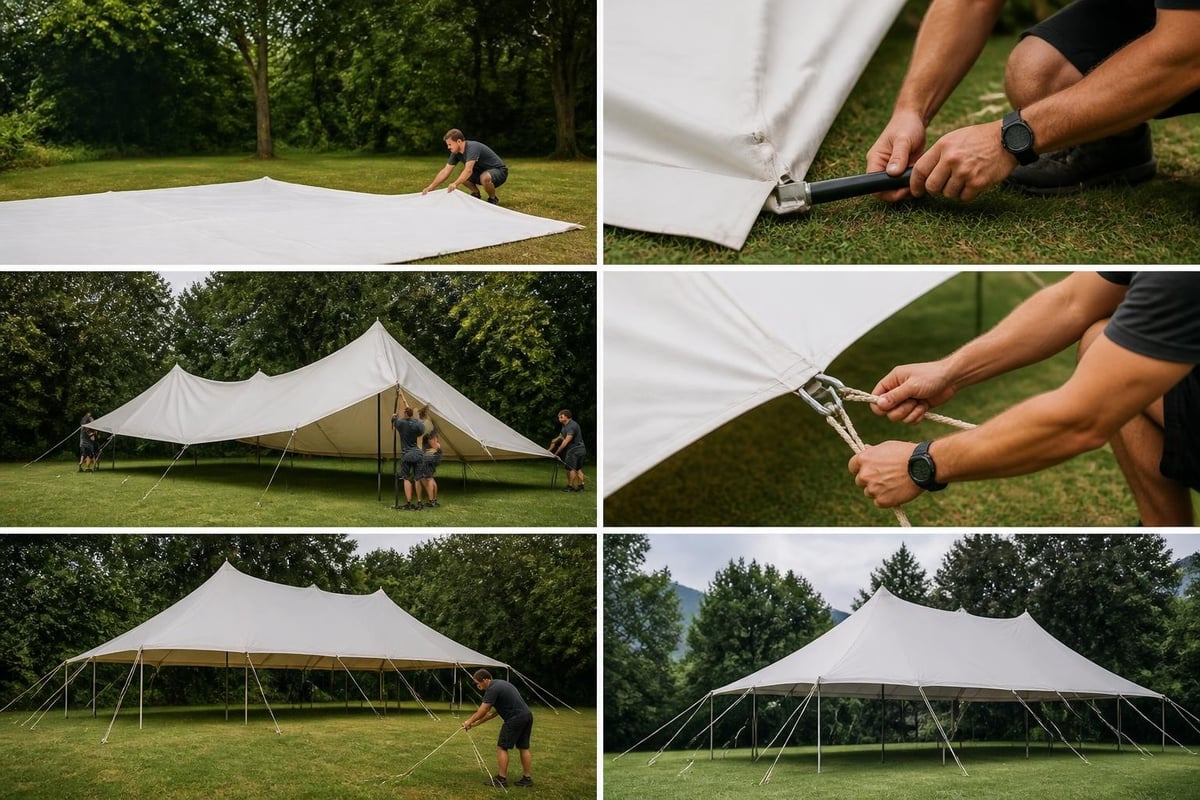
Guy ropes represent the adjustment mechanism that fine-tunes poled tent performance. Understanding proper placement and tensioning techniques separates adequate installations from excellent ones.
The angle between guy ropes and ground surface affects load distribution significantly. Steeper angles increase vertical load on stakes but reduce lateral stability. Shallower angles improve wind resistance but require stakes farther from the tent's footprint.
45-degree angles provide balanced performance for most applications. This angle creates equal vertical and horizontal force components, optimizing stake holding power while maintaining adequate lateral support. Adjust angles based on soil conditions and expected wind loads.
Progressive tensioning prevents asymmetric loads that distort tent geometry. Work systematically around the structure, applying moderate tension to all guy ropes before final tightening. This approach distributes loads evenly and reveals any setup errors before they become locked into the structure.
Line tensioners or adjustable rope locks enable quick modifications as weather conditions change. These simple devices let operators increase tension before storms or reduce it during calm periods, extending fabric life and maintaining optimal geometry.
Proper care extends poled tent service life significantly. Regular inspection and preventive maintenance address minor issues before they become major failures.
Fabric inspection should occur before and after each use. Look for tears, worn areas, mildew growth, and UV damage. Address small tears immediately with patch kits to prevent propagation. Clean mildew promptly using appropriate cleaning solutions that don't degrade fabric treatments.
Pole condition requires regular assessment. Check for:
Guy rope and stake evaluation prevents sudden failures. Rope abrasion, particularly where it passes through grommets, weakens the system. Replace frayed sections before failure occurs. Bent stakes lose holding power and should be straightened or replaced.
Clean and completely dry tents before storage. Moisture trapped in folded fabric promotes mildew growth and material degradation. Store in cool, dry locations away from direct sunlight, which degrades both natural and synthetic fibers over time.
Poles should be stored straight, supported along their length to prevent warping. Bundling sectional poles together prevents loss and maintains organization for rapid deployment. The Health and Safety Executive provides guidance on temporary structure maintenance that applies to commercial poled tent operations.
Professional poled tent operations must address safety requirements that protect occupants and maintain structural integrity during adverse conditions.
Wind loads represent the primary design consideration for temporary structures. The ANSI E1.21 standard establishes minimum safety practices for temporary event structures, including calculation methods for determining appropriate guy rope specifications, stake requirements, and pole dimensions based on tent size and expected conditions.
Snow loading calculations apply in regions where accumulation occurs. Poled tent designs with steep roof pitches shed snow effectively, but calculating maximum expected loads ensures the pole system can handle worst-case scenarios without collapse.
Fabric flammability represents a critical safety consideration, particularly for event applications. The U.S. Consumer Product Safety Commission publishes comprehensive guidance on tent flammability standards, including material testing methods and labeling requirements.
| Safety Aspect | Standard/Requirement | Application |
|---|---|---|
| Flame resistance | CPAI-84 certification | Event and commercial tents |
| Wind load calculation | ASCE 7 methodology | All temporary structures |
| Structural inspection | Pre-event and periodic | Commercial operations |
| Emergency egress | Minimum opening requirements | Occupied structures |
Treatment with flame-retardant chemicals enables otherwise flammable fabrics to meet safety standards. These treatments require renewal periodically as weathering reduces effectiveness. Documentation of treatment dates and reapplication schedules maintains compliance.
Different applications demand specific poled tent configurations optimized for their unique requirements.
Single-pole bell tents offer simple setup and excellent space efficiency. The conical design sheds wind and rain effectively while maximizing usable interior volume. These configurations work well for family camping and semi-permanent glamping installations.
Multi-pole ridge tents provide more complex interior layouts with standing headroom throughout the structure. The A-frame profile created by angled poles at each end offers good weather performance and familiar tent geometry that many campers prefer.
Large event tents employ multiple center poles creating repeated peaks across the structure's length. This design scales effectively to cover substantial areas while maintaining manageable pole heights and guy rope angles. The modular nature allows flexible sizing based on guest counts and site constraints.
Frame tents use perimeter poles combined with ridge poles to eliminate interior center supports. This configuration maximizes usable space for dining, dancing, or presentations where center poles would create obstructions and limit layout flexibility.
Traditional safari tents combine canvas fabric with wooden poles to create semi-permanent accommodations that blend with natural surroundings. These structures typically feature front porches supported by extended ridge poles, creating covered outdoor spaces that expand usable area beyond the tent's main footprint.
The robust pole framework supports internal furniture mounting and partition walls that create multiple rooms within a single tent structure. This adaptability makes poled tent designs excellent for hospitality applications where comfort expectations exceed typical camping standards. For those exploring canvas tent solutions, understanding these configuration options helps match tent style to intended use.
Environmental conditions test poled tent designs continuously. Understanding how these structures respond to specific weather challenges enables proactive preparation and appropriate specification.
Aerodynamic tent profiles reduce wind loading significantly. Lower peak heights and smooth surface transitions minimize turbulence that creates uplift forces. Guy rope placement at optimal angles ensures load paths transfer wind forces into ground anchors effectively.
Additional guy ropes beyond minimum requirements provide redundancy and increased stability margins. Storm configurations might double standard guy rope counts, distributing loads across more anchor points and reducing stress on individual components.
Ballast systems supplement or replace ground stakes when soil conditions prevent adequate penetration. Water barrels, sandbags, or purpose-built weight systems secure guy ropes to achieve necessary holding forces. Calculate ballast requirements based on expected wind speeds and total tent area.
Proper tension prevents water pooling on fabric surfaces. Sagging areas collect water, creating concentrated loads that exceed design specifications and potentially causing structural failure. Regular tension checks during rainy periods maintain proper geometry and water shedding capability.
Perimeter drainage management prevents ground water from entering the tent. Dig shallow trenches or install berms around the structure's footprint to direct runoff away from fabric walls and floor areas. This simple preparation dramatically improves interior comfort during extended rain events.
Waterproof groundsheets protect floor areas and prevent moisture wicking through fabric. Extend groundsheets slightly beyond wall perimeters, then fold edges upward to create a bathtub effect that contains any water entering the structure.
Understanding total ownership costs helps buyers make informed decisions about poled tent investments.
Tent size drives base costs linearly. Larger structures require more fabric, longer poles, additional guy ropes, and increased hardware quantities. However, per-square-meter costs often decrease with size due to efficiency gains in manufacturing and material utilization.
Material specifications significantly impact pricing. Premium canvas with ripstop reinforcement, waterproof treatments, and UV inhibitors commands higher prices than basic untreated fabrics. These upfront costs typically deliver lower lifecycle expenses through extended service life and reduced maintenance requirements.
Setup labor represents a recurring expense for temporary installations. Poled tent designs generally require more setup time than modern freestanding alternatives, potentially increasing labor costs for commercial operations with frequent installations. However, this disadvantage diminishes for semi-permanent or seasonal installations where setup occurs once per extended period.
Replacement parts maintain system functionality over time. Guy ropes, stakes, and pole sections wear at different rates. Sourcing compatible replacement components becomes easier with common designs versus proprietary systems. Standard pole diameters and simple connection methods reduce long-term parts costs.
Cleaning and treatment expenses accumulate based on usage intensity and environmental exposure. Canvas requires more frequent cleaning than PVC fabrics but often accepts simpler cleaning methods. Periodic retreatment with waterproofing agents extends canvas life but adds to operating budgets.
| Cost Category | Initial Investment | Annual Operating Cost |
|---|---|---|
| 4m x 6m canvas tent | Moderate | Low to moderate |
| Large event tent (10m x 20m) | High | Moderate to high |
| Semi-permanent safari tent | High | Low |
Contemporary manufacturers apply modern materials and engineering analysis to traditional poled tent concepts, creating hybrid designs that honor proven principles while incorporating performance improvements.
Carbon fiber poles deliver exceptional strength-to-weight ratios that enable larger spans with fewer support points. While expensive, these high-performance poles suit premium applications where weight savings and maximum clear spans justify increased costs. Aerospace-grade aluminum alloys provide intermediate options that outperform standard aluminum without carbon fiber's premium pricing.
Quick-connect pole joints reduce setup time and eliminate the loose pins that disappear in field conditions. These engineered systems maintain structural strength while improving deployment speed and reducing the skill level required for proper assembly. Indexed connections prevent incorrect assembly that compromises structural integrity.
Built-in tensioning mechanisms replace traditional knots and manual adjustment processes. Ratchet systems, cam locks, and mechanical tensioners provide precise, repeatable tension settings that optimize structural performance. These systems also enable rapid tension adjustment as conditions change, improving safety margins during severe weather.
The European standard BS EN 13782:2015 establishes comprehensive requirements for temporary tent safety, including design calculations, manufacturing quality, installation procedures, and maintenance protocols that guide modern poled tent development.
Poled tent designs continue providing reliable outdoor shelter across diverse applications from recreational camping to commercial events. Understanding structural principles, material options, and proper setup techniques ensures optimal performance and longevity. Whether you need traditional canvas camping shelters, heavy-duty event structures, or semi-permanent accommodation solutions, selecting components and configurations matched to your specific requirements delivers the best value and performance. Ejenti Outdoor manufactures quality tents, gazebos, and outdoor solutions engineered for South African conditions, offering expert guidance and durable products that meet professional standards for outdoor shelter systems.