Choosing the right tent color might seem like a minor decision, but it significantly impacts your camping experience. A black camping tent offers unique advantages and challenges that outdoor enthusiasts should understand before making a purchase. From heat dynamics and UV protection to aesthetic considerations and practical durability, the color of your shelter plays a crucial role in comfort, safety, and overall performance in the field. This comprehensive guide explores everything you need to know about black tents, helping you make an informed decision for your next outdoor adventure.
A black camping tent stands out in the outdoor gear market for several compelling reasons. The dark color offers specific benefits that appeal to different types of campers, from festival-goers seeking privacy to hunters requiring effective concealment.
Black tents excel at blocking light, creating a darker interior environment that helps campers sleep later in the morning. Unlike lighter-colored tents that glow brightly at sunrise, a black camping tent maintains interior darkness well into the day. This feature proves especially valuable for:
The superior light-blocking capability means you control your sleep schedule rather than being awakened by the first rays of dawn. Many campers report sleeping 2-3 hours longer in dark-colored tents compared to traditional beige or yellow options.
Dark fabrics, particularly black materials, offer enhanced UV protection compared to lighter alternatives. The dense color naturally blocks more ultraviolet radiation, which serves two important purposes. First, it protects occupants from harmful sun exposure during the day. Second, it helps preserve the tent fabric itself from UV degradation over time.
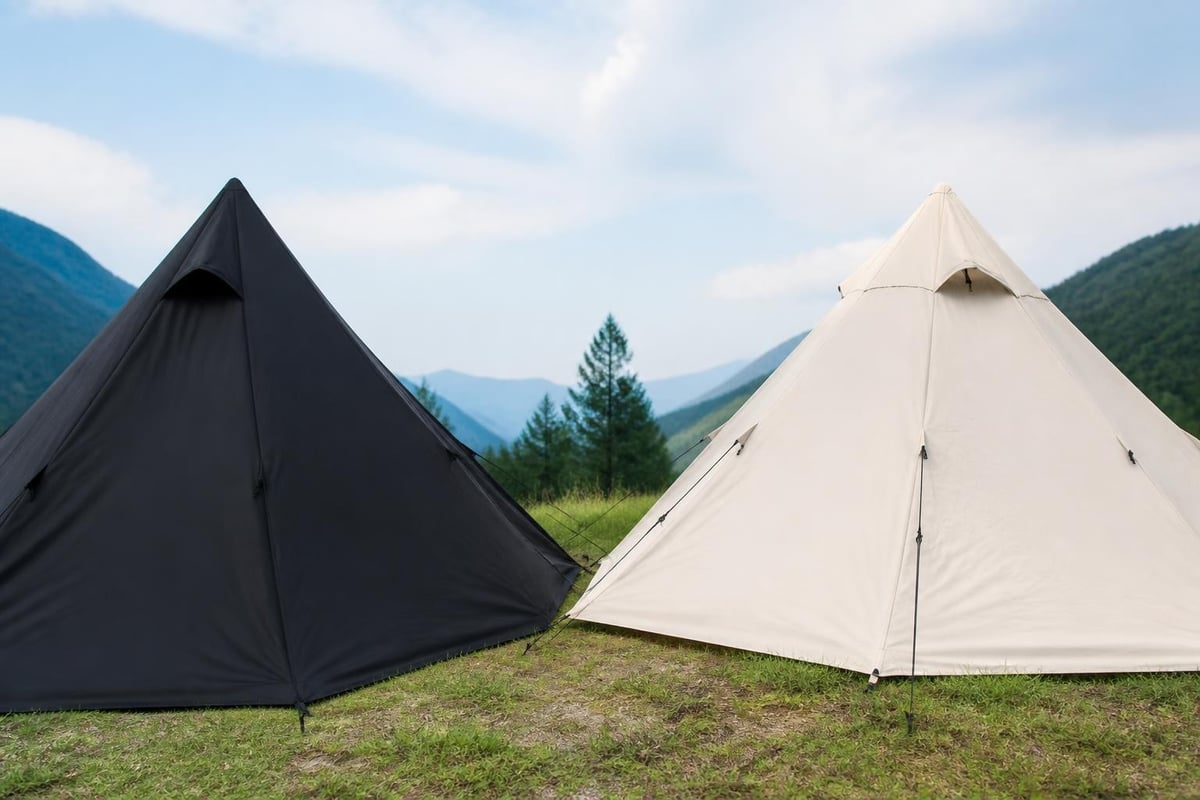
Research on passive daytime radiative cooling materials demonstrates how fabric spectral properties affect heat absorption and emission. While black absorbs more visible light, proper tent design with ventilation mitigates heat buildup while maintaining UV protection benefits.
| Feature | Black Tent | Light-Colored Tent |
|---|---|---|
| Light blocking | Excellent (95%+) | Moderate (60-75%) |
| UV protection | Very high | Moderate to high |
| Heat absorption | Higher | Lower |
| Interior privacy | Maximum | Limited |
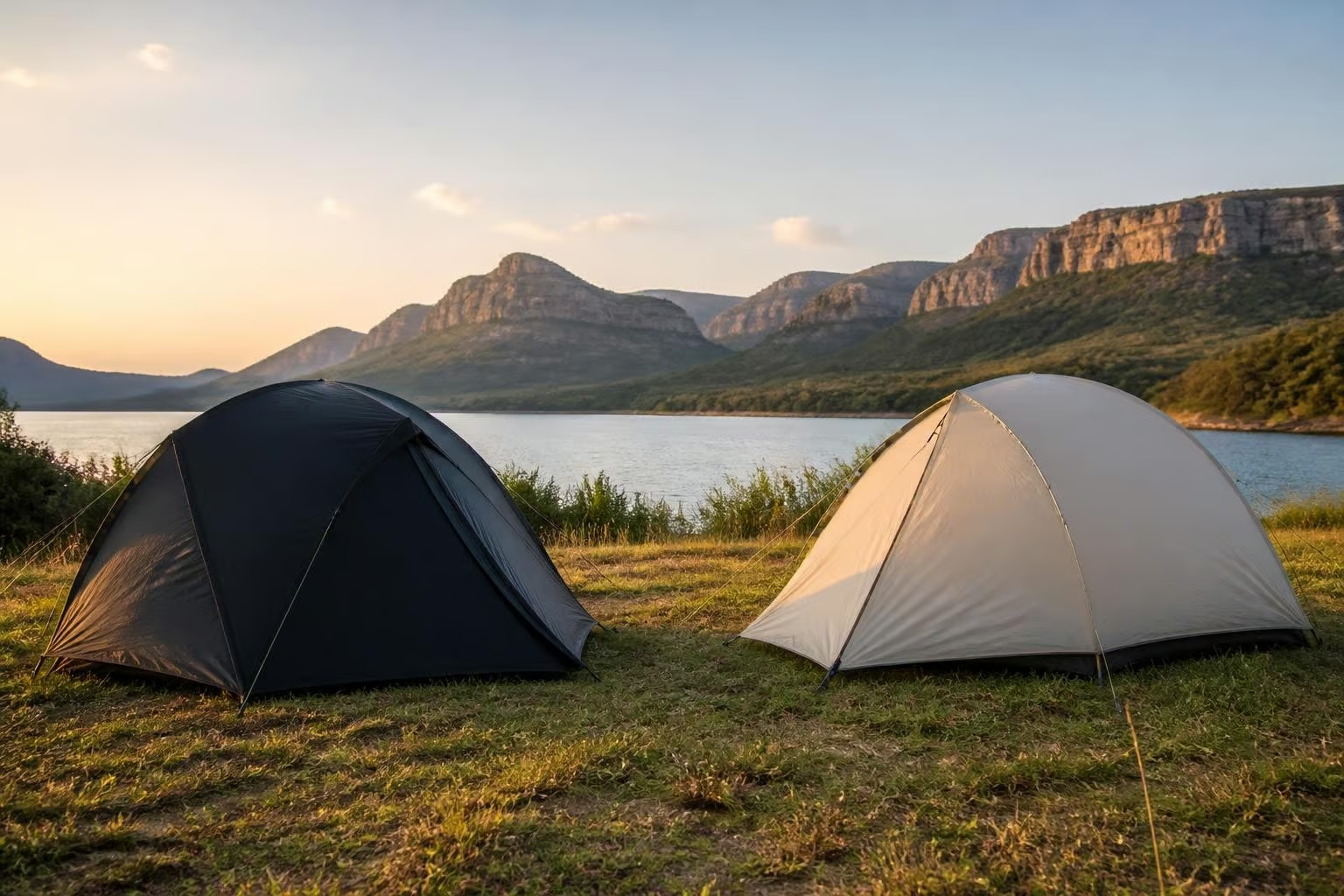
| Visibility from distance | High contrast | Blends with environment |
The primary concern many people have about a black camping tent centers on heat management. Yes, black absorbs more solar radiation than lighter colors, but modern tent engineering and smart camping practices can effectively manage this challenge.
Black fabric absorbs more heat during direct sun exposure. However, the actual interior temperature depends on multiple factors beyond color alone:
A well-designed black camping tent with adequate ventilation can remain surprisingly comfortable even in warm weather. The key lies in choosing models with generous mesh panels, multiple windows, and strategic vent placement that promotes cross-ventilation.
You can employ several techniques to keep your black tent comfortable:
Many experienced campers actually prefer their black camping tent in cooler seasons and shoulder months when the extra heat absorption provides welcome warmth during chilly mornings and evenings. The same property that requires management in summer becomes an asset in spring and fall.
Not all black tents are created equal. The material, construction quality, and design features significantly impact performance, durability, and user experience.
Black tents come in various materials, each with distinct characteristics:
Ripstop canvas remains a popular choice for premium black camping tents. The heavy-duty fabric offers excellent durability, natural breathability, and superior waterproofing when properly treated. Canvas naturally regulates temperature better than synthetic materials, making it ideal for black tents where heat management matters. Ejenti Outdoor’s canvas tent collection showcases how quality ripstop canvas construction delivers reliable performance across South African conditions.
Polyester and nylon represent the most common synthetic options. These lightweight materials pack smaller and weigh less than canvas, making them popular for backpacking. Modern polyester blends include UV inhibitors and water-resistant coatings that enhance longevity.
PVC-coated fabrics provide maximum waterproofing and durability for semi-permanent installations or harsh weather conditions. While heavier than uncoated options, PVC materials excel in heavy rain and extended outdoor exposure.
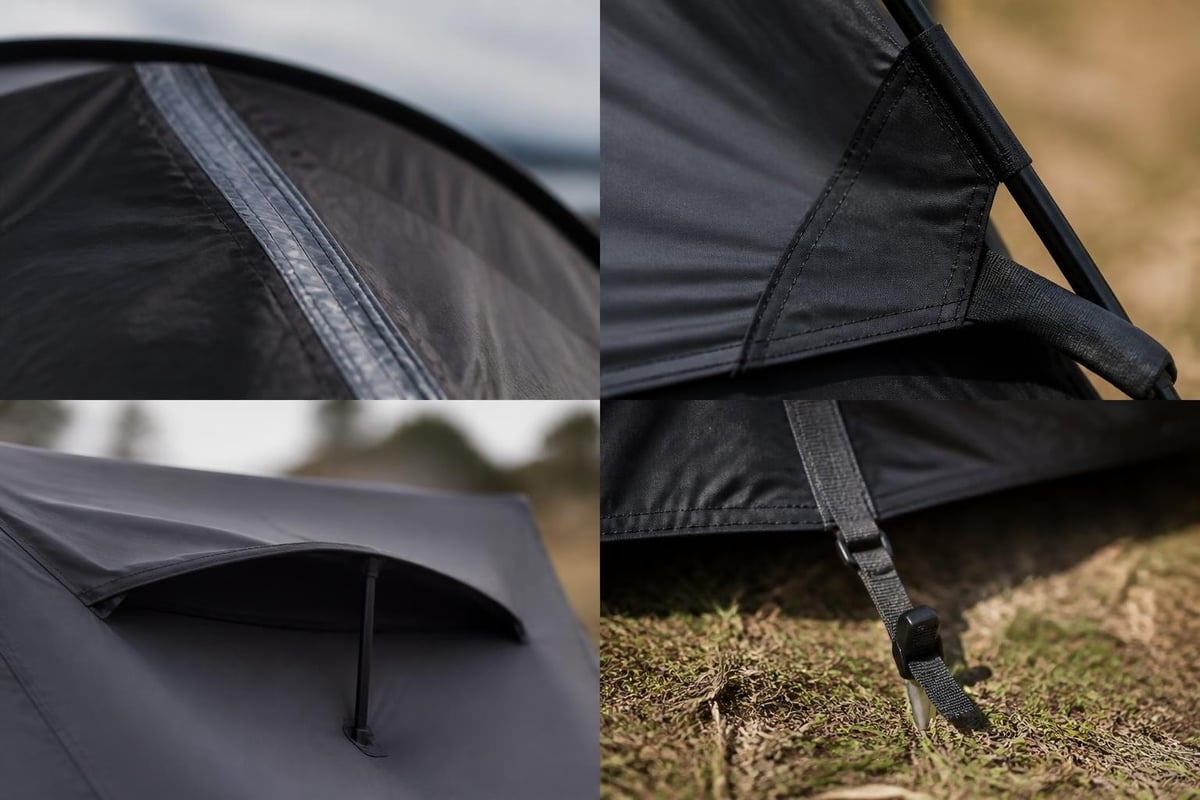
When evaluating a black camping tent, examine these construction details:
The manufacturing standards and quality control processes directly affect how well your tent performs over years of use. Premium manufacturers conduct rigorous testing for waterproofing, wind resistance, and material fatigue.
Your tent choice extends beyond personal comfort to include environmental impact and visual presence in natural settings.
The Leave No Trace principles encourage minimizing visual impact on wilderness areas. A black camping tent creates high visual contrast against most natural landscapes, making it highly visible from significant distances. This visibility has both advantages and drawbacks:
Advantages:
Drawbacks:
Some wilderness areas and national parks have specific regulations regarding tent colors. The National Park Service backcountry camping guidelines note that certain protected areas prefer or require earth-tone tents to minimize visual impact. Before purchasing a black camping tent for backcountry use, verify local regulations at your intended destinations.
The production of black-dyed tent fabrics involves chemical processes with environmental implications. Textile dyeing ranks among the most pollutant-intensive manufacturing processes, particularly for dark colors that require multiple dye applications. Research on environmental impacts of dye-containing wastewater reveals the significant water consumption and chemical discharge associated with fabric dyeing.
The EPA’s guidance on textile processing outlines pollution prevention strategies that responsible manufacturers implement. When selecting a black camping tent, consider manufacturers who demonstrate environmental responsibility through:
Ejenti Outdoor manufactures tents and outdoor fabrics with attention to South African environmental standards, balancing durability requirements with responsible production practices.
Beyond general camping, black tents serve specific purposes where their unique properties provide distinct advantages.
Hunters and wildlife photographers frequently choose black camping tents for their concealment properties. The dark color helps the tent blend into shadows and wooded environments, creating less disturbance to wildlife. When positioned strategically near tree lines or in forested areas, a black tent becomes far less conspicuous than bright-colored alternatives.
For these applications, additional considerations include:
Music festivals and large camping events present unique challenges where a black camping tent offers practical benefits. The superior light-blocking helps festival-goers rest during daylight hours after late-night performances. The dark color also provides better interior privacy, as external light doesn't silhouette occupants or belongings.
Festival campers appreciate these features:
For semi-permanent camping setups, safari camps, or extended outdoor accommodations, a black camping tent can provide both functional and aesthetic benefits. The dark color ages gracefully, showing less visible wear from sun exposure, dirt, and general use compared to lighter tents that quickly appear dingy.
Professional guides and outfitters sometimes prefer black or dark green tents for:
The canvas tent category at Ejenti Outdoor includes durable options designed for South African conditions, suitable for extended deployments where a black camping tent needs to withstand harsh weather while maintaining structural integrity.
Proper care extends the life of any tent, but black fabrics require specific attention to maintain their appearance and performance over years of use.
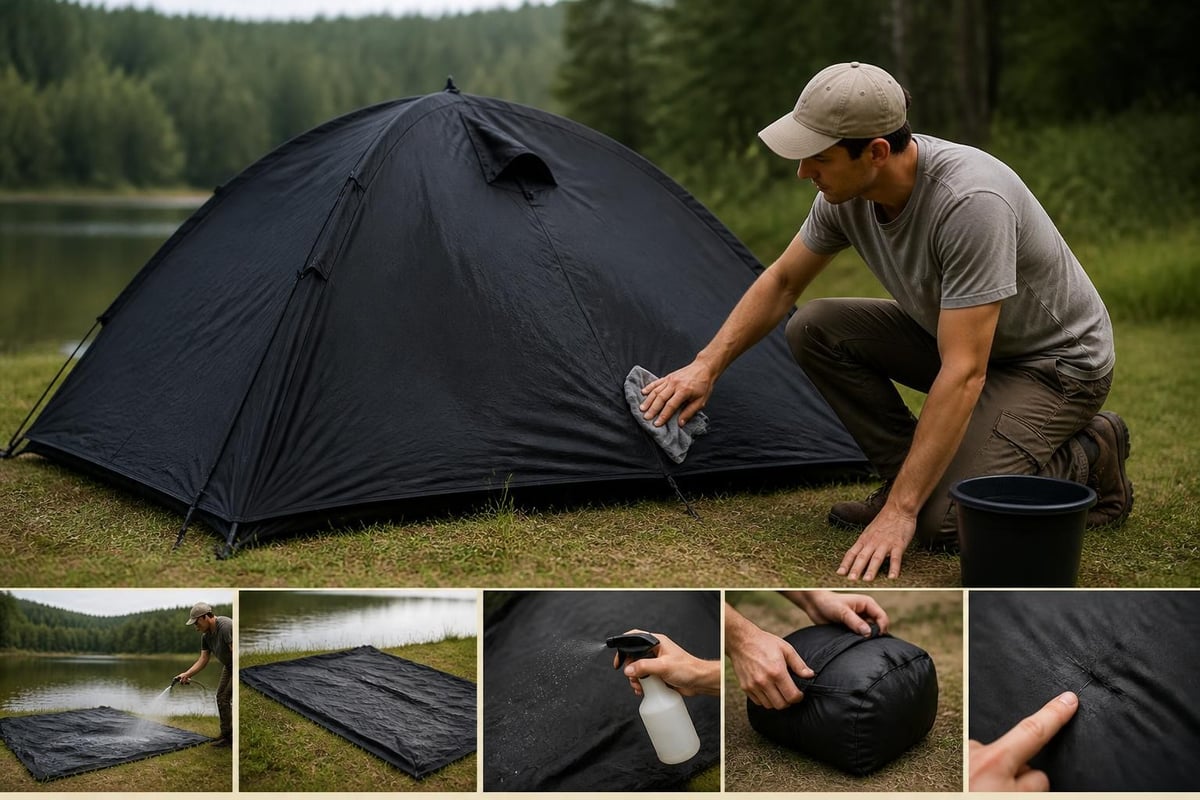
Black tent fabrics show dust and debris less visibly than light colors, but regular cleaning remains essential for fabric longevity:
After each trip:
Periodic deep cleaning:
Storage recommendations:
Over time, even the best black camping tent will require maintenance to restore water resistance and repair minor damage:
| Maintenance Task | Frequency | Method |
|---|---|---|
| Seam sealing inspection | Annually | Check for gaps; reapply seam sealer as needed |
| Waterproof coating renewal | Every 2-3 years | Apply tent-specific waterproofing spray or wash-in treatment |
| Zipper maintenance | Before each season | Clean and lubricate with zipper wax or lubricant |
| Fabric tear repair | As needed | Use repair tape or patch kits designed for tent materials |
| Pole inspection | Annually | Check for cracks, bends, or loose shock cord |
The dark color of black tents makes small repairs less noticeable, as patch materials in black blend seamlessly with the original fabric. This aesthetic advantage means your tent maintains its appearance even after field repairs.
Making the right purchase requires evaluating your specific needs against available options in the black tent market.
Tent capacity ratings indicate how many people can technically fit inside, but real-world comfort requires additional space:
Consider interior height as well. If you're taller than average, prioritize tents with higher peak heights that allow standing or sitting comfortably. Dome and cabin-style black camping tents typically offer more headroom than tunnel or wedge designs.
Tents receive seasonal ratings that indicate their intended use conditions:
Three-season tents (spring, summer, fall):
Four-season tents (including winter):
A black camping tent in a three-season configuration works well for most outdoor enthusiasts in South Africa's moderate climate. The extra heat absorption during cooler months actually benefits campers in highland and winter conditions.
Black camping tents span wide price ranges based on materials, construction, brand reputation, and features:
Budget tier ($50-150):
Mid-range ($150-400):
Premium tier ($400+):
Quality outdoor equipment from Ejenti Outdoor provides excellent value by combining durable construction with practical design features suited to African outdoor conditions.
Before finalizing your black camping tent purchase, verify these key features:
Test the setup process before your first trip. Familiarize yourself with the assembly sequence at home where you can take your time and identify any missing components or unclear instructions.
Maximizing the performance and comfort of your black camping tent often requires complementary accessories and equipment.
Certain accessories specifically enhance the black tent experience:
Reflective tarp or fly: Position a reflective emergency blanket or specialized cooling tarp above your black camping tent during extreme heat. This creates an air gap that dramatically reduces heat absorption while maintaining the tent's light-blocking benefits.
Ground cloth or footprint: Protect the tent floor from punctures, abrasion, and ground moisture. A quality footprint extends tent life significantly and costs far less than replacing a damaged floor.
Additional guy lines and stakes: Black tents often serve in exposed locations for hunting or photography. Extra anchoring points and robust stakes ensure stability in high winds. Ejenti Outdoor’s camping gear selection includes quality tent accessories designed for reliable field performance.
Ventilation fans: Battery-powered tent fans improve air circulation in hot conditions, particularly beneficial for black tents where ventilation matters most.
Strategic tent placement and setup techniques maximize comfort in a black camping tent:
The National Park Service regulations often specify minimum distances from water sources and restrictions on campsite locations. Familiarize yourself with applicable rules before setting up your black camping tent in protected areas.
A black camping tent offers unique advantages for outdoor enthusiasts willing to understand and manage its specific characteristics. The superior light blocking, enhanced privacy, and distinctive aesthetic appeal to many campers, while proper ventilation design and smart site selection address heat management concerns. Whether you're seeking better sleep at festivals, effective concealment for hunting, or simply prefer the bold appearance, a well-chosen black tent can serve you reliably for years of outdoor adventures. For durable outdoor solutions built to handle South African conditions, Ejenti Outdoor provides quality tents, fabrics, and camping gear engineered for performance and longevity in demanding environments.