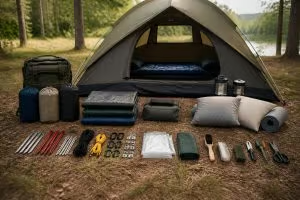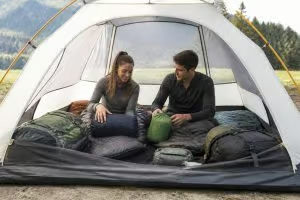

A canvas camping tent represents one of the most time-tested shelter solutions for outdoor enthusiasts, offering a unique blend of breathability, durability, and comfort that synthetic alternatives struggle to match. As camping technology evolves in 2026, canvas tents continue to hold their ground, particularly in harsh climates like South Africa's diverse landscape. Understanding what makes these shelters special helps campers make informed decisions about their outdoor gear investments.
Canvas has served campers reliably for centuries, and modern manufacturing techniques have only enhanced its natural advantages. Unlike synthetic fabrics that trap moisture and heat, a canvas camping tent breathes naturally, creating a more comfortable interior environment during extended trips.
The woven cotton fibers in canvas allow air circulation while blocking direct sunlight. This creates a cooler interior during scorching summer days and provides better insulation when temperatures drop at night.
Key thermal benefits include:
Canvas tents demonstrate particularly strong performance in South Africa's variable climate zones, from the arid Karoo to humid coastal regions. Research on multifunctional tent fabrics shows how modern canvas treatments enhance hydrophobic properties while preserving breathability.
A quality canvas camping tent withstands punishment that would shred lighter materials. The heavy-weave construction resists tears, punctures, and abrasion from branches, rocks, and wildlife encounters.
| Durability Factor | Canvas Performance | Synthetic Comparison |
|---|---|---|
| Tear Resistance | Excellent | Moderate |
| UV Degradation | Minimal with treatment | Significant over time |
| Puncture Resistance | Superior | Variable |
| Lifespan | 15-20+ years | 3-8 years |
| Repairability | Easy field repairs | Often requires replacement |
The fabric weight typically ranges from 300 GSM to 550 GSM, with heavier weights providing enhanced durability for permanent or semi-permanent installations.
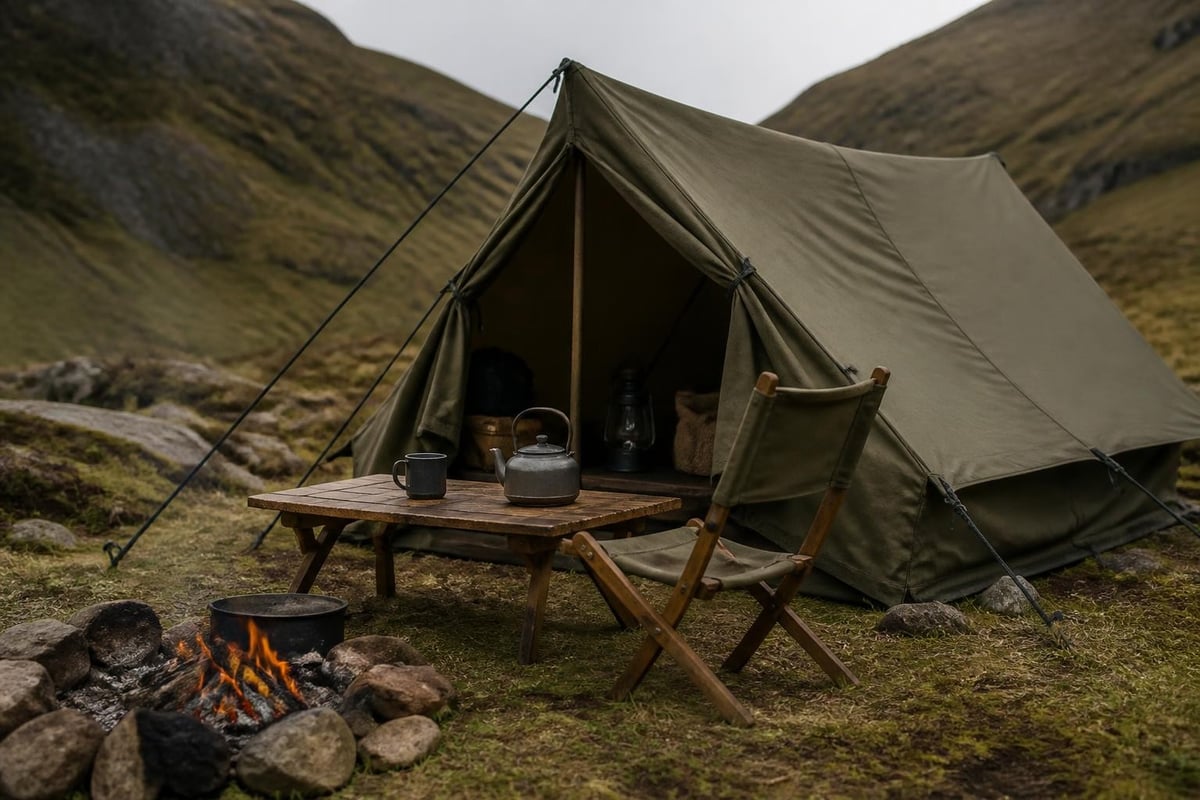
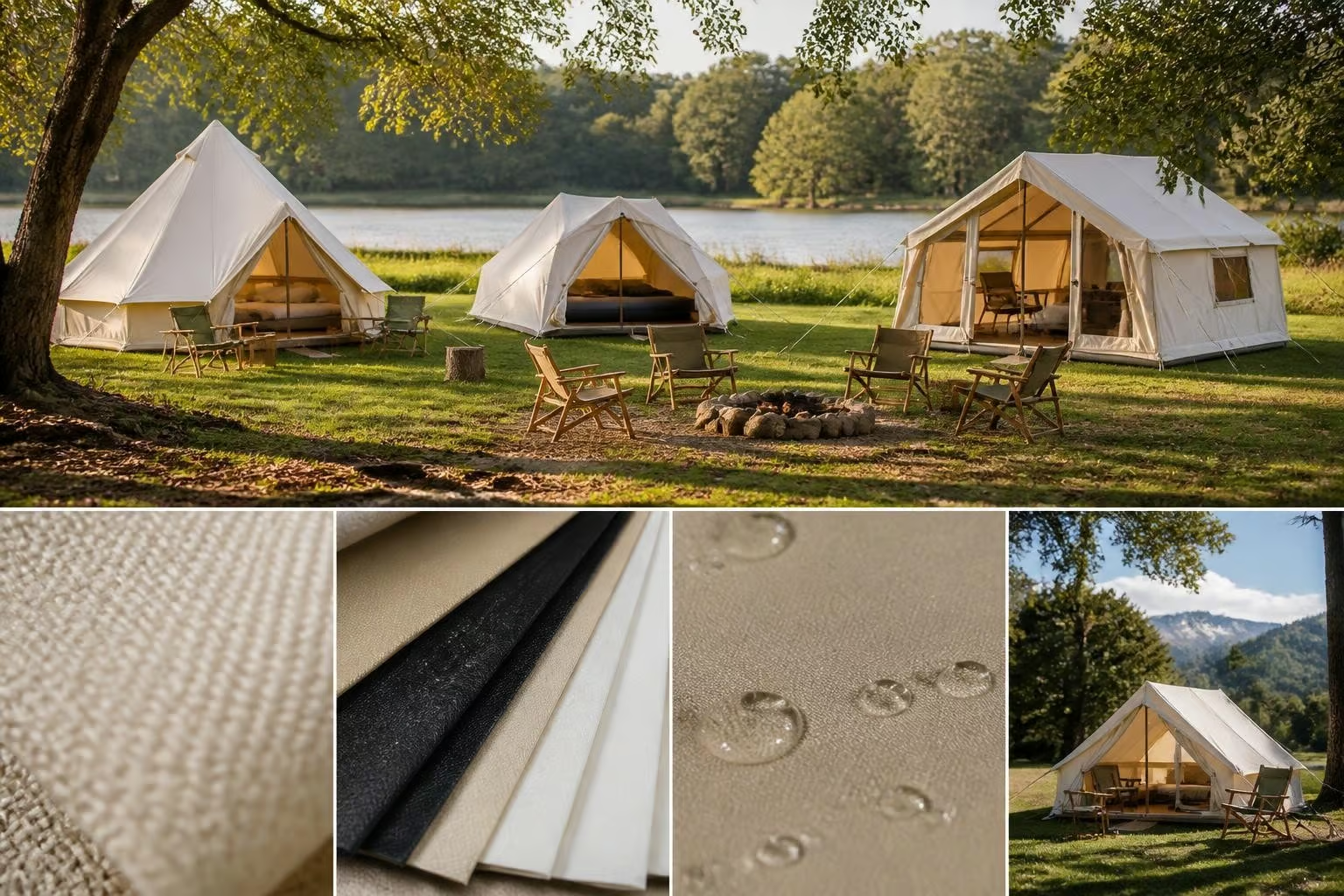
Not all canvas tents serve the same purpose. Your choice depends on camping style, group size, climate conditions, and how frequently you'll set up and break camp.
Canvas camping tents come in several proven designs, each optimized for specific conditions:
Dome tents offer excellent wind resistance and efficient interior space utilization. The curved structure sheds rain effectively and stands up to gusty conditions. For those seeking reliable protection in the African bush, the Premium Heavy-Duty Canvas Dome Tent provides engineered solutions specifically designed for harsh conditions.
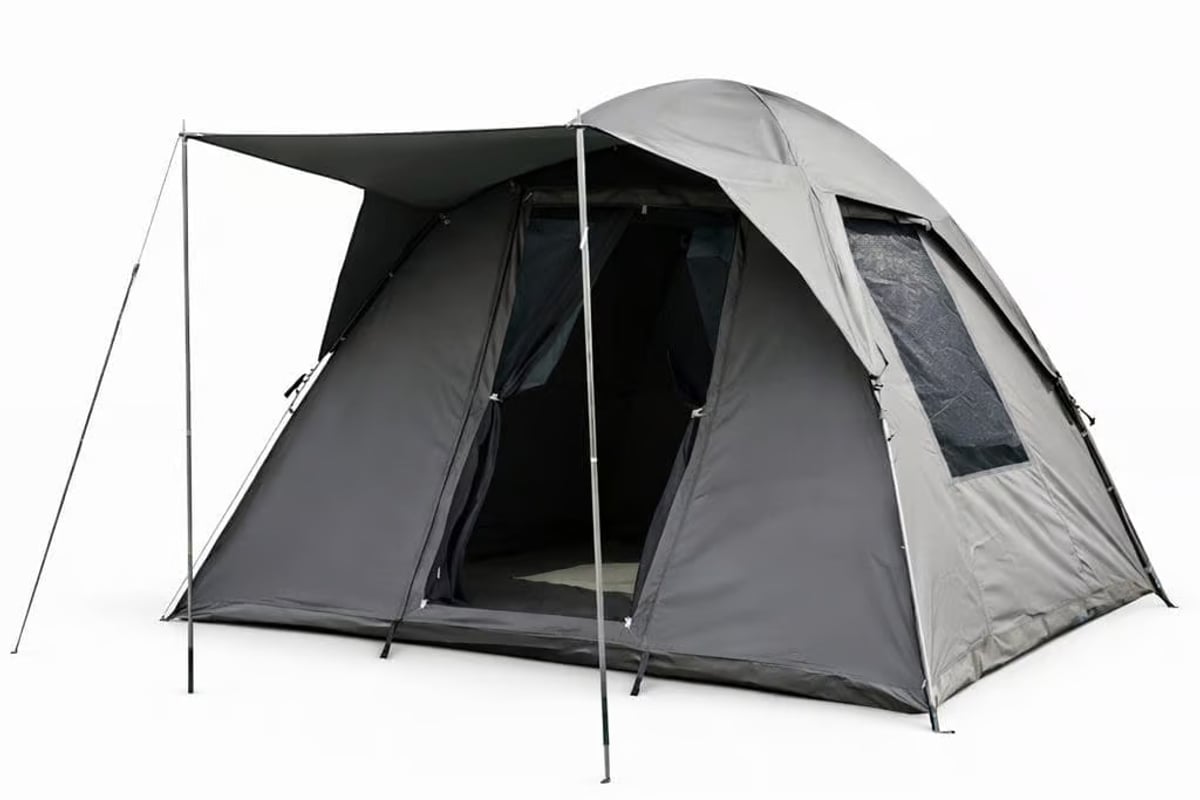
Bell tents provide spacious interiors with a single central pole. Their conical shape creates generous headroom and natural ventilation, making them popular for glamping operations and base camps.
Cabin-style tents maximize vertical walls for better usable space. These work well for family camping or extended stays where interior comfort matters.
Tunnel tents excel in high-wind environments. Their low profile and aerodynamic shape handle exposed campsites better than upright designs.
Manufacturers rate tent capacity by how many sleeping bags fit inside, but real-world comfort requires more space. Plan for gear storage, movement, and livability beyond just sleeping area.
A four-person rated canvas camping tent comfortably accommodates three adults with their equipment, or two adults and two children on a weekend trip.
Correct setup determines how well your tent performs. Canvas forgives some mistakes better than synthetic fabrics, but following proper procedures ensures safety and longevity.
The National Park Service guidance on campsite setup provides authoritative best practices that every canvas tent owner should follow.
Choose level ground free from rocks, roots, and depressions where water might pool. Clear the footprint area of sharp objects that could damage the floor. Position your tent considering:
Mark your tent corners before unrolling to ensure proper orientation. A canvas camping tent weighs significantly more than synthetic alternatives, so having the right position from the start saves effort.
Canvas requires proper tensioning to achieve its waterproof characteristics. When rain wets the fibers, they swell and create a tight, water-resistant barrier.
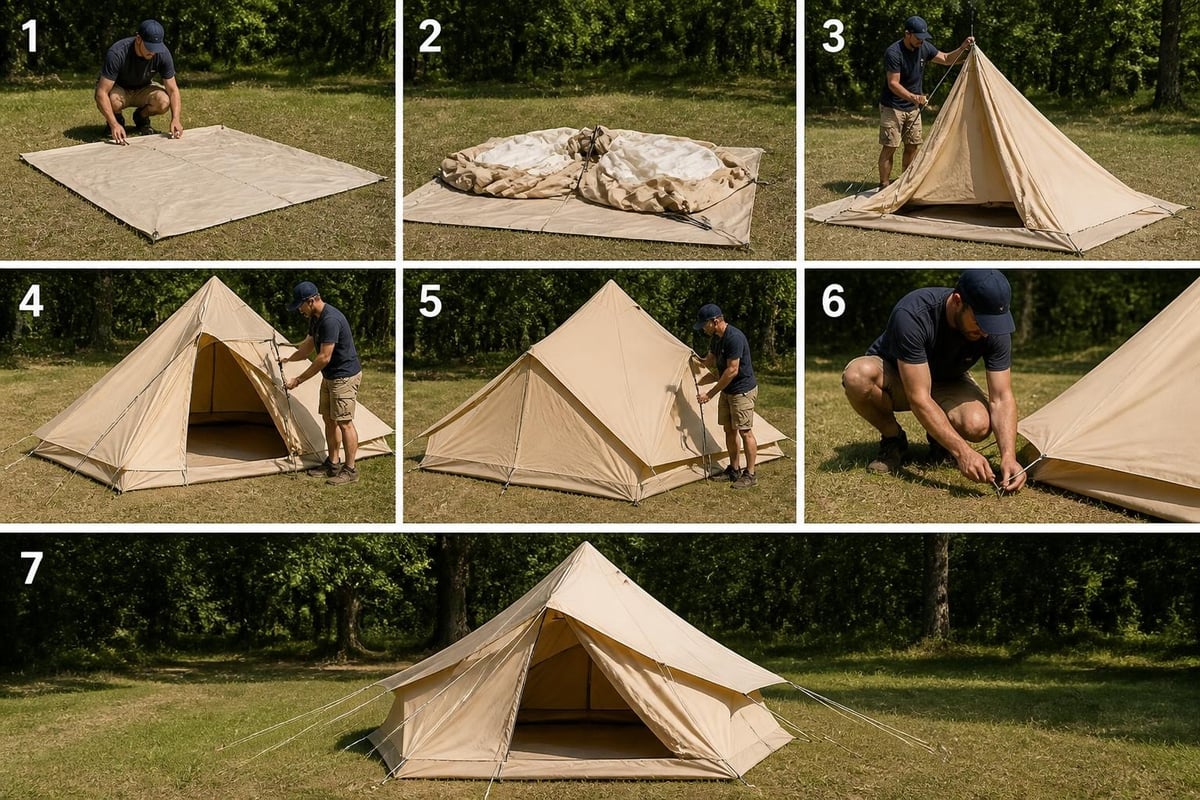
A canvas camping tent relies on fiber swelling and proper treatments to shed water effectively. Understanding these mechanisms helps you maintain peak performance.
Untreated canvas is water-resistant but not waterproof. Modern tents receive factory treatments that enhance performance:
Recent technical studies on tent waterproofing demonstrate how seam construction and fabric treatments interact to determine overall water resistance.
The environmental impact of waterproofing chemicals deserves consideration. Traditional PFAS-based treatments raise health and environmental concerns, leading manufacturers to explore alternatives. The European Environment Agency’s briefing on PFAS in textiles highlights the industry shift toward sustainable waterproofing solutions.
Even factory-treated canvas camping tents require periodic maintenance to maintain water resistance:
Annual inspection checklist:
Apply waterproofing treatments to clean, completely dry canvas. Work in sections, ensuring even coverage without over-saturating the fabric. Most treatments require 24-48 hours of curing time before the tent can handle moisture.
Proper airflow separates comfortable canvas camping tents from damp, stuffy shelters. Managing moisture inside your tent protects both occupants and equipment.
Human respiration and perspiration release significant moisture into the tent interior. A single person exhales approximately one liter of water vapor over eight hours of sleep. Without adequate ventilation, this moisture condenses on cooler interior surfaces.
Canvas naturally wicks moisture vapor through its fibers, but this passive ventilation alone cannot handle the output from multiple occupants. Active ventilation strategies include:
| Climate Condition | Ventilation Approach | Additional Considerations |
|---|---|---|
| Hot and Dry | Maximum ventilation, all vents open | Position tent to catch breezes |
| Hot and Humid | Full cross-ventilation required | Consider elevated tent floor |
| Cold and Dry | Minimal ventilation, crack vents slightly | Vent accumulation zones only |
| Cold and Wet | Balanced ventilation, monitor condensation | Use vapor barriers in sleeping bags |
| High Wind | Leeward vents open, windward closed | Secure all panels against flapping |
South African campers face all these conditions depending on season and location. A versatile canvas camping tent accommodates different ventilation configurations for changing weather.
Canvas camping tents carry specific fire safety considerations, especially for larger installations or commercial use. Understanding regulations protects both people and investments.
Untreated canvas burns readily, making fire-retardant (FR) treatments essential for many applications. The NFPA codes and standards provide the regulatory framework for tent fire safety in the United States, with many countries adopting similar requirements.
FR treatments work through several mechanisms:
Commercial operations, event tents, and installations on public lands typically require certified FR canvas. The National Park Service fire and life-safety requirements outline specific standards for outdoor events and tent use.
Beyond fabric treatments, campers must practice safe fire management:
The Nebraska Forest Service guidance on fires and camping offers practical recommendations for managing fire risks at campsites.
Proper maintenance between trips extends your canvas camping tent's lifespan from years to decades. This investment in care pays dividends in reliability and performance.
Never store a canvas camping tent while damp. Mold and mildew grow rapidly on moist natural fibers, causing permanent damage and health hazards.
Post-trip cleaning process:
For heavily soiled tents, set up the tent and wash sections with a soft brush and mild detergent. Rinse with clean water and allow complete drying in full sun and breeze.
Store canvas camping tents in cool, dry locations with good air circulation. Avoid:
Roll or loosely fold the tent rather than cramming it into a stuff sack. This preserves fabric integrity and reduces permanent creasing. Include moisture-absorbing packets if storing in humid environments.
Canvas camping tents offer a significant advantage in repairability. Unlike synthetic fabrics that require specialized patches and adhesives, canvas accepts traditional sewing repairs.
Minor tears and holes can be field-repaired by cleaning the damaged area, applying a patch with fabric adhesive, and reinforcing with stitching once back home. Larger damage benefits from professional repair or manufacturer service.
Some situations exceed field-repair capabilities:
Manufacturers and specialized tent repair services possess the equipment and expertise to restore heavily damaged canvas camping tents to original specifications.
Understanding how canvas stacks up against synthetic options helps campers make informed choices based on their specific needs and priorities.
| Feature | Canvas | Polyester | Nylon | Polycotton Blend |
|---|---|---|---|---|
| Breathability | Excellent | Poor | Poor | Good |
| Weight | Heavy | Light | Very Light | Moderate |
| Durability | Excellent | Good | Moderate | Good |
| Weather Resistance | Excellent when treated | Excellent | Good | Very Good |
| Pack Size | Large | Compact | Very Compact | Moderate |
| Cost | High | Low-Moderate | Low-Moderate | Moderate-High |
| Lifespan | 15-20+ years | 5-8 years | 3-5 years | 8-12 years |
The canvas camping tent excels in scenarios where base camping, extended stays, or permanent installations justify the extra weight. Backpackers and minimalist campers often choose lighter synthetics for their specific needs.
Canvas offers sustainability advantages as a natural fiber product. Cotton production carries its own environmental footprint, but end-of-life disposal presents fewer challenges than synthetic materials.
The EPA’s guidance on textiles addresses environmental impacts of textile manufacturing and waterproofing treatments. Conscious consumers increasingly seek products that balance performance with ecological responsibility.
Canvas biodegrades naturally, while polyester and nylon persist in landfills for centuries. Repair and restoration options for canvas camping tents further enhance their sustainability profile through extended useful life.
Canvas camping tents serve purposes beyond weekend adventures. Their durability and adaptability suit various professional and commercial applications.
Multi-week expeditions in remote locations demand equipment that performs reliably without resupply opportunities. Canvas camping tents withstand the rigors of professional safari operations, research camps, and exploration projects.
The breathable fabric proves essential in tropical and subtropical environments where synthetic tents become unbearable. Natural temperature regulation and moisture management preserve both comfort and equipment inside the shelter.
Glamping operations, outdoor events, and temporary hospitality setups rely on canvas for its aesthetic appeal and practical benefits. Guests appreciate the comfortable interior environment that canvas provides compared to synthetic alternatives.
Heavy duty marquee tents demonstrate how commercial-grade canvas structures serve events requiring reliable weather protection combined with elegant presentation. Wedding venues, corporate gatherings, and outdoor festivals use canvas structures ranging from intimate shelters to expansive pavilions.
Hunting camps, seasonal research stations, and remote work sites often use canvas camping tents as semi-permanent structures. Their ability to withstand extended exposure to elements makes them cost-effective alternatives to permanent buildings.
Proper foundation preparation and additional guy-line systems allow canvas tents to remain standing for months or even years in fixed locations. Regular maintenance and seasonal inspections ensure continued performance throughout their service life.
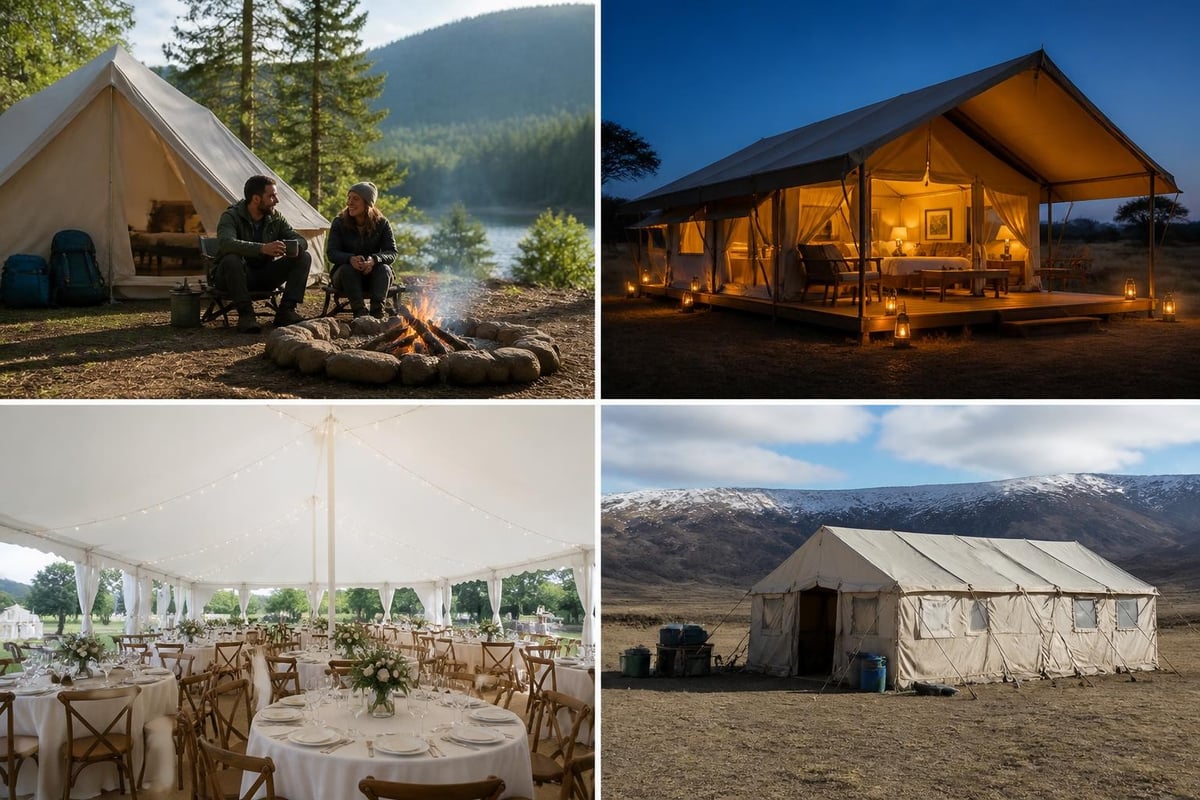
A canvas camping tent becomes more versatile and comfortable with appropriate accessories tailored to your camping style.
Quality groundsheets protect tent floors from abrasion and ground moisture. Options include:
Groundsheets should be slightly smaller than the tent footprint to prevent water pooling between layers during rain.
Proper tensioning keeps canvas performing optimally. Upgrade standard guy lines with:
Maximize livable space with organizational accessories:
Canvas camping tents offer unmatched durability, comfort, and versatility for outdoor enthusiasts who value quality over convenience. From weekend family trips to extended safari expeditions, these time-tested shelters provide reliable protection across South Africa's diverse climates and terrains. Whether you're outfitting a permanent base camp or seeking dependable gear for your next adventure, Ejenti Outdoor provides locally manufactured canvas tents and outdoor solutions engineered specifically for African conditions. Explore their range of heavy-duty canvas shelters, quality outdoor fabrics, and professional-grade camping equipment designed to perform when it matters most.