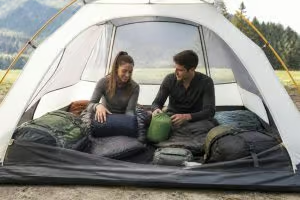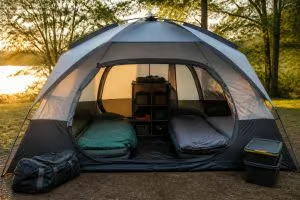

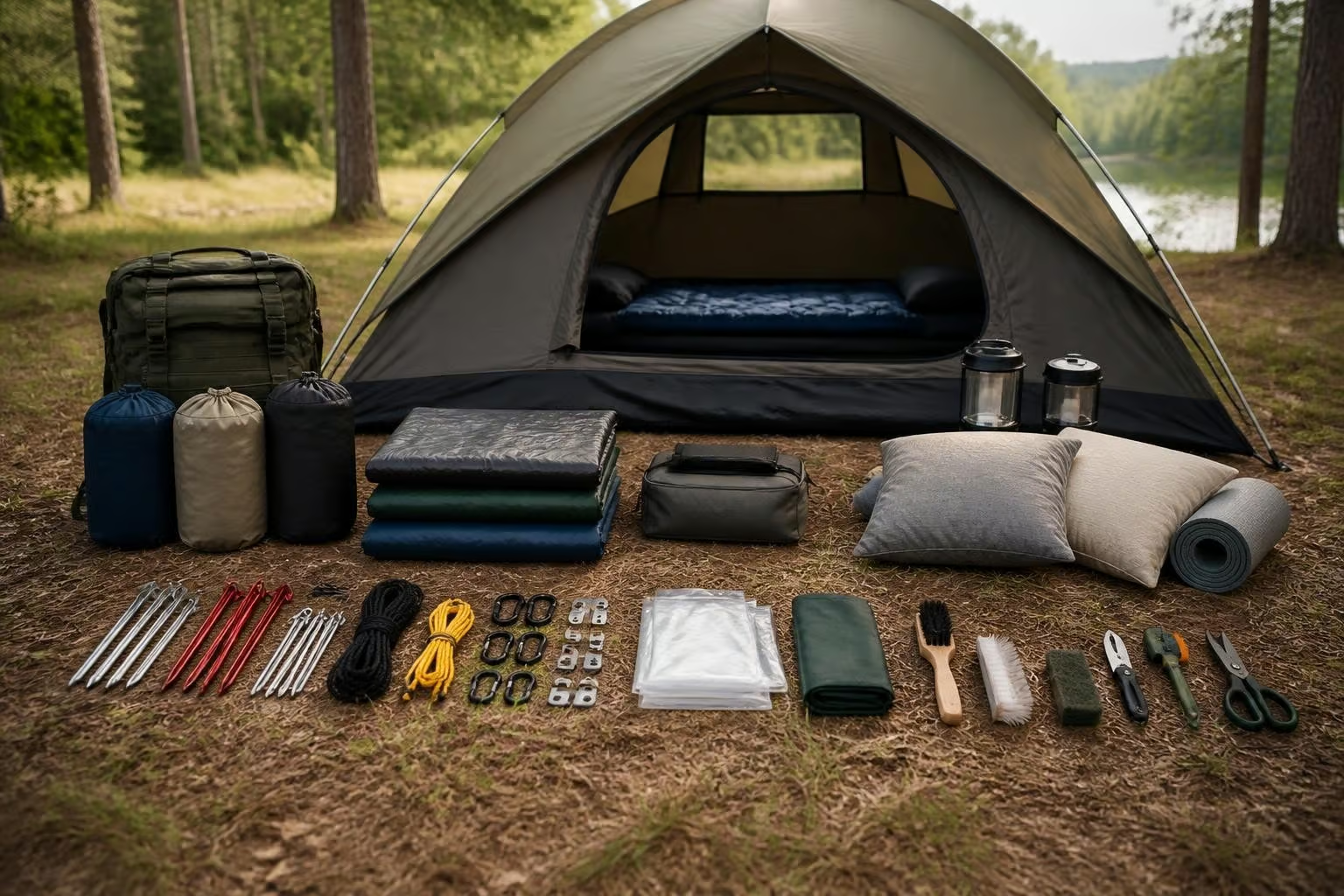
Setting up camp involves far more than just pitching your tent. The right tent accessories transform a basic shelter into a comfortable, secure, and weather-ready home away from home. Whether you're planning a weekend getaway in the Drakensberg or an extended bush camping adventure, understanding which accessories matter most can make the difference between a memorable trip and a frustrating experience. This comprehensive guide walks you through the essential tent accessories every outdoor enthusiast should consider, helping you build a complete camping kit that performs reliably in South African conditions.
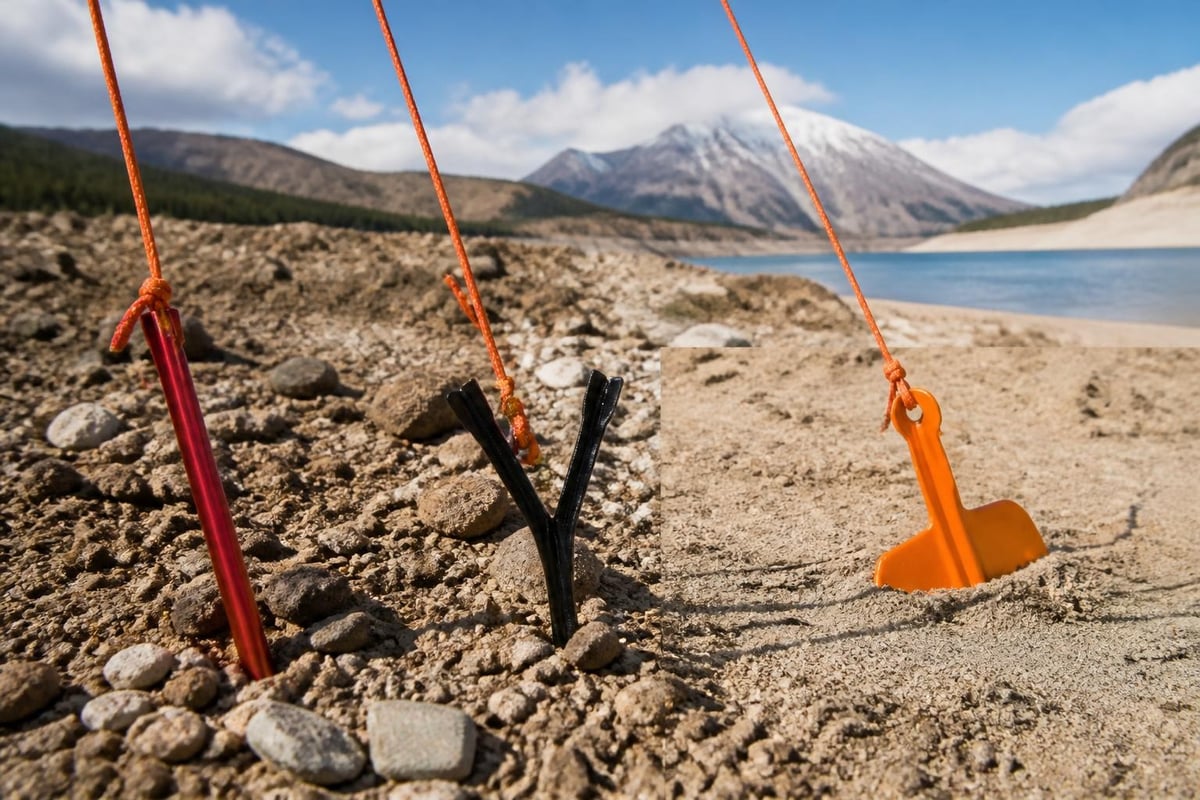
The foundation of any stable tent setup begins with proper anchoring. Standard aluminum stakes work well in soft soil, but South Africa's diverse terrain demands a more versatile approach. Different ground conditions require different solutions.
Key stake types for various terrains:
Heavy-duty metal stakes outperform the lightweight pegs that come standard with most tents. Investing in quality anchoring hardware ensures your shelter stays put during unexpected wind gusts or summer thunderstorms. The National Park Service gear checklist emphasizes that proper tent stakes are non-negotiable for safe campsite setup.
Guy lines add critical stability by distributing wind loads across multiple anchor points. Reflective guy lines enhance safety by preventing nighttime trips, while adjustable tensioners let you fine-tune your tent's pitch throughout changing weather conditions.
Quality guy line systems include:
A tent footprint serves as your first line of defense against ground moisture, sharp rocks, and abrasive soil. This protective layer extends your tent floor's lifespan significantly while adding an extra moisture barrier.
| Footprint Material | Durability | Weight | Best Use |
|---|---|---|---|
| Heavy-duty tarpaulin | Excellent | Heavy | Semi-permanent camps |
| Oxford fabric | Very good | Medium | General camping |
| Tyvek | Good | Light | Backpacking |
| Polycryo | Fair | Very light | Ultralight setups |
Position your footprint slightly smaller than your tent floor to prevent water pooling between layers during rain. Many campers overlook this detail, creating an unintended water collection system that defeats the footprint's purpose.
While most quality tents include a rain fly, carrying an additional tarp multiplies your shelter options. A well-positioned tarp creates a dry vestibule for gear storage, cooking space, or social areas during multi-day rain events.
Tarp configurations extend beyond simple overhead coverage. The lean-to, A-frame, and diamond setups each offer specific advantages depending on wind direction, rain intensity, and available anchor points. Learning multiple pitching methods before your trip saves frustration when weather turns challenging.
Adequate tent lighting transforms evening hours from frustrating fumbles to comfortable relaxation. Modern LED technology delivers impressive runtime on minimal battery consumption.
Recommended lighting accessories:
Consumer Reports’ camping gear guide highlights energy-efficient lighting as one of the top improvements campers can make for extended comfort. Solar-rechargeable options reduce battery waste and ensure consistent power availability.
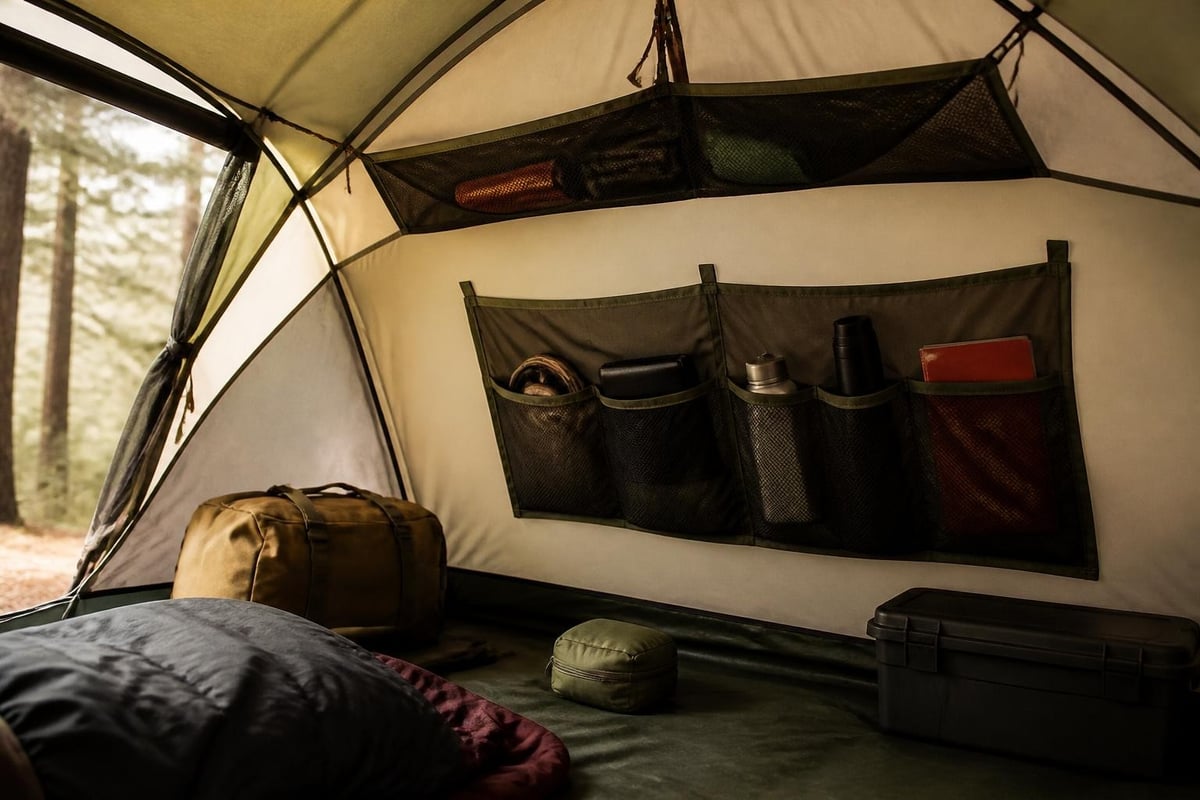
Tent pockets, gear lofts, and hanging organizers prevent the chaotic jumble that accumulates when multiple people share confined spaces. Strategic organization keeps essentials accessible while maintaining floor space for sleeping and movement.
Mesh gear lofts hang from ceiling loops, providing overhead storage for clothing, headlamps, and small items you need within arm's reach. Doorway organizers with multiple pockets accommodate shoes, water bottles, and frequently accessed gear without cluttering your living space.
Proper airflow prevents condensation buildup that leaves sleeping bags damp and creates uncomfortable humidity. Vent covers allow air circulation even during light rain, while quality window screens keep insects out without blocking cooling breezes.
Storm vent covers feature angled designs that channel rain away while maintaining airflow. This seemingly simple accessory prevents the common problem of closing all vents during storms and waking to condensation-soaked tent walls.
Battery-powered tent fans provide significant comfort during hot weather camping. Clip-on models attach to tent peaks or poles, circulating air throughout your shelter and accelerating moisture evaporation.
For car camping setups, small 12-volt fans powered by portable battery banks deliver stronger airflow. Position fans to draw hot air out rather than blow cool air in for maximum efficiency. This creates negative pressure that pulls fresh air through lower vents naturally.
Tent-specific repair kits deserve a permanent spot in your camping gear. These compact pouches contain the essential materials needed for field repairs that keep your shelter functional until you return home.
Essential repair kit components:
Popular Mechanics’ tent repair guide provides detailed instructions for addressing common failures, from zipper jams to pole breaks. Understanding basic repairs before problems occur reduces stress and prevents minor issues from ending trips early.
When camping in areas that permit fires or using cooking equipment near tents, fire safety accessories become critical. Flame-resistant ground mats protect tent floors from sparks, while proper spacing between heat sources and shelter walls prevents accidents.
The National Park Service fire safety requirements outline specific clearances and precautions for tent use near open flames. Even if regulations don't mandate these practices at your chosen campsite, following professional safety standards protects your investment and ensures everyone's wellbeing.
Securing tent accessories is just as important as choosing quality products. The various hooks, fasteners, and connection points you select determine how efficiently you can set up and adjust your complete shelter system.
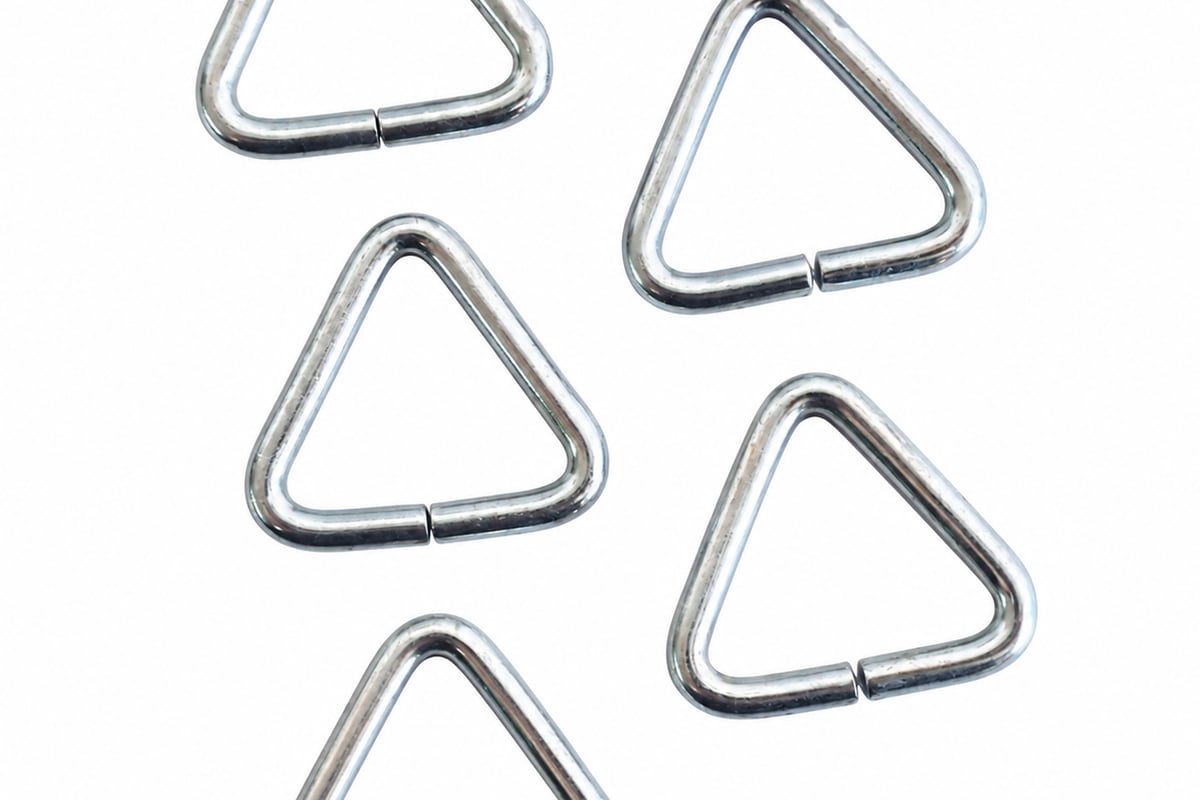
When looking to reinforce your tent setup or repair worn attachment points, quality metal fasteners make all the difference. Heavy Duty Tent Hooks & Metal Fasteners provide reliable connection options whether you're securing guy lines, hanging gear lofts, or creating custom tarp configurations.
Small carabiners offer versatile connection points for hanging items, securing loose cords, or creating attachment points where none exist. Choose models rated for outdoor use rather than decorative key-chain versions.
Adjustable straps with quick-release buckles simplify setup and breakdown while providing strong, secure connections. These components work particularly well for:
Quality strap systems feature UV-resistant webbing that withstands prolonged sun exposure without degrading. South Africa's intense sunlight accelerates material breakdown, making durability specifications particularly important when selecting tent accessories.
Organizing tent accessories into dedicated storage bags prevents loss and simplifies packing. Color-coded stuff sacks help identify contents quickly, while compression bags reduce volume for efficient vehicle loading.
| Accessory Category | Recommended Storage | Size Guideline |
|---|---|---|
| Stakes and pegs | Heavy-duty drawstring bag | 2-3 liter |
| Guy lines and cord | Mesh stuff sack | 1-2 liter |
| Repair and tools | Zippered pouch | 0.5-1 liter |
| Lighting equipment | Padded electronics case | 1-2 liter |
Waterproof dry bags protect electronics, batteries, and items sensitive to moisture. Even if your tent remains dry, condensation and humidity can damage unprotected gear during multi-day trips.
For car camping scenarios, rigid storage containers protect accessories from crushing during transport. Action packers with gasket seals keep contents dry and dust-free while providing organizational compartments.
Stackable bins maximize vehicle space efficiency. Label each container clearly and develop a consistent packing system so you know exactly which bin contains each category of tent accessories. This organization pays dividends when setting up camp after dark or searching for specific items during trips.
Regular maintenance extends the functional life of both tents and their accessories. Dedicated cleaning products designed for tent fabrics remove dirt and organic matter without damaging waterproof coatings or UV treatments.
Basic tent maintenance kit includes:
Never store tents or canvas accessories while damp. Mold and mildew develop rapidly in humid conditions, permanently damaging fabrics and creating health hazards. If you must pack wet gear during rainy conditions, unpack and dry everything within 24 hours of returning home.
Even factory-sealed seams benefit from periodic reapplication of seam sealer. Water finds the path of least resistance, and seams represent the most common entry point for moisture infiltration.
Seattle Fabrics’ technical guide explains proper seam sealing techniques, including surface preparation, application methods, and curing times. This preventive maintenance costs far less than replacing damaged gear or enduring wet camping experiences.
Waterproofing treatments for tent floors and rain flys restore water repellency after extended use. Apply these products before the camping season rather than discovering degraded performance in the field.
Extended trips require thoughtful power management for devices and rechargeable accessories. Solar panels, portable battery banks, and charging organizers keep essential electronics functional throughout your stay.
Solar chargers work best when positioned for maximum sun exposure rather than kept inside tents where UV-filtering fabrics reduce efficiency. Extend charging cables long enough to place panels in optimal locations while keeping sensitive electronics protected in shade.
Beyond basic functionality, certain tent accessories significantly improve quality of life during extended camping:
The Leave No Trace principles remind campers to select accessories and setup methods that minimize environmental impact. Choose reusable, durable products over disposable alternatives, and position tent accessories to avoid damaging vegetation or creating erosion.
Budget constraints mean most campers build their accessory collections gradually. Focus first on items that address safety, basic comfort, and gear protection before expanding into luxury additions.
Priority tier system:
This staged approach lets you test equipment and identify personal preferences before investing in comprehensive accessory suites. Different camping styles demand different accessories-a weekend car camper's needs differ dramatically from a long-distance backpacker's requirements.
South African camping seasons present distinct challenges requiring specific tent accessories. Summer demands enhanced ventilation and sun protection, while winter camping prioritizes insulation and weatherproofing.
Adapt your accessory selection based on anticipated conditions. A shade tarp matters more than thermal ground mats during December beach camping, while May mountain excursions reverse these priorities. Versatile, multi-purpose accessories deliver better value than single-function items with limited seasonal utility.
Not all tent accessories justify premium pricing. Items experiencing high stress or exposure to elements warrant quality investments, while protected, low-stress components can utilize more economical alternatives.
Invest in quality for:
Economy options work well for:
Ejenti Outdoor manufactures products specifically engineered for South African conditions, understanding the unique demands of local terrain, weather patterns, and usage scenarios. This regional expertise matters when selecting tent accessories that must perform reliably across diverse environments.
Quality tent accessories share common characteristics regardless of specific function. Reinforced stitching, UV-resistant materials, corrosion-proof hardware, and manufacturer warranties signal products designed for durability rather than single-season disposability.
Examine construction details before purchasing. Double-stitched seams, bar-tacked stress points, and quality zippers indicate attention to longevity. Premium materials cost more initially but deliver superior performance and extended service life that offset higher upfront investment.
Vehicle-accessible campsites allow heavier, more comprehensive accessory collections since weight and volume constraints relax significantly. Backpackers must scrutinize every gram, selecting ultralight alternatives and multi-purpose items that justify their pack space.
Car campers benefit from rigid storage containers, larger lighting systems, comfortable furniture, and extensive organizational tools. Backpackers prioritize compact, lightweight essentials that address critical needs without excess.
Camping with children introduces additional accessory considerations. Enhanced lighting, extra organizational systems, entertainment options, and comfort items transform challenging family trips into enjoyable experiences that build lasting outdoor appreciation.
Child-friendly tent accessories include:
Teaching children proper gear care and setup responsibilities develops outdoor skills while distributing workload across family members. Age-appropriate tasks might include organizing personal gear pouches or helping position ground sheets.
Selecting appropriate tent accessories elevates your camping experience from basic shelter to comfortable outdoor living. The investment in quality stakes, protection systems, organizational tools, and maintenance supplies pays dividends through enhanced safety, improved comfort, and extended gear lifespan. Whether you're outfitting a basic weekend setup or building a comprehensive expedition kit, Ejenti Outdoor provides durable, locally manufactured solutions designed specifically for South African outdoor conditions. Visit their range today to discover how proper tent accessories transform your next camping adventure.