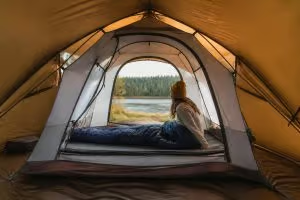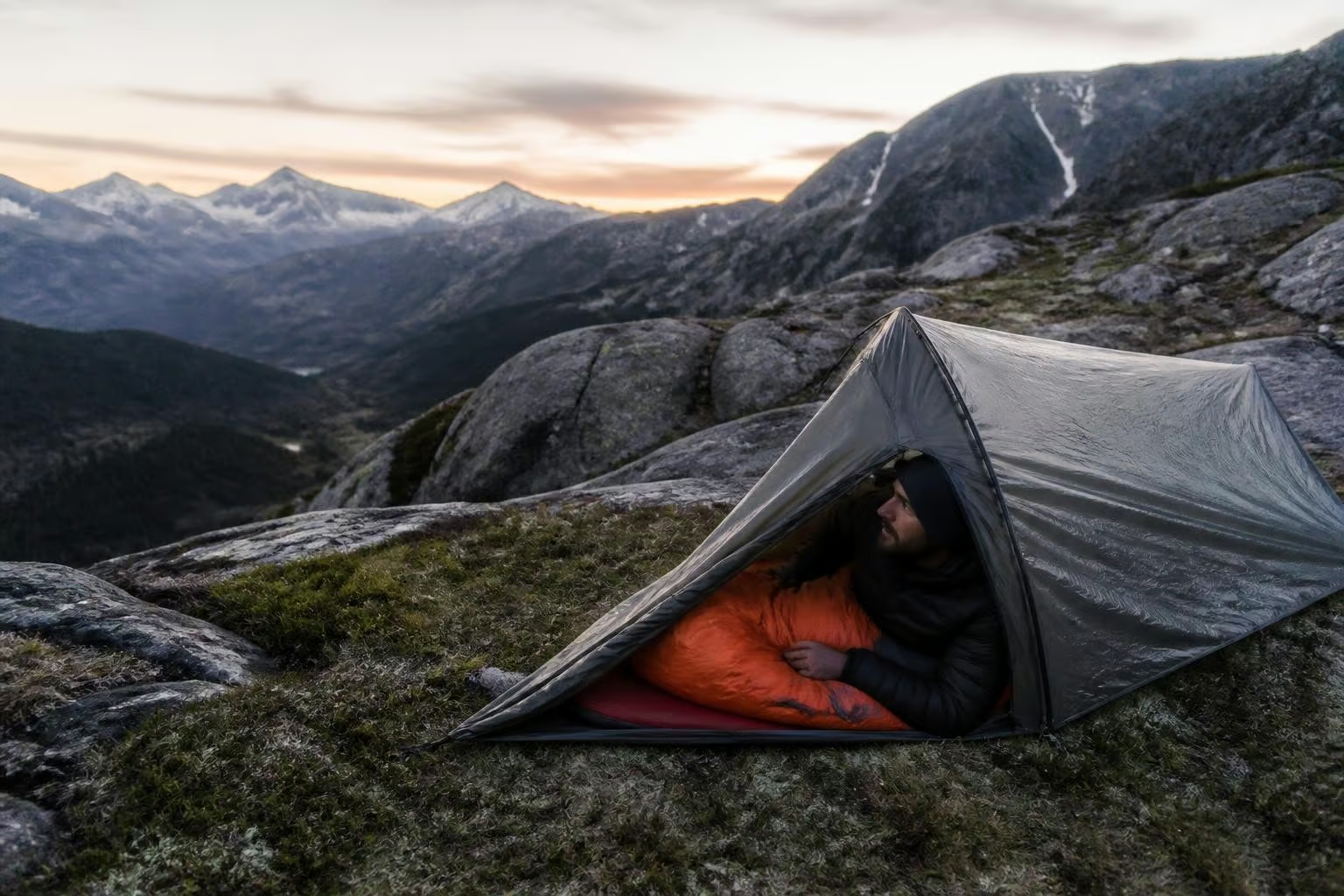
The bag tent represents one of the most innovative solutions in emergency shelter design, merging the portability of a sleeping bag with the weather protection of a tent. This ultralight shelter option has evolved from military surplus bivouac sacks into sophisticated outdoor gear that serious backpackers, mountaineers, and adventure travelers rely on when every gram counts. Whether you're planning a fast-and-light alpine ascent or need a backup shelter for unexpected weather, understanding the capabilities and limitations of a bag tent can make the difference between a safe night and a dangerous situation.
A bag tent is essentially a weatherproof shelter that encloses the sleeper and their sleeping bag in a single, streamlined package. Unlike traditional tents that create separate living space, this design hugs close to the body, minimizing weight and pack volume while maximizing thermal efficiency.
The concept originated from military bivouac sacks used in field operations, where soldiers needed protection from rain and wind without the weight or setup time of a full tent. Modern designs have refined this basic idea into specialized outdoor equipment that balances breathability, waterproofing, and durability.
Most bag tent systems incorporate several key elements that distinguish them from ordinary bivvy sacks or sleeping bags:
The National Park Service’s camping guidance recognizes emergency bivy-style shelters as part of the Ten Essentials for backcountry travel, underscoring their importance in outdoor safety planning.
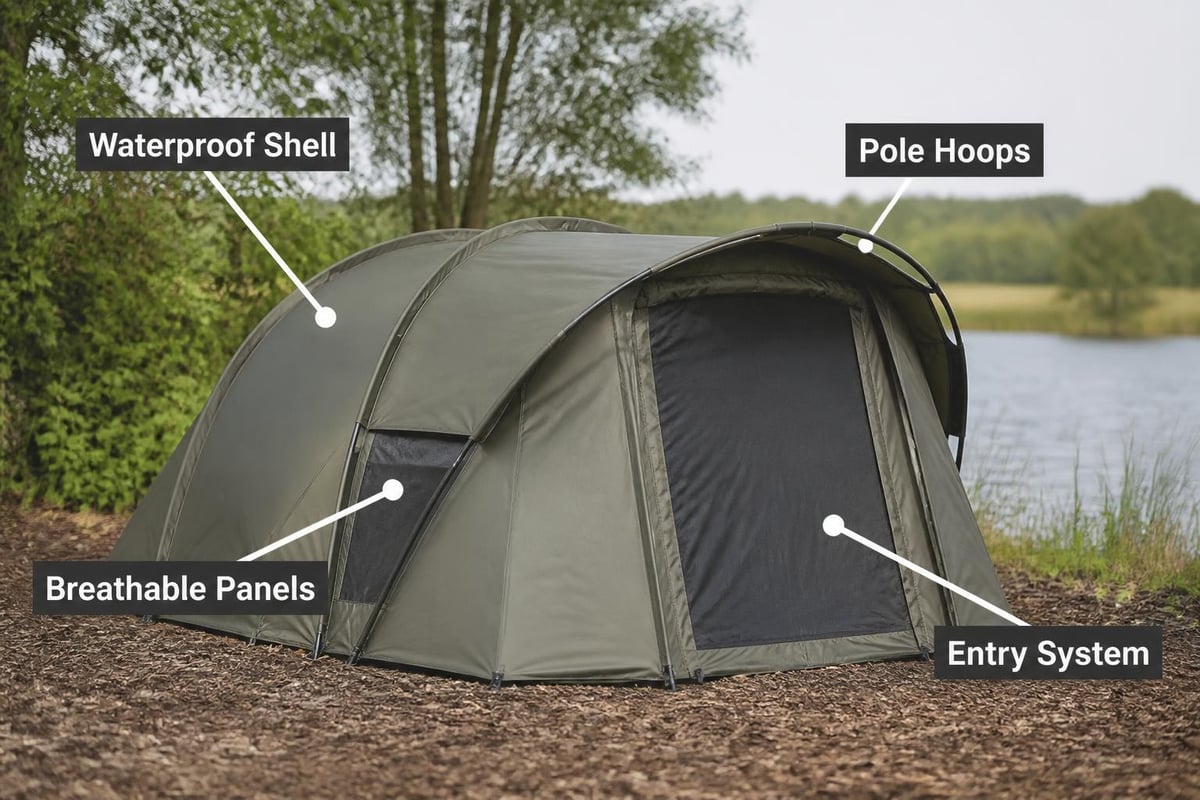
The performance of any bag tent depends heavily on the fabrics and construction methods used. Manufacturers must balance competing demands: complete waterproofing versus breathability, durability versus weight reduction, and packability versus comfort.
Traditional bag tent designs relied on coated nylon taffeta with taped seams. These fabrics typically weigh between 30-70 denier and incorporate polyurethane or silicone coatings for waterproofing. While effective, they create condensation challenges during extended use.
Advanced materials have transformed the category. Dyneema® Composite Fabric (DCF), formerly known as Cuben Fiber, offers exceptional strength-to-weight ratios and inherent waterproofing. A bag tent constructed from DCF can weigh as little as 200-300 grams while maintaining durability for multi-season use.
| Material Type | Weight Range | Waterproof Rating | Breathability | Durability |
|---|---|---|---|---|
| Coated Nylon | Medium | 3,000-10,000mm | Low | Good |
| Silnylon | Light | 3,000-5,000mm | Moderate | Fair |
| Dyneema (DCF) | Very Light | 20,000mm+ | Low | Excellent |
| eVent/Gore-Tex | Medium-Heavy | 20,000mm+ | High | Excellent |
The floor section typically uses heavier-weight fabric (70-210 denier) to resist punctures from rocks, roots, and rough ground. Some designs incorporate ripstop patterns that prevent small tears from spreading, a feature common in professional outdoor fabrics.
Condensation management remains the primary technical challenge in bag tent design. When you exhale moisture-laden breath inside a waterproof enclosure, that vapor condenses on cold surfaces, potentially soaking your sleeping bag from the inside.
Modern solutions include:
The Backpacker magazine guide to tent and bivy basics emphasizes proper ventilation management as critical to successful bivy use, recommending leaving vents open even during light precipitation.
Unlike conventional tents that require clear ground and multiple stakes, a bag tent adapts to constrained spaces and difficult terrain. This flexibility makes it valuable in specific contexts where traditional shelter systems fail.
Alpine and mountaineering environments represent the ideal use case. When establishing camps on narrow ledges, snowfields, or exposed ridges, the compact footprint and minimal anchoring requirements of a bag tent provide solutions that larger tents cannot match.
Ultralight thru-hiking on established trails benefits from weight savings. A complete bag tent system (including stakes and poles) typically weighs 400-800 grams compared to 1,200-2,000 grams for ultralight one-person tents.
Emergency backup shelter for day hikers or trail runners offers insurance against unexpected overnight stays. A compressed bag tent occupies less space than a water bottle, making it practical to carry "just in case."
Bikepacking and adventure cycling applications value the quick setup and minimal space requirements when camping in non-designated areas or urban environments.
The setup process for most bag tent designs follows these basic steps:
Total setup time rarely exceeds three minutes with practice, and some minimalist designs require no setup at all beyond unrolling the bag.
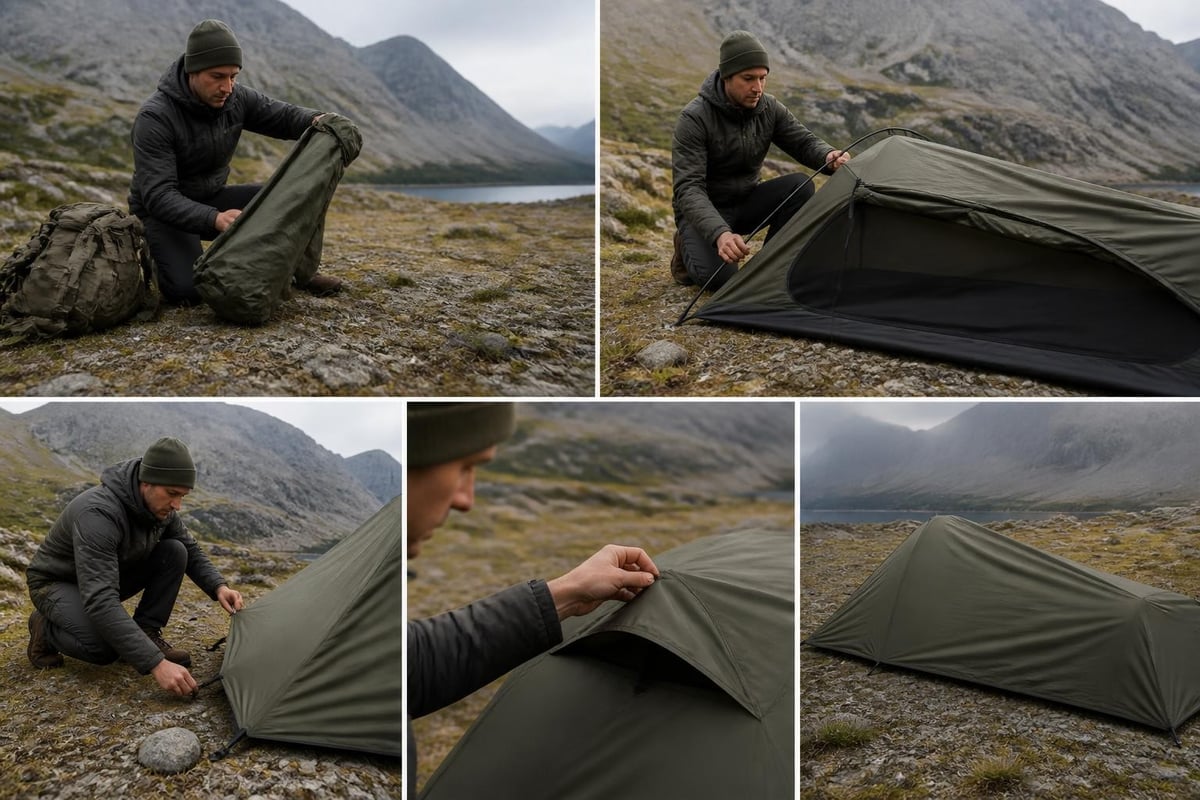
For outdoor enthusiasts tracking every gram, the bag tent category offers compelling numbers. Understanding the actual system weight versus advertised "minimum weight" helps set realistic expectations.
Manufacturers often advertise only the shelter fabric weight, excluding essential components. A complete bag tent kit includes:
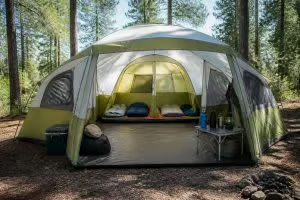
Total system weight typically ranges from 320 grams for minimalist DCF designs to 900 grams for four-season mountaineering models with full breathable panels. By comparison, inside a camping tent reveals the additional space and comfort traditional designs provide, but at significantly higher weight.
A compressed bag tent typically occupies 1.5-3 liters of pack volume, approximately the size of a 750ml water bottle. This compact footprint allows it to fit into small gaps in your pack or attach externally without creating snag points.
The cylindrical or rectangular compression shape differs from the bulkier, irregular form of traditional tents, making it easier to optimize pack organization and weight distribution.
The bag tent format delivers specific benefits that make it superior for certain applications and user priorities. These advantages become most apparent in challenging conditions where conventional tents struggle.
Minimal pitch footprint enables camping on surfaces that cannot accommodate tent footprints: narrow ledges, dense vegetation, rocky terrain, or crowded campsites. You need only body-length clearance rather than tent floor dimensions.
Rapid deployment matters during weather emergencies or when arriving at camp in darkness. Three minutes from pack to fully weatherproof shelter can prevent exposure injuries in deteriorating conditions.
Wind resistance improves dramatically when you eliminate tall profiles and large surface areas. A low-profile bag tent remains stable in winds that would flatten or destroy freestanding tents. The NOLS risk management guidelines note that bivy-style shelters reduce wind-related risks during alpine travel.
Thermal efficiency increases because your body heat warms a smaller air volume with less fabric surface area radiating heat. This characteristic matters most in cold conditions where every degree counts.
Cost savings benefit budget-conscious adventurers. Quality bag tent options start around $150-200, while comparable ultralight tents begin at $300-400.
Honest assessment of bag tent limitations helps users avoid dangerous situations and choose appropriate shelter for their specific needs. These systems involve real compromises that matter in certain conditions.
Even with breathable panels and ventilation, condensation remains problematic during multi-night use or humid conditions. Moisture accumulates on interior surfaces, potentially wetting sleeping bags and clothing. Experienced users learn to ventilate aggressively, accept some dampness, or choose tent designs for longer trips.
The confined space challenges some users psychologically. Unlike tents with vestibules for gear storage and sitting room, a bag tent offers only sleeping space. You cannot sit up, change clothes comfortably, or escape the enclosed feeling during long storm-bound periods.
All gear that cannot tolerate rain must fit inside with you, including pack, boots, and clothing. This constraint requires careful planning and potentially accepting wet equipment or making multiple trips in and out of the shelter during precipitation.
Sleeping directly on the ground increases exposure to flooding from rain runoff, ground moisture, and insects. Traditional tents elevate sleepers slightly and provide floor barriers; bag tents offer minimal separation from the environment.
| Feature | Bag Tent | Ultralight Tent | Traditional Tent |
|---|---|---|---|
| Weight | 300-900g | 800-1,500g | 1,500-3,000g |
| Setup Time | 2-4 minutes | 5-8 minutes | 8-15 minutes |
| Interior Space | Body only | Sitting height | Standing (some) |
| Weather Protection | Good | Excellent | Excellent |
| Condensation Control | Challenging | Moderate | Good |
| Gear Storage | None | Vestibule | Vestibule/Interior |
Matching bag tent specifications to your actual use patterns ensures you get performance benefits without unnecessary weight or cost. Different designs optimize for specific conditions and priorities.
Three-season designs prioritize breathability and light weight for spring through fall use in temperate climates. They incorporate large mesh panels, minimal insulation, and focus on rain protection rather than wind resistance.
Four-season mountaineering models emphasize weather sealing, durable fabrics, and minimal ventilation. These systems handle snow loading, high winds, and extended storms that would overwhelm lighter designs.
Desert and dry-climate versions may eliminate waterproofing entirely in favor of maximum breathability, using water-resistant fabrics that block dew while venting moisture efficiently.
Bag tent sizing typically references sleeping bag length rather than tent floor dimensions. A "regular" model accommodates users up to 6'0" (183cm), while "long" versions extend to 6'6" (198cm). Width at shoulders matters for larger individuals or those who shift positions frequently during sleep.
For outdoor enthusiasts needing versatile, durable gear, understanding how bag tent design relates to other shelter options helps make informed decisions. Ejenti Outdoor manufactures equipment built for demanding South African conditions, where reliability and weather resistance matter more than marginal weight savings.
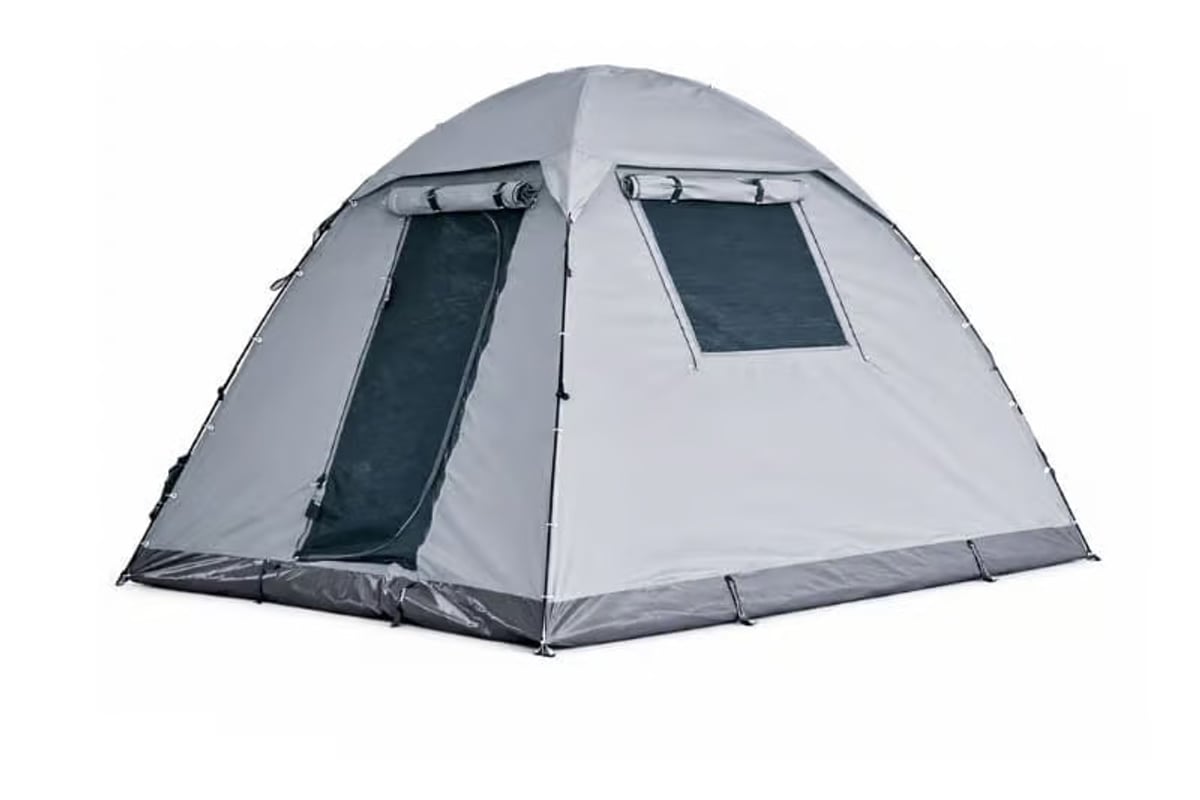
When evaluating bag tent options, examine these construction details:
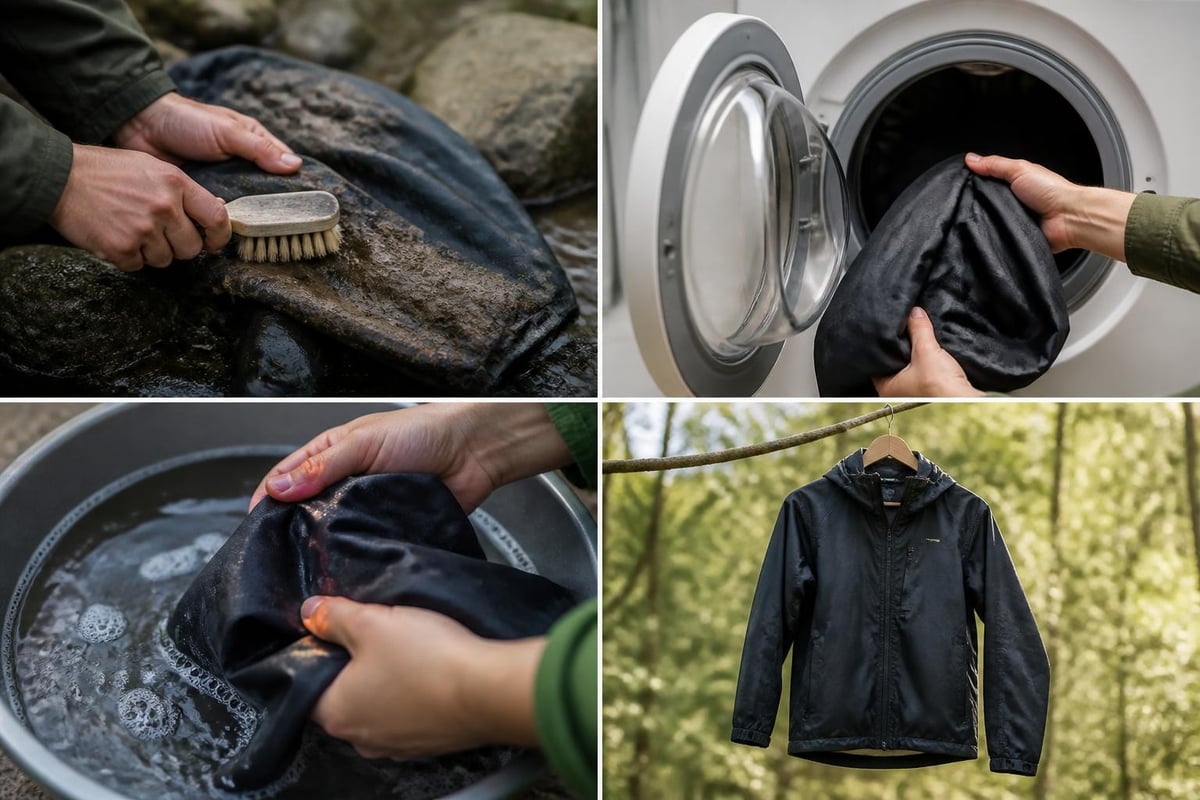
Proper care extends bag tent service life from several seasons to many years. The compact, folded storage creates unique maintenance requirements compared to loose-hanging tent storage.
After each trip, shake out debris and wipe interior and exterior with a damp cloth. For deeper cleaning:
Dirt and body oils degrade waterproof coatings over time. Annual cleaning maintains performance even if the shelter looks clean.
Store bag tents loosely in a breathable mesh sack or hanging from a closet rod. Compression storage damages waterproof coatings and reduces fabric loft over time. Keep stored shelters in cool, dry locations away from direct sunlight and chemical fumes.
Carry a repair kit containing:
Small punctures and tears caught early prevent major failures later. The historic patent for integrated sleeping bag tent designs from the 1950s shows that durability and repairability have always been central concerns in combined shelter systems.
A bag tent functions as the outer weatherproof layer in a complete sleep system that includes pad and bag. Understanding how these components work together optimizes warmth and comfort.
Ground insulation becomes more critical in a bag tent because the thin floor provides minimal thermal barrier. A sleeping pad with R-value appropriate to expected temperatures prevents conductive heat loss:
Closed-cell foam pads add durability and eliminate puncture concerns, though they sacrifice comfort and pack size. Inflatable pads offer superior insulation and comfort but require careful ground preparation.
Your sleeping bag must fit comfortably inside the bag tent while maintaining loft for insulation. Measure the bag tent interior width at shoulders and compare to your sleeping bag's girth. Compression reduces sleeping bag effectiveness.
Waterproof-breathable shell fabrics on sleeping bags conflict with bag tent breathability strategies. Use non-shell sleeping bags inside weather shelters to avoid trapping moisture between layers.
In cold conditions, some adventurers use a vapor barrier liner inside the sleeping bag to prevent moisture from reaching insulation. This technique works well with bag tents because it addresses condensation at the source rather than relying solely on shelter ventilation.
Using a bag tent in wilderness areas requires understanding local regulations and Leave No Trace principles. Different land management agencies impose varying rules on camping locations and shelter types.
Many national parks and wilderness areas restrict camping to designated sites where bag tent use may be impractical due to ground conditions. Check regulations before planning trips that rely on finding suitable bivy spots.
Minimum impact camping with a bag tent involves:
Emergency bivy use falls under different rules than planned overnight camping in most jurisdictions. Familiarize yourself with local policies if carrying a bag tent as backup shelter during day activities.
Beyond backcountry camping, bag tent designs serve specialized purposes that demonstrate their versatility and value in edge-case scenarios.
Disaster preparedness kits benefit from the compact, weatherproof shelter that requires no infrastructure or setup expertise. Emergency managers increasingly recommend individual bivy-style shelters for evacuation kits.
Military and tactical operations continue using advanced bag tent designs for rapid deployment and minimal signature. Modern military systems incorporate camouflage patterns and IR-reduction treatments.
Homeless outreach programs in cold climates distribute simple bag tent designs as survival shelters. The weatherproof enclosure prevents hypothermia more effectively than blankets or sleeping bags alone.
Festival and event camping where tent space is limited benefits from the minimal footprint. Though not ideal for multi-night comfort, bag tents enable participation where traditional camping isn't feasible.
For those seeking professional outdoor solutions built to withstand African conditions, Ejenti Outdoor offers expertise in weather-resistant shelter systems and fabric technology.
Understanding whether a bag tent makes economic and practical sense depends on your specific outdoor activities and priorities. The investment delivers maximum value for certain user profiles while offering limited benefits for others.
Ultralight backpackers logging serious annual mileage quickly justify the cost through weight savings that reduce fatigue and increase daily range. Spending $300-400 on a quality bag tent system that saves 800 grams over a budget tent provides measurable performance benefits.
Mountaineers and alpinists who regularly camp above treeline or on technical terrain find bag tents essential rather than optional. The ability to bivouac on narrow ledges or in crevasses where tents won't fit enables ascents that would otherwise require heavier, slower approaches.
Car campers and recreational users who prioritize comfort and living space gain little from bag tent investments. The compromises in comfort and condensation management outweigh any benefits when vehicle access eliminates weight concerns.
Family camping and group trips suffer from the individual nature of bag tent designs. Unlike larger tents that create shared space and social opportunities, separate bag tents isolate occupants and prevent interaction during weather events.
Weekend backpackers on established trails might better invest in quality sleeping bags or pads that improve sleep quality across all shelter types rather than optimizing shelter weight alone.
The bag tent represents a specialized but valuable tool in the outdoor shelter category, delivering unmatched weight savings and deployment flexibility for users willing to accept confined space and condensation challenges. By understanding the material technologies, proper use scenarios, and maintenance requirements, you can determine whether this ultralight shelter solution matches your adventure style and environmental conditions. Whether you're planning alpine ascents, thru-hikes, or simply need emergency backup shelter, the right bag tent choice enhances safety and capability in the backcountry. For outdoor enthusiasts seeking durable, weather-resistant equipment engineered for demanding conditions, Ejenti Outdoor provides professional-grade tents, fabrics, and outdoor solutions designed specifically for South African environments.