
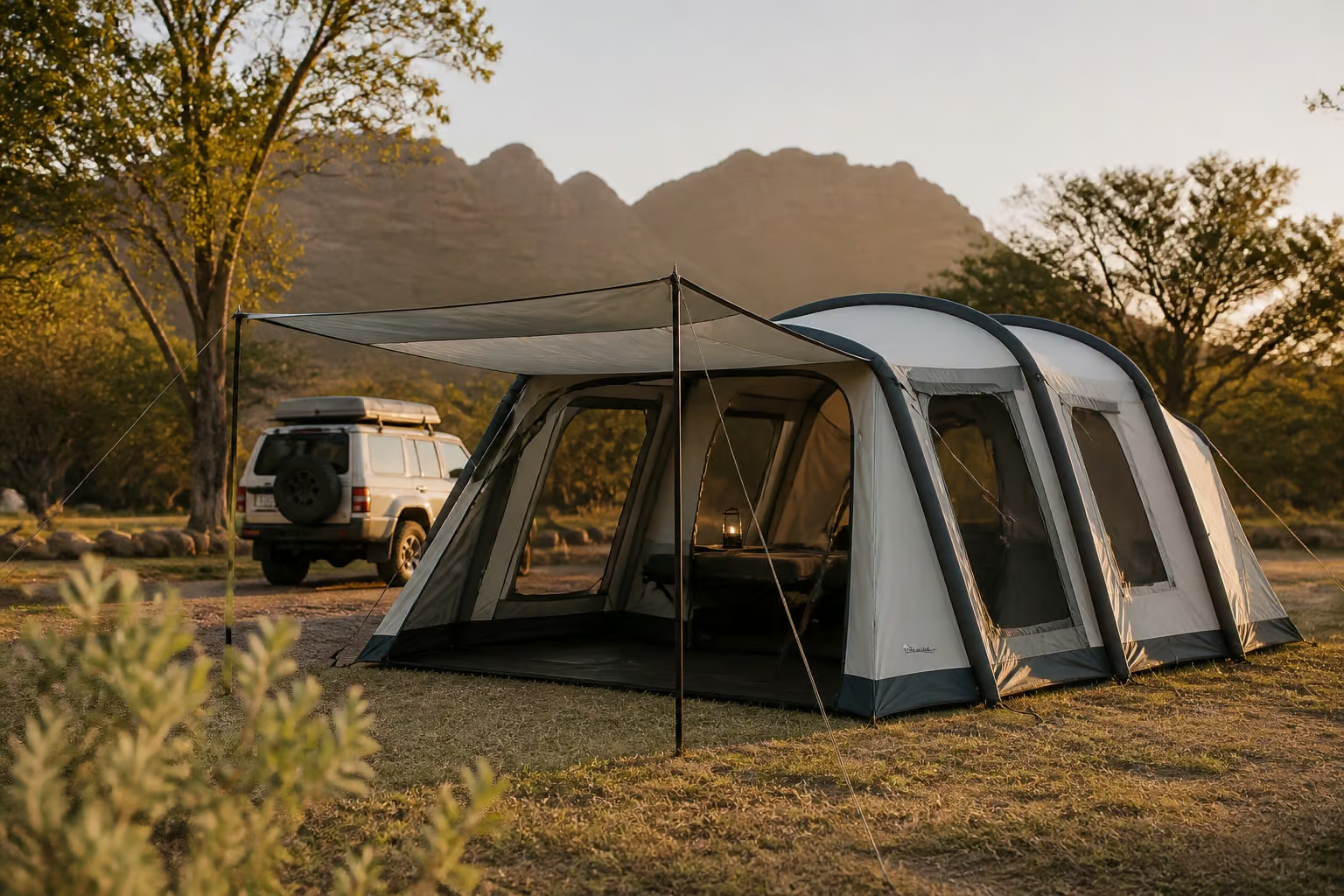
Air tents are tents that use inflatable beams instead of rigid poles, and you pitch them by pumping air into the frame rather than threading poles through sleeves. They suit families and groups who want fast setup and a roomy interior, but they trade some weight and repair simplicity for that convenience. This guide explains how air tents work, where they struggle, and what to check before you buy for South African conditions.
An air tent replaces the traditional pole frame with sealed, inflatable tubes built into the tent body. According to Pitchup, these integrated beams are filled using a hand, foot, or electric pump, and the pressure makes the structure stiff enough to hold the fabric taut.
Each beam contains an inner bladder, usually made of TPU or a similar airtight material, wrapped in a tougher outer sleeve. The sleeve protects the bladder from abrasion and UV. Most models connect several beams to a single inflation valve through a manifold, so you pump once and the whole frame rises.
A typical pitch looks like this:
Pitchup says most air tents take less than 15 minutes to pitch, including pegging. For a large family model, it is usually quicker to pitch than a comparable poled tent, and it is easier for one person to manage alone.
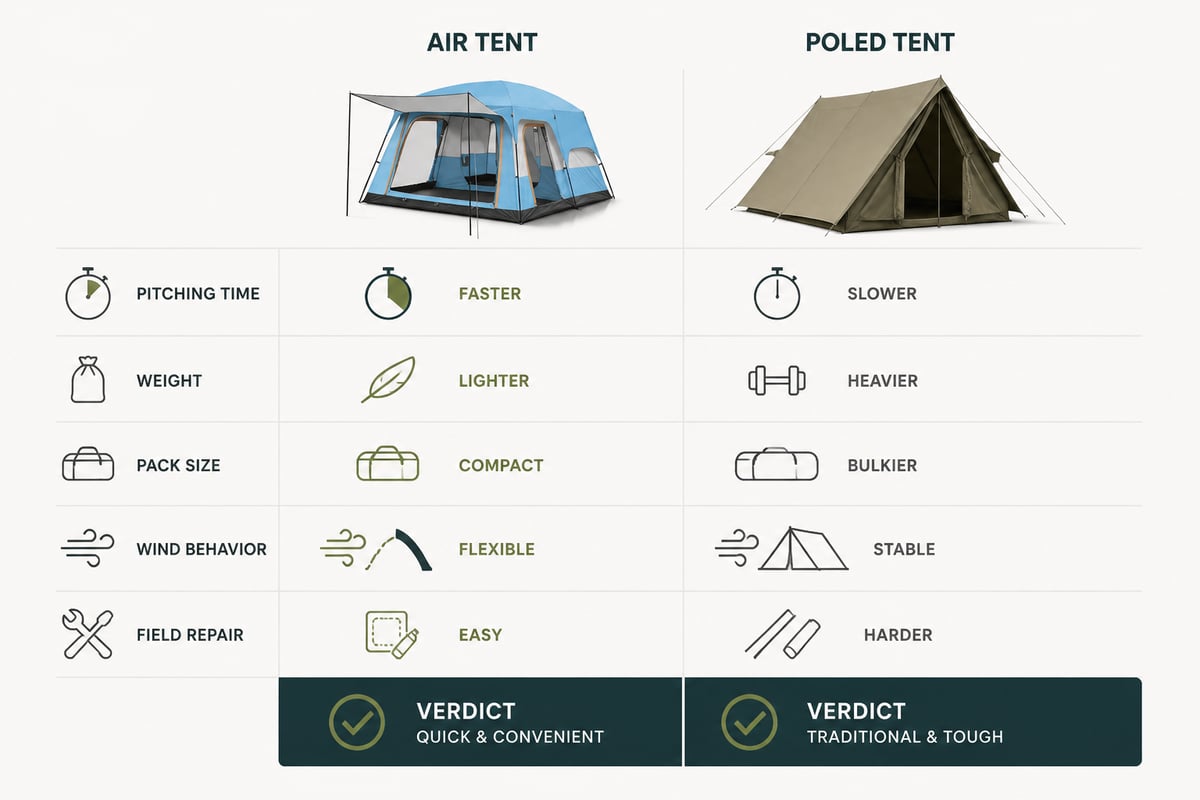
Inflatable frames win on pitching speed and ease, while traditional poles win on weight, simplicity and field repairs. Neither is better in every situation.
| Feature | Air tent | Poled tent |
|---|---|---|
| Pitching time | Usually under 15 minutes | Often 20 to 45 minutes for large sizes |
| Pack weight | Heavier (beams, bladders, pump) | Lighter for the same floor area |
| Pack size | Bulkier | More compact |
| Puncture risk | Beam can leak if damaged | Poles can snap or bend |
| Field repair | Patch kit, spare bladder | Splint sleeve, spare pole section |
| Wind behavior | Flexes and recovers | Rigid, can bend or snap |
| Interior space | Open, few obstructions | Poles can intrude at the edges |
The practical upside of air beams is that they flex under gusts and spring back, where an aluminium or fibreglass pole may bend permanently. The downside is that a puncture in a beam can leave one section limp, which matters at a remote site hours from a shop.
Weight is the other cost. An inflatable family tent is a vehicle-camping tent. If you walk in with your gear on your back, a poled tent or a different shelter style makes more sense.
Air tents handle rain well when the fabric and seams are good, and they handle moderate wind well, but no tent is safe in severe weather. The frame type matters less than the fabric, the guy lines and how you pitch.
On wind, the Met Office warns that winds above 30 mph can damage most tents. Inflatable beams tolerate gusts better than thin poles because they absorb movement, but a large, flat-sided tent still acts like a sail. Pitch with the lowest, narrowest face toward the wind, use every guy line, and add extra pegs on loose or sandy ground.
On rain, look at the waterproof rating of the fabric (hydrostatic head), taped seams, and a bathtub-style groundsheet that wraps up the walls. The beam sleeves should also shed water without pooling, so check that horizontal beams are slightly angled or well tensioned.
Lightning is a separate issue. The National Weather Service states that tents do not protect campers from lightning. During Highveld summer storms, which often arrive with little warning in the afternoon, get into a hard-topped vehicle or a solid building rather than sheltering in a tent of any kind.
Heat is the other South African factor. Synthetic air tents trap heat quickly, so ventilation matters: multiple mesh panels, openable windows and a fly that does not press against the inner.
The features that decide whether an air tent lasts several seasons are fabric weight, beam construction, valve quality and the repair options available. Work through this list before paying:
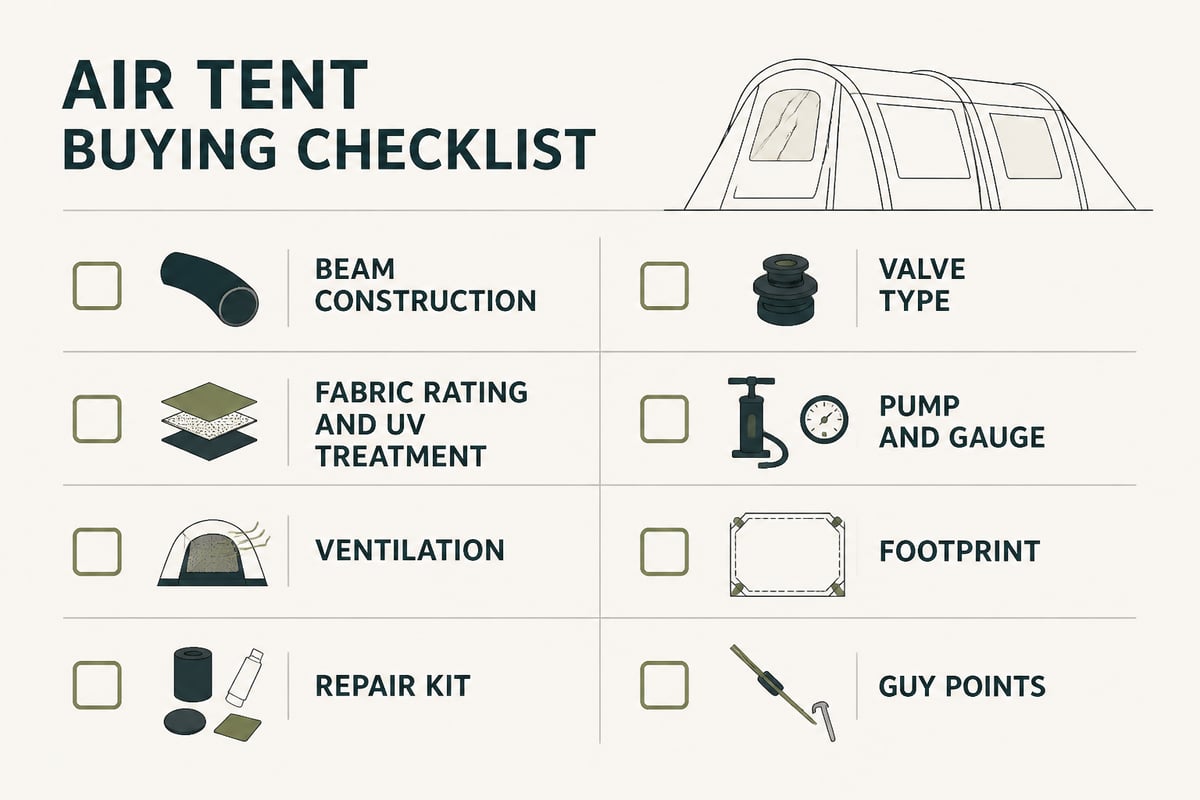
Careful inflation, regular inspection and dry storage extend the life of air tents considerably. Most failures come from handling, not from the design itself.
A small repair kit with TPU patches, spare valve parts and a few meters of repair tape fits in any camping crate and covers most issues.
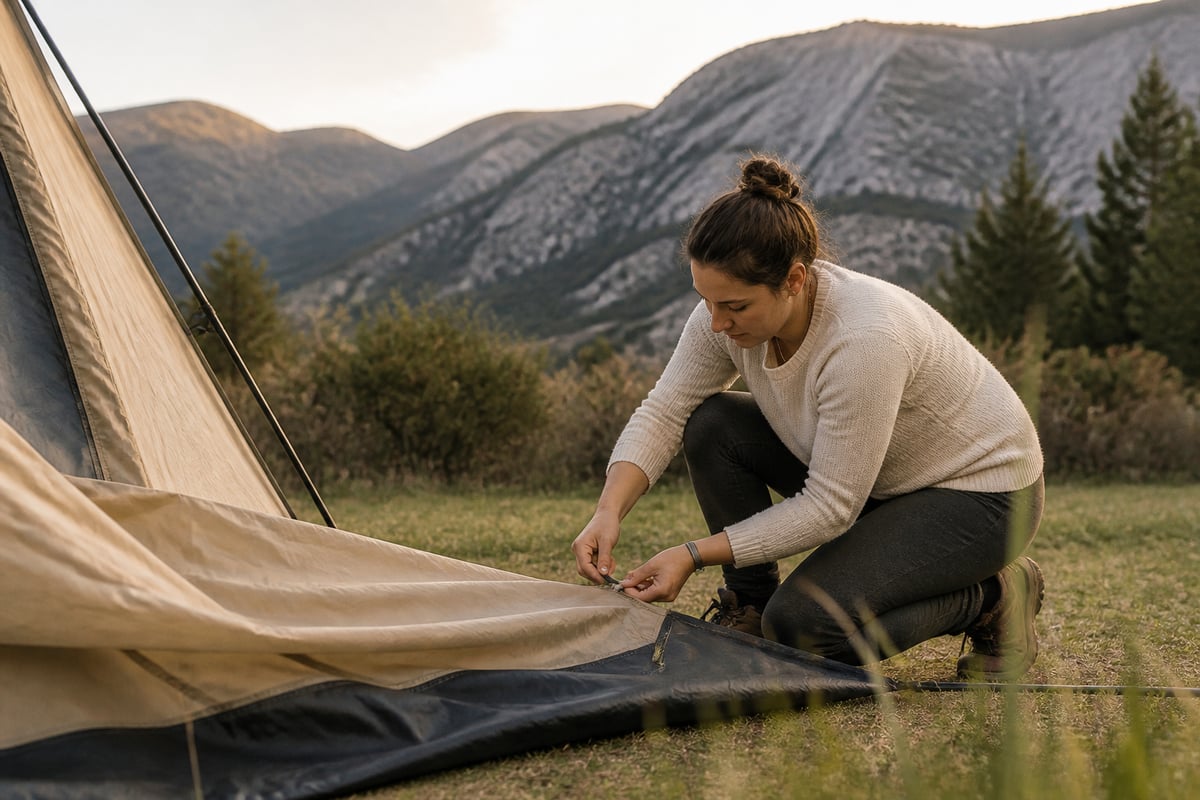
For long stays, heavy use and harsh sun, canvas often outperforms synthetic air tents. If you camp for weeks at a time, run a safari operation or keep a tent standing for a whole season, the lack of pumps and bladders becomes an advantage.
Canvas breathes, stays cooler in the heat and handles UV far better than thin coated polyester. Heavy-duty canvas and ripstop also tend to tolerate abrasion and repeated pitching better than lightweight synthetics. The trade-off is weight and a longer pitch, but a well-designed canvas frame is simple and repairable with basic tools.
Ejenti Outdoor is a proudly South African company based in Pretoria that manufactures its own tents from heavy-duty canvas and ripstop fabrics that are waterproof and UV-treated. Its Premium Heavy-Duty Canvas Dome Tent is built for African conditions, from SANParks campsites to remote 4×4 trails, and suits campers who want shelter that handles several seasons of use without a pump.
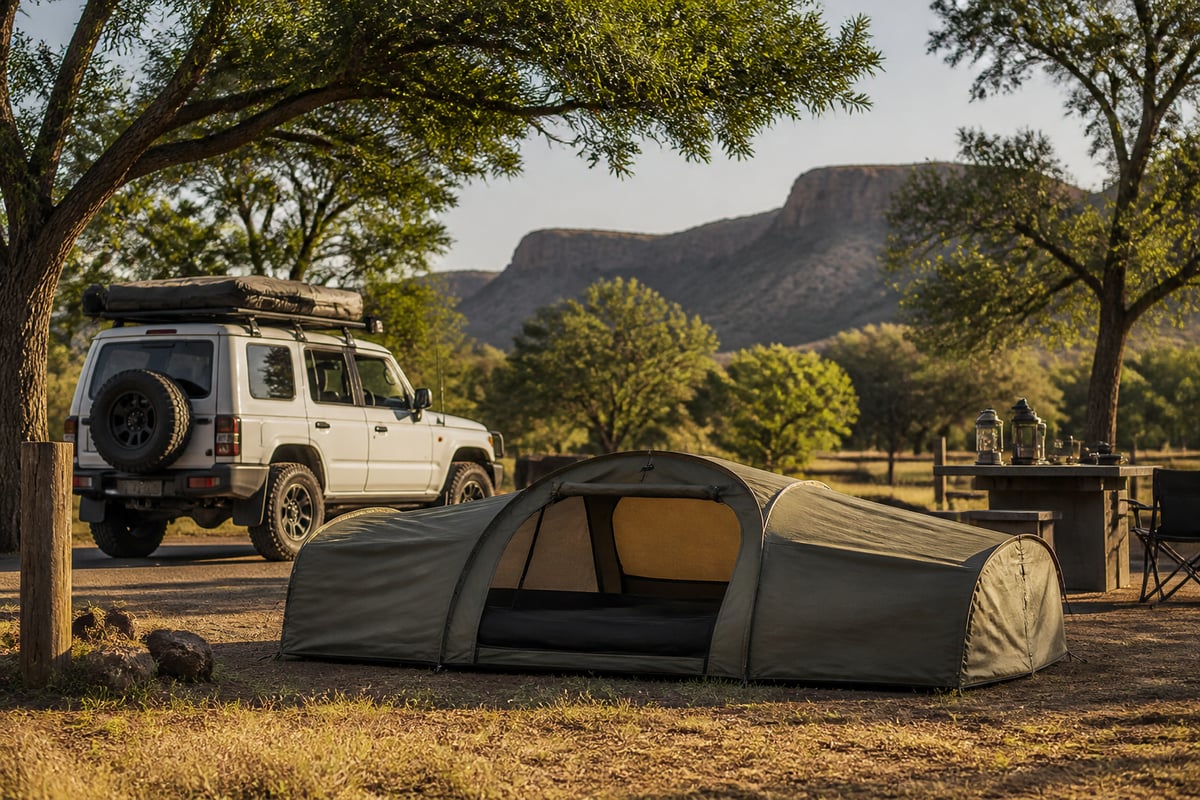
If you want more space for a group, a bell tent offers a tall central pole, a circular floor and room to stand and move around, which works well for glamping setups and extended stays.
Air tents can work for events and safari camps, but organisers should weigh pitching speed against durability and repair logistics. Inflatable structures go up quickly, which helps with short-turnaround events. Pitchup notes that most air tents take under 15 minutes to pitch, which can help a hire company turn a site around between bookings. Large inflatable marquees need powered pumps, trained crew and constant pressure monitoring, and a leak mid-event is awkward to fix. Electric pumps also need a generator or mains supply, which is not always available on a farm or bush venue.
Safari operators and businesses that run camps for months need shelter that tolerates daily use, sun and the occasional tear. Staff will pitch, strike and drag these tents repeatedly, so abrasion at the base and around guy points matters more than headline setup time. Heavy canvas and ripstop are easier to patch with ordinary tools, and a custom build can match exact floor plans, door positions and fly sizes. Ejenti Outdoor is a South African company that offers custom builds, and for specific sizes or requirements it is best to contact the team through its product pages rather than assume a standard spec.
Whatever the shelter type, plan for wind. The Met Office warns that winds above 30 mph can damage most tents, so event tents in particular need proper ballast or ground anchoring, and a clear weather call-off threshold agreed before the day. Guests should also be told to leave tents during storms, since a tent offers no protection from lightning.
Do air tents go flat overnight? A properly sealed beam holds pressure for days. A slow leak at the valve or a pinhole in a bladder is the usual cause, and a soapy-water test will locate it. Temperature drops overnight can also reduce pressure slightly, so top up if needed.
Can you use an air tent in winter? Yes, though cold lowers air pressure and can make fabrics stiffer. Check the pressure in the morning and evening, and clear snow or heavy frost so the beams do not carry extra load.
How long do air tents last? Lifespan depends on fabric quality, UV exposure and how carefully the tent is handled and stored. With dry storage, regular inspection and a footprint under the floor, a good tent can last many seasons.
Are air tents good for beginners? They are a sensible first family tent because pitching is simple and intuitive, provided you accept the extra weight and learn to read the pressure gauge.
Can an air tent be repaired in the field? Small punctures can be patched with a repair kit, and some designs allow you to replace a single bladder. Carry the kit, and know the process before you leave.
Before your next trip, inflate your tent at home, check every valve and seam, and write down the pressure your model needs so you can pitch confidently in the dark. If your plans lean toward long stays, rough terrain or commercial use, a canvas shelter such as the Premium Heavy-Duty Canvas Dome Tent is worth comparing against an inflatable. Ejenti Outdoor builds durable tents, gazebos and custom shelters right here in South Africa, so you can shop now at Ejenti Outdoor and find a tent built for the way you camp.