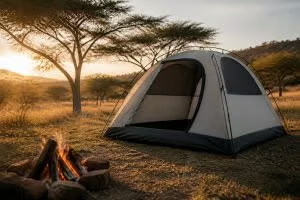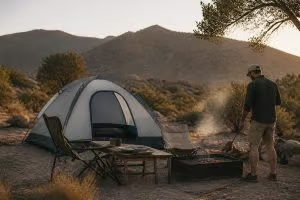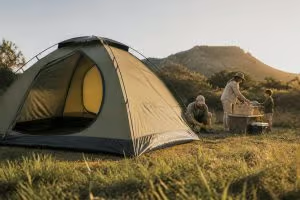

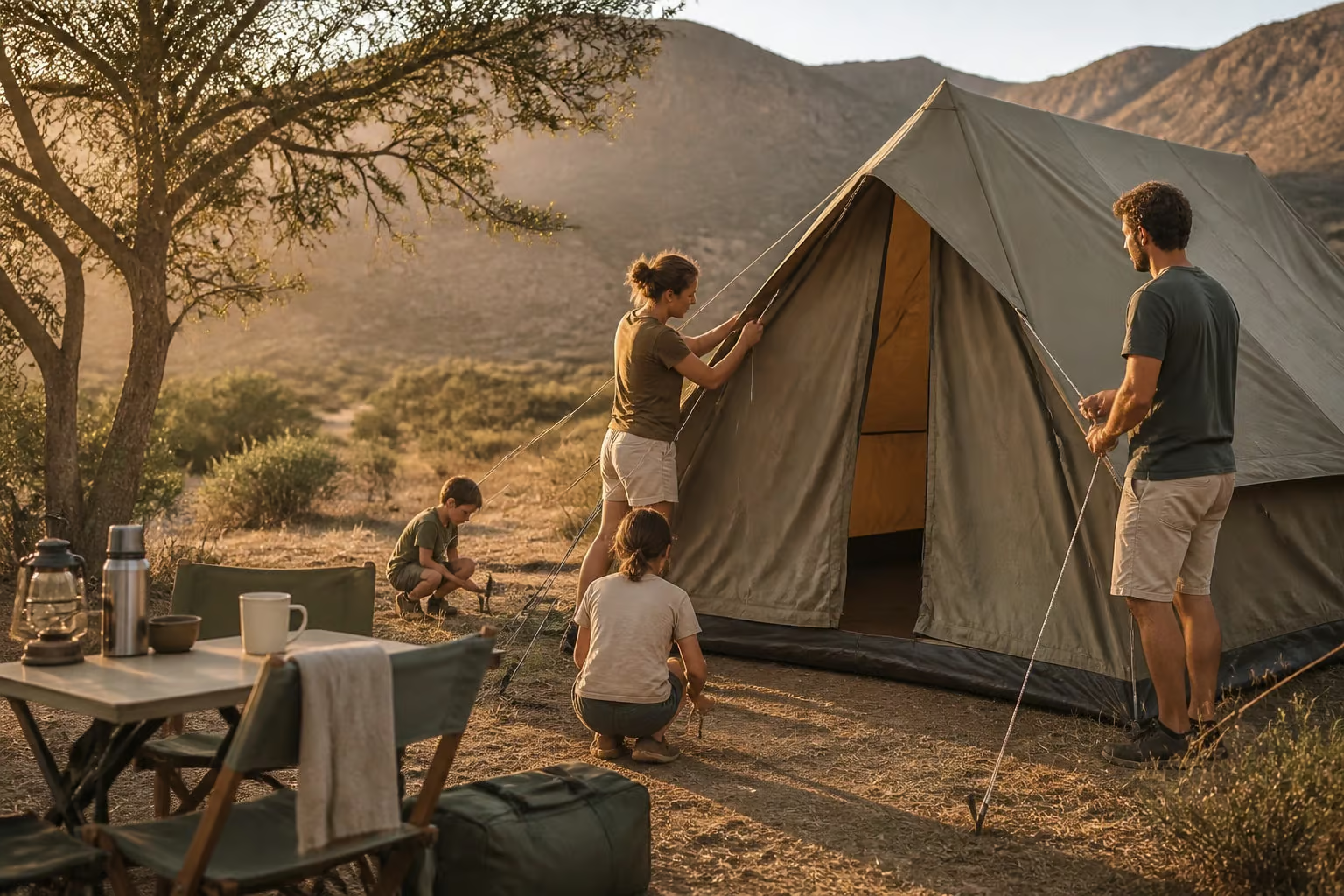
A 4 man tent is a shelter sized to sleep four adults, though in practice it fits four people comfortably only if you accept tight quarters and little gear space. For most South African camping families, the better choice is a tent with a floor area of roughly 3 m x 3 m or more, a waterproof fabric that holds up in summer thunderstorms, and UV protection that survives months of Highveld sun.
This guide explains how tent capacity ratings work, which fabrics suit local conditions, how the main designs compare, and how to set up and care for your tent so it lasts.
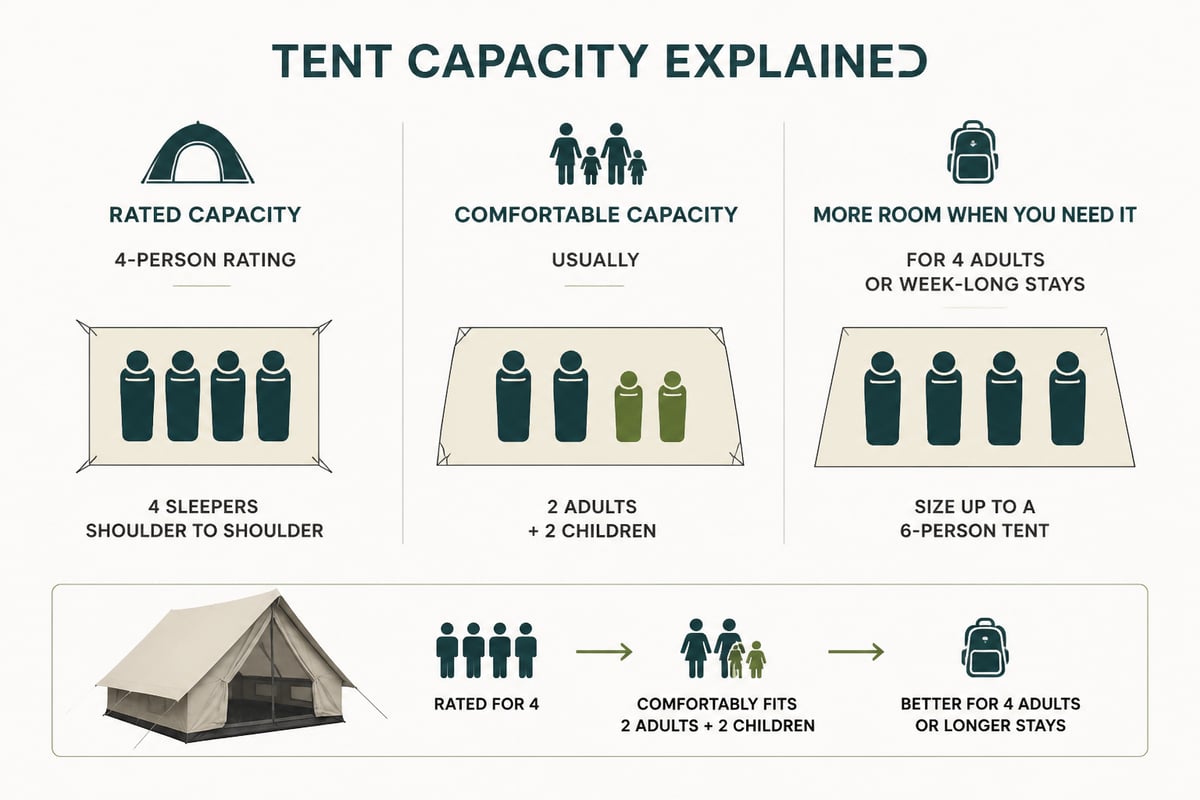
A four-person rating describes how many sleeping bags fit side by side with no room left over, not how many people can live comfortably inside. Manufacturers usually calculate capacity by fitting sleepers side by side, which leaves little space for bags, boots or a cooler box.
For a family camping trip, that rating translates into something more practical:
Peak height matters as much as floor area. A tent with a tall centre and near-vertical walls lets you stand, change clothes and move around, while a low dome with sloping sides wastes much of its floor area on unusable corners.
The right 4 man tent for South Africa has to handle intense UV, sudden afternoon storms, and in some regions strong wind, so fabric and construction matter more than headline capacity.
Conditions vary a great deal across the country. The Highveld sees violent summer thunderstorms, the Cape brings wind and winter rain, and the Lowveld and KwaZulu-Natal coast add heat and humidity. A tent that works in one region can fail in another if you pick on price alone.
Fabric decides how long a tent lasts and how it behaves in heat and rain.
Fabric weight is quoted in GSM (grams per square metre). A higher GSM generally means a thicker, more durable material, but also a heavier tent to carry and pitch. If you want to understand how canvas performs in more detail, this overview of canvas material tents is a useful starting point.
A tent that is waterproof out of the bag can still leak after two seasons if the coating breaks down. Look for three things:
Heavy canvas gets its water resistance from tightly woven fibres that swell when wet. That is why a new canvas tent should be pitched and wetted before its first trip, which lets the fibres tighten and seal around the stitching.
Dome, tunnel, cabin and bell tents each trade off weight, headroom and stability differently, and the best design depends on how often you move camp and how long you stay.
| Design | Typical Set-up | Headroom | Wind Handling | Best For |
|---|---|---|---|---|
| Dome | Two or three poles, quick | Moderate, sloped walls | Good when pegged and guyed | Short weekend trips |
| Tunnel | Several flexible hoops | Good in the centre | Fair, must face the wind | Families wanting a separate living area |
| Cabin | Steel or fibreglass frame | Excellent, near-vertical walls | Moderate, needs guy ropes | Long stays at one site |
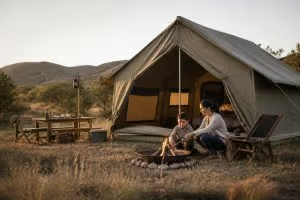
| Bell / canvas safari | Central pole or frame | Excellent in the middle | Strong on sturdy frames | Base-camp camping, multi-season use |
If you only camp occasionally and pack the tent into a small boot, a dome is the simplest choice. If you stay put for a week at a time at a bush camp or holiday resort, a cabin or canvas safari design gives you far more living space for the same sleeping capacity.
For a broader look at manufactured options and what different builds offer, you can read about tent manufacturers and how construction affects durability.
A handful of features separate a tent you tolerate from one you enjoy, and most of them cost very little to check before buying.
Pay attention to pole material as well. Steel frames are heavy but strong, aluminium offers a good balance, and thin fibreglass poles are the first thing to snap in a gust.
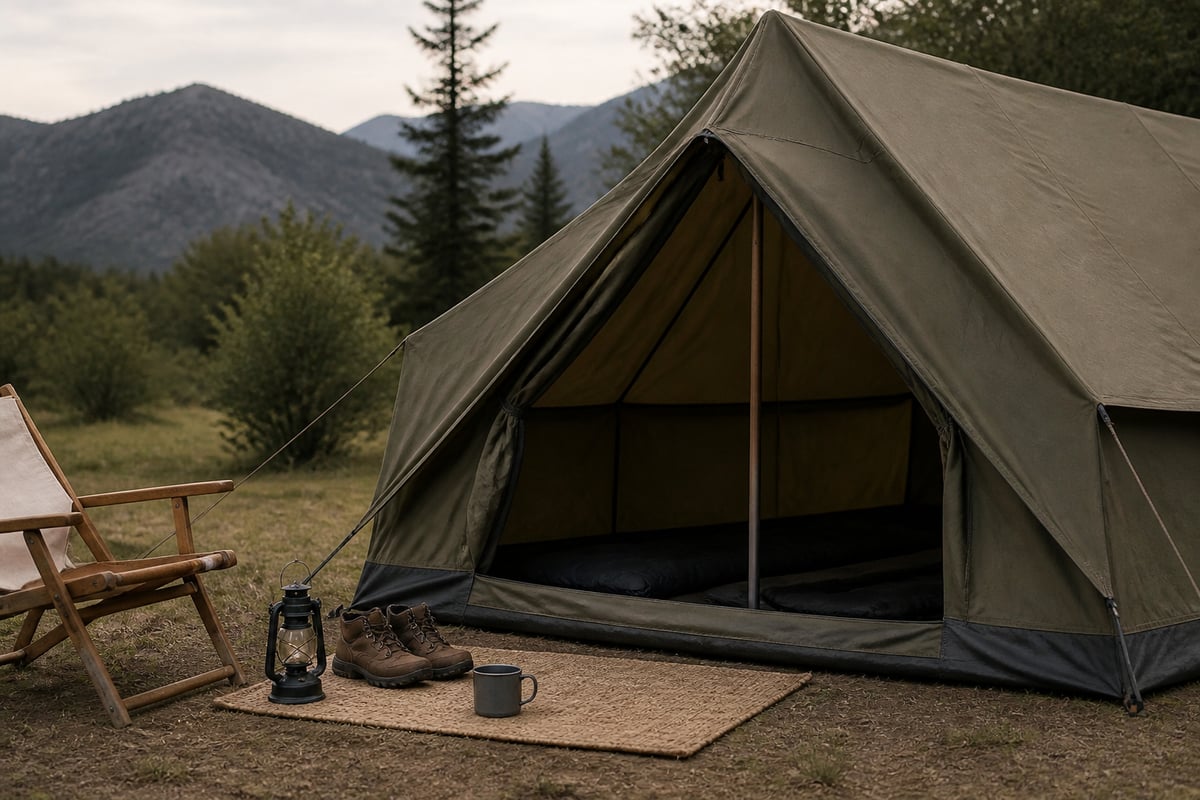
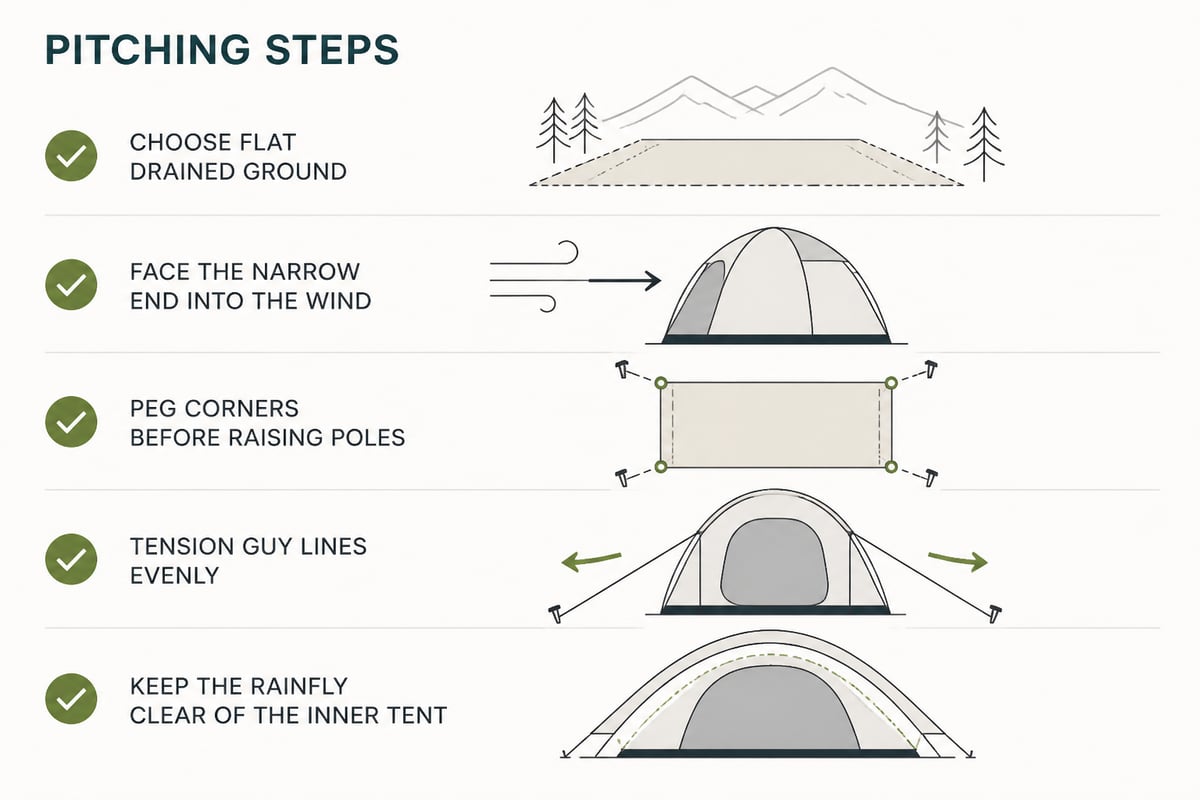
Correct pitching and basic maintenance extend a tent's life far more than any single feature, and both take only a few minutes each trip.
Pack a tent only when it is completely dry. Even a small amount of trapped moisture leads to mildew within days, particularly in humid coastal areas, and mildew weakens canvas and wrecks waterproof coatings.
Brush off dirt, shake out the groundsheet, and store the tent loosely in a cool, dry space rather than compressed in its bag for months. Clean with plain water and a soft brush; detergents strip waterproofing. For general advice on picking tent sizes by group, Coleman’s range of 4-person camping tents shows how floor plans and set-up styles vary across popular models.
A canvas tent costs more up front and weighs more, but for families who camp several times a year at the same sites it often works out cheaper over its lifetime than replacing a synthetic tent every few seasons.
Canvas pays off when:
It is a poor fit if weight is your main concern. Heavy canvas is not designed for carrying long distances, so it does not suit hikers who count every gram.
One example of a canvas option at the larger end of the range is the 3m x 6m Safari Lodge Tent with two rooms. It is a waterproof canvas tent made for outdoor accommodation and safari setups in South Africa, with a two-room layout that separates sleeping from living space. That kind of layout suits a family of four who want privacy and room to spread out on longer stays, and it shows how stepping up from a basic four-sleeper dome changes the camping experience.
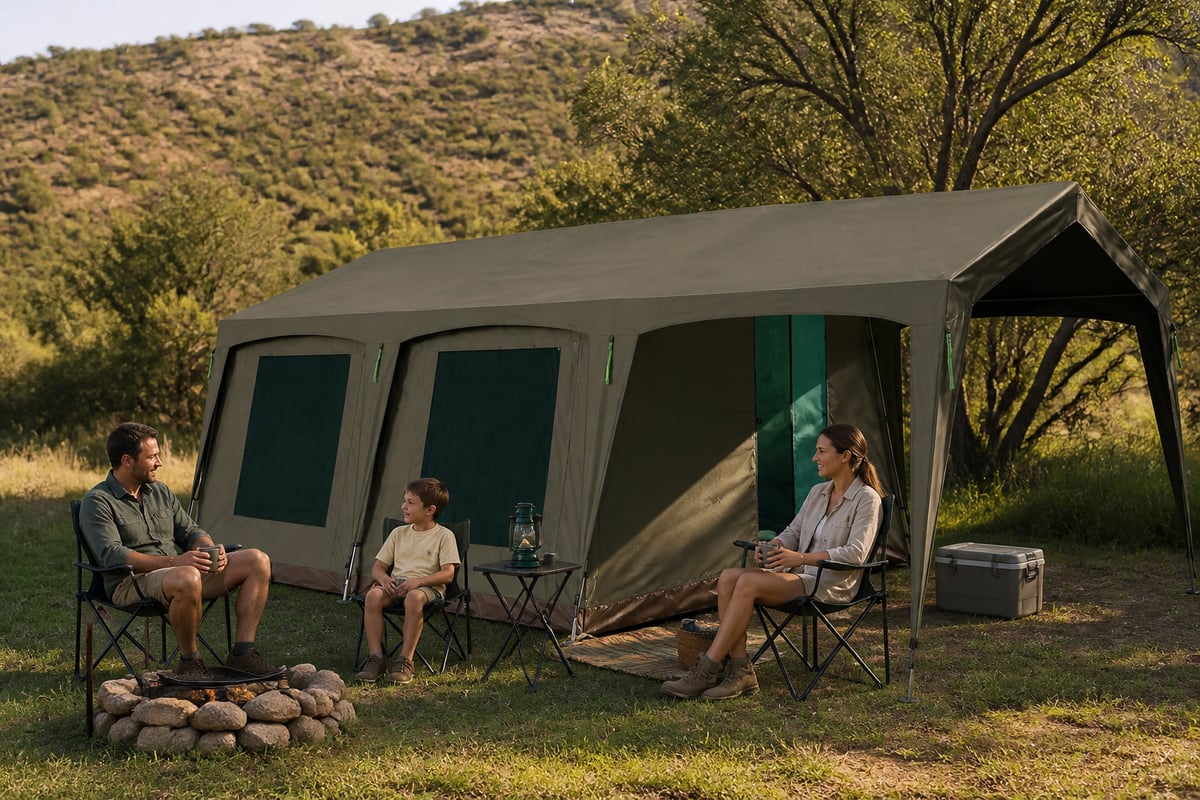
You can view the 3m x 6m Safari Lodge Tent Two Room Waterproof Canvas Tent to see the layout and specifications for yourself.
A custom-built tent lets you specify the exact size, door positions and fabric you need instead of settling for a standard four-person model that nearly fits.
Standard tents are designed for an average buyer and an average trip. If you have a tall family, a particular vehicle, or a recurring campsite with limited space, a made-to-measure tent solves problems an off-the-shelf design cannot. Ejenti Outdoor is a South African company that makes durable tents, gazebos and outdoor fabrics, and it has completed more than 400 custom builds. Details on sizes and options are best confirmed on its product pages or through its contact page, since specifications vary by build.
Buying from a local maker has practical benefits as well. The fabrics are chosen with South African sun and storms in mind, and repairs or adjustments are easier to arrange when the manufacturer is in the same country. You can also read more about Ejenti Outdoor’s wider range of outdoor solutions to see how tents fit alongside gazebos and other shelters.
Answering a few honest questions about how you camp will narrow the choice faster than comparing specifications.
Write down your answers before you shop. They will tell you whether a simple four-person dome is enough or whether a larger canvas tent will serve you better over the next decade.
Before you buy, pitch the tent in a garden or open space at home and check that your whole family fits, with bags, before the first trip. If you want a tent built for South African sun and storms, Ejenti Outdoor is a South African manufacturer of durable canvas tents, including the 3m x 6m Safari Lodge Tent and custom builds made to your requirements. You can browse the full range and shop now at Ejenti Outdoor to find a tent that keeps your family dry for many seasons.