
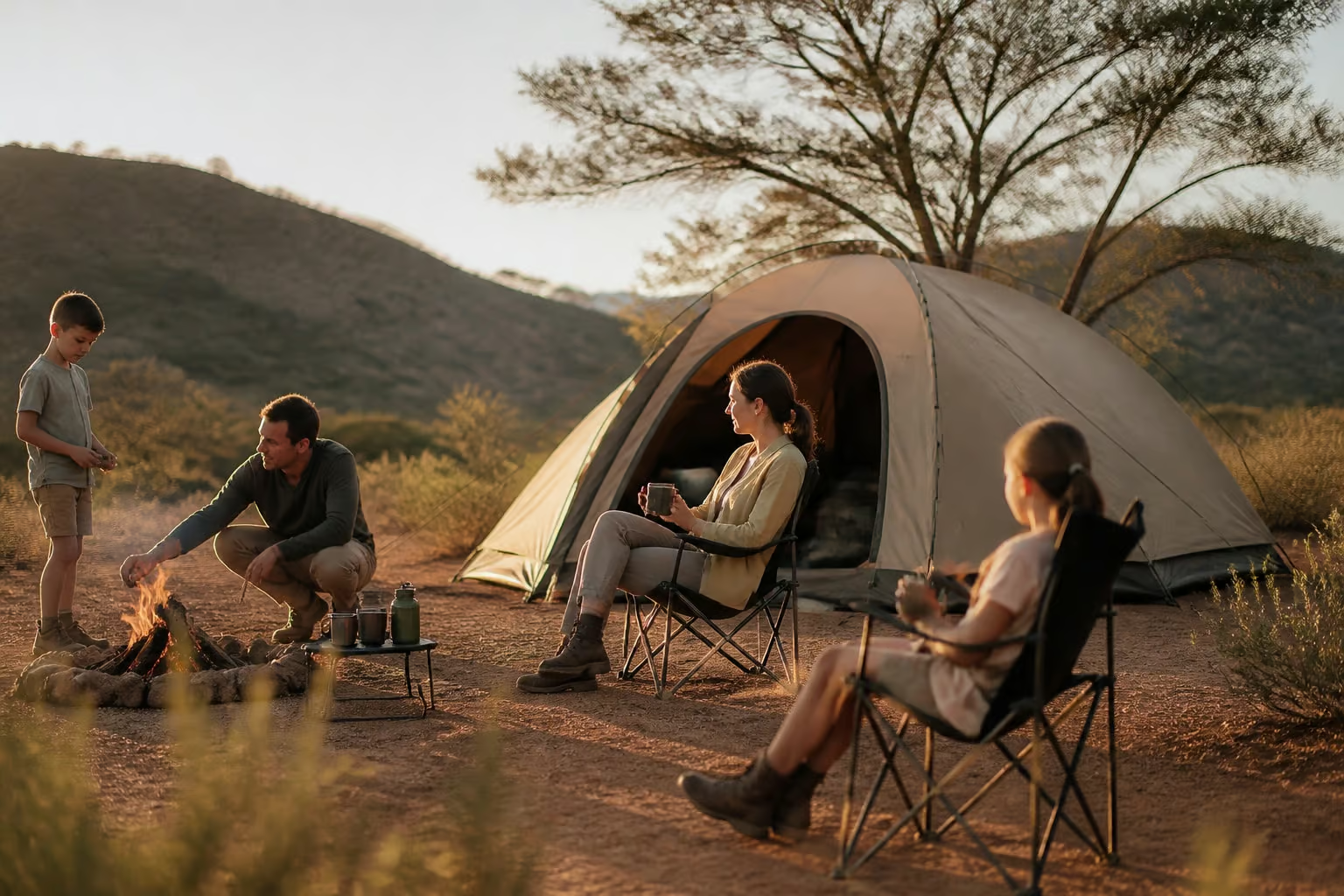
The best 4 person tents for most families are those with a floor area closer to a six-person rating, waterproof fabric with taped seams, and a frame that holds up in wind. A tent labeled for four people usually fits four sleeping bags with no room left for bags, shoes or a child who wakes up at 2 a.m. This guide walks through size, fabric, weather protection, setup and site choice so you can buy a tent that stays dry for many seasons.
A "4 person" label is a sleeping-capacity estimate, not a comfort rating. Manufacturers calculate it by assuming each person lies shoulder to shoulder on a narrow mat, allowing a fairly tight width per sleeper. Add a camp bed, a cooler bag or a dog, and the space disappears.
Here is how to translate the label into real life:
Check the floor dimensions in meters rather than trusting the number on the box. A floor of roughly 3 m by 3 m gives four people room to sleep and move, while a 2.4 m by 2.4 m floor is tight for four.
Peak height matters as much as floor area. If adults can stand or at least kneel upright to change clothes, the tent feels twice as large. Steep sidewalls add usable volume, while a low dome that slopes quickly wastes the corners.
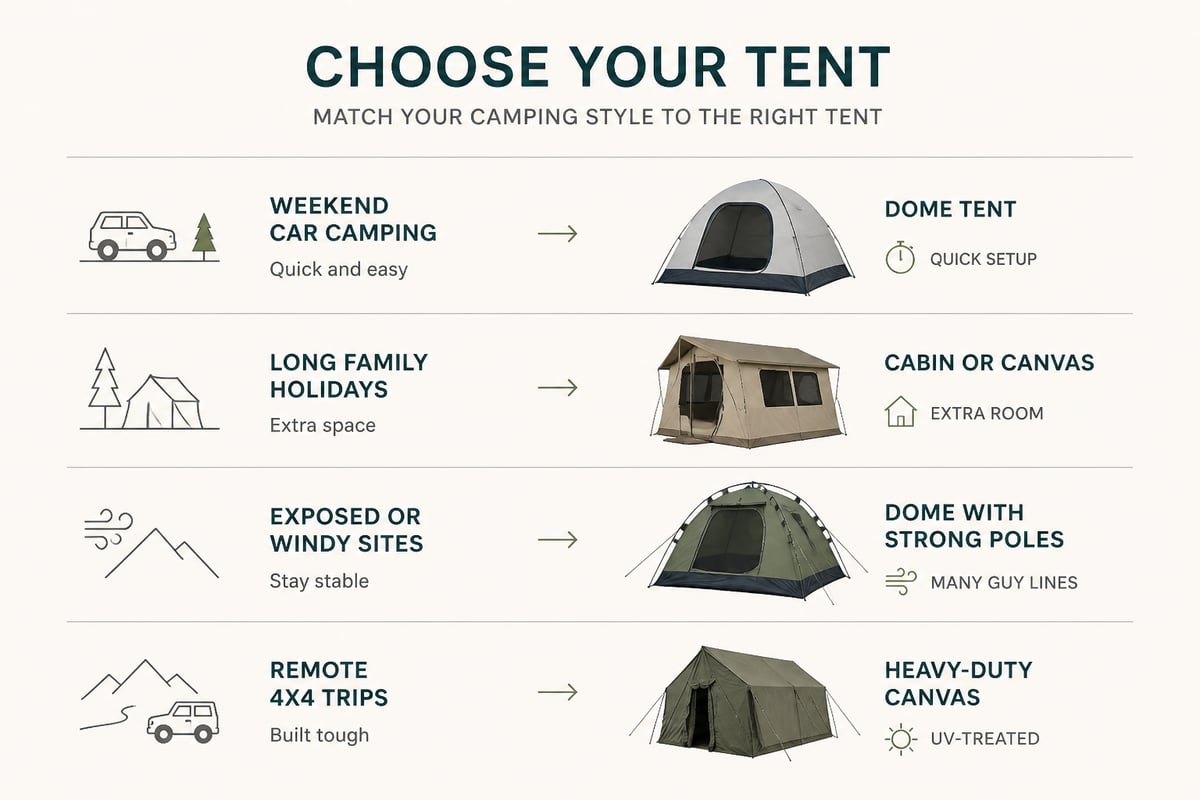
The shape of a tent decides how it handles wind, how much headroom you get and how fast you can pitch it. The main options for a four-person group are dome, cabin, tunnel and bell-style tents.
| Style | Headroom | Wind handling | Setup | Best use |
|---|---|---|---|---|
| Dome | Good in the center | Strong, sheds gusts well | Quick, two or three poles | Weekend trips, exposed sites |
| Cabin | Excellent, near-vertical walls | Moderate, needs guy lines | Moderate | Family base camps |
| Tunnel | Good along the length | Strong when pegged into the wind | Moderate | Longer stays on open ground |
| Bell | Tall center pole | Good with good pegging | Slower | Seasonal or semi-permanent camps |
Dome tents suit most campers because they balance stability and simplicity. Cabin designs feel like a small room, which many families prefer, but their flat roofs can pool water if the fabric sags. Whatever the shape, count the guy-out points. More anchor points mean more ways to keep the tent steady when the afternoon thunderstorms roll in across the Highveld.
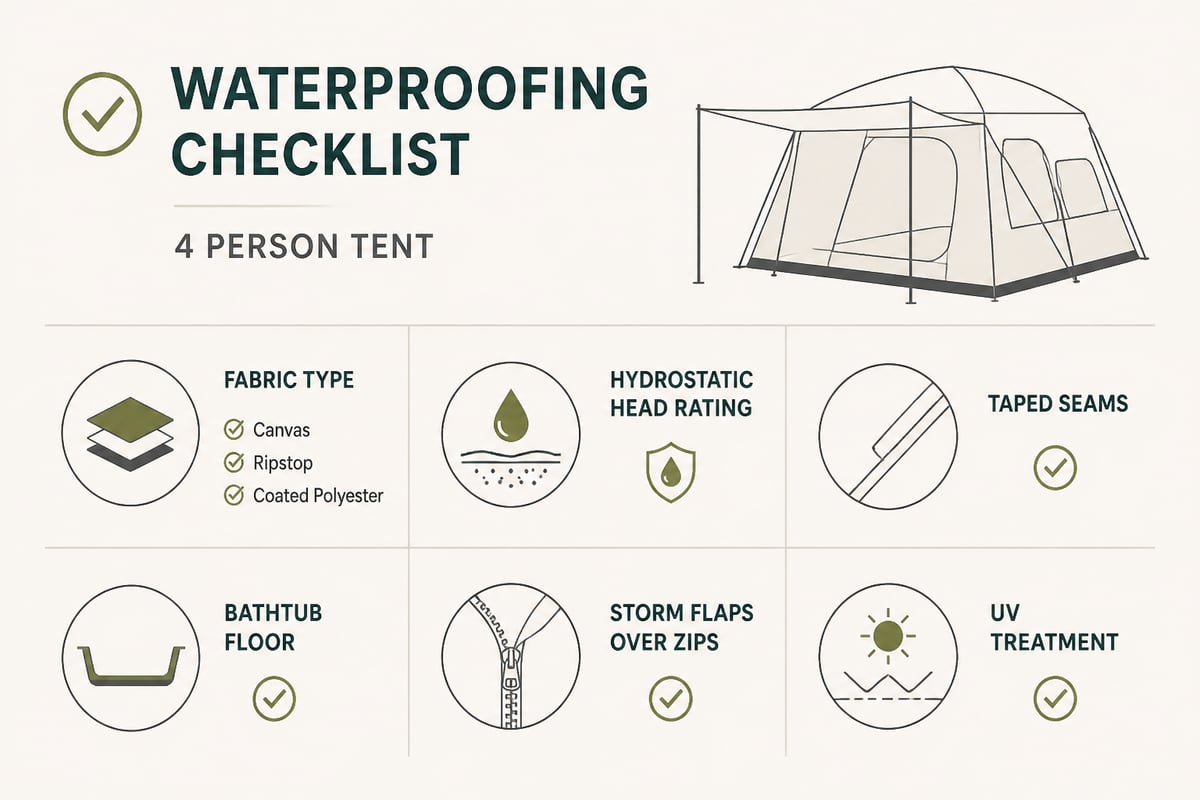
Waterproofing depends on fabric type, coating and seam construction working together. A good fabric with untaped seams will still leak, and a taped tent made of thin material will wear out fast.
Most budget and mid-range tents use coated polyester or nylon. These are light and dry quickly, but the waterproof coating breaks down over time, especially under strong sun. Waterproof ratings are given in millimeters of hydrostatic head. As a general guide, a higher hydrostatic head rating means better resistance to rain, and heavier-duty storm use calls for a higher rating. The floor should rate higher than the walls, since it takes the pressure of your weight against wet ground.
Heavy-duty canvas is thick cotton or cotton-blend fabric that is naturally breathable and handles repeated use far better than thin synthetics. It is heavier and takes longer to pack, which is why it suits car camping and fixed base camps rather than anyone carrying a pack. Ripstop weaves add small reinforcing threads that stop tears from spreading. For families who camp several times a year, treated canvas or ripstop is often the more economical choice over time because it does not need replacing every couple of seasons.
South African sun is hard on fabric. UV-treated material resists the fading and brittleness that shorten a tent's life, so look for it on the spec sheet rather than assuming it is included.
Check for these before buying:
A tent that keeps rain out but traps breath inside will still leave you with wet walls by morning. Four sleepers release a surprising amount of moisture overnight, so airflow matters as much as waterproofing.
Look for high and low vents that let warm air escape at the top while cooler air enters near the floor. Mesh panels in the doors and windows help on humid summer nights in places like the Lowveld or KwaZulu-Natal coast. Closable flaps over those panels keep you comfortable when the weather turns.
Breathable fabrics such as canvas reduce condensation naturally. With synthetic tents, a gap between the inner and the fly is what stops damp from soaking through. Never pitch the fly so tight against the inner that the two touch.
Many tents are sold as "three-season," which means they are designed for spring, summer and autumn, not heavy snow or severe storms. For most South African camping, that is enough, but local conditions deserve attention.
Poles are the part that fails first in wind. Fiberglass is cheap and flexes, but it can splinter. Aluminum and steel cost more and hold their shape better. Ask what the pole diameter is and whether the tent comes with sturdy pegs, because the thin pegs included in many budget tents bend in hard ground.
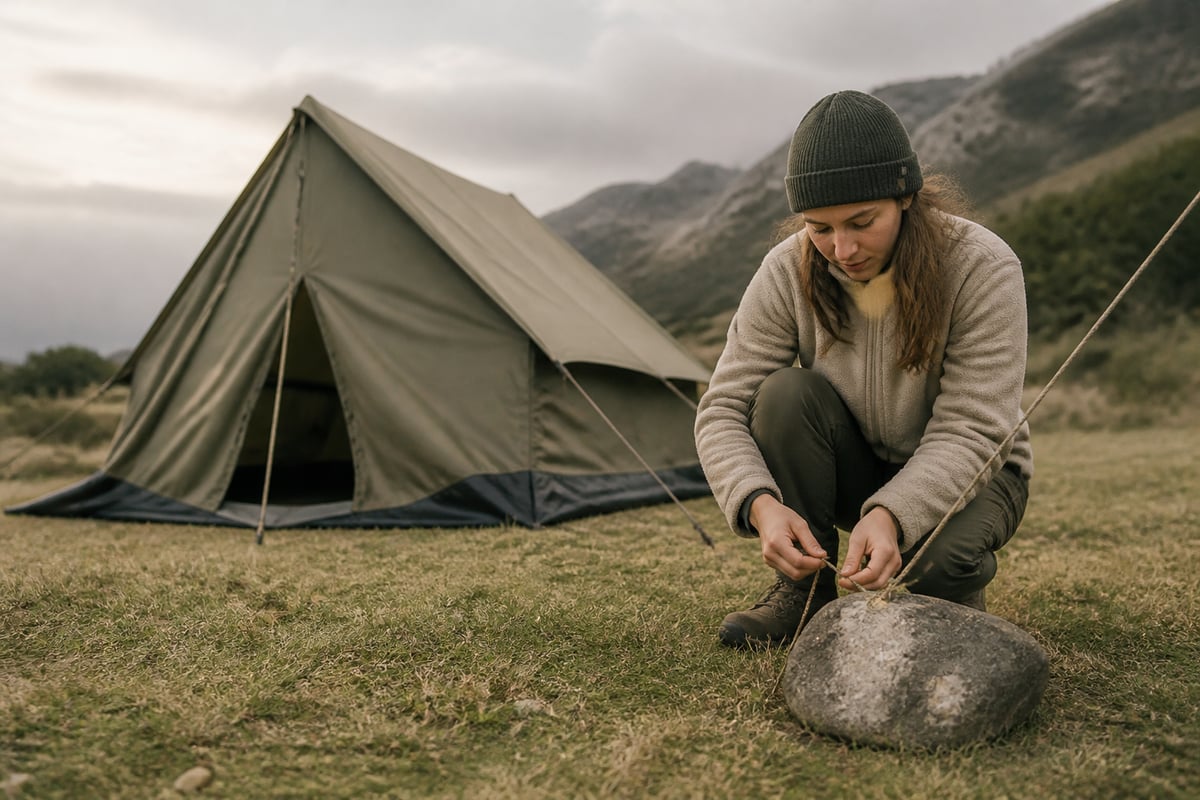
Even the best tent performs poorly on the wrong ground. The National Park Service advises choosing level ground that is not a low spot, since low areas can become very wet in rain, and it recommends avoiding ravines that could flood and areas beneath dead branches.
Those same principles apply to South African campsites. Before you unpack, walk the site and check:
A ground sheet or footprint under the tent protects the floor from abrasion and adds a little moisture protection. Cut it slightly smaller than the tent floor so rain does not run down the fly and collect between the layers.
Setup time is a practical test of any tent, since you will probably pitch it late in the day with tired children. Practise at home in the garden before the first trip. A dome with color-coded poles can go up in 10 to 15 minutes with two people, while a larger cabin or canvas tent may take 20 to 40 minutes the first time.
Weight is a trade-off. A canvas tent for four can weigh well over 20 kg with poles and pegs, which is fine from a bakkie or SUV but unrealistic on foot. That is the reason heavy-duty canvas suits car campers, 4×4 trail travelers and families who set up a base for several nights, and it is not the right choice for anyone carrying everything on their back.
Consider how the tent packs, too. A long, narrow bag fits easily across the back of a vehicle, while a bulky one may take up space needed for food and water.
If you camp from a vehicle and want a shelter that handles sun, wind and sudden rain over many seasons, a heavy-duty canvas dome is worth a close look. The Premium Heavy-Duty Canvas Dome Tent from Ejenti Outdoor is designed for the African climate, whether you are at a SANParks site or on a remote 4×4 trail. Ejenti Outdoor is a South African company that makes durable tents and outdoor gear, so you can check the product page for current sizes and specifications.
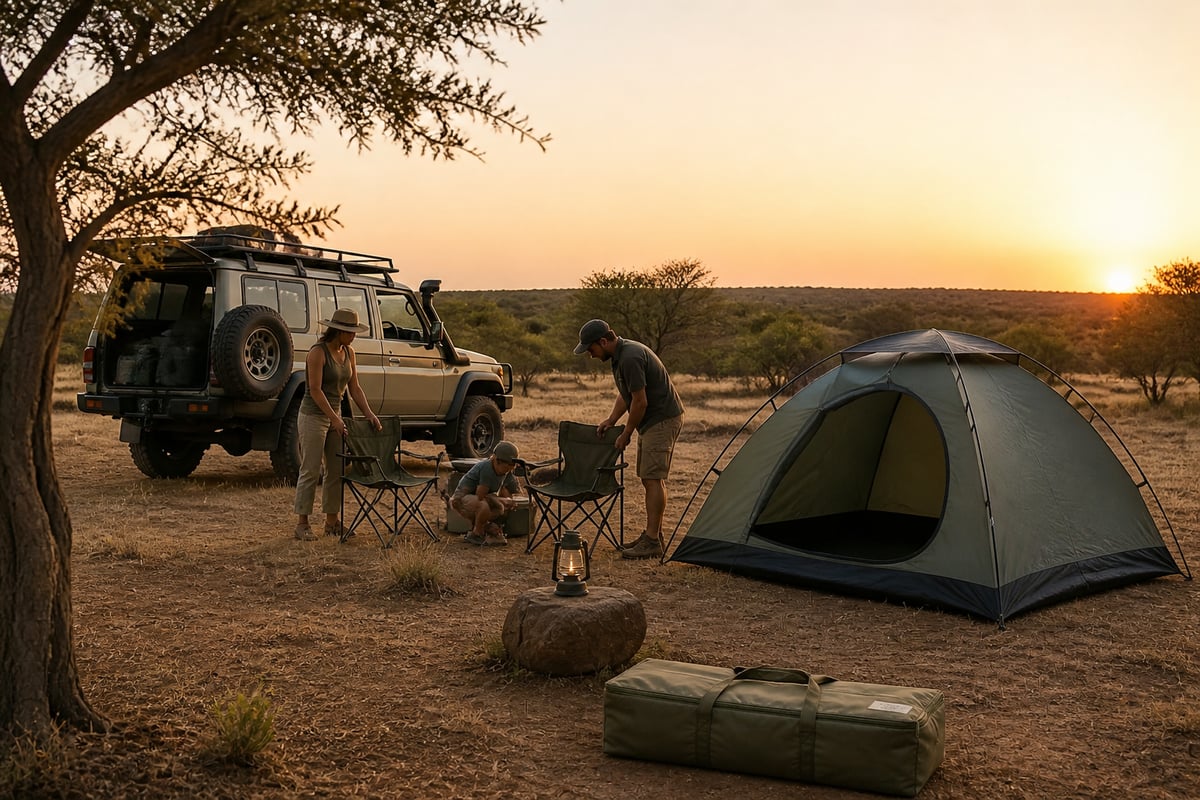
Some campers need a layout that standard sizes do not offer, such as an extended porch, extra windows or a particular floor footprint. Ejenti Outdoor handles custom builds made to your exact requirements, so contact them directly to discuss what is possible.
Once the basics are covered, a few features make a real difference over a long weekend or a week-long holiday.
Think through the kind of trips you take most. A family of four who braai at a different campsite every weekend needs quick setup and good ventilation. A group heading out on a ten-day 4×4 trip cares more about toughness and a roomy porch.
A tent that is dried and stored properly can last many more seasons than one thrown into a bag wet. These habits pay off:
Canvas needs a little extra care the first time. New canvas typically benefits from a wetting-down so the fibers swell and seal, which helps stop light leaks at the stitching. Check the care guidance supplied with your tent for specifics.
Before you commit, run through a short set of questions:
Answering honestly narrows the field fast. Most families end up choosing between a quick-pitch dome for casual trips and a heavy-duty canvas model for frequent, longer or tougher outings.
Before you buy, set up your current tent in the garden, lie down with everyone who will use it, and write down exactly where it feels cramped or leaks. That list becomes your shopping brief. If you want a shelter that handles South African sun, wind and rain, look at the Premium Heavy-Duty Canvas Dome Tent and talk to Ejenti Outdoor about custom sizing, or shop now at Ejenti Outdoor to browse the full range of tents and outdoor gear.