
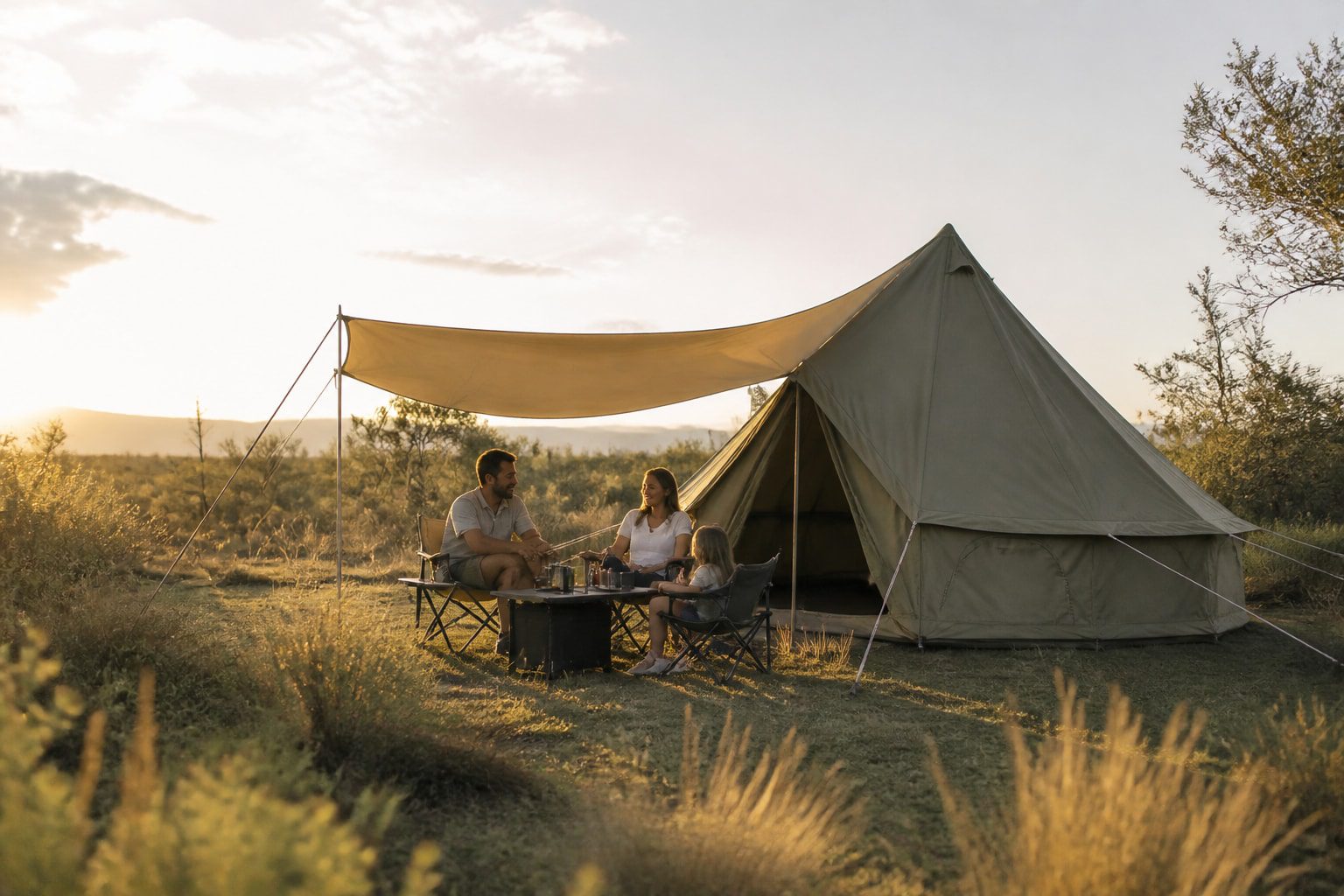
A bell tent is a round, single-pole canvas tent that sleeps a family comfortably, stays cooler than synthetic shelters in summer heat and lasts for many seasons when you choose heavy fabric and look after it properly. Pick it by diameter (4 m for a couple or small family, 5 m for four to six people), canvas weight, waterproofing and ground sheet, then season it before the first rain and dry it fully before every pack-up.
This guide covers how to size a bell tent, what the fabric specs mean, how to pitch and season it, how to deal with South African weather, and the fire-safety rules that matter once you add a stove or a braai to the picture.
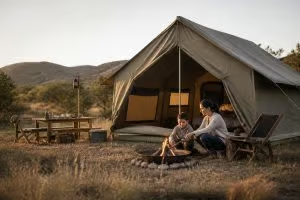
A bell tent is a free-standing round shelter held up by a central pole (or an A-frame in some designs), with sloping walls that flare out like a bell. That shape gives you tall, usable headroom in the middle and a wide circular floor with no awkward corners.
Compared with a standard dome or cabin tent, the main differences are:
The trade-offs are weight and setup time. A bell tent is a base-camp shelter, not something you carry on your back. If you are after ultralight backpacking gear, a bell tent is the wrong tool. It suits families who drive to the campsite and want to stay put for a weekend, a week or a whole holiday season.
Choose a bell tent by diameter, then remove one or two people from the manufacturer's sleeping capacity so you have room for bags and bedding. Capacity figures assume people lying shoulder to shoulder with nothing else inside.
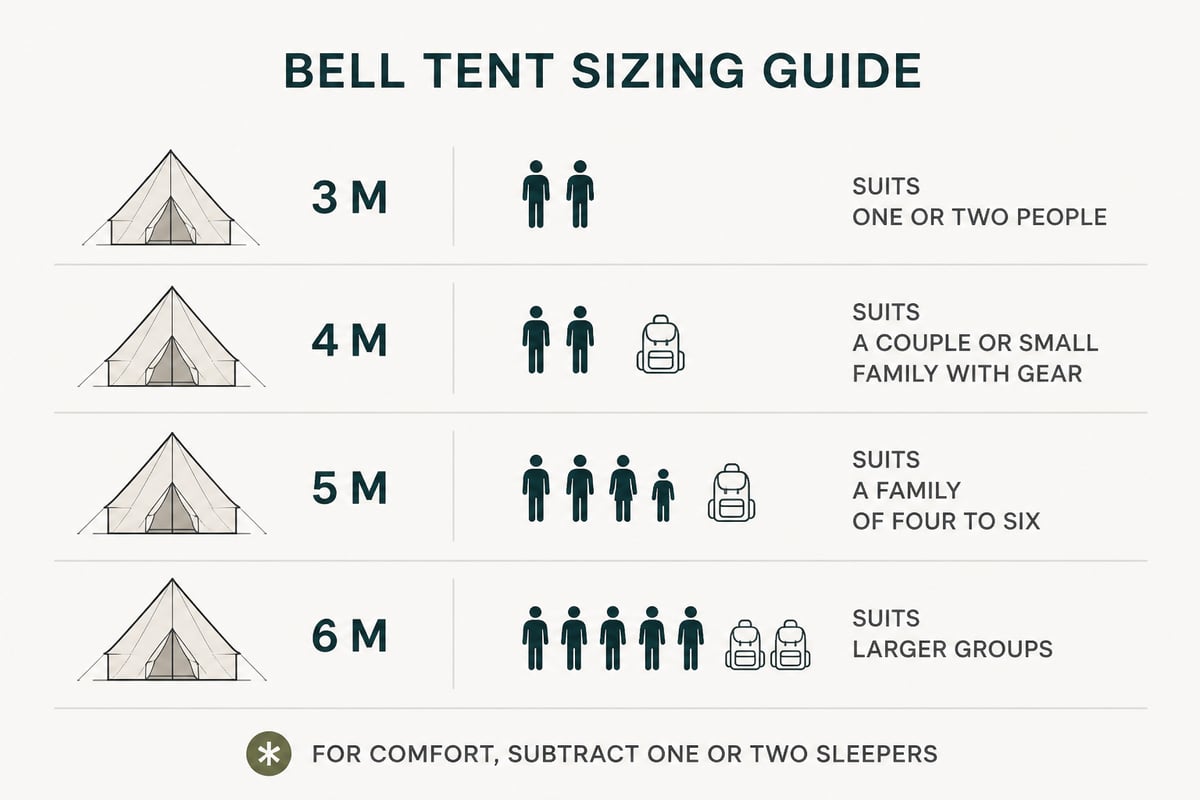
Use this as a rough planning guide:
| Diameter | Comfortable sleeping (with gear) | Typical use |
|---|---|---|
| 3 m | 1 to 2 people | Couples, short trips |
| 4 m | 2 to 3 people | Small family, weekend camping |
| 5 m | 4 to 5 people | Family holidays |
| 6 m | 6 to 8 people | Large families, groups |
A few things shift those numbers. Camp beds, stretchers and inflatable mattresses all eat floor space, and a stove takes a further bite. If you plan to cook under a separate awning and keep the tent purely for sleeping, you can go a size smaller. If bad weather means everyone sits inside for an afternoon, size up.
Ceiling height matters as much as diameter. A taller centre pole gives you real standing room and better airflow, which helps in summer.
For a bell tent that has to stay dry for several seasons, look for heavy cotton canvas, a water-repellent and UV treatment, a sewn-in ground sheet and strong stitching at the seams and pole point. Weight per square metre is the quickest way to judge how substantial the fabric is.
Pure cotton canvas swells when wet, which closes the weave and makes it shed water. Poly-cotton blends are lighter and dry faster, but they rely more heavily on coatings. For South African conditions, where you get hard UV and sudden summer thunderstorms, a quality treated canvas is the safer bet.
Ask whether the canvas is treated for water resistance and UV. Our summer sun degrades untreated fabric quickly, and storms in Gauteng and KwaZulu-Natal can dump a lot of water in minutes. Ejenti Outdoor, a South African company, makes durable tents and outdoor products, and it is the kind of spec to look for from any maker.
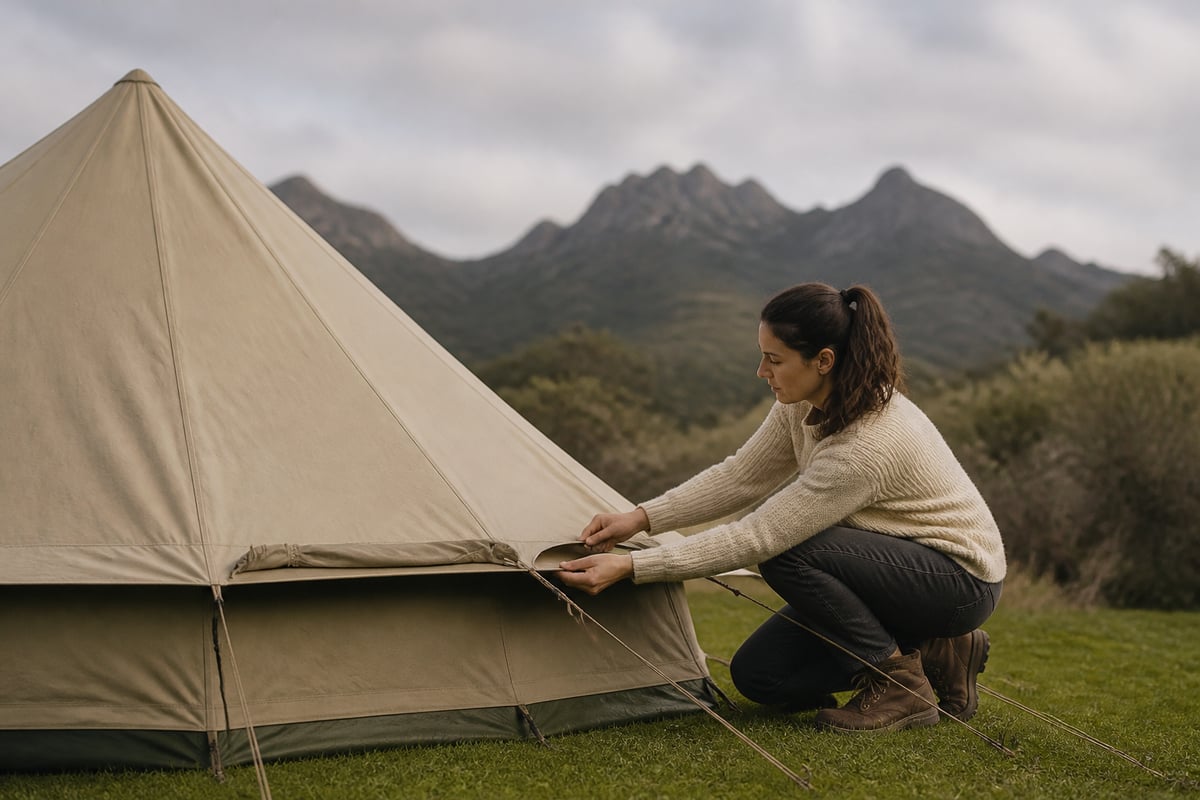
Set the tent up in a dry spot, peg the walls out evenly, raise the centre pole last and tension the guy ropes in opposite pairs so the canvas pulls tight without puckering. A properly tensioned bell tent sheds wind and rain far better than a saggy one.
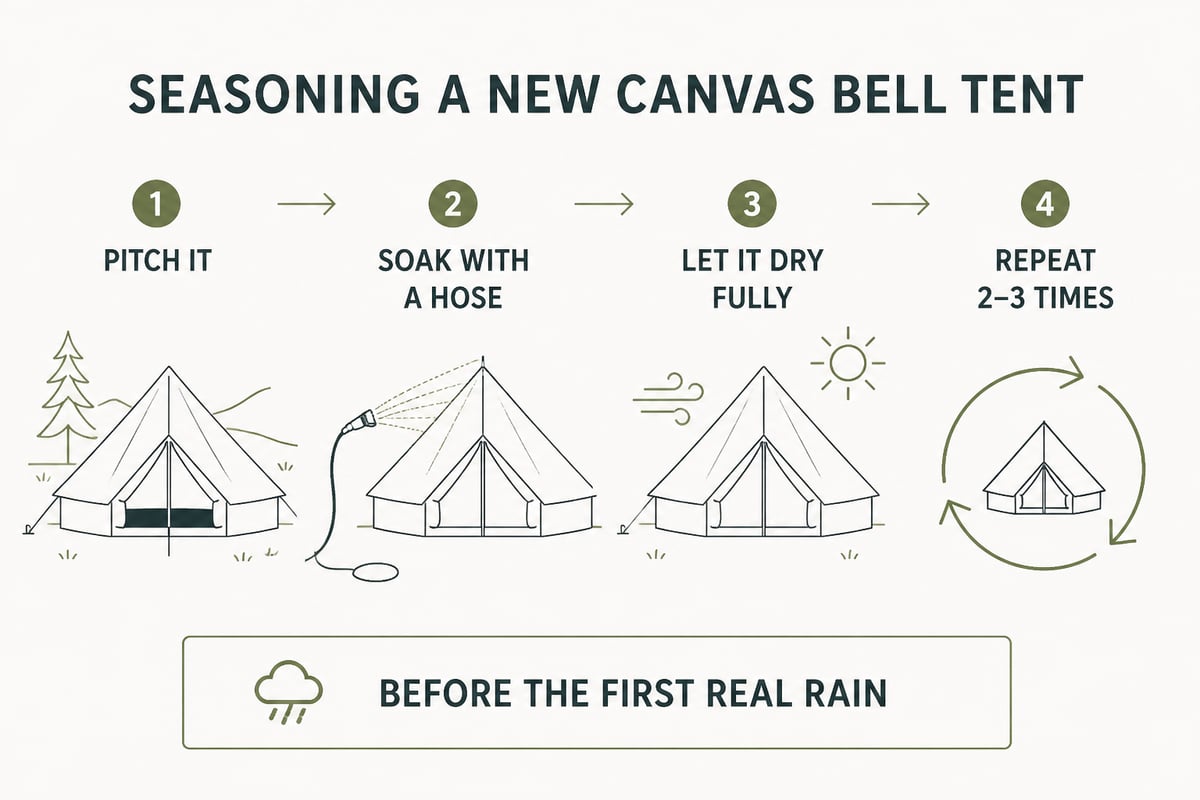
Seasoning is what stops a new cotton tent leaking at the seams. Colorado Tent advises that a new canvas tent should be set up and soaked thoroughly, allowed to dry, and soaked again two or three times before its first rain. Do this at home with a garden hose rather than waiting for your holiday storm to test it. The cotton fibres swell, the needle holes in the stitching close and the tent becomes properly watertight.
Keep a bell tent dry by pitching on slightly raised ground, tensioning the canvas evenly, avoiding touching the walls from inside during rain and ventilating well so condensation does not drip. Canvas that touches wet fingers or bedding can wick water through at that point.
Practical habits for summer storms and winter drizzle:
If you camp regularly in coastal or high-wind areas, use extra guy lines and heavier pegs than the ones supplied.
Canvas is flammable, so keep flames, hot surfaces and sparks well away from the fabric and never cook inside the tent. Kodiak Canvas warns that canvas tents are flammable and that you should keep flames and heat sources away from the fabric while maintaining adequate ventilation.
The key rules:
A good habit is to cook and braai under a separate shade awning or gazebo, a few metres from the sleeping tent.
Dry the canvas completely before you store it, because damp folded cotton can grow mould. Colorado Tent recommends that a canvas tent be dried completely before storage, and if it is packed wet, hung to dry fully as soon as possible.
After each trip:
Avoid garages that flood or sheds where rodents and damp thrive. A tent that goes into storage dry and clean can last many seasons.
A bell tent suits relaxed base-camp stays, but other shelters fit better for certain trips. If you want something quick to pitch for overnight stops at a campsite or on a 4×4 route, a dome design is easier to handle. Ejenti Outdoor's Premium Heavy-Duty Canvas Dome Tent is built for the harsh African climate and works well when you want canvas durability without the larger footprint of a bell.
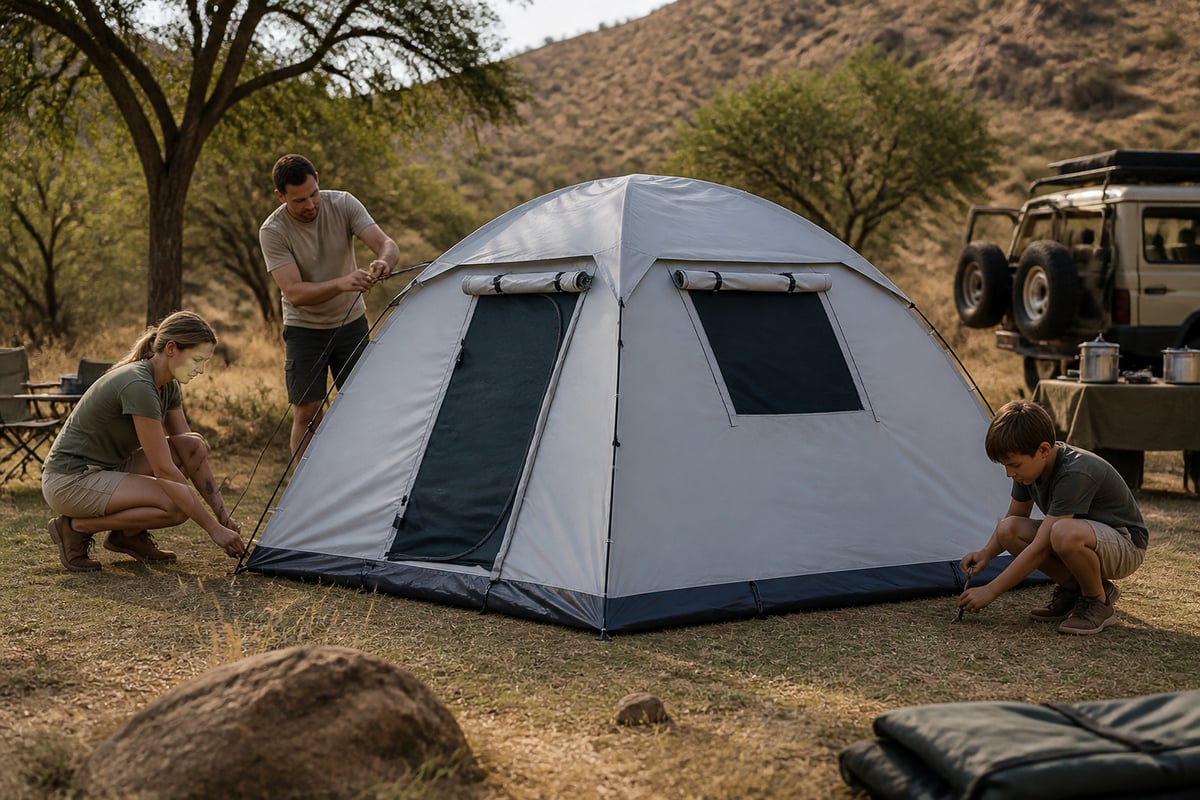
For long stays and a more permanent feel, look at Ejenti Outdoor's safari tents, which give you walls and more headroom. For big gatherings such as weddings or farm events, a heavy-duty waterproof PVC marquee covers far more floor space than any bell tent.
If you sleep rough on the ground or in a vehicle, Outhaus makes canvas swags and tarps that pair well with a bell tent as a rain-proof cooking or sitting area.
If a standard size or layout doesn't fit your needs, a custom build can solve it. Ejenti Outdoor offers custom builds, so questions about special dimensions, door placement or fabric choice are worth asking through their product pages or contact page rather than assuming a limit.
Before you pay for any bell tent, ask the seller:
Clear answers to those five questions tell you more about a tent than any photo.
Start by measuring the space you have at your usual campsite and counting how many beds you really need, then match that to a diameter before you compare fabrics. When you are ready to see what is available, Ejenti Outdoor offers durable canvas shelters for South African conditions, including the Premium Heavy-Duty Canvas Dome Tent if a bell tent turns out to be bigger than you need. Browse the range at Ejenti Outdoor and shop now for a shelter that will see you through many seasons.