
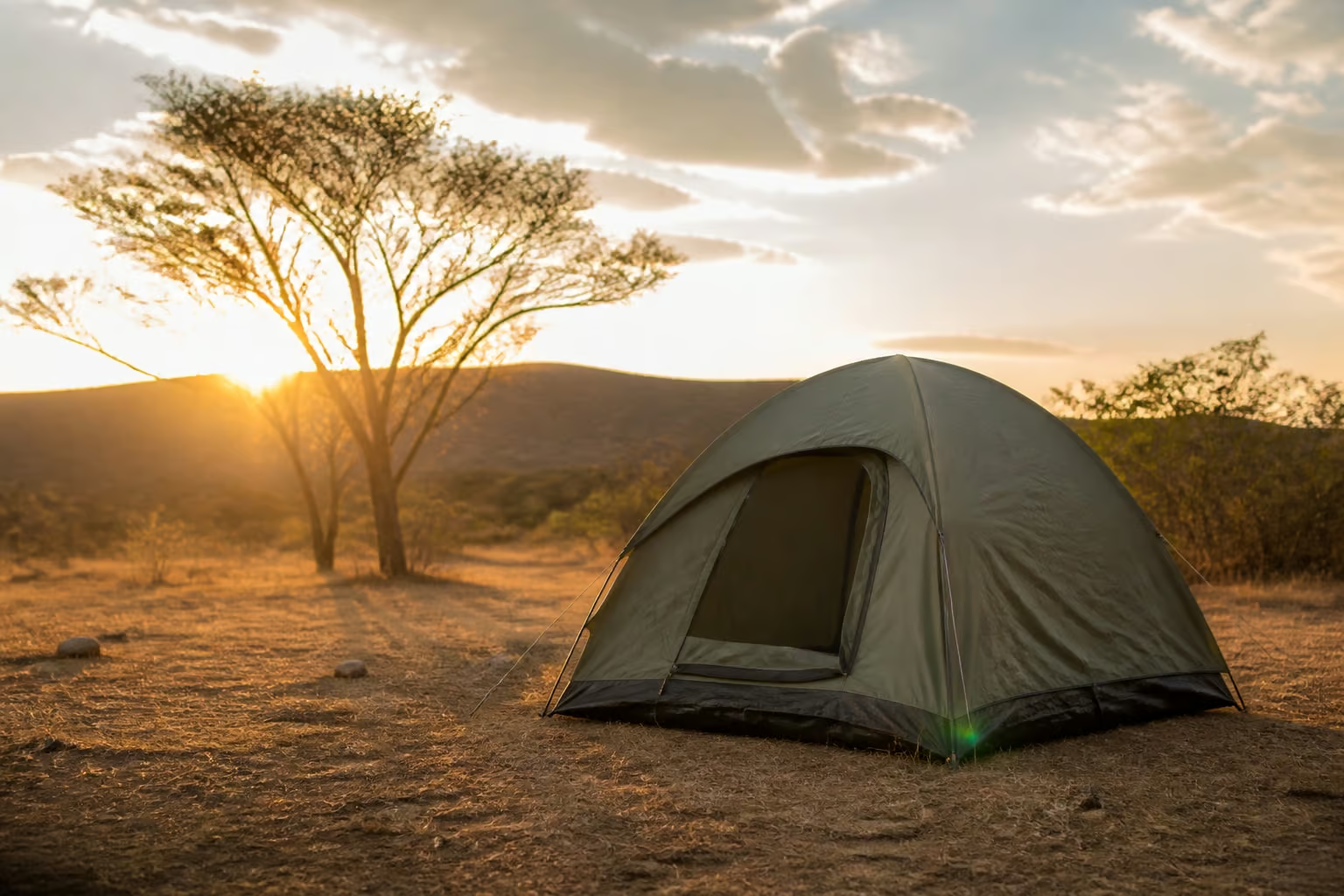
The right camping tent matches your group size, the season you camp in, and how you travel: pick a capacity one person larger than your headcount, a fabric suited to your climate, and a pitch style you can manage alone. Get those three decisions right and most of the buying work is done.
Tents range from a 1 kg backpacking shelter to a heavy canvas cabin you leave pitched for a week. The best choice for a weekend at a Drakensberg hiking hut stop looks nothing like the best choice for a family holiday at a Kruger rest camp. This guide walks through the decisions in order, so you can narrow a crowded market down to two or three realistic options.
The best tent type depends on how you reach your campsite and how long you stay: backpackers want light tunnel or dome designs, car campers want roomy cabin or dome models, and long stays favor canvas.
Here are the main categories:
If you camp only a few times a year at established sites, a mid-priced dome or cabin tent is usually enough. If you camp monthly or in remote areas, durability starts to outweigh weight.
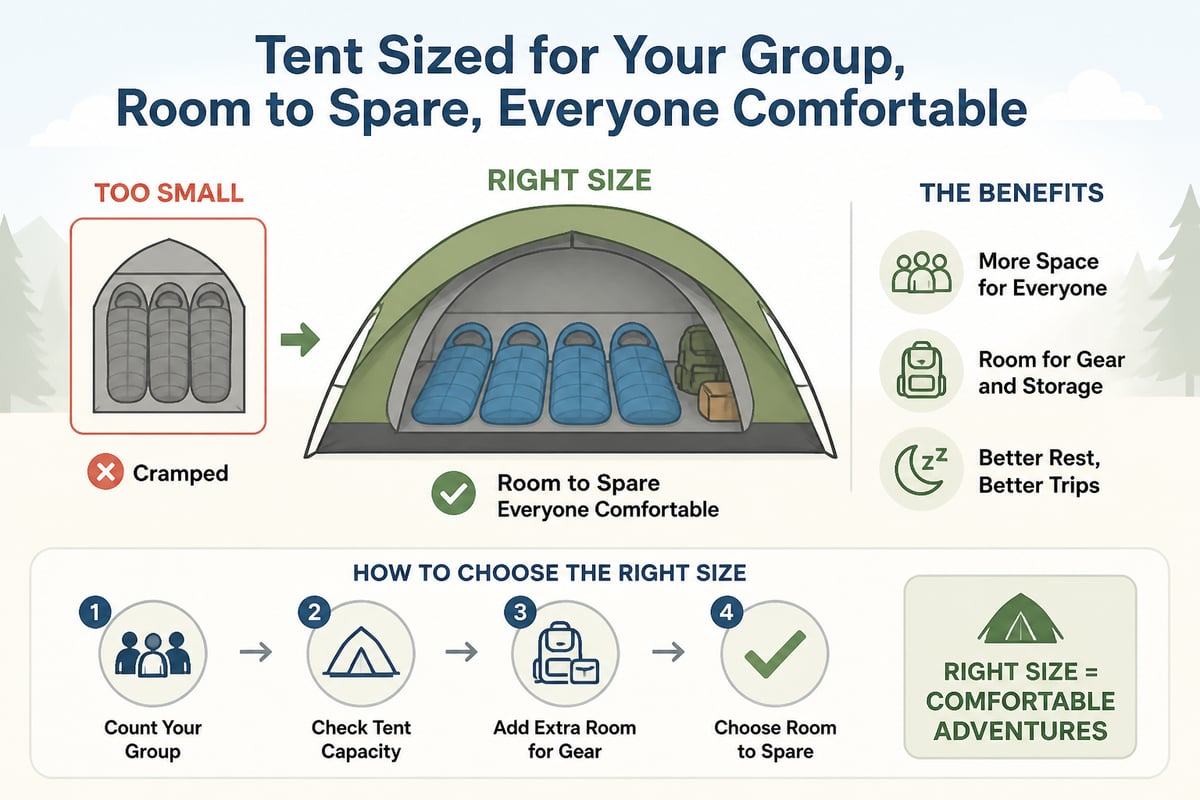
Choose a tent rated for at least one more person than will sleep in it, because manufacturer capacity numbers assume everyone lies shoulder to shoulder with no gear inside.
A two-person tent fits two sleeping mats and little else. A "four-person" tent comfortably sleeps three adults with bags beside them. Families with children can often stay on the rated number, since small bodies take up less floor.
Check these dimensions on the spec sheet:
For groups, a 5-person camping tent sits in a useful middle spot, sleeping a family of four with space left over for bags. If you are shopping for children and parents together, the range of camping tents for families covers layouts with separate sleeping zones.
Season rating tells you how much wind, rain, and cold a tent is built to handle, and for most South African camping a three-season design is the sensible default.
Three-season tents suit spring through autumn. They have mesh panels for airflow and enough waterproofing for summer thunderstorms, which can be fierce on the Highveld and along the Wild Coast. Four-season tents use stronger poles and fewer mesh panels for snow and sustained wind, which matters for winter in the Drakensberg or Lesotho border country.
Look closely at these weather features:
Hot camping needs different thinking. Dark fabrics trap heat, and a tent with no cross-ventilation turns into an oven by 8 a.m. Light-colored flies, large mesh doors, and a pitch under shade make the real difference.
Polyester suits budget and general camping, nylon suits lightweight trips, and canvas suits long stays and harsh sun, with each trading weight against durability.
| Fabric | Weight | Durability | Breathability | UV resistance | Best for |
|---|---|---|---|---|---|
| Polyester | Light to medium | Good | Low | Good | Everyday camping |
| Ripstop nylon | Lightest | Good, tears resist spreading | Low | Fair (degrades in sun) | Backpacking |
| Poly-cotton | Medium to heavy | Very good | Medium | Very good | Seasonal camps |
| Heavy canvas | Heavy | Excellent | High | Excellent | Base camps, long stays |
Canvas deserves a closer look for southern African conditions. Cotton canvas swells when wet, which tightens the weave and seals the fabric, and it breathes so the interior stays cooler and less clammy than in a coated nylon tent. It handles intense UV, which breaks down thin synthetics over a few seasons. The cost is weight and a longer drying time after rain, so canvas suits car camping, 4×4 trips, and sites where you stay several nights.
Before choosing a coated synthetic, check the UV rating. Sun damage is the most common reason a polyester fly fails years before its seams do.
Polyester is the usual budget choice, while canvas is the most durable and breathable option.
Yes: a tent you can pitch alone in ten minutes gets used more often than one that needs two people and an hour, so match the design to your real camping habits.
For backpacking, packed weight rules. Look for light trail weights and compact pack sizes. For car camping, weight matters less than pitch time and living space. Pre-attached poles, clip-on inners, and simple pole designs all speed things up.
Think about pitching in poor conditions too. Many campers arrive at dusk after a long drive, sometimes in wind or rain. A freestanding dome that holds its shape without pegs lets you reposition it, which helps on rocky ground or hard-packed sites where pegs will not bite. Pack extra strong pegs for sand and a mallet for clay.
Packing size matters for vehicles with limited boot space. A tent that rolls into a long duffel is easier to load than a short, fat sack. A carry bag with compression straps also makes it easier to repack after a wet trip.
Heavy-duty canvas dome tents combine the quick, stable shape of a dome with the longevity and cooler interior of canvas, which makes them a strong pick for rough African conditions.
The Premium Heavy-Duty Canvas Dome Tent from Ejenti Outdoor is built for this use, from SANParks sites to remote 4×4 trails, where thorn scrapes, strong sun, and sudden storms test a tent harder than a weekend campground does.
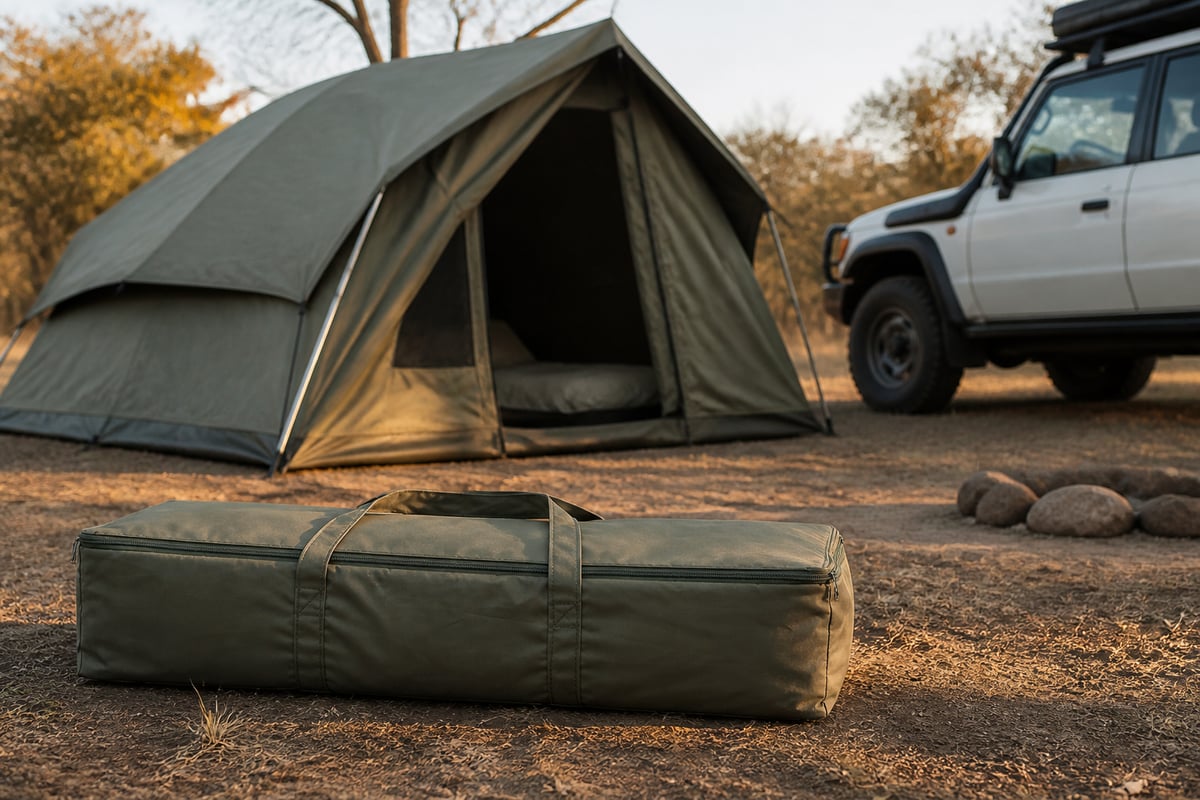
A canvas dome gives you a sturdy structure and a fabric that tolerates years of repeated pitching. If you camp often and want a tent you will not replace in three seasons, that longevity changes the math on the higher upfront price.
Small design details, like door count, pocket placement, and floor construction, shape how pleasant a tent is to live in for several nights.
Worth checking before you buy:
Footprints, or ground sheets cut to the floor shape, protect the base from abrasion and add a layer against moisture. A cheap tarp trimmed slightly smaller than the floor does the same job. Keep it inside the tent's outline so rain does not channel under the floor.
Spend according to how often you camp: a budget tent suits occasional trips, while frequent campers often save over time by buying a durable one once.
Rough guidance by use:
If you are unsure, you do not have to buy first. Hiring lets you test a size and style before spending, and you can rent tents for camping to see whether a cabin layout or a dome suits your group. Bundled options such as a family camping pack also reduce the cost of kitting out beyond the tent itself.
For a sense of what independent reviewers tend to rate highly, Best Camping Tents roundups compare tents by pitch ease and weather performance, which gives useful benchmarks for your own shortlist.
Dry it fully, store it loose, and keep it out of prolonged sun, and a good tent can last many seasons.
Mildew is the main killer. Never pack a tent wet. If you must break camp in rain, pitch it at home as soon as you can and let it dry completely, including the floor and seams. Store it in a breathable bag, not a tight compression sack, in a cool, dry room.
Other habits that pay off:
Treat your vehicle with the same care you give your gear, since keeping the car in good shape matters as much as the tent on longer trips.
Run through a short checklist before paying, and you will avoid the most common buyer regrets.
If you want to compare against marketplace listings, AMERLIFE's sale tents page lists tents at a range of prices, though local suppliers may know South African weather better. For visual comparison, our guide to tent photos explains where to find good images and how to judge their quality and licensing.
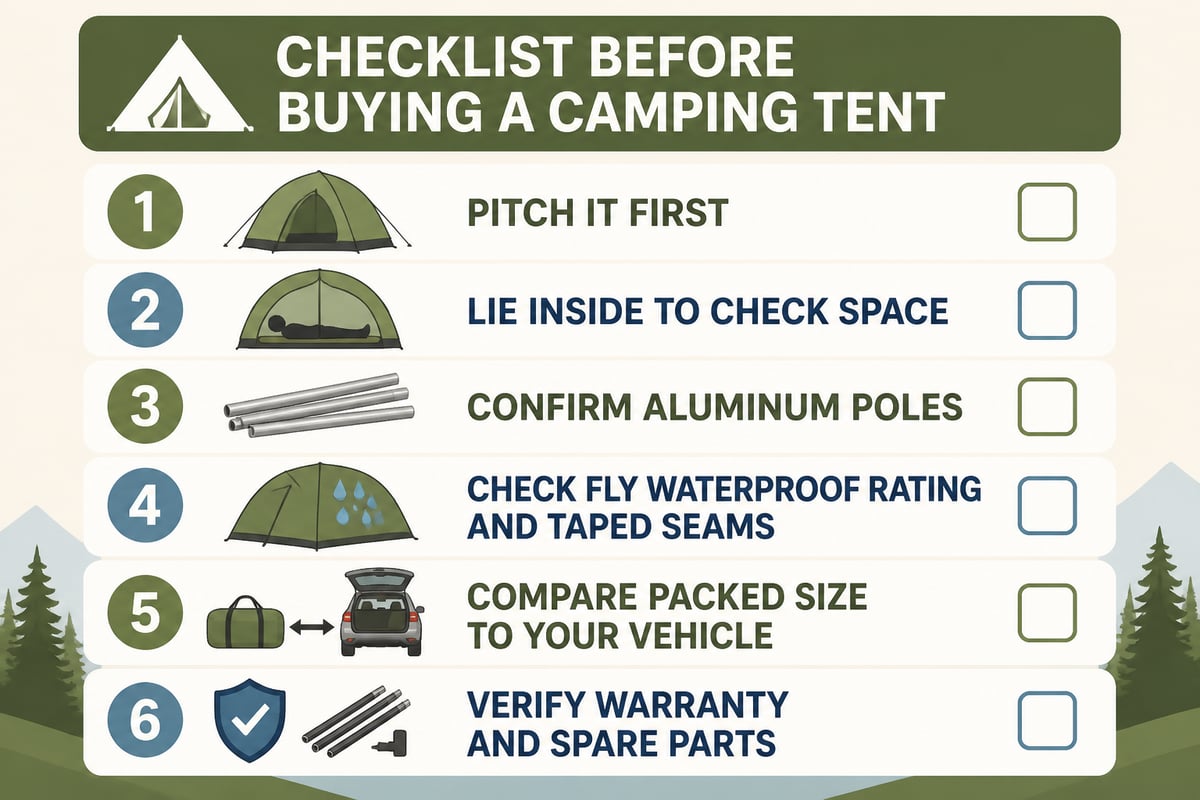
The costliest errors are buying too small, ignoring ventilation, and choosing the lightest tent when weight did not matter for the trip.
Buyers often pick a tent by headline price or capacity alone. A cheap four-person tent that sleeps two comfortably is not a bargain if you camp with a partner and two kids. Another frequent mistake is skipping a practice pitch, which means the first setup happens in the dark at a campsite. A related one is overlooking site rules: some reserves restrict tent footprints or ban certain fire practices near fabric, so confirm before you go.
Choosing for the trip you imagine instead of the trips you take also leads to waste. A weekend car camper rarely needs an ultralight shelter, and a hiker rarely needs a cabin. If you move between styles, a quality 4-person waterproof tunnel tent with a sunshade vestibule shows how a vestibule adds living space without adding much weight.
Finally, plan for the whole camp. Poles, pegs, a footprint, and a good mat matter as much as the tent, and tents sold with matching accessories save time. Camping often means long drives, and travelers who enjoy active trips sometimes pair a campsite with cycling to cover more ground than walking allows.
Before you buy, pitch a tent in your garden or hire one for a weekend, then measure it against the checklist above. Ejenti Outdoor builds tents for South African conditions, from canvas to dome designs, and the Premium Heavy-Duty Canvas Dome Tent is a good place to start if you want one that handles sun, wind, and rough tracks season after season.