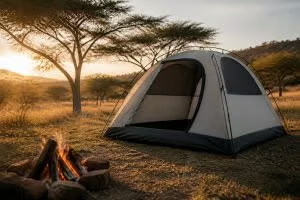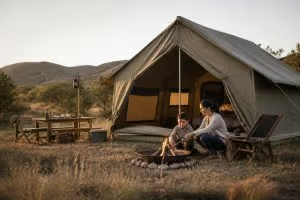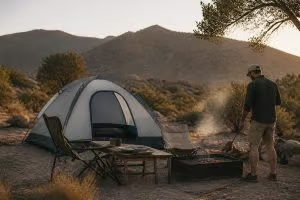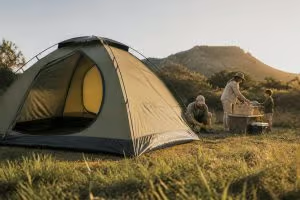

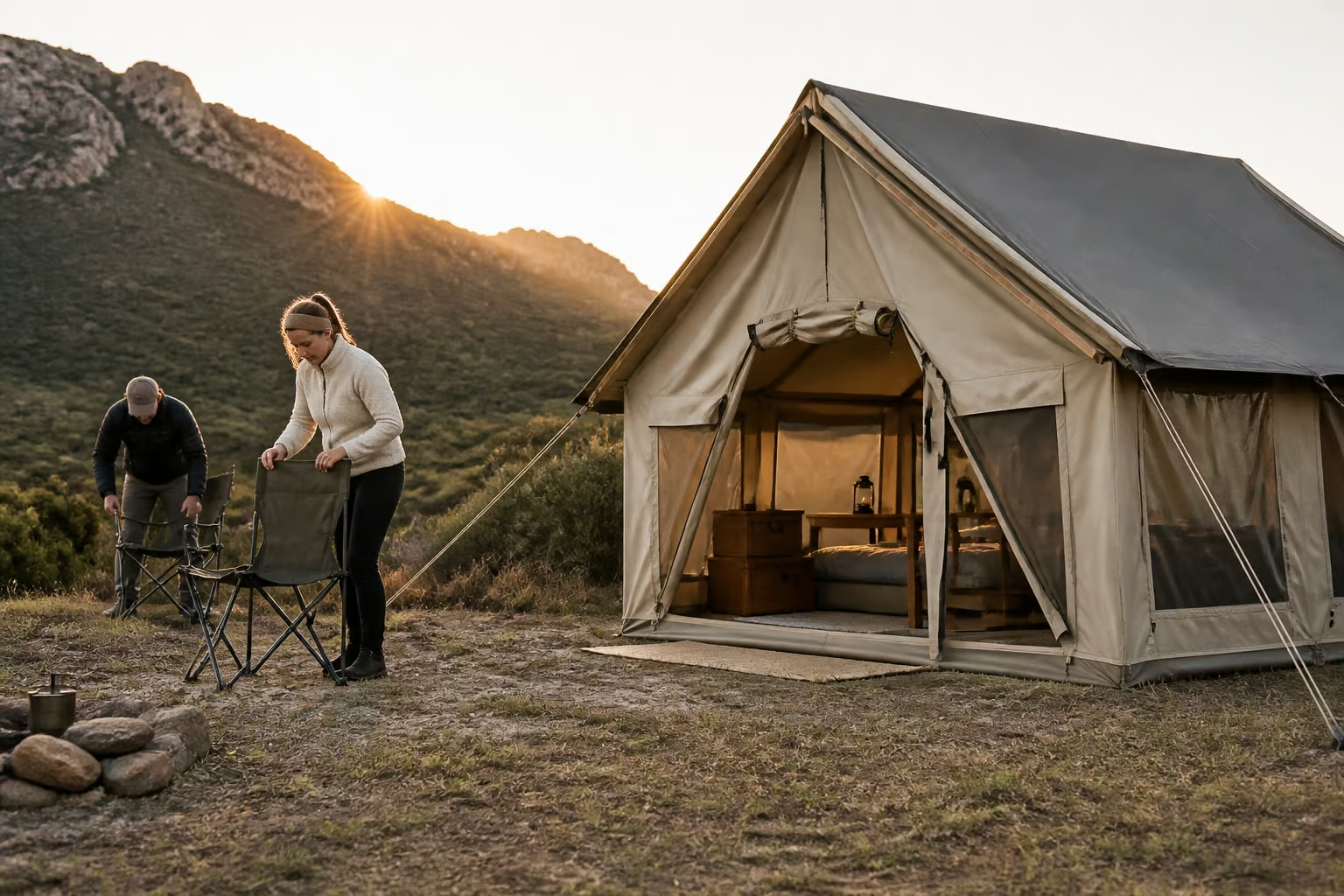
A 4 person tent sleeps four people at a squeeze, but most families get far better comfort from a model with roughly 4 to 6 sleeping spaces, because rated capacity assumes bodies packed shoulder to shoulder with no room for bags. The best choice for South African camping is a tent with a floor size that matches your group, a fabric that handles UV and summer storms, and a frame you can pitch in under 20 minutes.
This guide covers how to size a tent honestly, which fabrics last, how to judge waterproofing, and what to check before you buy.
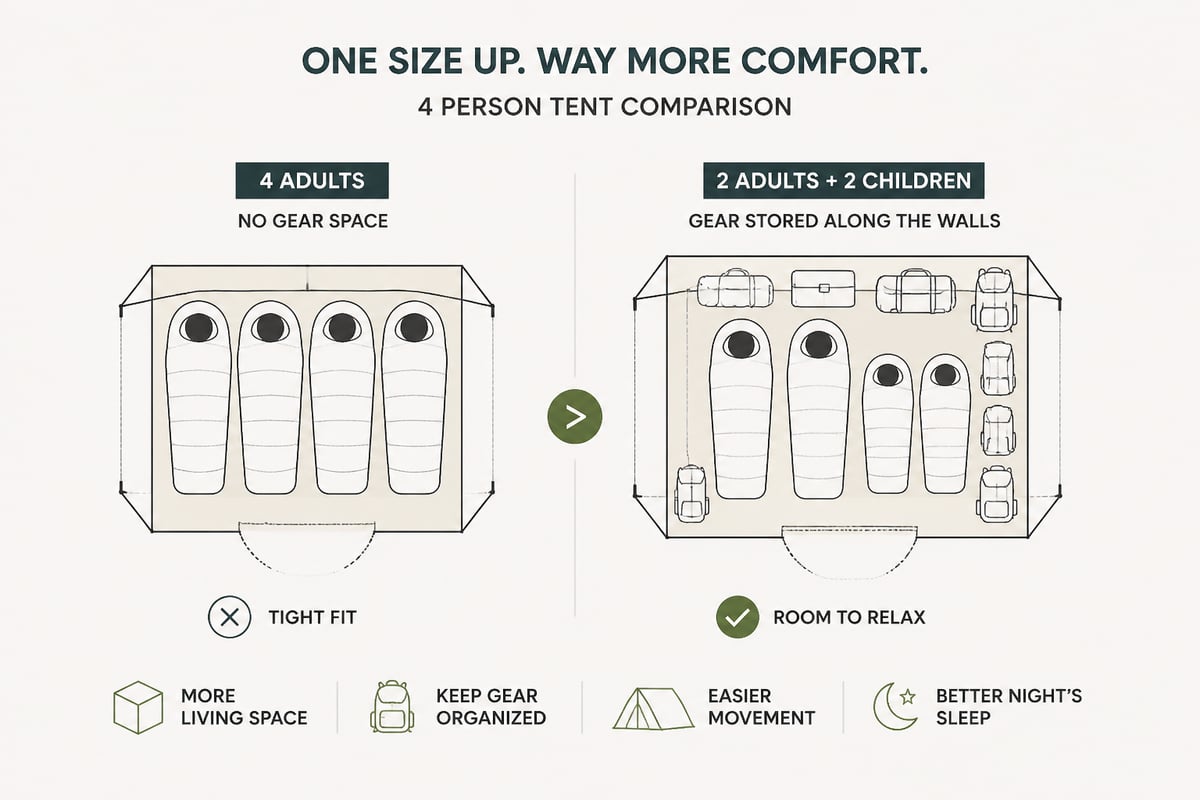
A 4 person rating describes the maximum number of sleeping bags that fit on the floor, not the number of people who will be comfortable. Manufacturers usually calculate capacity by allowing about 50 to 60 cm of width per sleeper, which is a snug fit for adults on standard mats.
In practice, a tent rated for four works like this:
A common rule among campers is to buy one size up from your headcount. If four people will sleep in it regularly, look at models rated for five or six. That extra floor area is the difference between a tidy camp and a tent full of clutter during a rainy afternoon.
Floor area and peak height decide how livable a tent feels far more than the capacity number does. Compare these three measurements before anything else.
| Measurement | What to look for in a family tent |
|---|---|
| Floor area | Around 6 to 8 square metres for four people with gear |
| Peak height | 1.7 m or more so adults can stand at the centre |
| Wall steepness | Near-vertical walls give usable space right to the edges |
Dome designs shed wind well but lose usable space at the edges as the walls curve inward. Cabin-style tents with straighter walls give more standing room, though they catch more wind and need better guying. Tunnel tents sit in between, with excellent space for their weight but a need to be pitched facing into the wind.
Think about layout too. A single large room is simple and flexible. A divided tent, with a sleeping pod separated from a living area, gives parents privacy and keeps muddy shoes away from sleeping bags. A covered porch or vestibule adds a dry spot for boots, packs and a camp stove on drizzly mornings.
Fabric determines how long a tent lasts, how it handles heat, and how well it keeps water out. Each option involves trade-offs.
Heavy cotton canvas is the traditional choice for long-lasting family shelters. It breathes naturally, which reduces condensation inside, and it stays cooler under harsh midday sun than thin synthetics. Quality canvas is also tough against abrasion from thorn trees and wind-blown grit. The trade-offs are weight and drying time: canvas is heavy, so it suits car camping and base camps rather than hiking. Treated canvas also needs to be dried fully before long-term storage to prevent mildew.
Synthetic tents are lighter and cheaper, and they dry quickly. Their weakness is sunlight. Ultraviolet exposure gradually breaks down untreated polyester and nylon, which matters across a South African summer where the UV index regularly climbs very high. Look for a UV-treated fly and expect to replace a budget synthetic tent sooner than a canvas one.
Ripstop is a weave with reinforcing threads in a grid pattern that stops small tears from spreading. It appears in both nylon and cotton-blend fabrics and is a good sign of durability on high-wear areas like the fly and floor.
For families who camp several times a year and want a tent that lasts many seasons, heavy-duty treated canvas or ripstop is usually the better long-term investment.
A tent keeps you dry through a combination of fabric treatment, seam sealing and smart design, not a single number on a label. Summer thunderstorms across much of South Africa can drop heavy rain in short bursts, often with strong wind, so each of the following matters.
Canvas has a distinctive trait worth knowing: untreated or newly bought canvas can need weathering. Cotton fibres swell when wet and close the weave, so a tent that drips slightly on its first soaking often seals itself afterward. Treated canvas from a reputable manufacturer reduces this, but a first-use wetting at home is still smart practice.
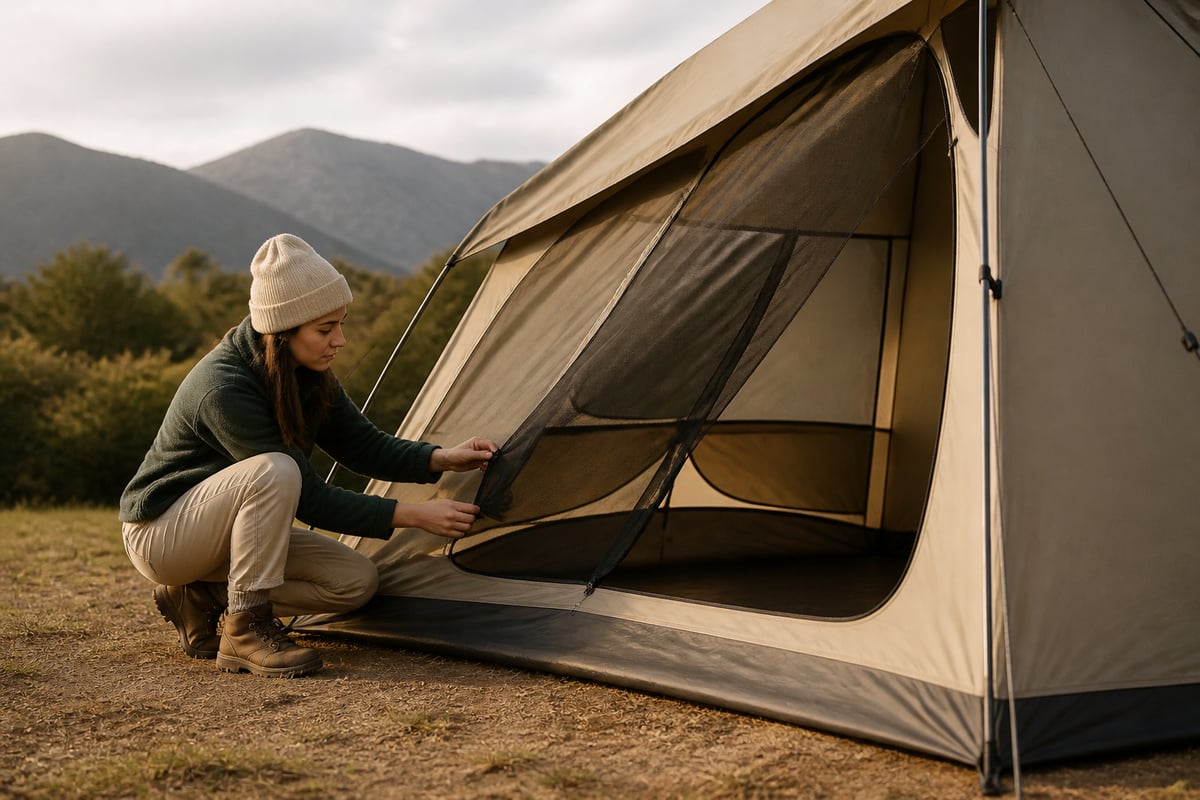
Good ventilation matters as much as waterproofing, because a sealed tent full of sleeping people soaks its own walls with condensation. Four people breathe out a surprising amount of moisture overnight.
Look for these features:
In hot regions such as the Lowveld or Kruger-area campsites, mesh panels also keep mosquitoes and other insects out while letting night air through. Canvas breathes on its own, which is one reason it handles muggy conditions well.
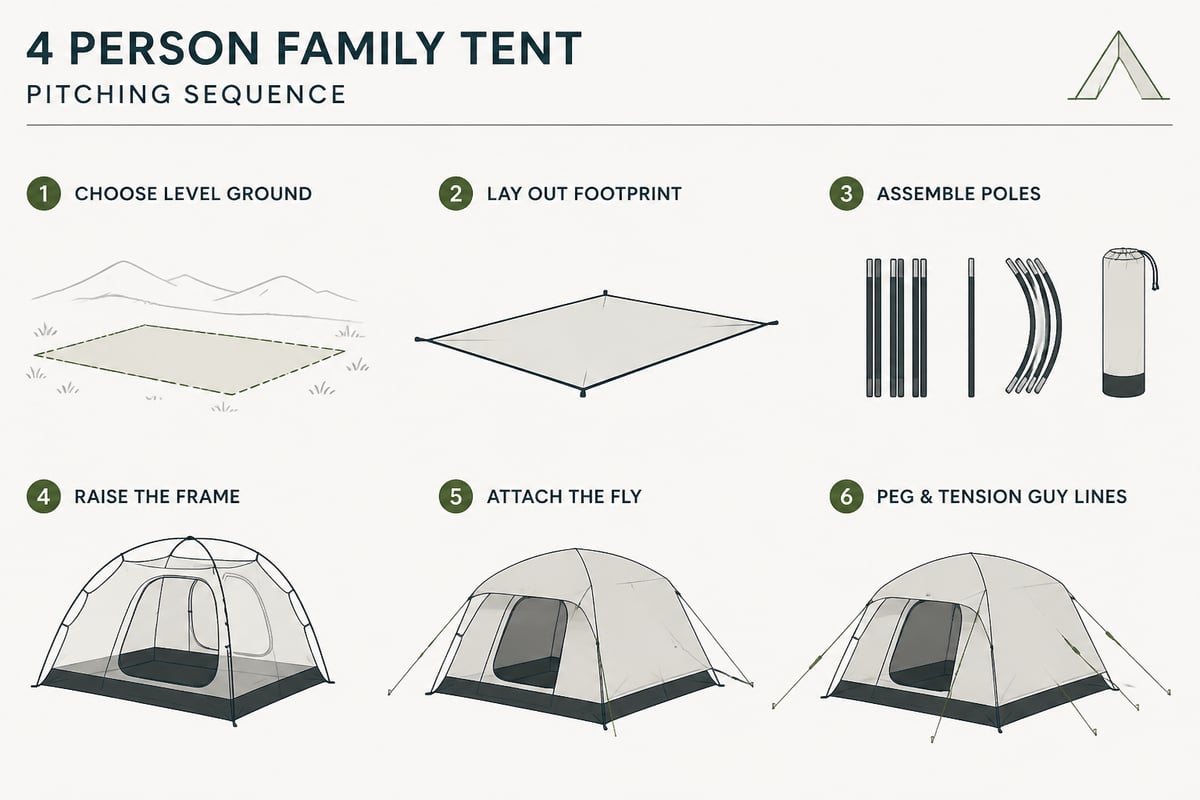
Setup effort decides whether you enjoy a tent or dread it. A 4 person tent should be pitchable by two people in about 15 to 25 minutes once you have practiced.
Before you buy, consider:
Pitch your new tent in the garden at least once before a trip. You will learn the sequence, spot any missing pegs, and check for faults while returns or repairs are still easy to arrange.
The right tent depends on the type of camping you do most. Use this as a quick filter.
If you are tempted by a lightweight model, remember that most ultralight designs trade durability for low weight. Lightweight backpacking shelters are judged mainly on packed weight, but that approach is aimed at people carrying their tent on their back. For vehicle-based family camping, you can prioritize space and durability over grams.
Keep your wider kit in mind too. If your trips involve a long drive, a tidy vehicle makes unloading faster, and basic car care accessories such as seat covers, boot organisers and cleaning supplies, like those offered by Iverol, help keep muddy camping gear from ruining your interior.
One tent built for local conditions is the Premium Heavy-Duty Canvas Dome Tent from Ejenti Outdoor, a South African company that makes durable tents, gazebos and outdoor products. It is designed for the African climate, from SANParks campsites to remote 4×4 trails, and the dome shape handles wind while heavy canvas stands up to sun and rough ground.
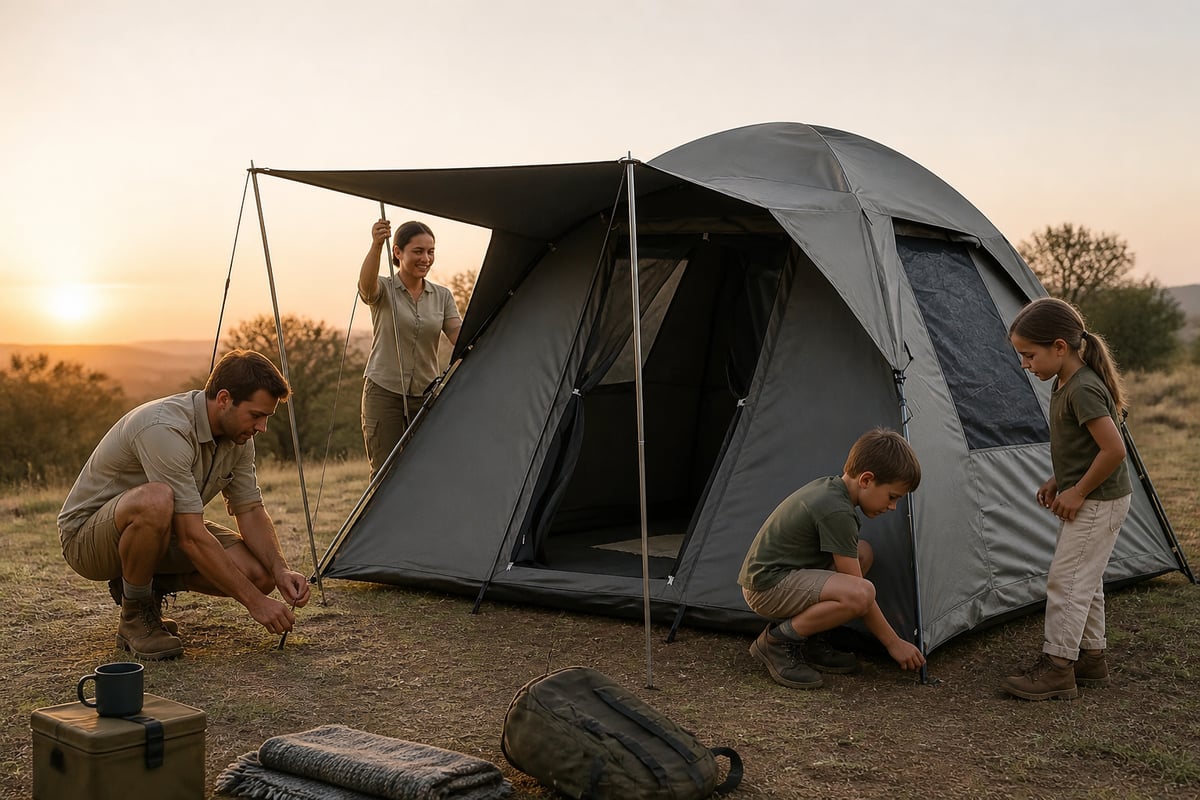
Ejenti Outdoor works with heavy-duty canvas and ripstop fabrics, and the company has completed over 400 custom builds. If your group is a little larger than four, or you want a feature set that standard sizes do not offer, you can browse the 4 person family tent range, compare it with 5 person tents, or look at a 6 person camping tent for extra room. For exact dimensions, fabric weights and custom options, check each product page or contact Ejenti Outdoor directly.
How you treat a tent often matters more than its original price. A few habits can add years to its life.
Before you commit to a 4 person tent, run through these questions:
If you are camping near wildlife areas or planning a longer trip, you might pair your tent plans with a guided safari experience. Safari operators offer everything from basic camps to luxury lodges, which can help you decide how rugged your own setup needs to be.
Four people fit if they are willing to sleep tightly packed with little room for gear. Most families find three adults, or two adults and two children, far more comfortable. If you are weighing a smaller option, our checklist for choosing a 4 person tent covers capacity, fabric, weather rating and site setup.
Canvas lasts longer, breathes better and handles sun well, but it is heavier and takes longer to dry. Polyester is lighter and cheaper but typically degrades faster under strong UV.
Open vents at both high and low points, keep the fly clear of the inner tent, and avoid cooking inside. Pitching with a gentle crosswind through the vents also helps.
For most families, yes. A tent rated one size above your group gives comfortable room for gear, which matters most when bad weather keeps everyone inside.
Heavy canvas suits vehicle-based camping. If you must carry your shelter for long distances, a lighter synthetic model is more practical, though it will sacrifice some durability.
Before your next trip, measure the boot space in your vehicle and pitch your current tent in the garden to see how much room you actually use. If you need a durable shelter built for South African sun, wind and storms, Ejenti Outdoor can help you find or custom-build one, starting with the Premium Heavy-Duty Canvas Dome Tent. Explore the full range and Shop Now to choose a tent that will see your family through many seasons outdoors.