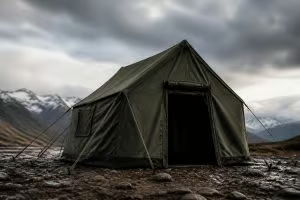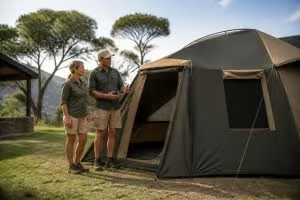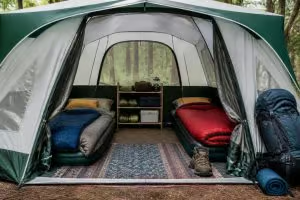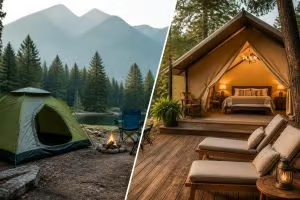

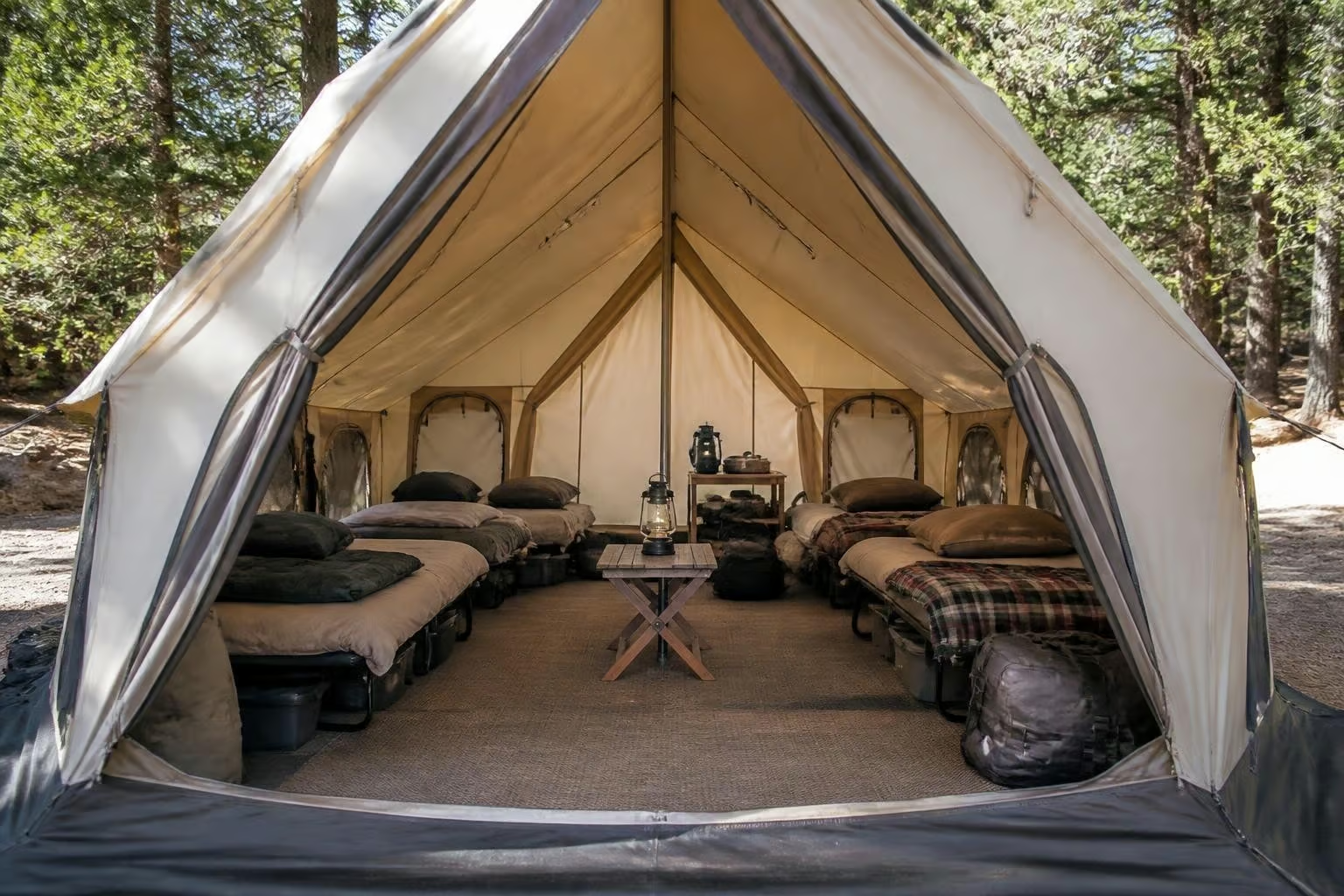
Choosing the right shelter for your family or group camping adventure requires careful consideration of size, durability, and comfort. A canvas tent 6 person configuration offers the perfect balance between spaciousness and practicality, providing enough room for a small family or a group of friends while remaining manageable to transport and set up. Unlike synthetic alternatives, canvas delivers superior breathability, temperature regulation, and longevity, making it the preferred choice for serious outdoor enthusiasts across South Africa and beyond.
When manufacturers label a tent as "6 person," they're typically calculating based on sleeping bag placement alone, without accounting for gear, movement space, or comfort.
A canvas tent 6 person model usually measures between 3m x 4m and 4m x 5m in floor dimensions. This translates to approximately 12 to 20 square meters of usable space. For genuine comfort, consider these practical guidelines:
The height of your canvas tent matters just as much as floor space. Most quality 6-person canvas tents feature center heights between 1.8m and 2.2m, allowing adults to stand upright in the central area.
Different canvas tent 6 person designs offer varying internal layouts:
| Layout Type | Best For | Key Feature |
|---|---|---|
| Single room | Groups of friends | Open, flexible space |
| Two-room divider | Families with children | Privacy partition included |
| Three-section | Mixed groups | Separate sleeping/living areas |
| Cabin style | Extended stays | Vertical walls, maximum headroom |
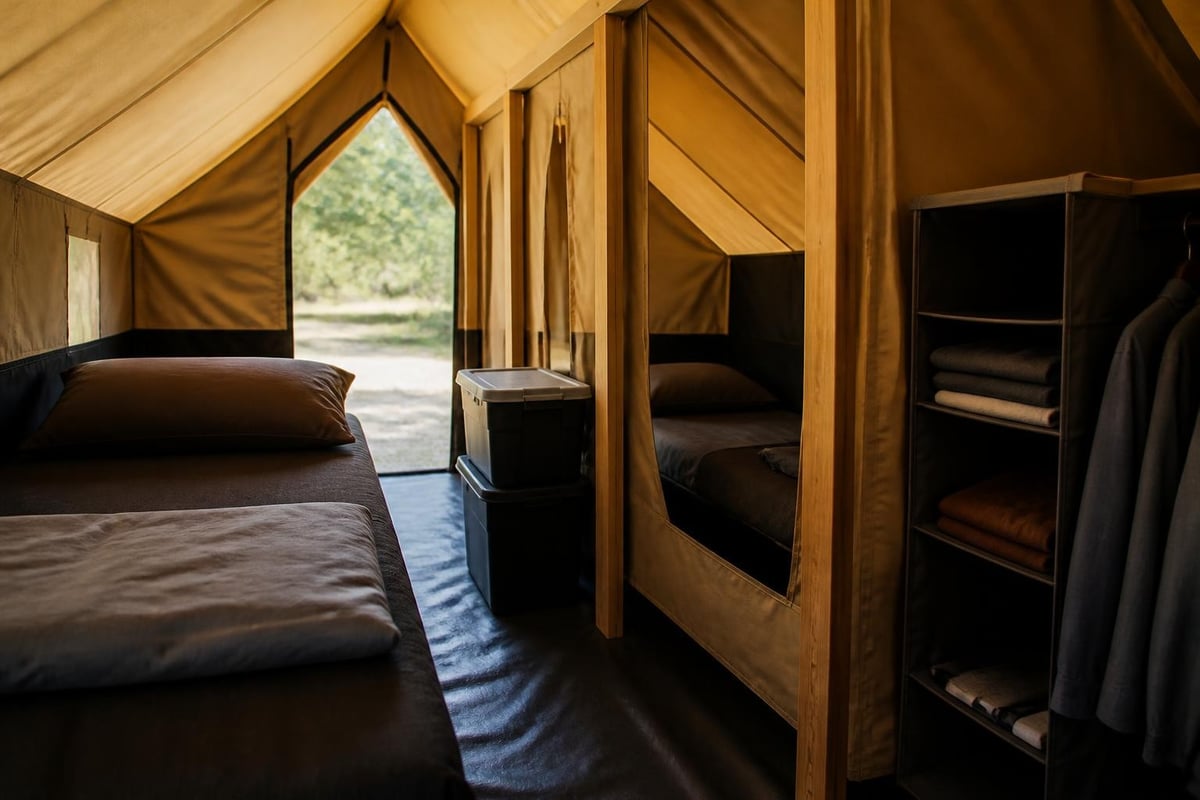
The fabric used in your canvas tent 6 person shelter determines its performance, longevity, and weather resistance. Modern canvas tents are manufactured from cotton duck canvas, polycotton blends, or specialized ripstop canvas materials.
GSM (grams per square meter) indicates fabric density and durability. For a reliable canvas tent 6 person model, look for these specifications:
The ripstop canvas construction method weaves reinforcement threads at regular intervals, creating a grid pattern that prevents tears from spreading. This technology has transformed canvas tent durability since its introduction in the 1960s.
Canvas naturally absorbs water, causing fibers to swell and create a tight seal. This "weathering-in" process requires one or two rain exposures before the tent reaches full waterproof capability. Modern waterproofing treatments enhance this natural property while maintaining breathability.
The balance between waterproofing and breathability distinguishes canvas from synthetic materials. According to research on waterproof and water-repellent textiles, canvas tents can "breathe" by allowing moisture vapor to escape while blocking liquid water, reducing condensation that plagues synthetic tents.
Beyond basic shelter, your canvas tent 6 person investment should include specific features that enhance functionality and comfort during extended outdoor stays.
Proper airflow prevents condensation buildup and maintains comfortable interior temperatures:
Quality ventilation becomes critical in humid climates or when cooking inside during rain. The difference between adequate and inadequate ventilation can mean waking to dry gear or finding everything damp with condensation.
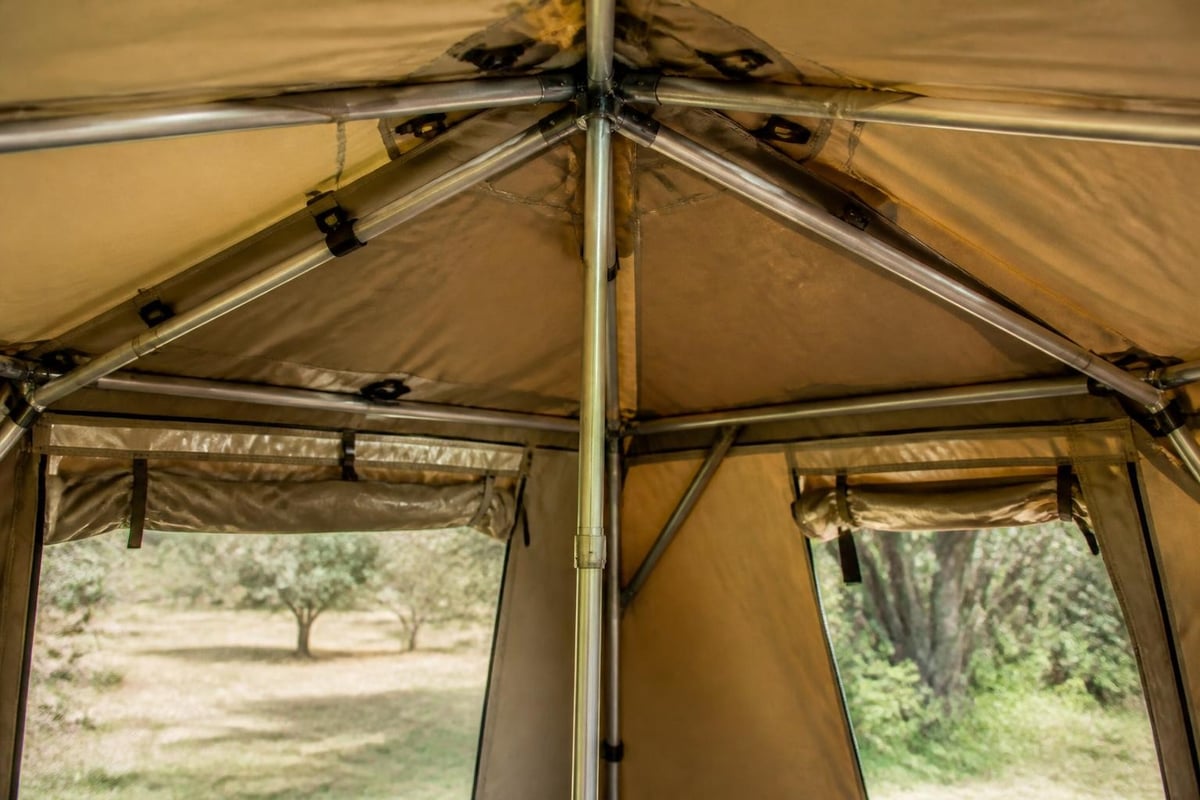
A canvas tent 6 person shelter requires robust structural support to handle wind loads and fabric tension. Frame materials include:
Galvanized steel: Heavy but exceptionally durable, rust-resistant, ideal for permanent setups
Aluminum alloy: Lighter weight, excellent strength-to-weight ratio, perfect for mobile camping
Combination frames: Steel base poles with aluminum roof supports, balancing stability and weight
The pole diameter matters significantly. Look for main support poles of at least 19mm diameter for a canvas tent 6 person configuration, with 25mm poles for larger or expedition-grade models.
When setting up your tent, the connection points where poles meet fabric experience the highest stress. Heavy-duty reinforcements at these junctions prevent premature wear. Some campers reinforce these areas further with heavy duty tent hooks and metal fasteners to ensure secure, long-lasting connections that won't fail during storms or high winds.
Erecting a canvas tent 6 person shelter correctly ensures safety, longevity, and weather resistance. The process differs significantly from lightweight backpacking tents.
Choose your campsite before unpacking:
According to the National Park Service campground design guidelines, proper tent siting considers environmental impact, user safety, and site durability, with specific spacing requirements for group camping scenarios.
The assembly sequence for a canvas tent 6 person unit follows this general pattern:
Preparation phase: Lay out all components, identify poles and stakes, clear site of debris
Foundation: Position groundsheet or footprint, stake corners loosely
Frame assembly: Connect pole sections, raise main supports, add cross-bracing
Canvas attachment: Drape canvas over frame, secure to poles at reinforced points
Tensioning: Work systematically from center outward, adjusting guy lines
Final securing: Drive all stakes at 45-degree angles, tension guy lines evenly
The entire process typically takes 30-45 minutes with two people once you're familiar with your specific model.
Proper guy line setup transforms a good canvas tent 6 person shelter into a storm-resistant haven:
| Guy Line Position | Purpose | Tension Level |
|---|---|---|
| Corner lines (4) | Primary stability | High tension |
| Mid-wall lines (4) | Wall shape, wind resistance | Medium tension |
| Ridge lines (2-4) | Roof tension, rain shedding | Medium-high tension |
| Storm lines (4-8) | Extreme weather reinforcement | Adjustable |
Guy lines should extend at 45-degree angles from attachment points. This angle provides optimal resistance to both vertical and horizontal forces.
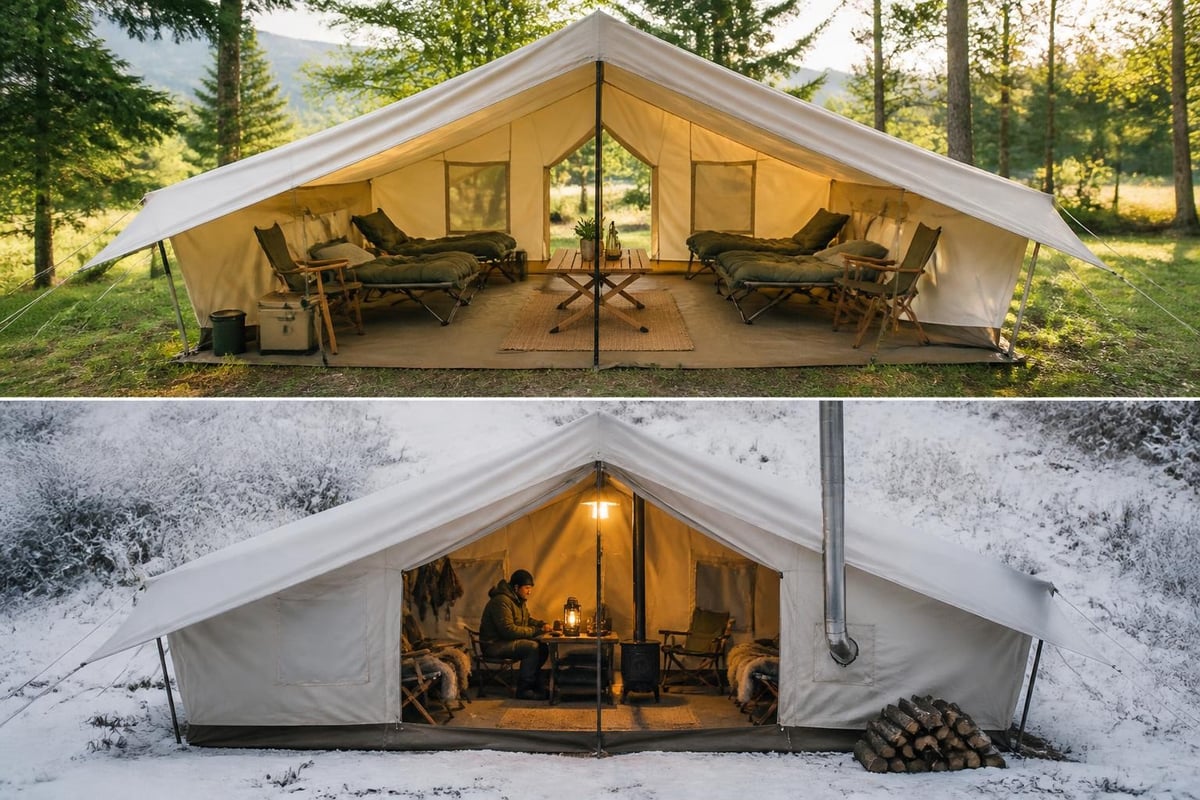
A quality canvas tent 6 person shelter performs across diverse weather conditions when properly configured for each season.
Hot weather demands maximum ventilation and UV protection:
Canvas naturally provides better UV resistance than synthetic materials, blocking up to 95% of harmful ultraviolet radiation depending on weave density and treatment.
Canvas excels in cold conditions with appropriate modifications:
The thermal mass of canvas provides more stable interior temperatures than synthetic tents, warming gradually during the day and cooling slowly at night.
Rain reveals the true quality of a canvas tent 6 person shelter:
The UK Government's guidance on fire safety risk assessment for temporary structures includes important weatherproofing considerations for canvas structures used in public settings.
A well-maintained canvas tent 6 person shelter can last 15-20 years or more, providing exceptional value compared to synthetic alternatives that typically degrade after 3-5 years of regular use.
Regular cleaning prevents mildew, extends waterproofing, and maintains fabric integrity:
After each trip: Shake out debris, spot-clean stains, air dry completely before storage
Quarterly deep clean: Brush off dirt, wash with mild soap solution, rinse thoroughly, dry completely
Annual treatment: Inspect for damage, apply reproofing if needed, check all hardware
Never machine-wash canvas tent fabric, as this can damage waterproofing treatments and weaken fibers. Hand-washing with soft brushes preserves the material.
Proper storage prevents the two biggest canvas enemies: mildew and UV damage.
Some owners of larger canvas tent 6 person models install them semi-permanently at family properties, covering with tarps during off-season rather than disassembling completely.
Minor damage to canvas tents repairs easily with proper techniques:
Small tears: Canvas patches with contact cement, sewn reinforcement
Seam separation: Re-stitching with UV-resistant thread, seam sealer application
Waterproofing failure: Clean fabric thoroughly, apply canvas waterproofing product, cure completely
The waterproof and water-repellent textile finishes used on modern canvas tents require periodic renewal, typically every 2-4 years depending on use intensity and climate exposure.
Operating a canvas tent 6 person shelter safely requires understanding fire risks, ventilation needs, and emergency protocols.
While canvas is naturally more fire-resistant than synthetic materials (which often melt rather than burn), treated flame-retardant canvas provides additional protection:
The NFPA 102 standards provide comprehensive guidance on tent fire safety, covering everything from flame-retardant requirements to emergency exit provisions for temporary structures.
Using fuel-burning equipment inside any canvas tent 6 person shelter creates serious carbon monoxide risks:
The Cambridgeshire Fire & Rescue Service guidance offers practical fire-safety recommendations specific to canvas structures and temporary accommodations.
For commercial applications or extended residential use, canvas tent 6 person shelters may need to meet structural safety standards. The British Standard BS EN 13782 covers safety requirements for temporary structures including tents, specifying anchoring, structural integrity, and material requirements.
Understanding how a canvas tent 6 person shelter compares to synthetic alternatives helps justify the investment and set realistic expectations.
| Characteristic | Canvas Tent | Polyester Tent | Nylon Tent |
|---|---|---|---|
| Breathability | Excellent | Poor | Poor |
| Durability | 15-20 years | 3-5 years | 2-4 years |
| Weather resistance | Superior when weathered | Good initially | Fair |
| Weight | Heavy (30-45kg) | Light (8-12kg) | Very light (5-8kg) |
| Setup complexity | Moderate-high | Easy | Easy |
| Temperature regulation | Excellent | Poor | Poor |
| UV resistance | Excellent | Degrades quickly | Degrades very quickly |
| Repair ease | Easy, permanent | Difficult | Difficult |
| Initial cost | High | Moderate | Low-moderate |
| Cost per year (20-year span) | Low | High | Very high |
Canvas offers significant environmental advantages:
The outdoor fabrics selected for quality camping equipment increasingly emphasize sustainability alongside performance.
Accessories and modifications transform a basic canvas tent 6 person shelter into a comfortable outdoor home.
Maximize your living space with thoughtful organization:
A well-organized canvas tent 6 person shelter feels significantly more spacious than a cluttered one with identical dimensions.
While many canvas tents come with sewn-in groundsheets, additional flooring improves comfort and cleanliness:
Foam tiles: Interlocking foam provides insulation and cushioning
Canvas tarps: Additional protection layer, easy to clean
Camping carpets: Comfort underfoot, reduces noise, traps dust
Raised platforms: Wooden pallets or commercial platforms for permanent installations
The tents and outdoor category at specialized retailers offers various flooring and comfort accessories designed specifically for canvas tent applications.
Modern camping doesn't require darkness at sunset:
LED technology has revolutionized tent lighting, providing bright illumination with minimal battery drain and zero fire risk.
With dozens of manufacturers and configurations available, choosing your ideal canvas tent requires evaluating specific criteria against your intended use.
Different camping styles demand different features:
Weekend family camping: Prioritize quick setup, moderate weight, built-in groundsheet
Extended off-grid stays: Emphasize durability, stove-jack capability, maximum ventilation
Hunting camps: Look for earth-tone colors, quiet zippers, scent-resistant treatments
Festival or event use: Consider social spaces, multiple rooms, weather versatility
Semi-permanent installations: Focus on heavy-duty construction, UV resistance, professional anchoring systems
Canvas tent 6 person models range from entry-level imports at around R8,000 to premium locally-manufactured units exceeding R25,000. Consider total cost of ownership:
A R15,000 tent lasting 15 years costs R1,000 per year, while a R6,000 tent lasting 4 years costs R1,500 per year – making the premium option more economical long-term.
Choosing canvas tents from South African manufacturers offers several benefits:
South African-made canvas products have earned international recognition for quality, benefiting from the country's strong textile manufacturing heritage.
The true advantage of investing in a quality canvas tent 6 person shelter becomes apparent over years of diverse use across changing seasons and conditions.
Your canvas tent configuration should change based on location:
Coastal camping: Extra guy line reinforcement against wind, rinse after exposure to salt air, maintain distance from high-tide lines
Mountain environments: Steeper pitch for snow shedding, storm-line preparation, reflection on heat retention needs
Desert conditions: Maximize shade and ventilation, sand-resistant groundsheet, extra stakes for loose soil
Forest camping: Careful site selection avoiding dead branches, moss and mildew prevention, critter-proofing food storage
Experienced campers view their canvas tent 6 person shelter as the centerpiece of a complete outdoor living system:
This systematic approach evolves over multiple trips, each outing revealing new optimization opportunities.
A canvas tent 6 person shelter represents a significant but worthwhile investment for families and groups who value comfort, durability, and authentic outdoor experiences. The combination of breathability, weather resistance, and longevity makes canvas the superior choice for serious camping enthusiasts. Whether you're planning weekend getaways, extended wilderness stays, or semi-permanent outdoor setups, selecting the right canvas tent with appropriate features ensures years of reliable performance. Ejenti Outdoor specializes in manufacturing durable canvas tents and outdoor solutions designed specifically for South African conditions, offering quality products backed by local expertise and comprehensive support for all your camping needs.