
Camping has evolved significantly beyond the days of digging a hole in the woods. Modern outdoor enthusiasts expect comfort and convenience without sacrificing the connection to nature. Camping tents with bathroom features represent a significant step forward in outdoor accommodation, combining the ruggedness of traditional camping with practical sanitation solutions. Whether you're planning a week-long safari, setting up a semi-permanent family campsite, or need facilities for extended outdoor events, understanding the options for integrated bathroom solutions can transform your outdoor experience.
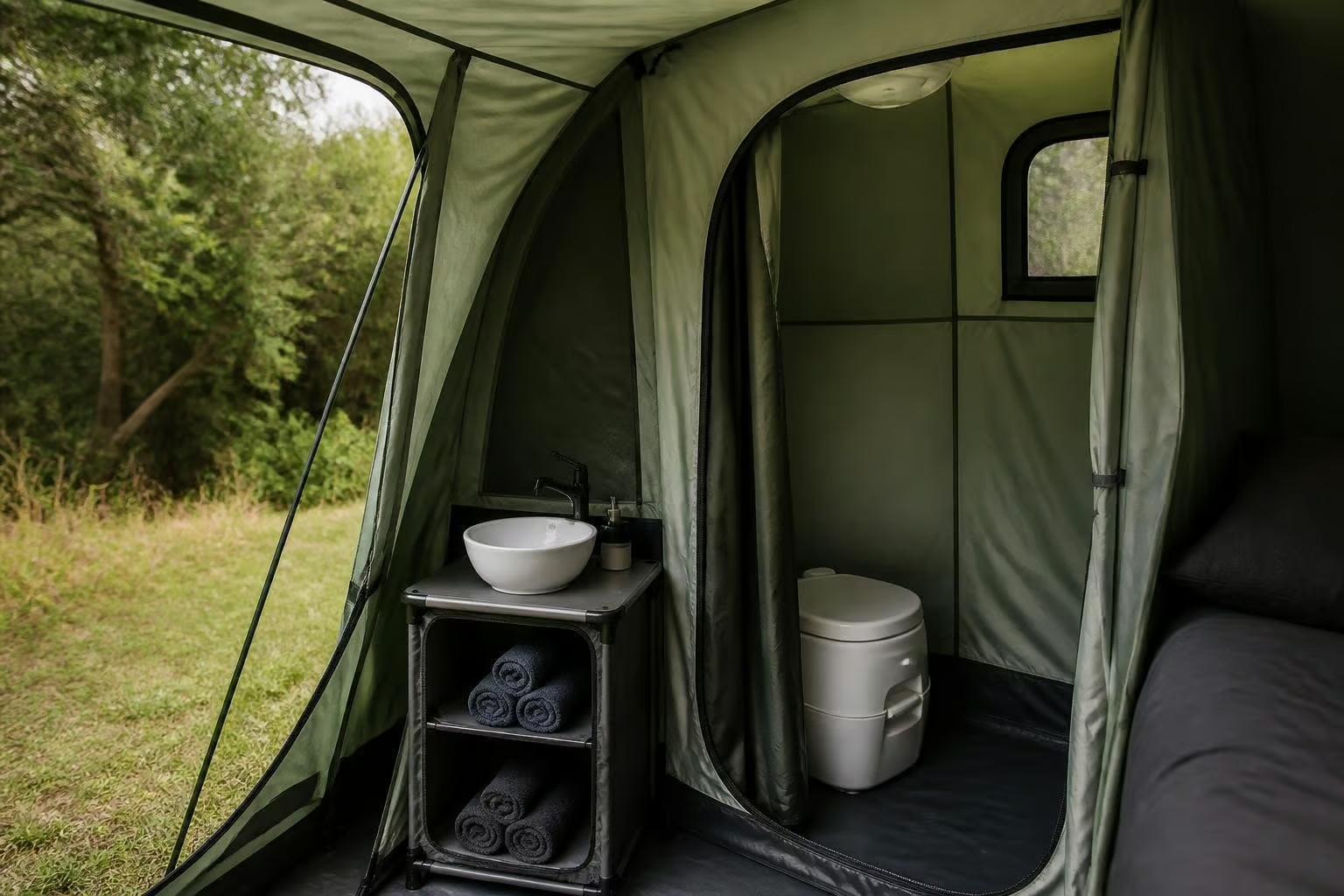
The concept of camping tents with bathroom capabilities covers a spectrum of designs, from simple privacy compartments to fully equipped ensuite setups. These specialized shelters address one of the most fundamental challenges of outdoor living: maintaining hygiene and comfort while away from permanent facilities.
Different camping scenarios require different bathroom solutions. The market offers several categories:
The distinction between these types depends primarily on size, construction quality, and whether the tent includes actual bathroom fixtures or simply provides the space for portable equipment.
When evaluating camping tents with bathroom functionality, several design elements separate basic privacy screens from true bathroom-equipped shelters:
Waterproof flooring in the bathroom compartment prevents groundwater seepage and contains any spills. The best designs use welded or sealed PVC flooring rather than standard canvas.
Ventilation systems specifically positioned in the bathroom area prevent moisture buildup and odors. Look for mesh panels with rain flaps or dedicated vent openings.
Separate entry points allow bathroom access without walking through sleeping quarters, crucial for multi-person occupancy and nighttime convenience.
| Feature | Basic Privacy Tent | Mid-Range Bathroom Tent | Premium Ensuite Tent |
|---|---|---|---|
| Dedicated compartment | Yes | Yes | Yes |
| Waterproof floor | Sometimes | Yes | Yes |
| Plumbing provisions | No | Sometimes | Yes |
| Built-in shower | No | Rare | Common |
| Gray water drainage | No | Sometimes | Yes |
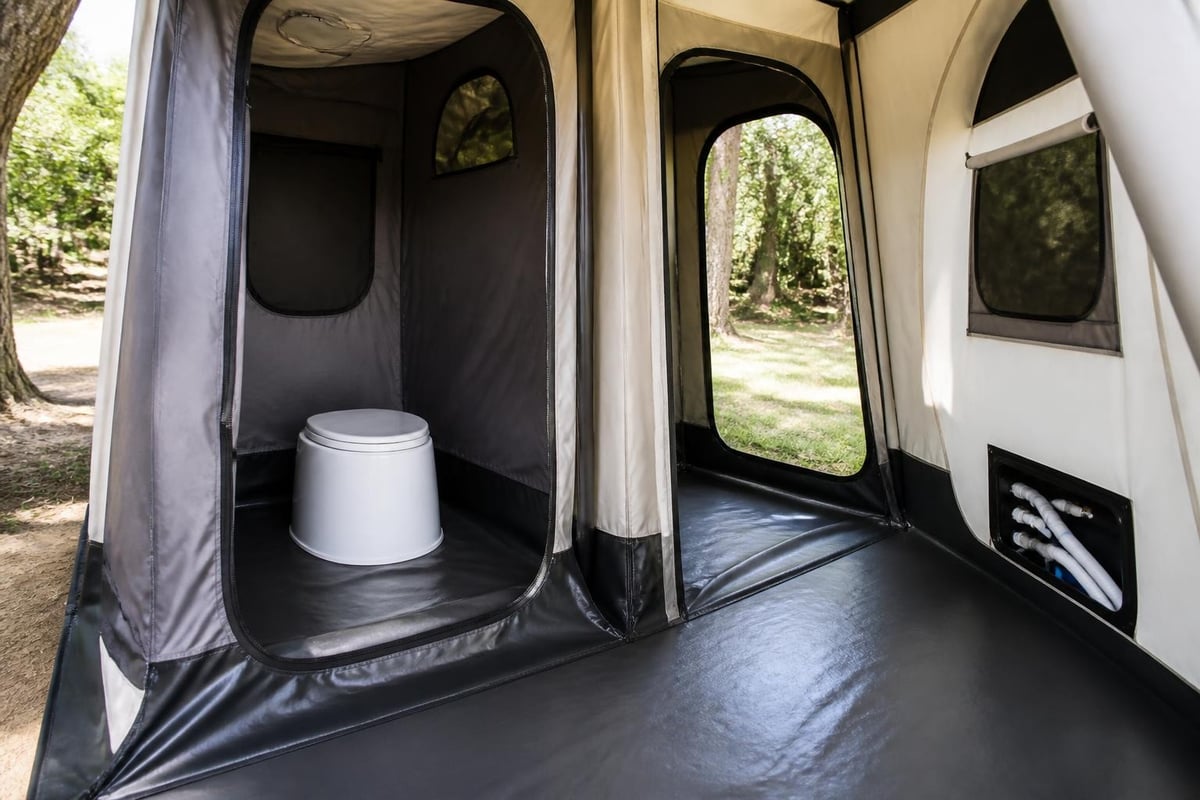
The physical dimensions of your tent determine how practical the bathroom integration becomes. A cramped bathroom compartment defeats the purpose of having one at all.
For a functional bathroom area within a camping tent, plan for at least 1.2 meters by 1.2 meters of floor space. This allows room for a portable toilet, a washing basin, and enough turning space for one person to dress or move comfortably.
Family-sized camping tents with bathroom features typically measure 3 meters by 6 meters or larger. This provides adequate sleeping quarters for 4-6 people while maintaining a genuinely usable bathroom compartment rather than just a token privacy screen.
Bathroom compartments need sufficient height for standing, washing, and dressing. Canvas dome tents and safari-style accommodations typically offer 2 meters or more of standing height in the bathroom area.
The U.S. Department of Justice accessibility standards provide excellent guidance on dimensions for accessible toilet facilities, useful even in camping contexts when planning for guests with mobility considerations.
Having a bathroom compartment is only the first step. Equipping it properly requires understanding the available sanitation technologies and their practical requirements.
Modern portable toilets have come far beyond basic bucket designs:
Chemical toilets use specialized fluids to break down waste and control odors. These self-contained units typically hold 12-20 liters and require regular emptying at designated disposal points. The EPA provides detailed guidance on safe wastewater disposal practices relevant to camping scenarios.
Composting toilets convert waste into compost through aerobic decomposition. While larger and more expensive, they're ideal for semi-permanent campsites and reduce water usage significantly.
Cassette toilets feature removable waste tanks that slide out for emptying. These European-style units integrate well into custom tent installations.
Camping tents with bathroom capabilities need water management systems:
The National Park Service guidelines emphasize maintaining proper distances from water sources and following pack-out protocols where facilities aren't available.
The materials used in bathroom-equipped camping tents must withstand moisture, cleaning chemicals, and heavy use while maintaining structural integrity.
Traditional canvas remains popular for quality camping tents with bathroom features because of its breathability and durability. Modern ripstop canvas at 300 GSM or higher provides excellent waterproofing when properly treated, while allowing sufficient air circulation to prevent condensation buildup.
Synthetic options include PVC-coated polyester and pure PVC fabrics. These materials excel in wet environments and are easier to clean and sanitize than canvas. For structures requiring robust materials suited to demanding outdoor conditions, exploring Ejenti Outdoor’s tent manufacturing capabilities reveals options specifically designed for South African climates.
The bathroom compartment floor deserves special attention:
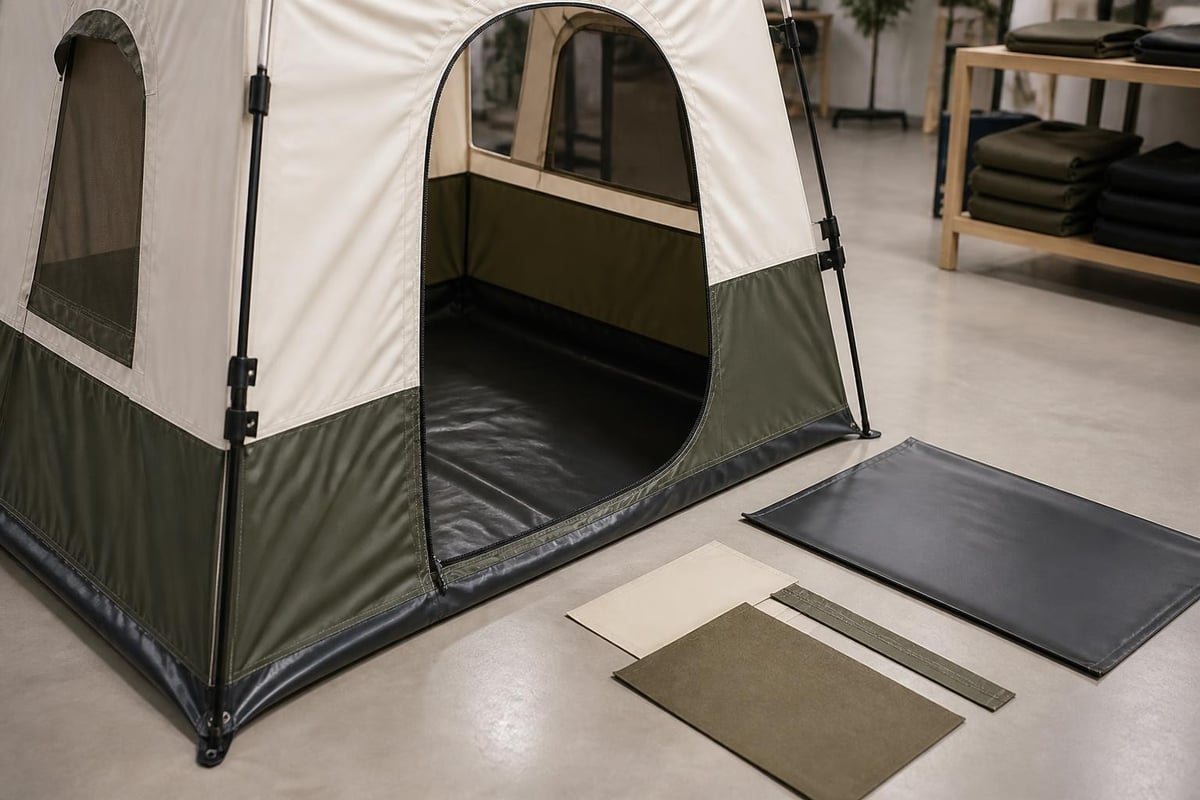
Proper installation ensures your bathroom-equipped tent functions correctly and lasts through multiple seasons.
Choose your campsite with bathroom requirements in mind:
Drainage: Position the tent on slightly sloped ground so gray water can drain away from the structure (where drainage is permitted). Never camp in depressions where water might pool.
Privacy: Consider sightlines from neighboring campsites and public areas. Trees and natural features provide screening, but maintain the recommended 200 feet from water sources as specified in U.S. Forest Service backcountry guidelines.
Access: Ensure the bathroom compartment's external door (if present) faces away from common areas for privacy and allows easy access to disposal facilities.
Bathroom compartments often house heavier equipment than sleeping areas, requiring additional anchoring:
Many campers find that reliable fastening components make setup easier and more secure. Quick-release buckles on guy lines and straps allow for quick adjustments to maintain proper tension as weather conditions change.
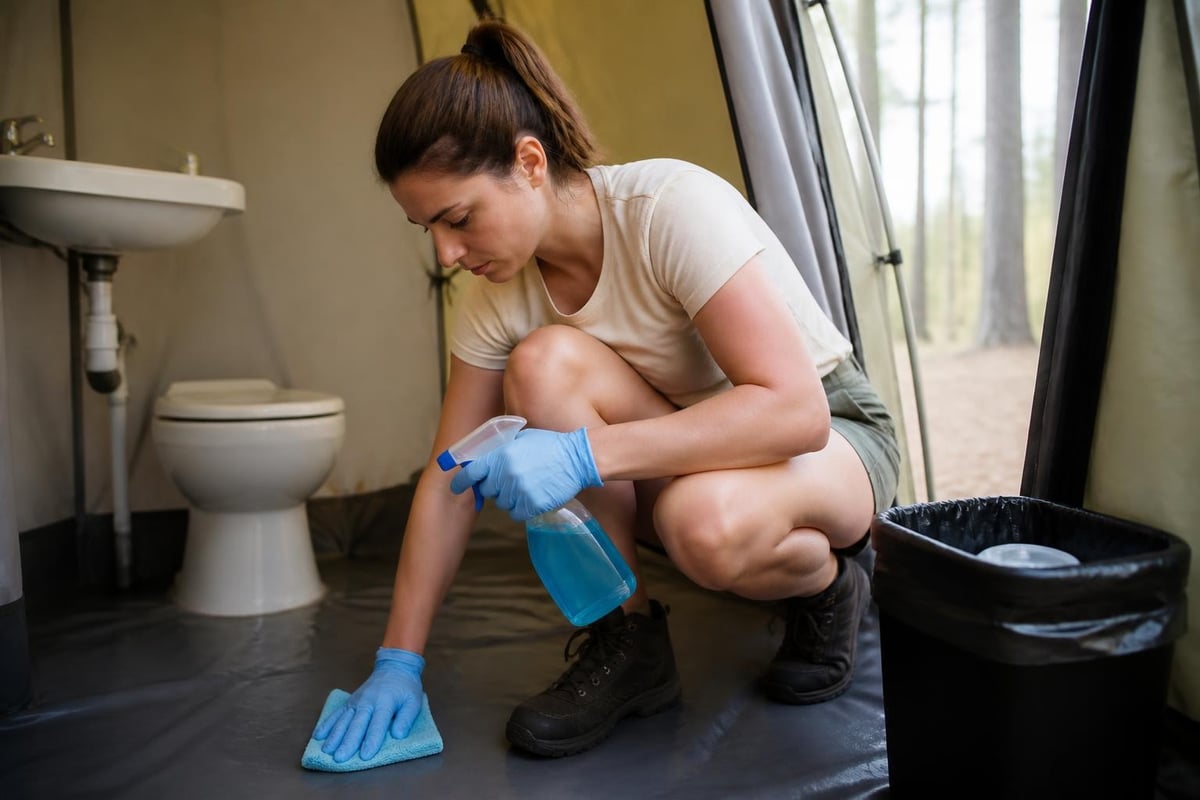
Regular cleaning and maintenance keep bathroom-equipped tents sanitary and extend their service life significantly.
Establish simple daily habits:
At least weekly during extended stays, perform thorough cleaning:
Fabric surfaces: Use mild soap solutions and soft brushes. Avoid harsh chemicals that damage waterproof coatings.
Floor areas: Scrub with disinfectant suitable for your floor material. PVC handles stronger cleaners than canvas.
Ventilation: Clear mesh screens of debris and ensure air can flow freely.
| Cleaning Task | Frequency | Recommended Products |
|---|---|---|
| Surface wipe-down | Daily | Mild soap, water |
| Floor scrubbing | Every 3 days | Appropriate disinfectant |
| Toilet maintenance | After each use | Manufacturer-specified chemicals |
| Deep fabric cleaning | Weekly | Canvas-safe cleaners |
| Mold prevention treatment | Bi-weekly | Vinegar solution or commercial treatment |
South African camping conditions range from coastal humidity to dry inland heat, each presenting unique challenges for camping tents with bathroom facilities.
Coastal and summer camping requires enhanced ventilation:
Winter conditions demand different strategies:
Insulation: Some premium tents include insulated bathroom compartments, or you can add thermal liners to reduce heat loss.
Freeze protection: Water supplies and waste tanks need protection from freezing temperatures. Insulated containers and heated elements may be necessary.
Condensation management: Cold exterior temperatures combined with warm, moist bathroom air creates condensation. Enhanced ventilation remains important even in cold weather.
Strategic room division maximizes the functionality of camping tents with bathroom compartments while maintaining comfort in sleeping and living areas.
The simplest bathroom-equipped designs divide the tent into two main chambers:
Interior walls in quality tents use heavy fabrics or double-layer construction to reduce sound transmission and prevent light from disturbing sleeping occupants during nighttime bathroom use.
Understanding the investment required for camping tents with bathroom features helps in making informed purchasing decisions.
Budget options ($200-$500) typically provide basic privacy partitions and space for portable equipment but lack integrated fixtures or specialized flooring.
Mid-range models ($500-$1,500) offer dedicated bathroom compartments with waterproof floors, proper ventilation, and reinforced construction suitable for regular use.
Premium safari and glamping tents ($1,500-$5,000+) include plumbing provisions, shower installations, and commercial-grade materials designed for permanent or semi-permanent deployment.
Consider the total cost of ownership:
Responsible camping with bathroom facilities requires understanding and following applicable regulations.
Most public lands have strict rules about human waste. The National Park Service campground guidelines detail comfort station requirements and sanitation standards that apply to organized campgrounds but provide useful benchmarks for private setups.
Key principles include:
Even with a bathroom-equipped tent, adhere to wilderness ethics:
Many camping tents with bathroom compartments allow for modifications and improvements over time.
Shower installations: Adding a camp shower system with proper drainage transforms a basic bathroom compartment into a full ensuite.
Solar lighting: LED strips or rechargeable lanterns dedicated to the bathroom area improve nighttime functionality and safety.
Mirror and storage: Wall-mounted mirrors and hanging organizers maximize the utility of limited space.
Flooring enhancements: Removable rubber mats or wooden pallets add comfort and protect the tent floor from wear.
For those working with various outdoor camping gear, exploring the full range of camping accessories can reveal components that enhance bathroom functionality.
Companies specializing in canvas and outdoor structures can create fully customized camping tents with bathroom specifications tailored to your exact requirements. Custom builds allow for:
When a full bathroom-equipped tent isn't necessary or practical, several alternatives provide similar benefits.
Separate toilet tents or shower stalls set up alongside your main sleeping tent offer flexibility:
Advantages: Lower cost, can be positioned optimally for privacy and drainage, replaceable if damaged
Disadvantages: Requires additional setup time and ground space, less convenient in bad weather
Some tent designs allow bathroom annexes to attach to the main structure:
Matching tent features to your actual camping style prevents overspending on unnecessary features or underinvesting in critical ones.
Weekend campers (1-2 nights, 6-12 trips per year): Basic privacy compartments with portable toilet space usually suffice. Durability matters less than weight and setup speed.
Extended stay campers (5-14 nights, 2-4 trips per year): Mid-range camping tents with bathroom compartments justify the investment through significantly improved comfort. Waterproof floors and ventilation become important.
Semi-permanent installations (seasonal setups, hunting camps, glamping operations): Premium tents with full bathroom integration and plumbing provisions provide the best long-term value and guest satisfaction.
| Group Size | Minimum Tent Size | Bathroom Compartment Size | Additional Features Needed |
|---|---|---|---|
| 1-2 people | 3m x 3m | 1.2m x 1.2m | Basic privacy, portable toilet space |
| 3-4 people | 4m x 4m | 1.5m x 1.5m | Waterproof floor, ventilation, storage |
| 5-6 people | 5m x 6m | 2m x 2m | Shower capability, dual entry, enhanced drainage |
| 7+ people | 6m x 8m+ | 2.5m x 2.5m+ | Multiple fixtures, plumbing, gray water system |
Proper bathroom facilities in camping environments directly impact health outcomes, particularly during longer stays or when camping with children or elderly individuals.
Adequate sanitation prevents the spread of gastrointestinal illnesses common in camping settings:
A functional bathroom compartment becomes especially valuable during:
The camping industry continues innovating in sanitation and comfort technologies.
Waterless toilets: New designs use chemical processes or incineration to eliminate waste without water or conventional chemicals.
Smart monitoring: Sensors track tank levels, alert when maintenance is needed, and monitor air quality in bathroom compartments.
Integrated gray water recycling: Advanced systems filter and reuse washing water for toilet flushing, reducing water consumption significantly.
Environmental consciousness drives development of:
Understanding the different types of tents available helps identify which styles best accommodate bathroom integration while meeting your specific outdoor needs.
Camping tents with bathroom features represent a significant evolution in outdoor comfort, bridging the gap between wilderness immersion and practical hygiene. By carefully selecting tent size, materials, and sanitation equipment appropriate to your camping style, you create an outdoor experience that's both adventurous and genuinely comfortable. Whether you need a basic privacy compartment for weekend trips or a fully equipped ensuite for extended stays, Ejenti Outdoor specializes in durable canvas tents and outdoor solutions engineered for South African conditions, offering the quality construction and thoughtful design that transform camping from endurance test to enjoyable retreat.