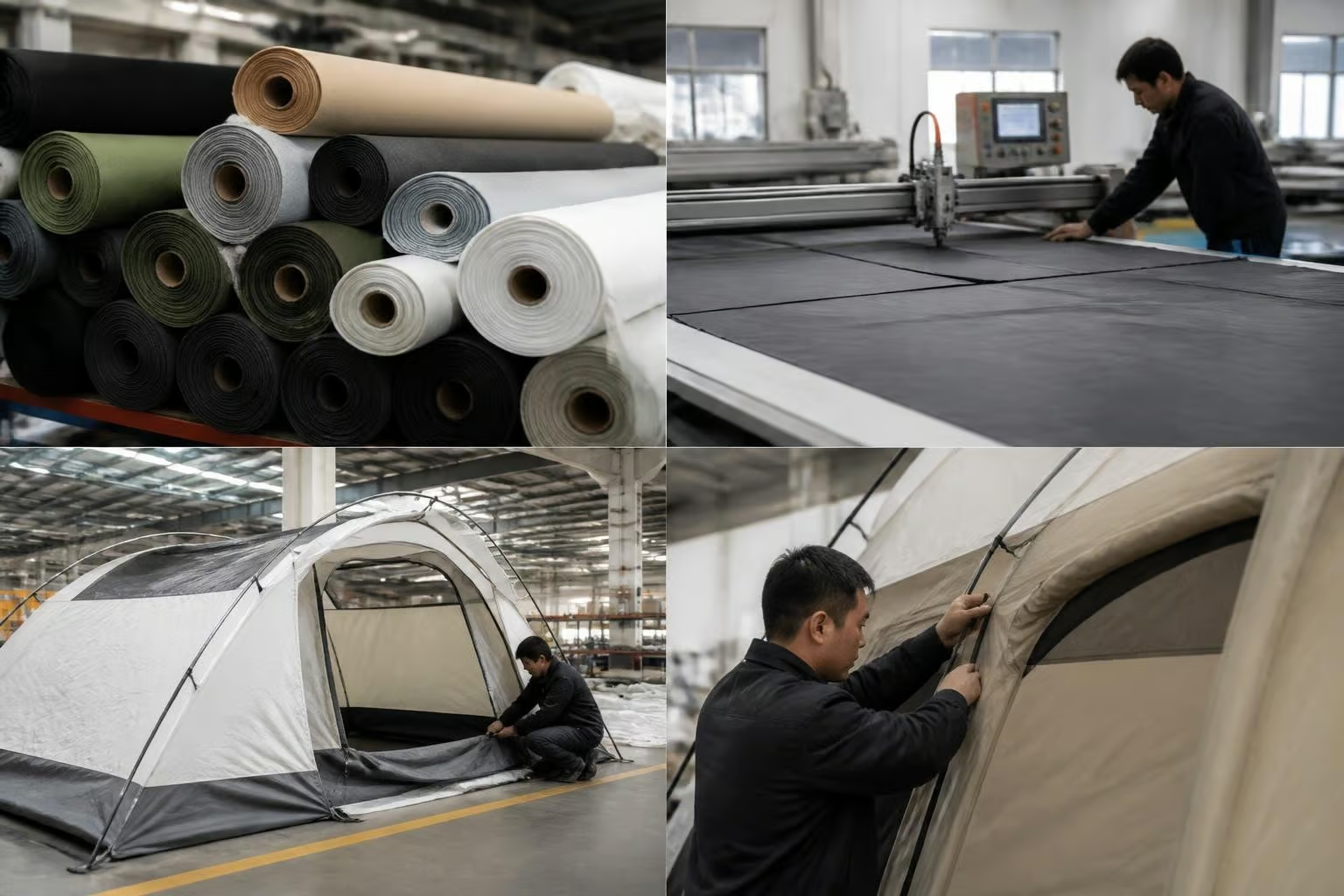
The tent manufacture industry has evolved dramatically over the past decades, transforming from basic hand-stitched canvas shelters into a sophisticated sector that combines advanced materials science, precision engineering, and rigorous quality standards. Whether producing lightweight backpacking tents for mountaineers or heavy-duty structures for events and expeditions, modern manufacturers must balance durability, weight, weatherproofing, and cost-effectiveness. Understanding the intricacies of tent manufacture helps consumers, outdoor enthusiasts, and businesses make informed decisions about the shelters they purchase and trust with their safety and comfort.
The foundation of quality tent manufacture begins with careful material selection. Fabric choice directly impacts a tent's performance, longevity, and suitability for specific environments.
Traditional canvas remains a preferred choice for many applications despite the proliferation of synthetic alternatives. Manufacturers value canvas for its breathability, natural insulation properties, and durability in harsh conditions. Ripstop canvas has become particularly popular in tent manufacture, featuring reinforced threading that prevents tears from spreading. This material excels in semi-permanent installations and safari operations where ventilation and temperature regulation matter most.
South African conditions demand fabrics that withstand intense UV exposure, sudden temperature fluctuations, and occasional heavy rainfall. Manufacturers treating canvas with waterproofing compounds create shelters that combine breathability with weather resistance, a balance difficult to achieve with purely synthetic materials.
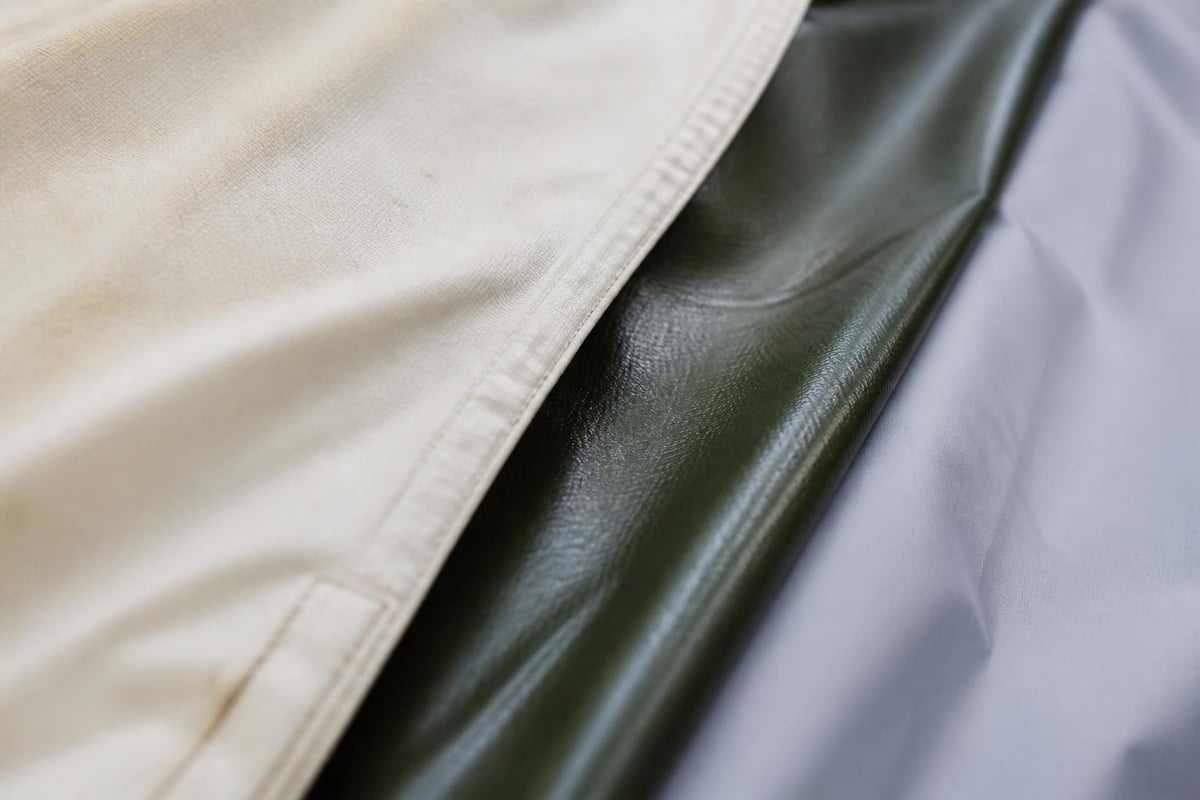
Modern tent manufacture increasingly relies on engineered synthetic fabrics. Polyester offers excellent UV resistance and dimensional stability, maintaining its shape even after prolonged sun exposure. Nylon provides superior strength-to-weight ratios, making it ideal for lightweight expedition tents where every gram matters.
PVC-coated fabrics have revolutionized heavy-duty tent manufacture. These materials deliver complete waterproofing, exceptional durability, and resistance to mold and mildew. According to environmental product declaration data, PVC-coated high-tenacity polyester fabrics offer quantifiable performance metrics that help manufacturers optimize their material selection based on environmental impact and functional requirements.
| Fabric Type | Weight Range (GSM) | Primary Benefits | Typical Applications |
|---|---|---|---|
| Canvas | 250-400 | Breathability, insulation | Safari tents, family camping |
| PVC-coated polyester | 450-650 | Waterproofing, durability | Marquees, event structures |
| Ripstop nylon | 40-70 | Lightweight, tear-resistant | Backpacking tents |
| Polyester | 150-300 | UV resistance, stability | General camping, recreational |
The structural integrity of a tent depends heavily on frame design and material selection. Modern tent manufacture incorporates sophisticated engineering principles to create stable, wind-resistant structures.
Galvanized steel frames provide the backbone for heavy-duty tent manufacture. These frames resist corrosion, support substantial loads, and maintain structural integrity across temperature extremes. Manufacturers choose steel for marquees, event tents, and semi-permanent installations where weight is less critical than strength.
Aluminum poles have transformed lightweight tent manufacture. With a strength-to-weight ratio superior to steel, aluminum enables manufacturers to create freestanding structures that one or two people can easily transport and erect. Anodizing processes protect aluminum from oxidation while adding minimal weight.
Tent manufacture requires careful attention to pole geometry and connection points. Hub systems distribute stress across multiple pole sections, reducing failure points and simplifying setup. Shock-corded poles speed assembly while ensuring components remain connected during transport.
The structural design guidance for tensile membrane structures provides technical frameworks that inform large-scale tent manufacture. These principles help engineers calculate load distributions, wind resistance, and snow loads for event structures and semi-permanent installations.
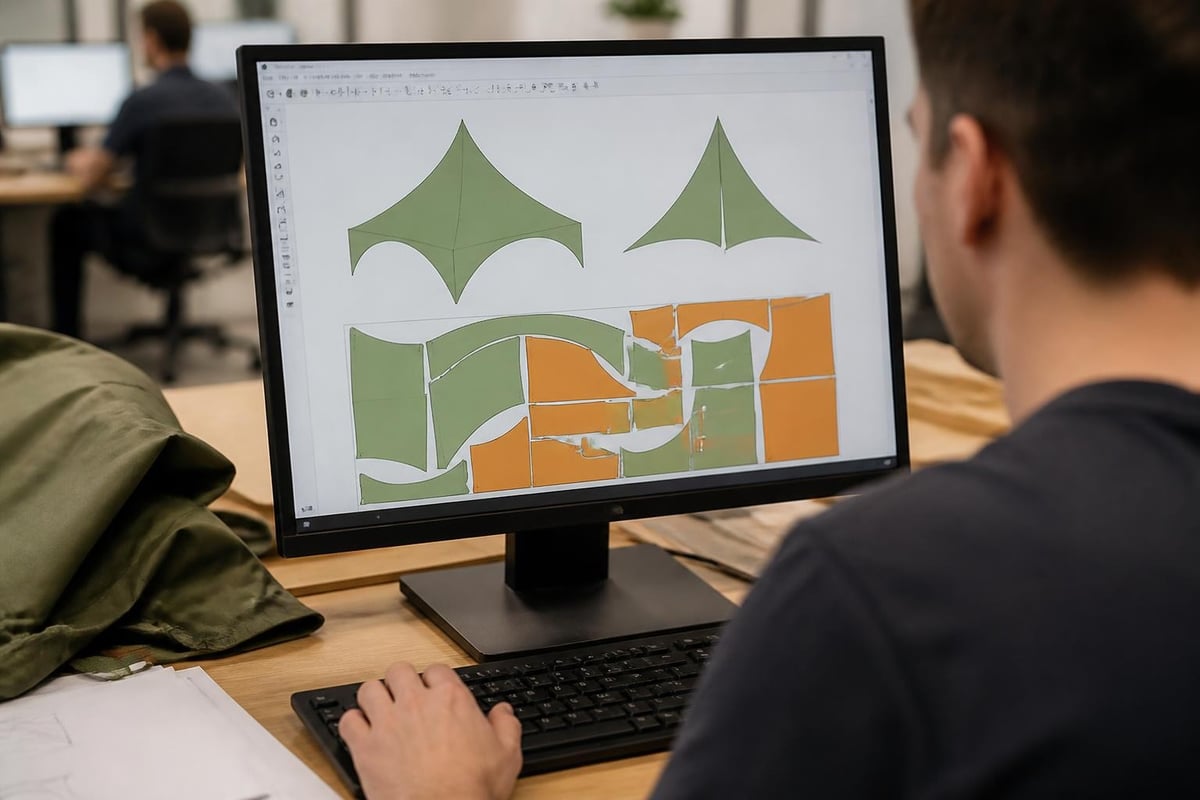
Precision cutting represents a critical phase in tent manufacture. Modern facilities employ computer-aided design (CAD) software to develop patterns that maximize material usage while minimizing waste.
Manufacturers create digital templates that account for fabric stretch, seam allowances, and stress points. Advanced cutting tables use CNC technology to slice through multiple fabric layers simultaneously, ensuring consistency across production runs. This precision becomes especially important when manufacturing tents where multiple panels must align perfectly during assembly.
Pattern development requires understanding how fabrics behave under tension. Manufacturers compensate for material characteristics, adjusting patterns to ensure the finished tent achieves the designed shape when erected and tensioned.
Industrial fabric cutters handle everything from delicate ripstop nylon to heavy PVC-coated materials. Manufacturers maintain separate cutting areas for different fabric types to prevent cross-contamination and optimize blade selection. Sharp blades are essential for clean edges that won't fray or unravel during subsequent manufacturing steps.
Quality control begins at the cutting stage. Inspectors verify that each panel meets dimensional specifications before pieces advance to assembly. This early detection prevents costly errors that would only become apparent during final assembly.
The assembly phase transforms cut fabric panels into functional shelters. Tent manufacture demands specialized sewing equipment and skilled operators who understand how different materials behave under needle and thread.
Heavy-duty sewing machines designed for tent manufacture can penetrate thick, coated fabrics while maintaining consistent stitch quality. Walking foot machines feed multiple layers evenly, preventing shifting that would create puckered or misaligned seams. Manufacturers adjust thread tension, stitch length, and needle size based on fabric type and seam requirements.
For critical structural seams, manufacturers employ double-needle or triple-needle stitching that distributes stress across multiple thread lines. This redundancy ensures that if one thread fails, others maintain seam integrity.
Stitching creates tiny holes that can admit water, so tent manufacture includes seam sealing as a standard step. Manufacturers apply:
Each method suits different fabric types and performance requirements. High-end tent manufacture may combine multiple sealing techniques to achieve complete weather protection.
Quality tent manufacture extends beyond fabric to include carefully selected hardware components. These elements often determine whether a tent withstands years of use or fails prematurely.
Manufacturers reinforce areas where poles contact fabric, guy lines attach, or zippers terminate. Webbing reinforcements distribute point loads across larger fabric areas, preventing tears at stress concentrations. Bar-tack stitching secures these critical junctions with dense, compact stitching patterns that resist pull-out forces.
When designing attachment systems, proper hardware selection makes all the difference. Heavy Duty Tent Hooks & Metal Fasteners provide reliable connection points for guy lines, securing tents against wind loads while remaining easy to install and adjust in the field.
Zipper selection significantly impacts tent longevity and user satisfaction. Tent manufacture typically employs:
Manufacturers sew zipper strips with overlapping fabric flaps that shed water away from the teeth. Quality installations include zipper pulls large enough for gloved hands and designed to resist snagging.
Responsible tent manufacture incorporates rigorous testing at multiple production stages. These protocols ensure products meet performance specifications and safety standards.
Quality control personnel examine:
Identifying defects early prevents wasted labor on components that will ultimately fail final inspection.
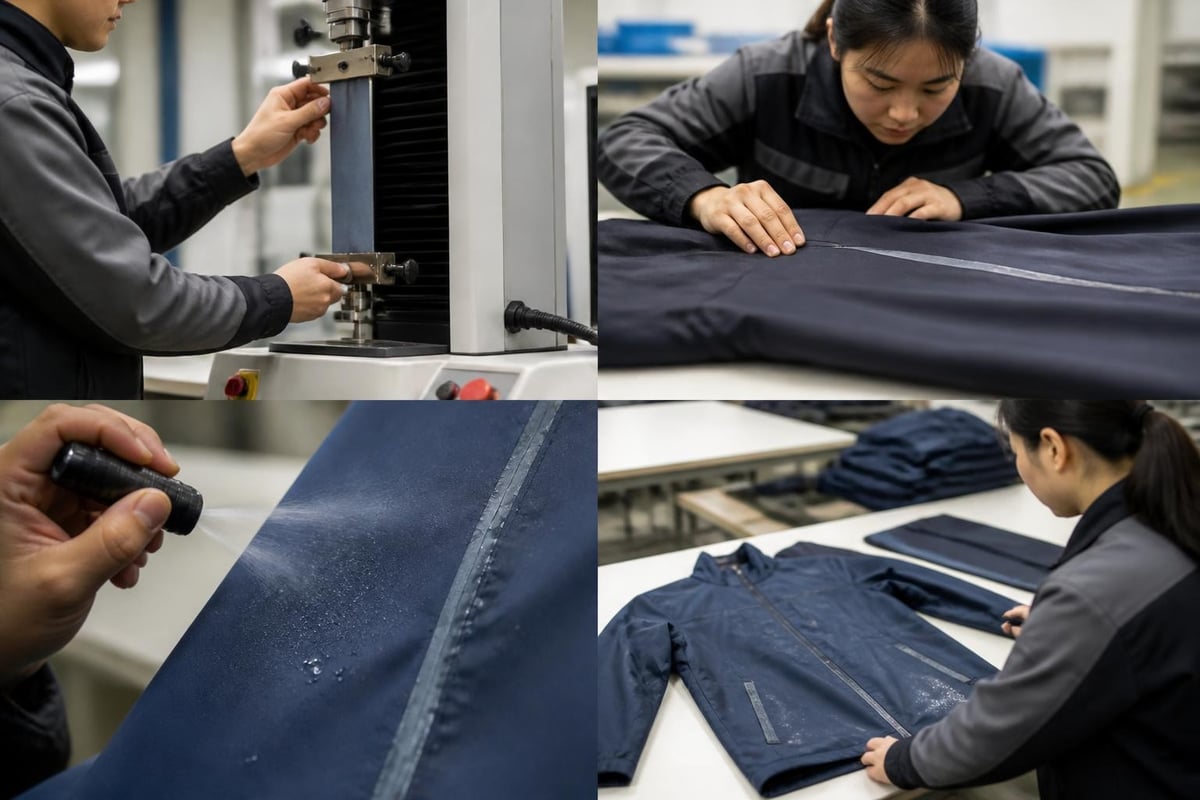
Complete tents undergo performance evaluations including:
Manufacturers document test results, creating traceability that supports warranty claims and continuous improvement initiatives.
Modern tent manufacture increasingly accommodates custom requirements for specific applications, climates, or branding needs.
Event tent manufacture often includes custom printing for corporate branding or promotional purposes. Manufacturers employ:
Professional signage integration has become standard for commercial tent applications. Companies like Signs4SA work with tent manufacturers to create cohesive branding solutions that combine structural durability with visual impact for corporate events, retail activations, and construction site identification.
Tent manufacture for different geographic regions requires understanding local environmental challenges:
South African manufacturers developing products for local conditions understand that intense sun, sudden storms, and diverse terrain demand specific design choices that differ from European or North American tent manufacture standards.
Contemporary tent manufacture increasingly addresses environmental sustainability through material choices, waste reduction, and end-of-life planning.
Manufacturers evaluate fabric options considering:
While PVC-coated fabrics offer exceptional performance, their environmental profile prompts some manufacturers to explore alternative treatments with reduced environmental impact. Canvas made from natural fibers presents biodegradability advantages, though waterproofing treatments may introduce chemical considerations.
Efficient tent manufacture minimizes fabric waste through:
Leading manufacturers track waste metrics, setting reduction targets that improve profitability while reducing environmental footprint.
Successful tent manufacture depends on reliable supply chains delivering quality materials on schedule. Manufacturers maintain relationships with fabric mills, hardware suppliers, and logistics providers.
South African tent manufacturers balance cost considerations against supply reliability when sourcing materials. Local fabric production offers:
However, specialized fabrics or hardware may require imports from established international suppliers. Manufacturers maintain inventory buffers for critical components, protecting production schedules from supply disruptions.
Tent manufacture facilities manage production flows balancing:
Effective planning ensures equipment utilization remains high while meeting delivery commitments across diverse product categories.
Professional tent manufacture addresses safety requirements that vary by application and jurisdiction. Event structures face different regulations than recreational camping tents.
Many jurisdictions mandate fire-resistant fabrics for commercial tent applications. Manufacturers apply:
Testing protocols verify materials meet flammability standards, with documentation supporting compliance during inspections.
Large tent manufacture requires engineering calculations demonstrating structures can withstand expected loads including:
Documentation supporting these calculations helps customers obtain necessary permits and insurance coverage.
The tent manufacture industry continues evolving through technological advancement and changing consumer expectations.
Emerging tent manufacture incorporates:
These innovations add value while increasing manufacturing complexity.
Advanced manufacturers adopt automation for:
Investment in these technologies helps manufacturers remain competitive while improving product quality.
| Manufacturing Aspect | Traditional Approach | Modern Innovation |
|---|---|---|
| Pattern Development | Manual drafting | 3D CAD modeling |
| Fabric Cutting | Hand-operated cutters | CNC cutting tables |
| Seam Sealing | Brush-applied sealants | Automated tape application |
| Quality Testing | Visual inspection | Automated water/wind testing |
Tent manufacture serves diverse markets, each pushing innovation in specific directions.
Military tent manufacture emphasizes rapid deployment, extreme durability, and transportability. These applications drive development of:
Technologies developed for military use often filter into commercial tent manufacture, benefiting recreational users.
Emergency medical tents require:
Manufacturers producing these specialized products maintain strict quality protocols ensuring reliability when lives depend on shelter performance.
Understanding the complexities behind tent manufacture helps you appreciate the engineering, craftsmanship, and quality control that transform raw materials into reliable outdoor shelters. Whether you need a rugged canvas tent for extended camping, a waterproof marquee for special events, or specialized outdoor equipment, Ejenti Outdoor manufactures durable solutions designed specifically for South African conditions using quality materials and proven construction techniques.