
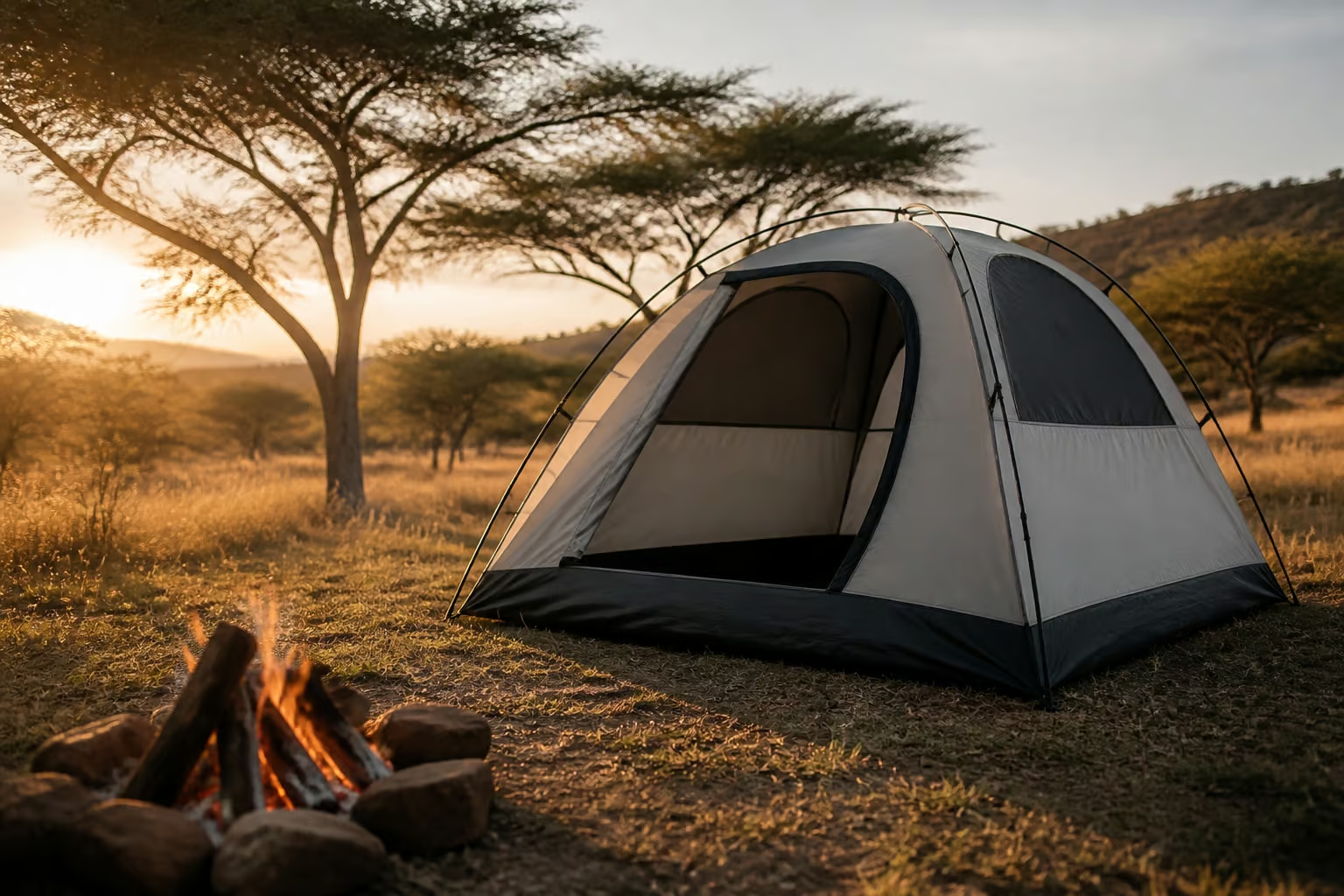
The best camping tent 2 person pick depends on how far you carry it and how much rain it must handle: lightweight models like the Nemo Dagger Ridge OSMO 2P suit hikers, while canvas dome tents suit drive-up camping in South African summer storms. This guide covers three well-reviewed two-person tents from other makers, two canvas options from Ejenti Outdoor, and the specs that decide whether a tent keeps you dry for several seasons.
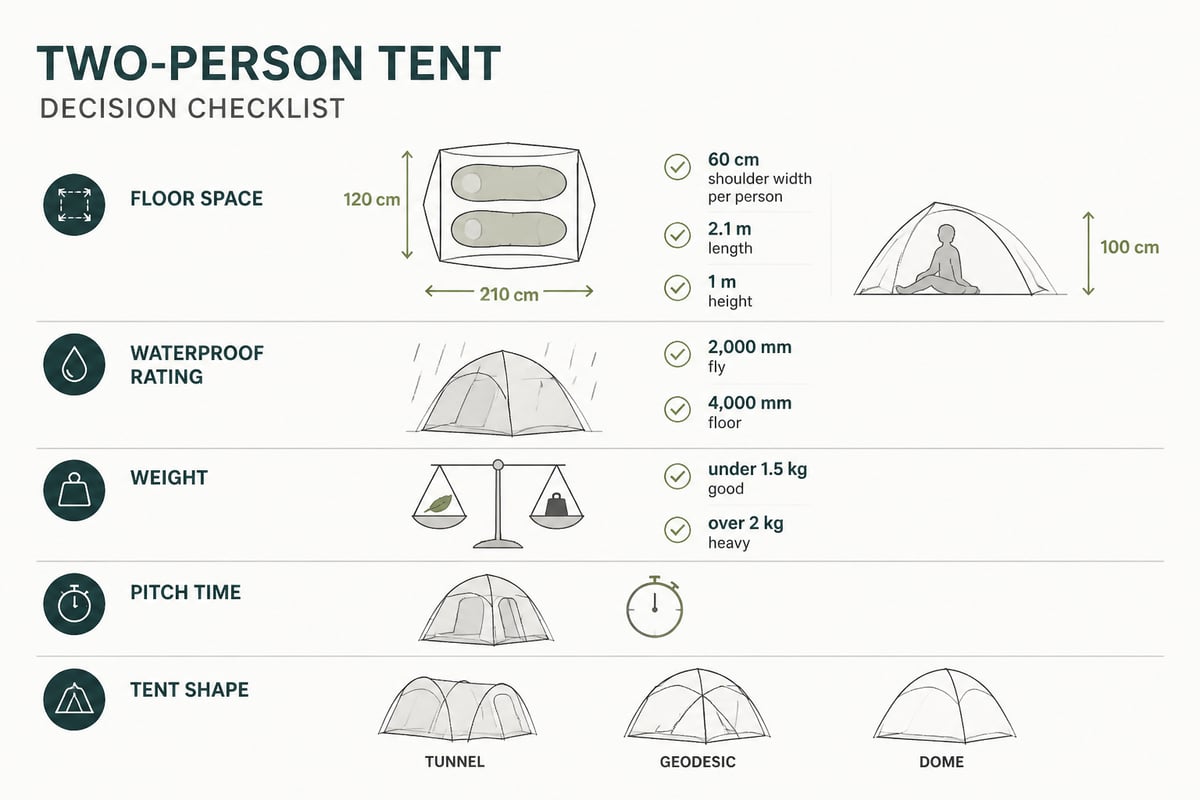
A good two-person tent comes down to five numbers: floor size, headroom, waterproof rating, weight and pitch time. Start with space. Live for the Outdoors recommends at least 60 cm of shoulder width per person, 2.1 m of tent length and 1 m of height for a two-person tent. Anything tighter works for sleeping only.
Waterproofing matters more in South Africa than many buyers expect, because Highveld afternoon storms dump a lot of water quickly. As a rule of thumb for heavy rain, the same guide suggests 2,000 mm hydrostatic head for the flysheet and 4,000 mm for the groundsheet.
Weight only matters if you carry the tent. The guide characterizes a 3-season tent weighing 1 kg or less as extremely light, 1.5 kg as good, and more than 2 kg as relatively heavy. If your tent rides in a bakkie or car boot, weight drops down the priority list and fabric durability moves up.
Shape affects wind performance. According to the same source, tunnel and geodesic shapes are among the most stable in poor weather, though geodesic designs tend to be heavier and less spacious.
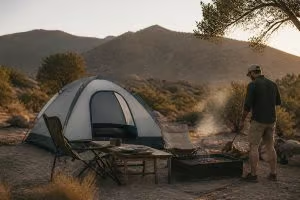
The Nemo Dagger Ridge OSMO 2P is a lightweight backpacking tent that balances interior space with weather protection. Live for the Outdoors reports it weighs under 2 kg, offers 109 cm of headroom and a 223 cm floor length, and uses 3,000 mm hydrostatic-head fabric on both fly and floor. Its 223 cm floor length is above the guide's 2.1 m benchmark for two people, though its 109 cm of headroom falls just short of the guide's 1 m height figure only in the sense that it is slightly lower than the guide's 1 m height benchmark, so taller sleepers should check the layout before buying. Its headroom also means most people can sit up inside to change layers or wait out a shower. A 3,000 mm floor rating sits below the 4,000 mm groundsheet guideline for heavy rain, so a footprint or careful site selection on soggy ground is sensible. At under 2 kg, it falls just inside the guide's "relatively heavy" threshold, which makes it a better fit for trips of a few nights than for ultralight thru-hiking.
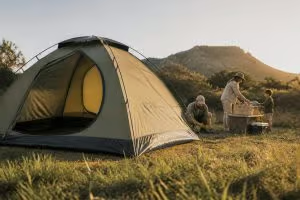
The Vango Apex Compact 200 is a budget-friendly two-person tent for campers who want a modest weight and a small pack size. It is rated for two people, with a trail weight of 1.99 kg, a pack size of 33 × 15 cm and a waterproof rating of 3,000 mm hydrostatic head, according to our research. That pack size is small enough to slide into the lid or side pocket of a daypack-sized rucksack, which helps if you split the load with a partner by carrying the poles and fly separately. At 1.99 kg, it sits right at the edge of the guide's "relatively heavy" line of more than 2 kg, so it is a fair trade for the lower price rather than a weight-saving pick. The 3,000 mm rating exceeds the 2,000 mm flysheet guideline, which covers the kind of heavy rain the guide has in mind. For the floor, the 4,000 mm guideline is the figure to compare against, so pitch on cleared, slightly raised ground. It suits a first tent for someone still working out whether they prefer hiking camps or campsite stays.
The Vango F10 Xenon UL 2 is the lightest tent here, built for people who count grams. It weighs 1.64 kg on the trail, packs to 40 × 13 cm, and carries a 3,000 mm flysheet and 6,000 mm groundsheet rating. Vango lists a 7-minute pitching time and capacity for two people. Against the guide's weight scale, 1.64 kg lands between "good" at 1.5 kg and "relatively heavy" above 2 kg, which is a strong result for a two-person shelter. The 40 × 13 cm packed size is long and narrow, so it suits strapping along the side of a pack or fitting into a bike frame bag. A pitch time of about 7 minutes matters when weather turns suddenly, such as a late-afternoon storm on an exposed ridge. Its 6,000 mm floor rating is higher than the 3,000 mm floors on the other hiking picks, so it should cope better with damp ground.
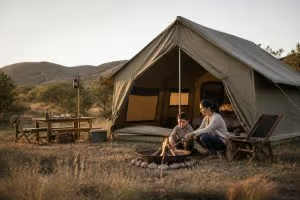
Ejenti Outdoor's Premium Heavy-Duty Canvas Dome Tent is a canvas shelter engineered for the African climate. It is a heavier, more durable alternative to the ultralight models above. A dome shape spreads wind load across its poles and usually gives more usable standing room near the center than a low-profile backpacking tent. Canvas also breathes better than thin synthetics, so the interior stays more comfortable on hot afternoons in the bushveld.
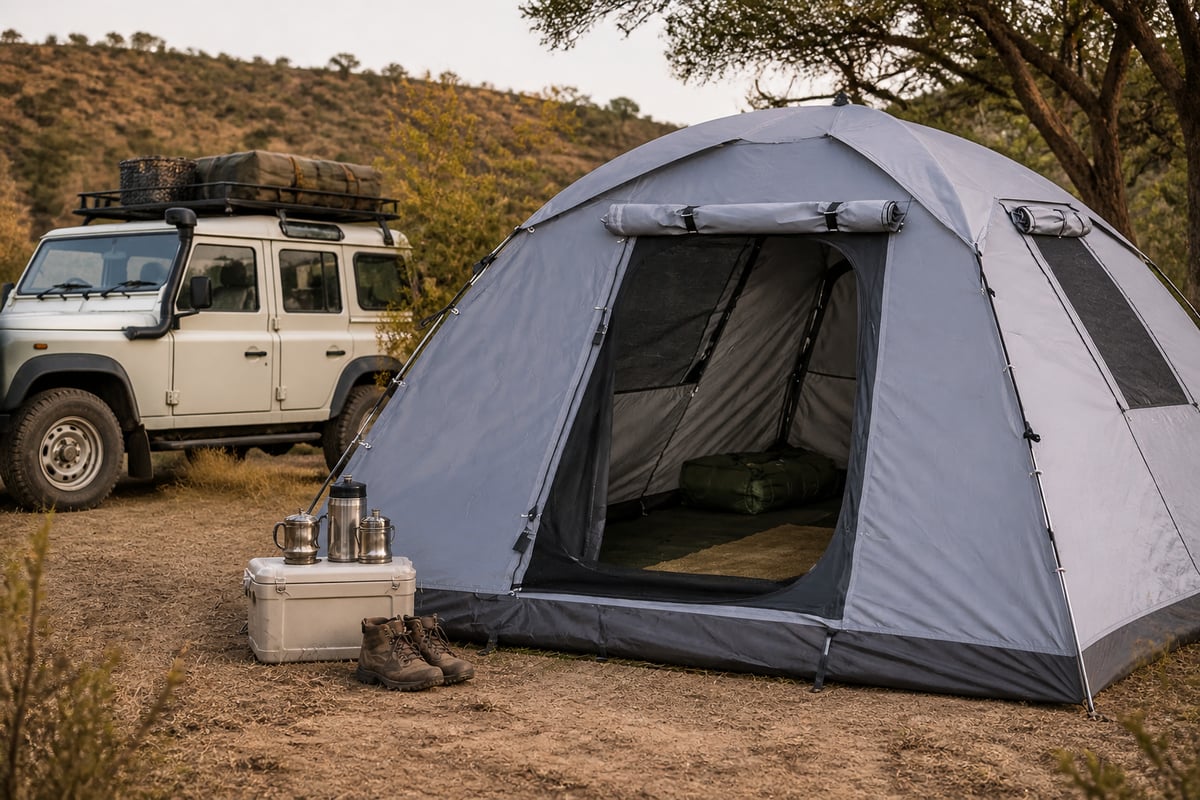
Ejenti Outdoor is a proudly South African company based in Pretoria that manufactures its own products, using heavy-duty canvas and ripstop fabrics that are waterproof and UV-treated. Custom builds are available made to your exact requirements, and the company has completed many custom builds. If the standard dome does not match your needs, such as an extra-tall roof for a taller camper or a specific floor size, the custom route lets you specify that before the tent is made. Because the fabric is UV-treated, it suits people who leave a tent up for several days at a time.
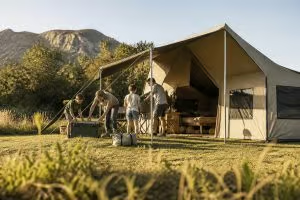
The 3m x 6m Safari Lodge Tent Two Room is a large canvas lodge tent for longer stays, and it is far bigger than a typical two-person tent. Its two-room layout gives a couple better privacy and more organized living space. With a 3 m x 6 m footprint, it offers far more room than the minimum the guide recommends for sleeping.
It is made from 300 GSM ripstop canvas that is described as waterproof and proudly SA made. This is not a hiking tent: it suits base camps and extended holidays where a couple wants room to stand, store gear and separate sleeping from living space. One room can hold beds and bags while the other works as a lounge or dining area, which keeps muddy boots and cooking gear away from where you sleep. Ripstop weave is designed to limit the spread of small tears, which helps on long stays where wind, branches and repeated pitching add wear. Pack weight is not a priority here, so plan on vehicle transport and a flat, cleared site large enough for the footprint.
| Tent | Weight | Waterproofing | Best for |
|---|---|---|---|
| Nemo Dagger Ridge OSMO 2P | Under 2 kg | 3,000 mm fly and floor | Comfort and weather resistance |
| Vango Apex Compact 200 | 1.99 kg | 3,000 mm | Budget camping |
| Vango F10 Xenon UL 2 | 1.64 kg | 3,000 mm fly, 6,000 mm floor | Trekking, biking, mountaineering |
| Premium Heavy-Duty Canvas Dome Tent | See product page | Heavy-duty canvas | Vehicle-based camping |
| 3m x 6m Safari Lodge Tent | See product page | Waterproof 300 GSM ripstop | Extended base camps |
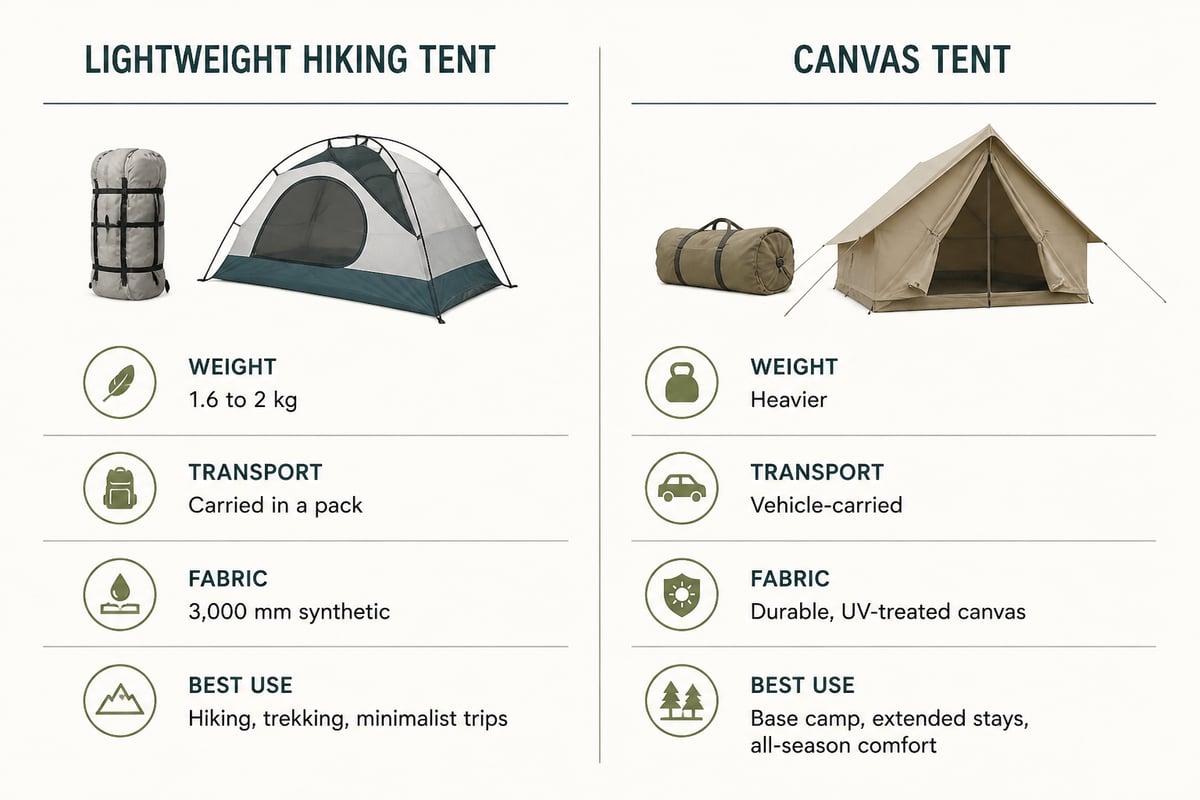
Synthetic hiking tents are generally lighter, while canvas tends to suit heavy use and warm conditions. Thin synthetic fabrics carry the waterproof ratings seen above, but sun exposure can wear coatings down over time. Canvas breathes well in heat and tolerates repeated pitching on rough ground.
If you hike with your tent, choose a synthetic model from the first three picks. If you drive to camp, read about canvas material tents and compare them with a lodge tent for larger groups. For a broader range of shelters and accessories, browse the Ejenti Outdoor shop.
Match the tent to the way you travel, not to the highest spec sheet. A few quick rules:
For more outside perspective, Outdoors Magic publishes an expert roundup of two-person hiking tents, and Advnture covers both backpacking and car-camping options. Ejenti Outdoor's guide to camping tents also covers choosing gear for local conditions.
How you pitch and store a tent affects its lifespan as much as its fabric. Follow these habits:
For changing in privacy at a busy campsite, a camping changing room is a useful add-on.
Before you buy, measure the sleeping space you need and decide whether the tent will be carried or driven, then compare that against the specs above. If a canvas shelter fits your trips, the Premium Heavy-Duty Canvas Dome Tent from Ejenti Outdoor is available at its product page, and custom builds are possible if standard sizes don't suit. Ejenti Outdoor manufactures durable, waterproof canvas and ripstop tents in Pretoria, so you can browse the range at Ejenti Outdoor to find products that fit your next trip.