
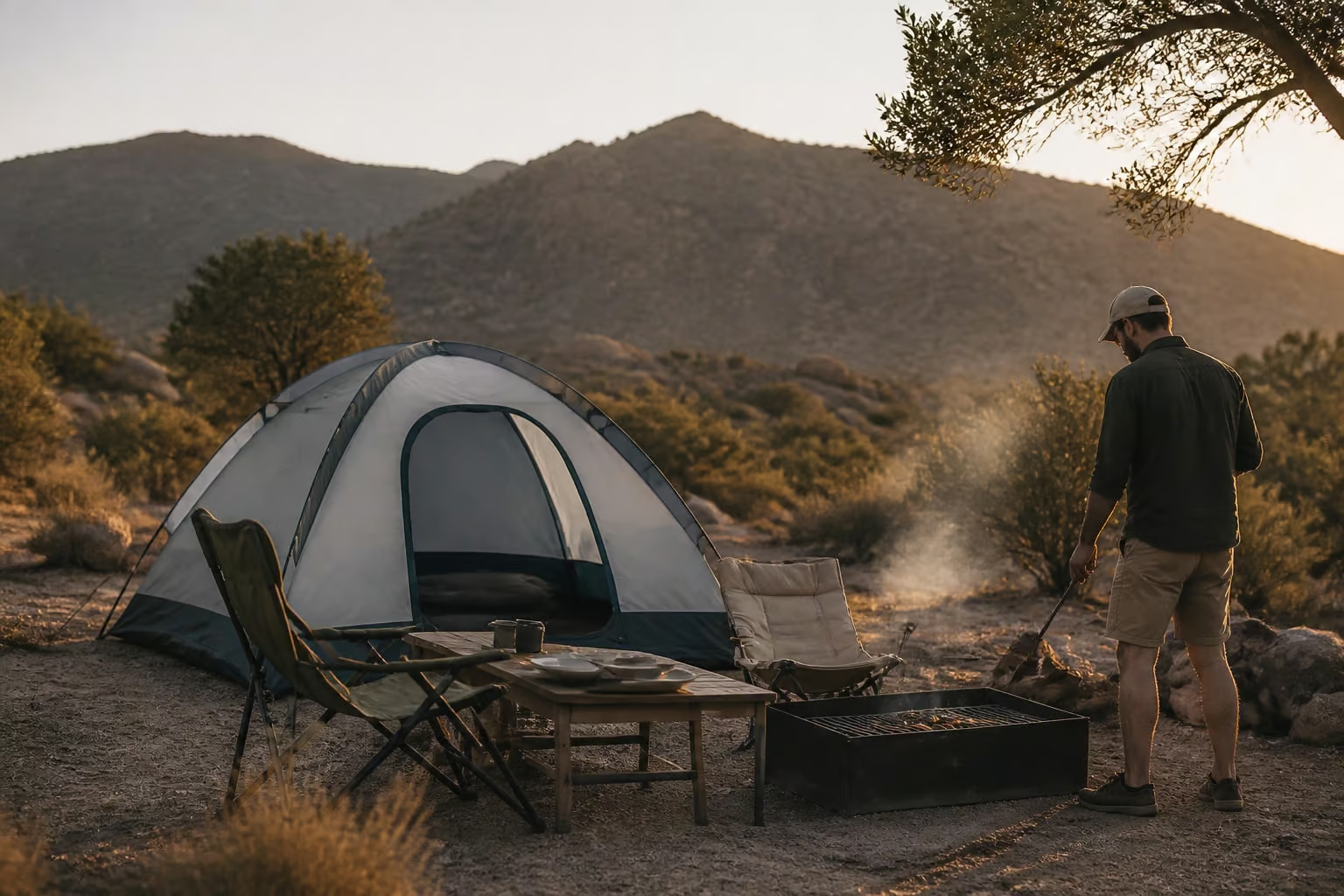
A 3 man tent is a shelter built to sleep three adults, but most of them fit two people comfortably with gear, so the right choice depends on how you camp as much as how many people you bring. For South African camping, the best options pair a reliable waterproof rating with enough ventilation for hot nights and enough strength for summer thunderstorms and gusty highveld afternoons. The five tents below cover budget, lightweight and heavy-duty canvas options, with real specs so you can compare them side by side.
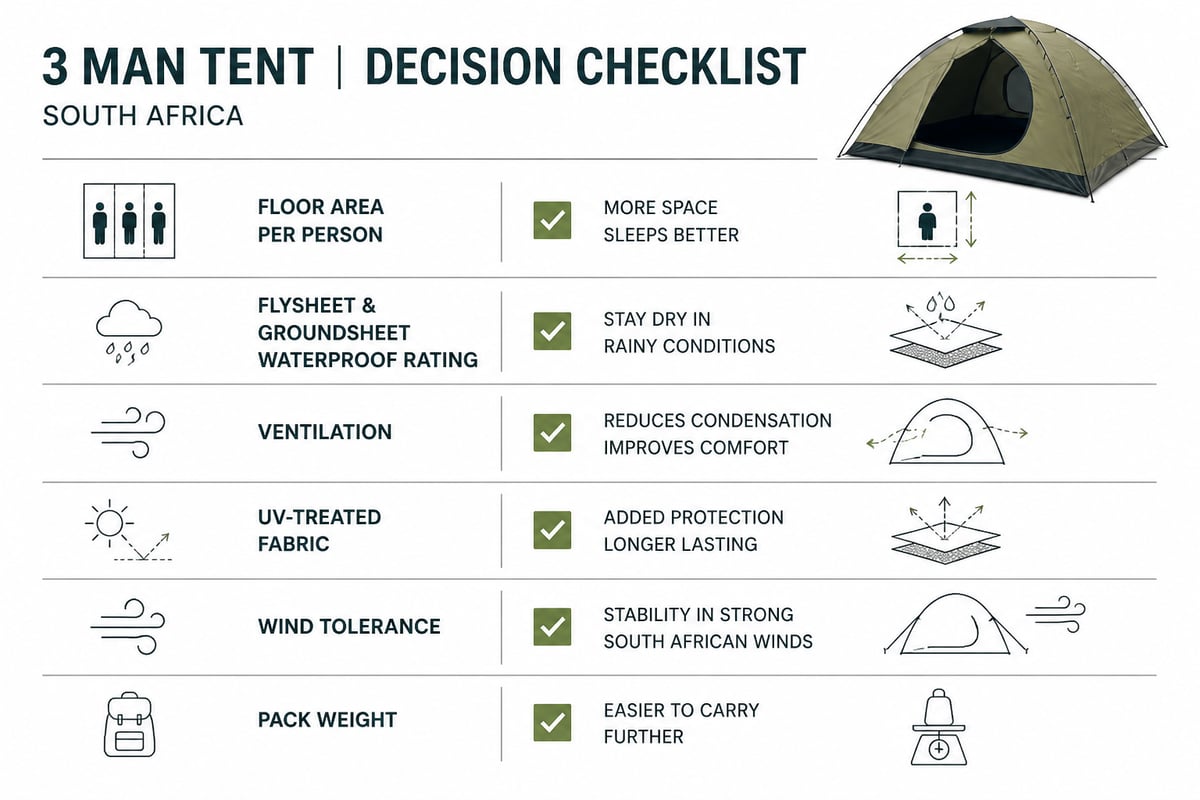
Start with three numbers: floor area, waterproof rating and weight. Floor area tells you whether three sleepers fit, waterproofing tells you whether you stay dry in a Lowveld downpour, and weight tells you how you will carry or pack it.
Here is what matters most:
The Naturehike Cloud-Up 3 is a lightweight three-season tent that suits budget-minded campers who want a small packed size and quick pitching. It is listed at about $199.
Key specs:
A review at Wilderness Times says the Cloud Up 3 comfortably sleeps two people despite the three-person label, so treat it as a roomy two-person tent with space for gear.
Best for: Short, mild-weather trips where weight and pack size matter more than space.
Verdict: A smart budget pick, but plan on two sleepers, not three.
The Nemo Dagger OSMO 3P is a premium three-season tent with a genuinely roomy interior and two separate entrances, aimed at campers who want comfort and weather performance. It is listed at about $649.95.
Key specs:
Two doors mean nobody climbs over a sleeping tentmate at night, and the paired vestibules keep wet boots and packs out of the sleeping area. The 44 in peak height lets adults sit upright to change clothes during a rainy afternoon.
Best for: Multi-night trips where interior space, two entrances and storage matter, and the budget allows for a premium price.
Verdict: Excellent design, but the price is steep for a tent that will mostly see weekend use.
The Decathlon MH100 is a straightforward, affordable 3 man tent for first-time campers who want a tent that works without fuss. It is listed at about R1,499.
Key specs:
The waterproof ratings suit typical South African summer showers, and the 40 km/h wind limit means you should pitch it in a sheltered spot and stake it properly if a front is forecast. At 3.4 kg it is easy to load into a hatchback boot alongside the cooler box.
Best for: Weekend trips to municipal and private campsites in moderate weather, on a tight budget.
Verdict: Good value for new campers, though the wind rating means it is not the tent for exposed coastal sites.
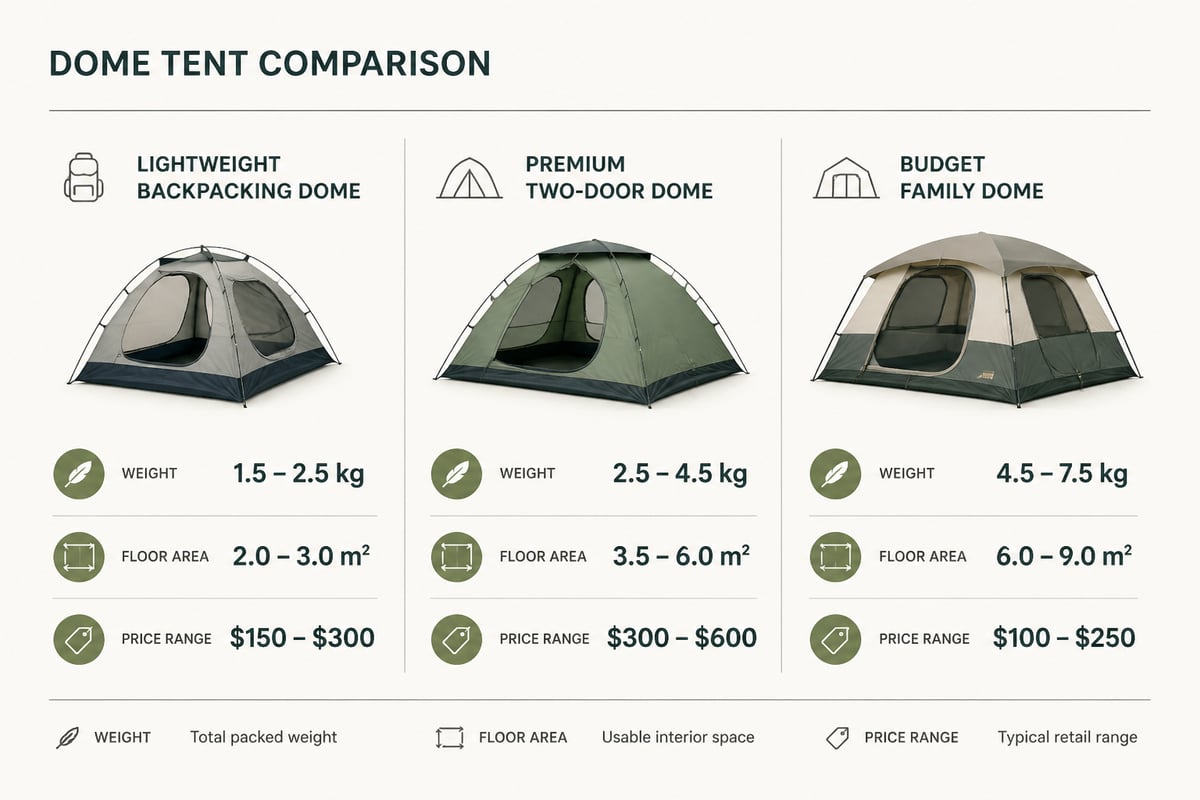
Ejenti Outdoor's Premium Heavy-Duty Canvas Dome Tent is a rugged canvas shelter for campers who want a tent that handles harsh African conditions across many seasons.
Ejenti Outdoor is a proudly South African company based in Pretoria that manufactures its own products, using heavy-duty canvas and ripstop fabrics that are waterproof and UV-treated. Specific dimensions and pricing are on the product page, so check there for the size that suits your group.
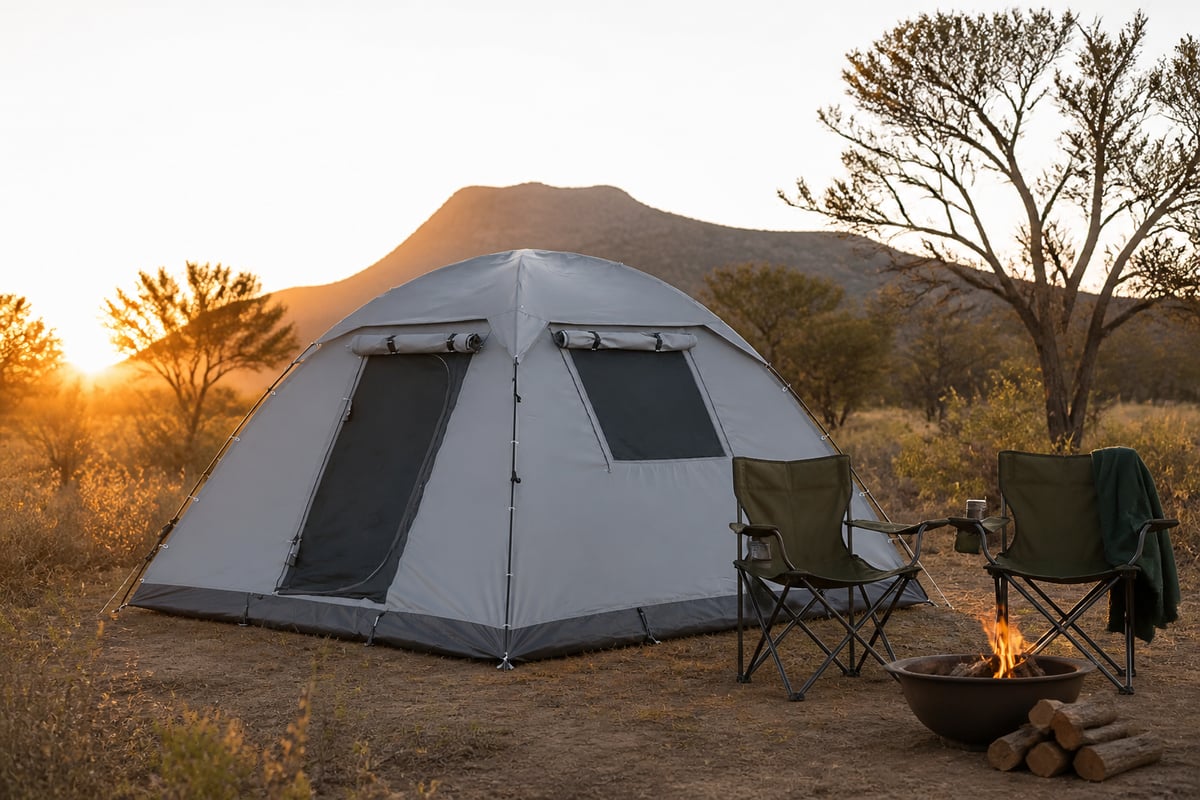
Best for: Families and groups who camp often, leave a tent up for several days and want long-term durability over low weight.
Verdict: A durable local option for repeated use. It is not an ultralight backpacking tent, and it is not meant to be.
The 3m x 6m Safari Lodge Tent is a two-room canvas tent for longer stays and safari-style setups, and it suits groups who would rather have space than save weight.
Key specs:
The two-room layout separates sleeping from living space, which helps with privacy and keeps gear organized over a week or more at one site. It will not fit in a hatchback with the cooler box, so plan on a bakkie, trailer or roof-rack setup.
Best for: Extended stays at a fixed campsite, where a family wants a sleeping room and a separate living area.
Verdict: Overkill for a night or two, but excellent for a long holiday base camp.
Match the tent to the trip rather than the label. If weight is your main limit, the Naturehike Cloud-Up 3 has the lowest minimum weight at about 3.86 lb, though it really sleeps two. The Nemo Dagger OSMO 3P gives you 42.8 sq ft of floor, a 44 in peak height and two doors, but at $649.95 it only makes sense if you camp often enough to use that space. The Decathlon MH100 is an easy entry point at R1,499, with a flysheet rated over 2,000 mm and a groundsheet rated 2,400 mm for summer showers. For repeated use over many seasons, or a long stay at one site, the Ejenti canvas options trade low weight for durability.
| Tent | Approx. price | Capacity | Weight | Waterproofing | Best use |
|---|---|---|---|---|---|
| Naturehike Cloud-Up 3 | about $199 | Sleeps 2 comfortably | ~3.86 lb min | PU3000mm+ fly | Light, short trips |
| Nemo Dagger OSMO 3P | $649.95 | 3 persons | 3 lb 13 oz min | Not listed | Comfort-focused multi-night trips |
| Decathlon MH100 3-Person | about R1,499 | 3 persons | 3.4 kg | Fly over 2,000 mm, floor 2,400 mm | Budget weekend camping |
| Ejenti Premium Heavy-Duty Canvas Dome | See product page | See product page | Not listed | Waterproof, UV-treated canvas | Repeated, durable use |
| Ejenti 3m x 6m Safari Lodge | See product page | Larger group, two rooms | Not listed | Waterproof 300 GSM ripstop canvas | Extended base camps |
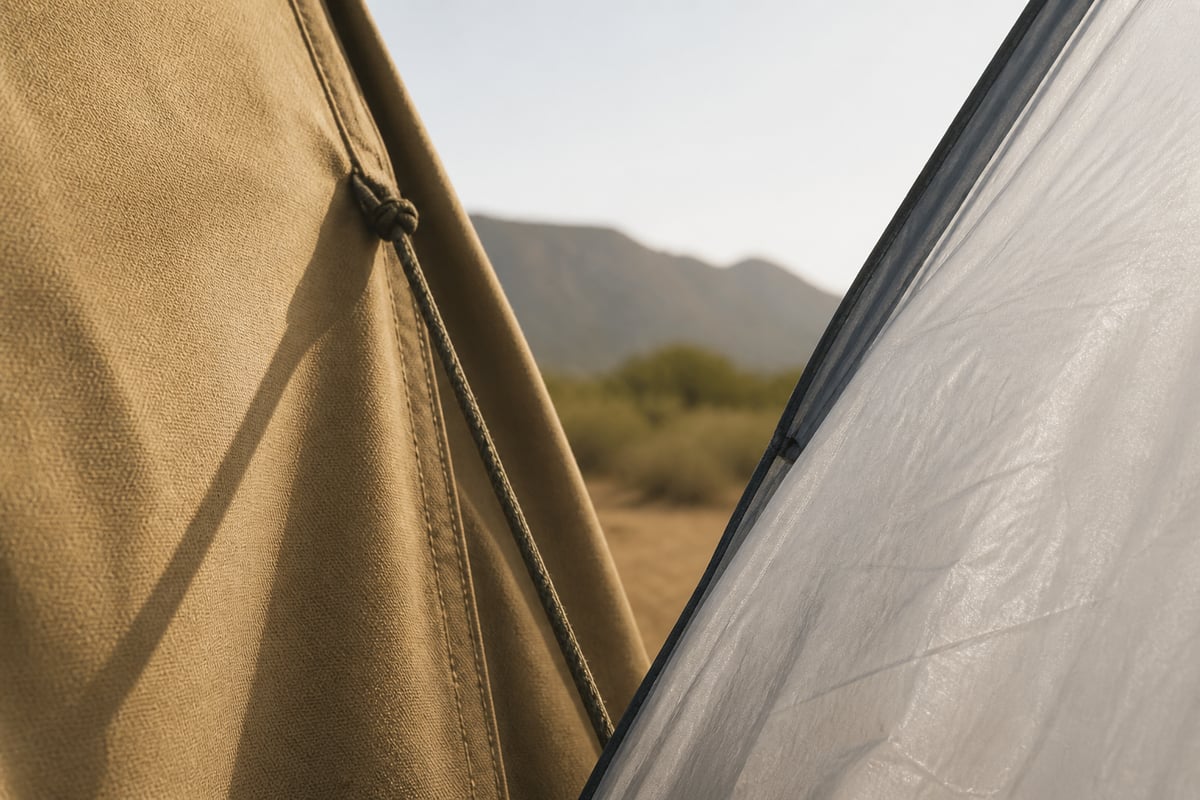
Canvas is generally more robust under strong UV than thin polyester, which is why it suits fixed or semi-permanent setups. Polyester and nylon ripstop tents are lighter and pack smaller, but sustained summer sun, especially on the highveld and in the Karoo, breaks down coatings and fabric faster. Once the coating degrades, a polyester fly can lose waterproofing, even if the fabric looks fine from a distance. Canvas is heavier and slower to dry, but it breathes, which keeps the inside cooler and cuts condensation on warm nights.
If your tent lives on a roof rack or stays pitched for days, UV-treated canvas is the longer-lasting option. A canvas dome left up for a week at a bushveld site faces far more sun than a tent pitched for one night and packed away. If it lives in a bag and comes out for a weekend, a coated synthetic tent is fine, and the lower weight is a real advantage when you carry it on your back or load a small hatchback. Whichever you choose, drying the fabric fully before storage matters as much as the material itself.
A few habits stretch a tent's life well past its first season:
If you want to understand how tent fabric and construction affect performance, Ejenti Outdoor explains the basics on its tent in camping page, and its tent manufacturers page describes how its tents are made. For repairs and custom projects, the fabric category has canvas and ripstop options.
Once your tent is sorted, a bit of route planning makes any trip smoother. Work out where you will sleep each night before you leave, and match the tent to the stop. A lightweight tent like the Naturehike Cloud-Up 3 suits a route where you carry everything on foot, while a canvas dome makes more sense for a base camp you return to every evening. Check the day's drive time against sunset so you pitch in daylight, and note whether each site has shade, because shade protects fabric during the hottest hours.
For camping and adventure ideas further afield, Private Guide Iceland offers custom private tours, and Yute Expeditions runs jungle and ruin tours in Belize. Both are useful for seeing how guides plan outdoor trips in very different terrain, from weather windows to gear lists and daily distances. Borrowing that habit helps at home too: write a simple itinerary, share it with someone who is not going, and pack a spare set of pegs and a repair patch for the tent.
Can three adults sleep in a 3 man tent? Yes, but it is a snug fit with little room for gear. Many campers treat a 3 man tent as a roomy two-person tent, as the Wilderness Times review of the Cloud Up 3 also suggests.
What waterproof rating do I need in South Africa? Aim for a flysheet of at least 2,000 mm and a groundsheet of 2,000 mm or more. Summer storms can be heavy and fast.
Is canvas worth the extra weight? For frequent campers who leave a tent pitched for days, yes. For one-off weekends where carrying weight matters, a coated synthetic is easier to manage.
Which tent suits a first-timer? The Decathlon MH100 is simple and inexpensive, and a good place to learn what you actually want from a tent.
Before you buy, measure the boot of your vehicle and write down how many nights a year you really camp, because that one number decides between a light tent and a durable canvas one. If you camp often and want shelter that stays dry through several seasons, Ejenti Outdoor builds its products in Pretoria from waterproof, UV-treated canvas and ripstop, and has delivered 400+ products and completed 400+ custom builds. Start with the Premium Heavy-Duty Canvas Dome Tent if you want a rugged dome, or Shop Now at Ejenti Outdoor to see the full range and ask about a custom build.