
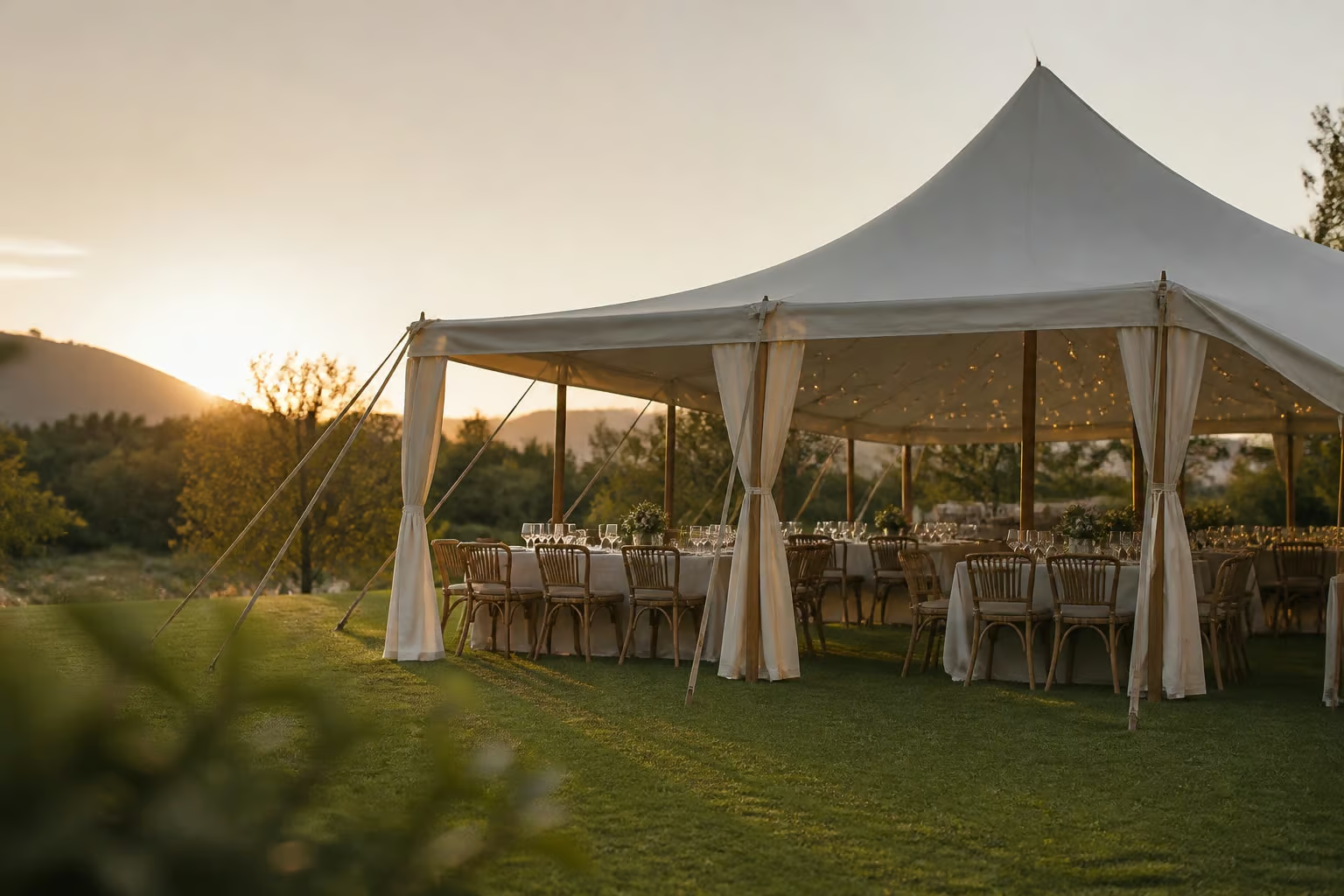
A tent rent works by matching the tent's size, fabric, and setup service to your event or trip, then booking early enough to secure the dates and sort out any permits. Most rentals are quoted per day or per weekend, and the details that decide whether you stay dry and comfortable are the fabric, the pegging or ballast method, and who handles installation.
This guide walks through how rental works, how to size a tent, what to check before you pay, and when buying becomes the smarter move for families who camp or host often.
A tent rental is a short-term hire agreement where a supplier delivers, sets up, and later collects a tent for a fixed rental period. You choose the structure, agree on dates, pay a deposit, and settle the balance before or on delivery.
Most suppliers follow the same basic sequence:
Ground type matters more than most renters expect. Soft lawn takes pegs easily, while paving needs weighted bases or ballast, and that can change both price and setup time.
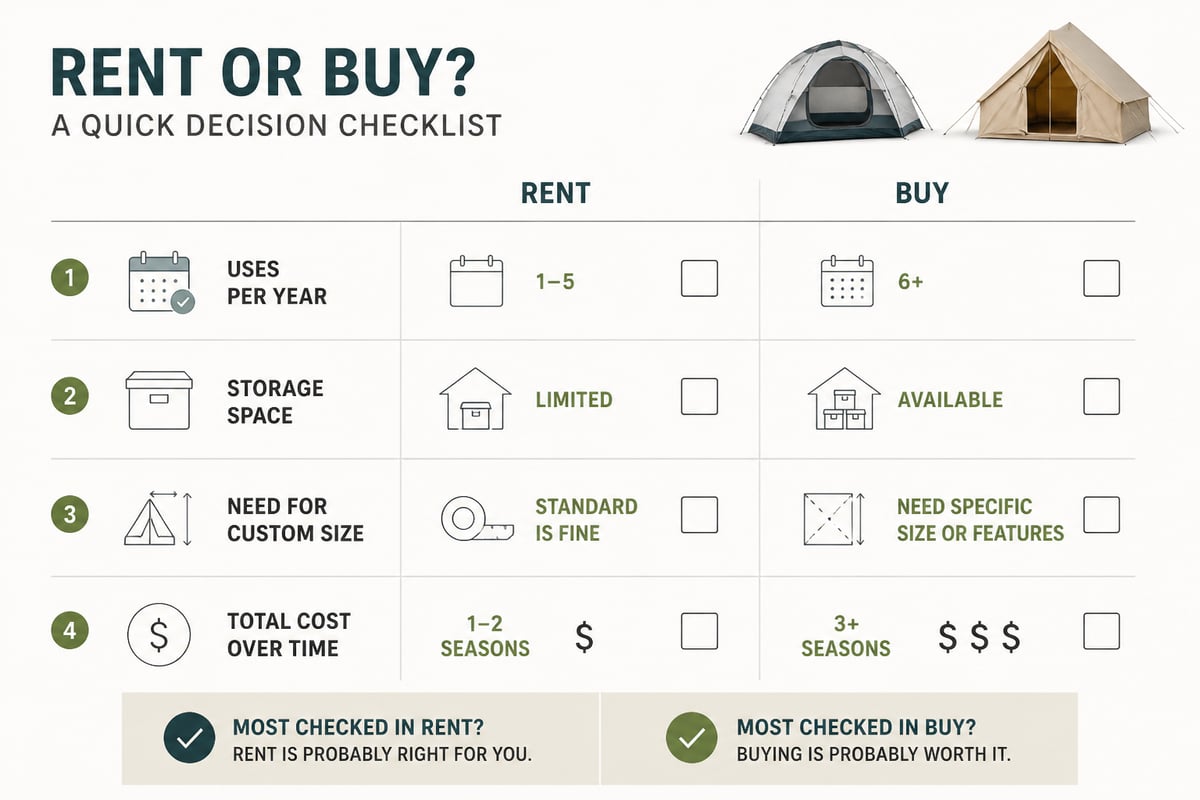
Renting suits one-off events and occasional trips, while buying suits families who camp or host several times a year and want shelter that lasts many seasons.
A simple way to decide is to count how many times you will use it. If you need a tent once for a wedding, a milestone birthday, or a single holiday, renting avoids storage and maintenance. If you set up a shelter four or five times a year, rental fees add up quickly and you still work around someone else's availability.
Consider these points:
For camping families who want a base camp that survives several summers of South African sun and sudden storms, a purchase built from canvas material tent fabric is worth pricing against repeated hire fees.
Plan on more space per seated guest once you add tables, a buffet, or a dance floor than you would for a simple gathering. For camping, size by sleeping capacity and add a covered living area.
Capacity figures change with layout, so use these as starting points rather than fixed rules:
Capacity depends on layout: a standing gathering needs far less space per person than seated guests at tables with a buffet and dance floor, so confirm the figure with your supplier for your exact setup.
Add space around the edges for guttering, guy ropes, and walkways. A common mistake is ordering a tent that fits the guest list but leaves no room for catering tables or a pack-up area.
For a family reunion of around 40 to 60 people with seating and a food station, a 5m x 10m structure is a sensible starting point. Smaller gatherings can often work under a gazebo, and you can compare options in the gazebo range.
Heavy-duty PVC and treated canvas stay dry best, because both are waterproof or water-resistant at a fabric level and hold up under South African UV and wind. Thin polyester and uncoated cloth tend to leak at seams or sag when wet.
Here is how the main materials compare:
Ask the supplier two direct questions: is the fabric UV-treated, and are the seams welded or stitched and sealed? A tent that is waterproof on paper but leaks along the seams will soak your guests anyway.
For a rental that must survive a Highveld afternoon storm, a PVC marquee is the safer pick. A larger event shelter such as the 5m x 10m PVC Marquee Tent from Ejenti Outdoor is made from PVC and designed for sun, rain, and wind exposure.
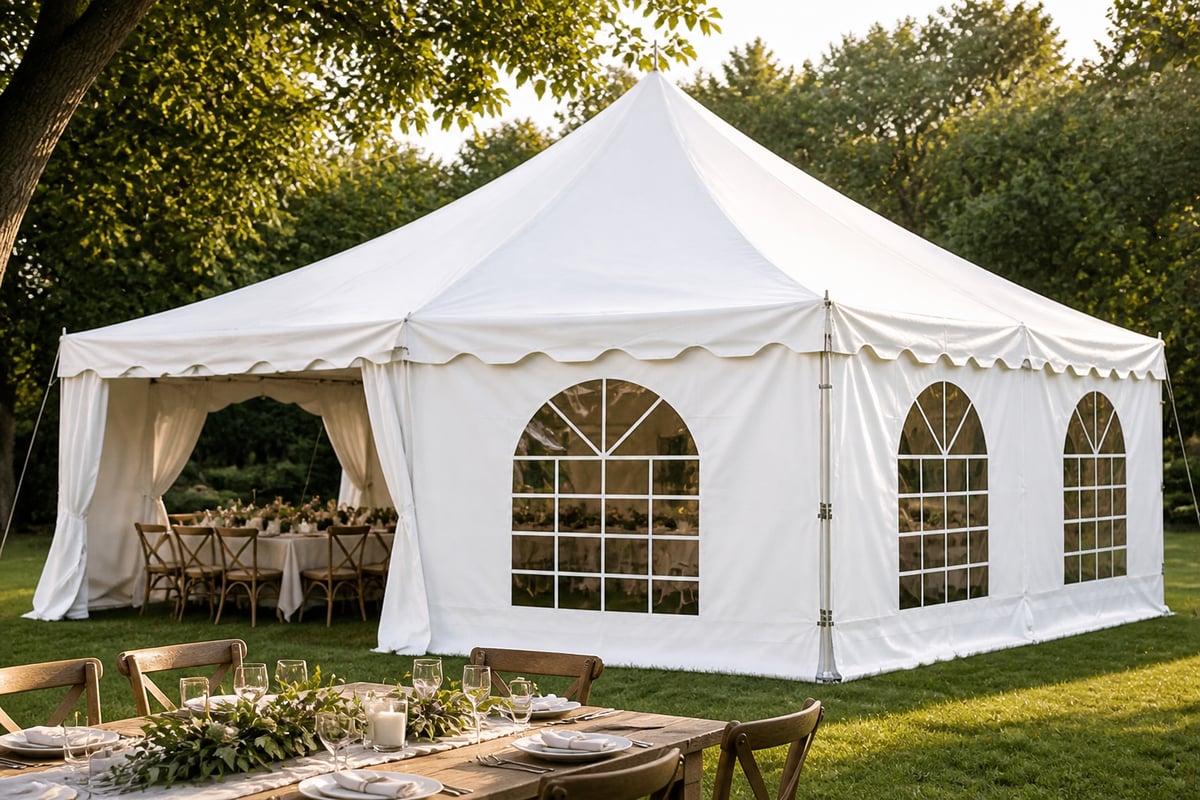
If you need covered space for a gathering and want to see the specifications, the 5m x 10m PVC Marquee Tent is a good size for larger gatherings.
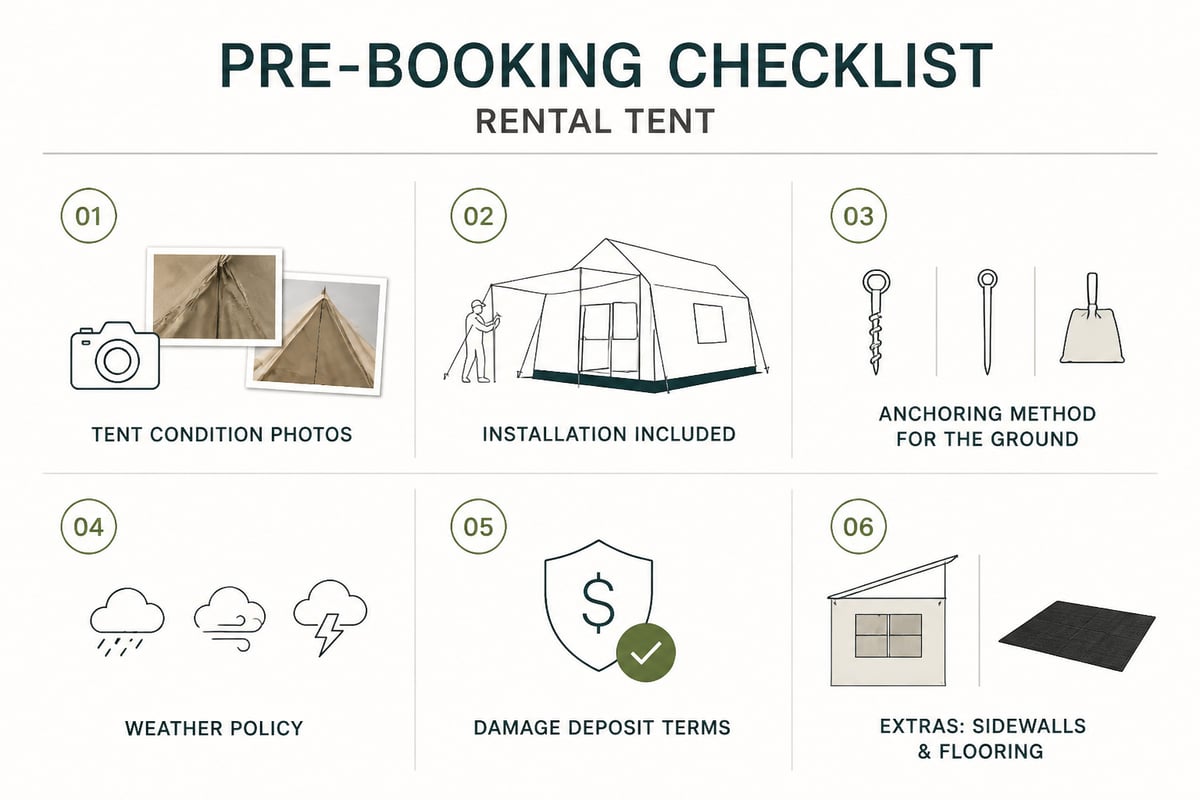
Check the supplier's inventory condition, setup method, weather policy, and total cost before paying a deposit. A clear written quote protects you from surprise charges.
Use this checklist:
Book as early as you can for peak periods such as December weddings, long weekends, and school holidays. Popular sizes sell out first, and last-minute availability is limited.
It depends on your location, the tent's size, and your event, so check with your local authority before you confirm a booking. Rules vary widely, and larger tents or events with cooking or power often trigger extra requirements.
International examples show the kinds of triggers to look for. In King County, Washington, a special-event permit is required for temporary tents over 400 square feet individually, or multiple tents totaling 700 square feet, and the listed triggers also include events expecting 50 or more people, temporary heating or cooking, and generators. The same county says a complete application must be submitted 30 calendar days before the event begins.
Chicago takes a similar size-based approach. Its temporary tent permit program covers eligible tents installed in one location for 180 days or less, with a single structure covering up to 600 square feet and at least 6 feet between structures.
These are American rules, so they do not apply directly to South African venues. What carries over is the pattern: size, headcount, cooking, and power are the usual triggers. In South Africa, ask the venue owner, your municipality, or the body managing your campsite or park what applies, and do it weeks ahead rather than days.
Keep flames and heat sources well away from the fabric, anchor the structure properly, and never block exits. Fire is the main hazard around any tent, and rental agreements usually hold you responsible for damage.
Practical rules to follow:
For larger gatherings, a written fire-safety risk assessment is good practice. The UK government publishes guidance on fire-safety risk assessments for open-air events that is useful as a framework even outside the UK.
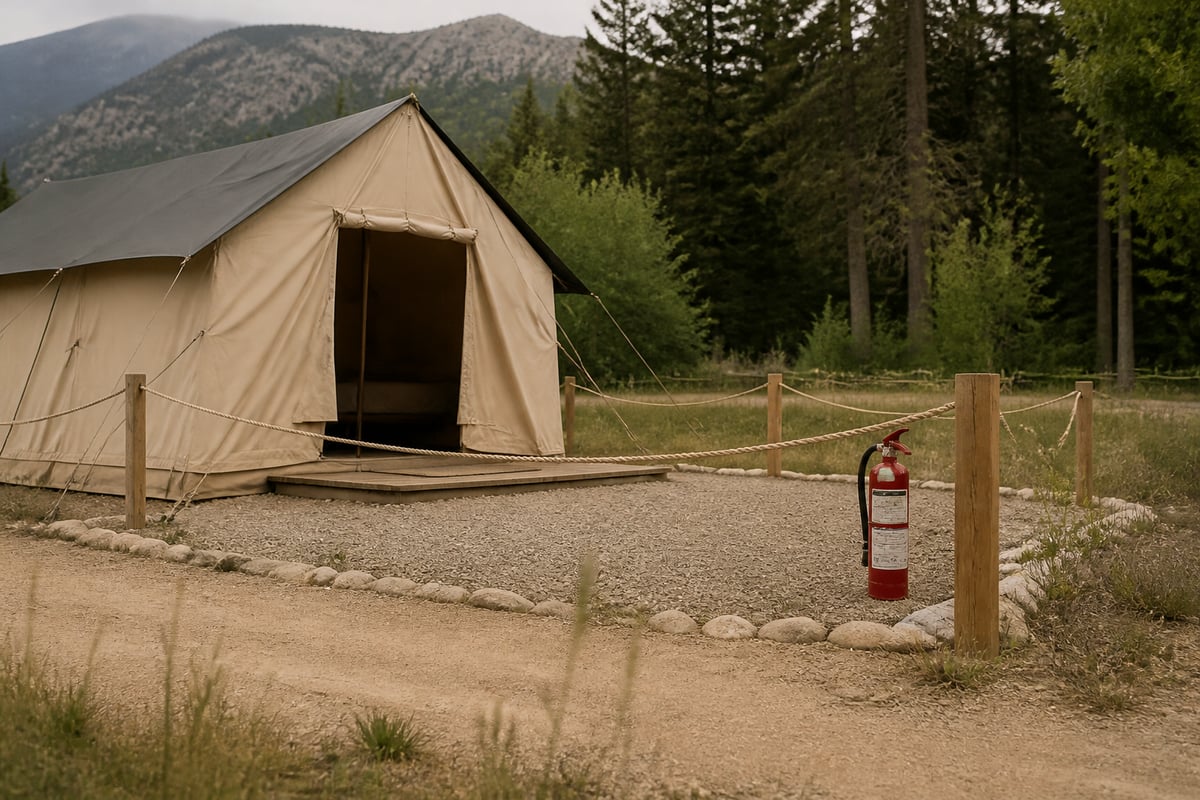
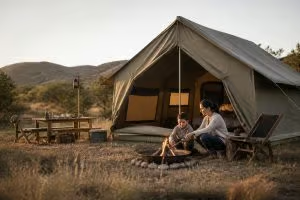
Yes. Some suppliers offer furnished glamping setups that include bedding, flooring, and lighting, which suits families who want an outdoor stay without hauling gear. Options range from simple canvas bell tents to fully dressed safari-style structures.
This route works well for a first family trip, a birthday weekend, or a farm stay, since there is nothing to pitch or pack. Browse the available glamping tents for rent if you want comfort without the setup work.
Ask what is included: mattresses, linen, a ground sheet, lighting, and whether staff handle setup and collection. A fully dressed tent can cost more per night than a bare one, but it saves you the transport and labor.
Most rental problems come from vague agreements, poor ground preparation, and ignoring the weather forecast. A few habits prevent nearly all of them.
If your event includes a team-building or wellness element, such as a corporate day with activities, a company like Mobile Wellness Co offers workplace experiences that pair well with an outdoor tent setup. Confirm the activity space and power needs with the tent supplier early.
A custom build makes sense when standard rental sizes do not fit your site, your guest count, or your use pattern. Having a tent made to your exact measurements avoids paying for space you do not need or squeezing into a shape that does not suit your ground.
Ejenti Outdoor is a South African company that manufactures durable tents, gazebos, and outdoor solutions. It has completed more than 400 custom builds, so it is a practical reference point for families weighing a rental against owning something built for their own plot, campsite, or event space.
Questions to settle before you commission anything:
Start by writing down your date, guest count, and ground type, then request written quotes from at least two suppliers so you can compare size, fabric, and what is included. If you decide that owning a tent is better than repeated hire, Ejenti Outdoor can build one to your measurements, and the 5m x 10m PVC Marquee Tent is a good starting point for larger gatherings. You can browse the full range of tents, gazebos, and outdoor fabrics at Ejenti Outdoor and shop now for shelter built to last several seasons.