
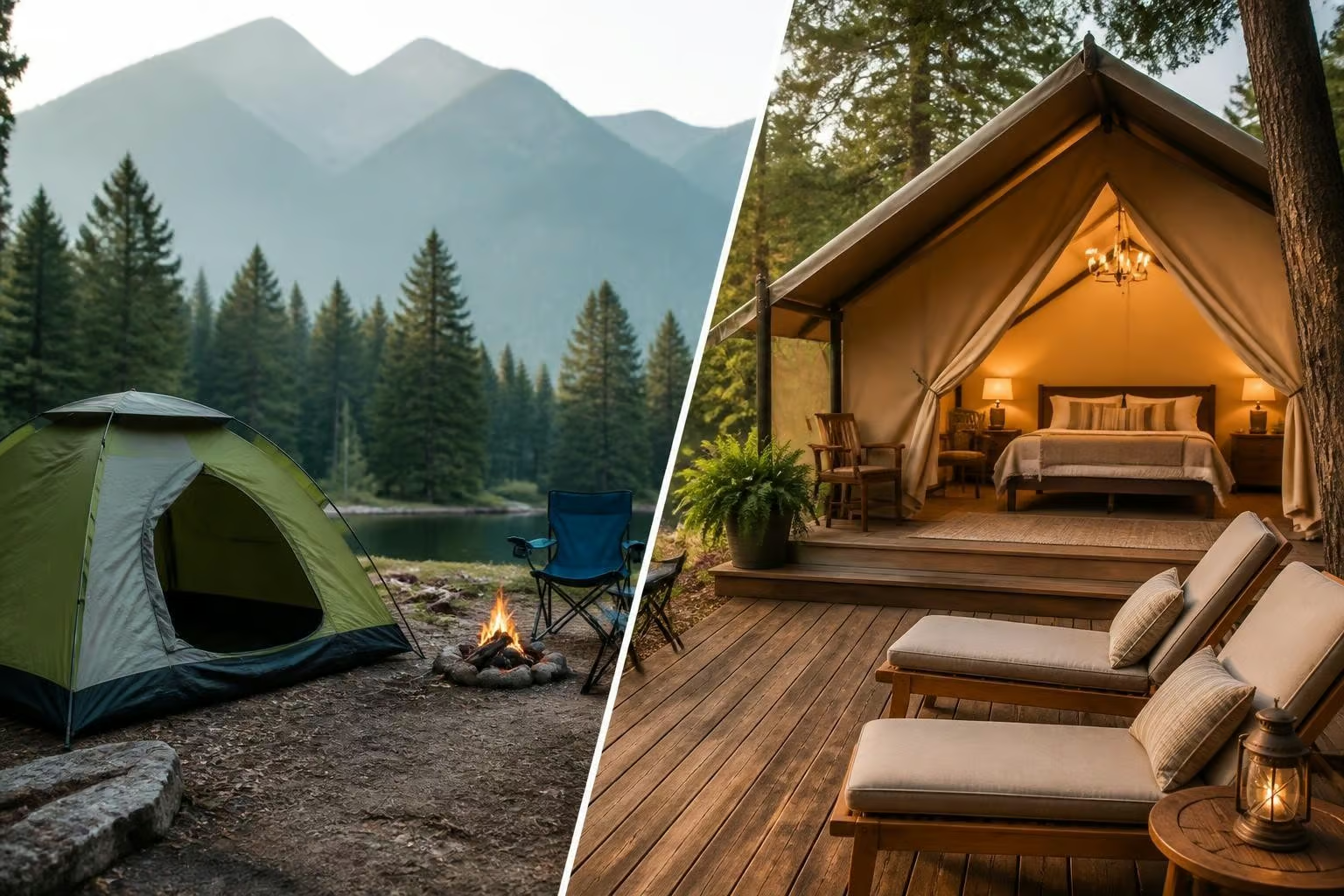
The outdoor hospitality industry has transformed dramatically over the past decade, with the glamping tent emerging as the centerpiece of this evolution. Unlike traditional camping that requires guests to sacrifice comfort for nature immersion, a well-designed glamping tent delivers both luxury and authentic outdoor experiences. These specialized structures combine durable construction with thoughtful amenities, creating accommodations that appeal to travelers seeking memorable stays without compromising on comfort. Understanding the key features, material choices, and setup considerations for glamping tents helps operators and outdoor enthusiasts make informed decisions about their investment.
The global glamping market reached significant milestones in 2026, with industry research showing consistent growth across all continents. According to Grand View Research’s glamping market analysis, the sector continues expanding as travelers prioritize unique experiences over traditional hotel stays.
Several factors fuel the rising demand for glamping tent accommodations. Today's travelers seek Instagram-worthy experiences that combine adventure with comfort, and a properly outfitted glamping tent delivers exactly that combination.
Key market drivers include:
The Canopy & Stars Glamping Market Report reveals that 68% of glamping guests prioritize comfort features like proper beds, while 72% want unique design elements that enhance their connection to nature. This data underscores why glamping tent specifications matter significantly to business success.
Different regions show distinct preferences for glamping tent styles and amenities. In South Africa, the safari tent tradition merges seamlessly with modern glamping expectations, creating opportunities for operators who understand local conditions and guest needs.
Material selection directly impacts durability, guest comfort, and operational costs. The right fabric choice ensures your glamping tent withstands weather extremes while maintaining an inviting interior environment.
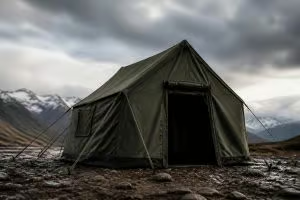
Ripstop canvas remains the gold standard for many glamping tent applications. This material offers natural breathability, excellent insulation properties, and a classic aesthetic that appeals to guests seeking authentic outdoor experiences. Quality ripstop canvas typically ranges from 280 to 450 GSM (grams per square meter), with heavier weights providing superior durability for permanent installations.
Benefits of canvas glamping tents:
Canvas does require proper waterproofing treatment and periodic maintenance. Quality waterproofing extends fabric life and maintains guest comfort during rainy seasons.
Modern PVC fabrics deliver exceptional waterproofing and require minimal maintenance. These materials excel in high-rainfall environments and offer longer service life in challenging conditions.
| Material Type | Weight Range | Primary Benefits | Best Use Cases |
|---|---|---|---|
| Ripstop Canvas | 280-450 GSM | Breathable, natural look | Safari tents, lodge tents |
| PVC Coated Fabric | 450-650 GSM | Waterproof, low maintenance | Event tents, marquees |
| Polyester Canvas | 300-400 GSM | Lightweight, mold resistant | Semi-permanent setups |
| Acrylic Treated Canvas | 320-420 GSM | UV resistant, color retention | Sunny climates |
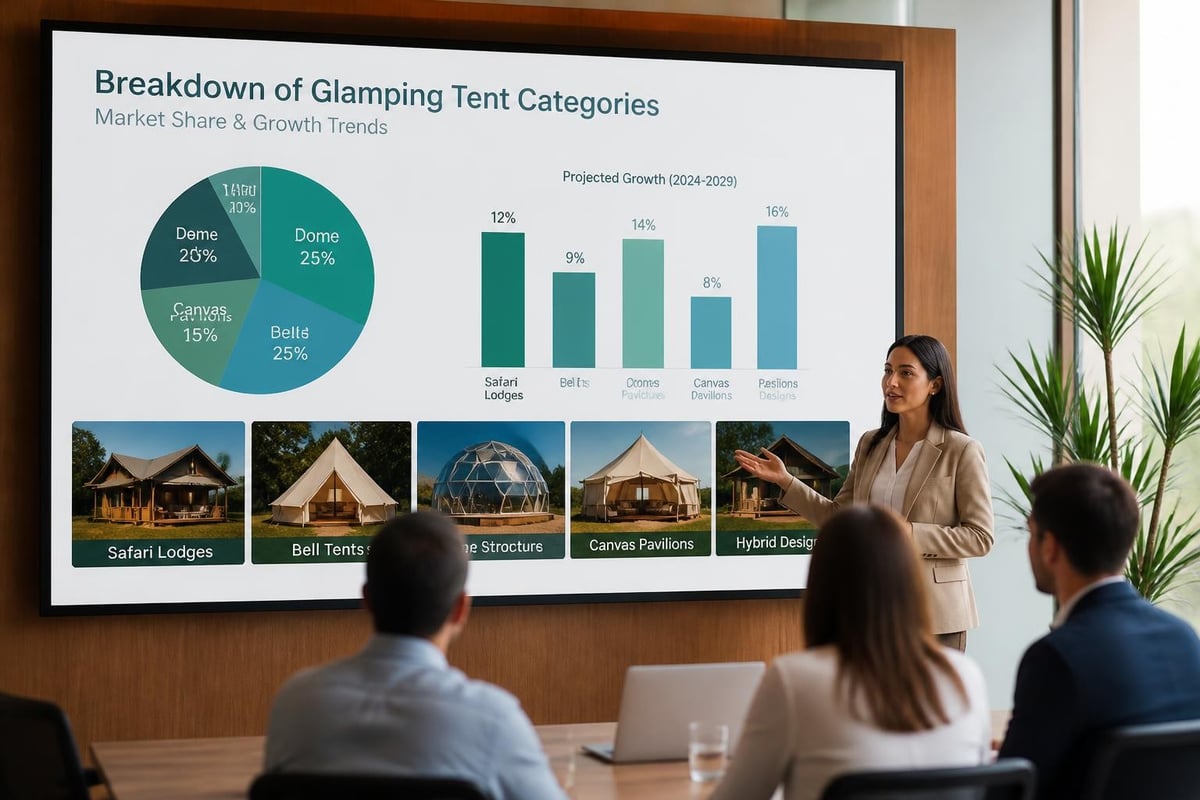
Different design styles serve specific operational needs and guest expectations. Understanding these categories helps match your glamping tent investment to your target market.
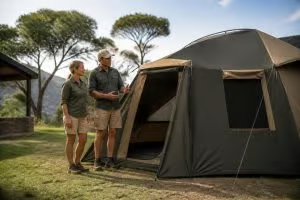
Safari-style glamping tents draw inspiration from traditional African camping while incorporating modern comforts. These structures typically feature high ceilings, large windows with mesh screens, and spacious verandas. The two-room configuration provides separate sleeping and living areas, enhancing the luxury experience.
A well-designed safari tent accommodates queen or king-sized beds, provides ample headroom for standing comfort, and includes dedicated storage areas. The 3m x 6m safari lodge tent exemplifies this category with its practical two-room layout and waterproof ripstop canvas construction.
Bell tents offer a distinctive circular floor plan with central pole support. This design creates an open, airy interior while maintaining structural integrity in moderate wind conditions. The sloping walls shed rain efficiently and the design allows for creative interior layouts.
Dome glamping tents provide superior wind resistance and maximize interior space. The geodesic structure distributes stress evenly across the frame, making these tents suitable for exposed locations and year-round use.
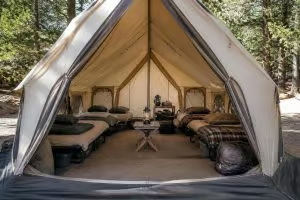
Larger glamping tent configurations serve group accommodations or event spaces. These structures utilize robust framing systems and can incorporate solid walls, large windows, and multiple room divisions.
Popular pavilion features include:
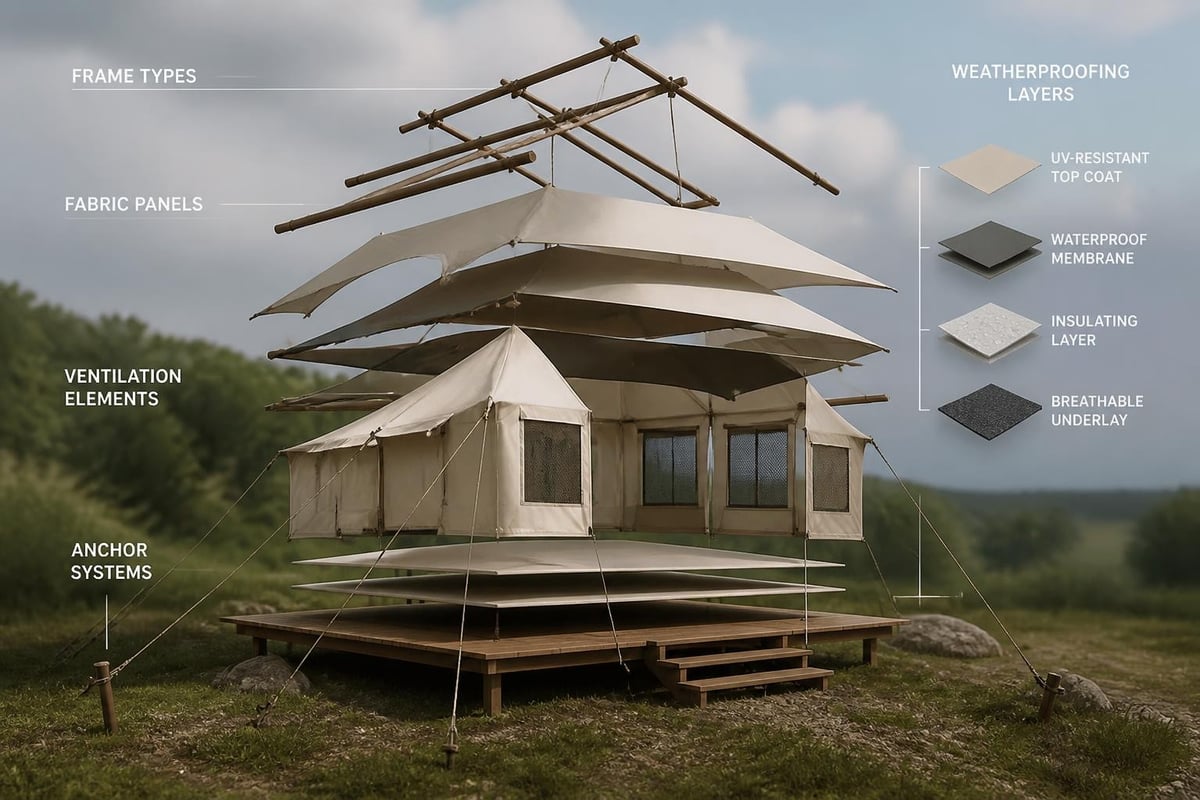
The frame determines your glamping tent's stability, longevity, and resistance to environmental stresses. Proper frame selection prevents costly repairs and ensures guest safety during adverse weather.
Galvanized steel frames offer excellent strength-to-weight ratios and resist corrosion in humid environments. These systems typically use tubular steel members with welded or bolted connections. Powder coating adds additional weather protection and allows color customization.
Steel frames support larger spans and heavier fabric loads, making them ideal for permanent glamping tent installations. The material handles temperature extremes without warping or degrading.
Aluminum framing reduces overall weight while maintaining structural strength. This material choice simplifies transportation and allows for quicker setup sequences. Marine-grade aluminum alloys resist salt air corrosion, beneficial for coastal glamping locations.
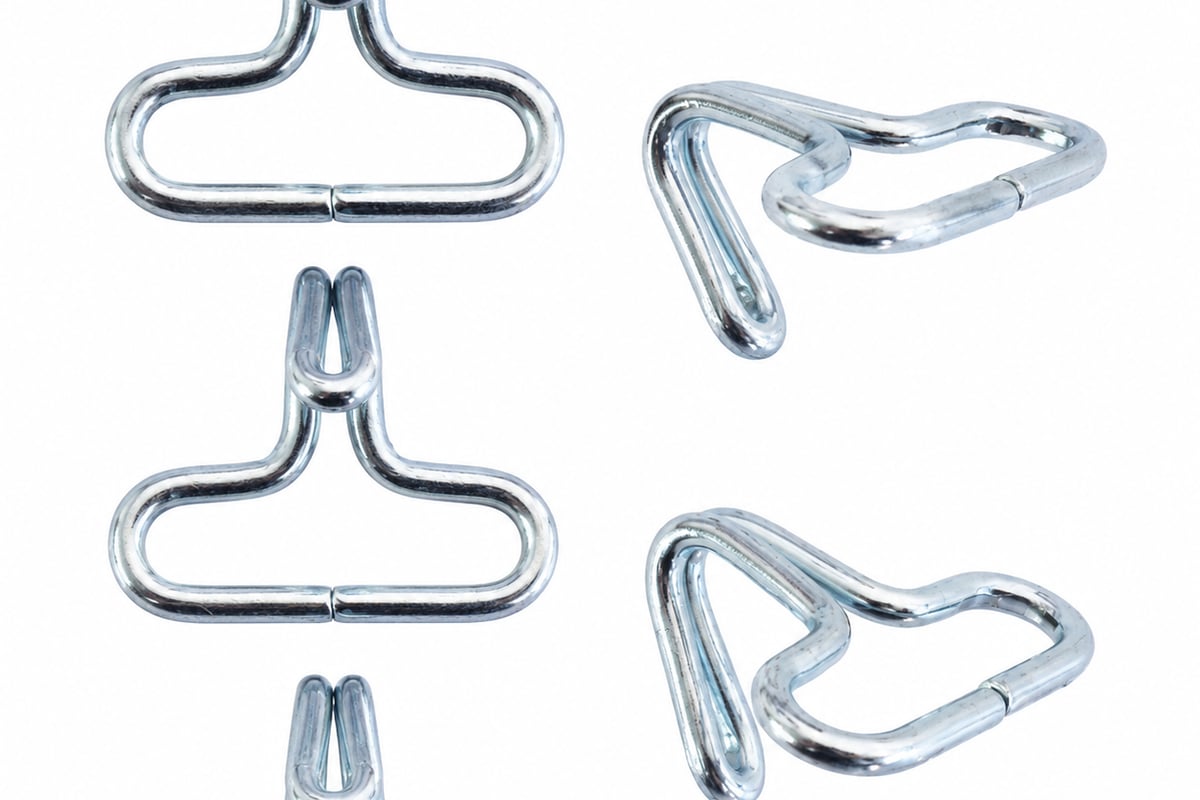
Quality hardware directly impacts setup efficiency and long-term reliability. Using heavy-duty tent hooks and metal fasteners ensures secure connections between fabric and frame components. These durable metal fasteners handle regular outdoor use while remaining easy to install and remove when needed.
Proper tensioning systems maintain fabric tautness, preventing water pooling and reducing stress on seams. Adjustable guy lines with quality hardware allow operators to fine-tune tension based on weather conditions.
Location choice influences everything from guest experience to operational efficiency. The National Park Service campground design guidelines provide valuable frameworks for site planning, including specific considerations for fixed-walled tent accommodations.
Select naturally elevated sites that promote water runoff away from the glamping tent footprint. Avoid depressions where water accumulates during rain events. Gentle slopes (1-3%) provide ideal drainage without creating accessibility challenges.
Site evaluation checklist:
Different foundation types suit varying soil conditions, budgets, and permanence requirements. Wooden decking platforms elevate the glamping tent floor, improving drainage and creating level sleeping surfaces. These platforms also extend tent life by preventing ground moisture contact.
Concrete footings provide maximum stability for year-round installations. Pier-and-beam systems allow adjustment for uneven terrain while minimizing site disturbance. For semi-permanent setups, heavy-duty ground anchors combined with reinforced flooring systems deliver good stability with easier relocation options.
Guest comfort depends heavily on interior temperature and air quality management. Well-designed glamping tents incorporate passive and active ventilation strategies.
Strategic window and vent placement creates cross-flow ventilation that removes hot air and introduces fresh breezes. Position low vents on windward walls and high vents on leeward sides to maximize natural convection.
Mesh screening on all openings prevents insect entry while maintaining airflow. Double-layer fabric systems with adjustable gaps between canvas and liner fabrics create air channels that improve insulation and reduce condensation.
Winter glamping requires reliable heating solutions. Wood-burning stoves create ambiance while effectively warming tent interiors. Ensure proper chimney installation with heat shielding where pipes pass through fabric. Electric heaters offer convenience but require generator capacity or grid connection.
For summer cooling, ceiling fans powered by solar or battery systems circulate air without noise disruption. Reflective fly sheets installed above the main glamping tent fabric reduce radiant heat absorption, keeping interiors comfortable during peak sun hours.
| Climate Control Method | Installation Complexity | Operating Cost | Guest Appeal |
|---|---|---|---|
| Wood stove | High | Low | Very High |
| Electric heater | Medium | Medium-High | Medium |
| Ceiling fan | Low | Very Low | High |
| Reflective fly sheet | Low | None | Medium |
The glamping tent interior creates the lasting impression that drives reviews and repeat bookings. Thoughtful finishing details elevate the space from shelter to memorable accommodation.
Flooring choice impacts comfort, maintenance, and aesthetic appeal. Hardwood platforms create upscale ambiance and provide stable surfaces for furniture. Marine-grade plywood with weatherproof finishes offers durability at moderate cost.
Luxury vinyl plank flooring combines water resistance with visual appeal and underfoot comfort. These products install quickly over plywood substrates and handle temperature variations well. Add area rugs to define spaces and enhance warmth.
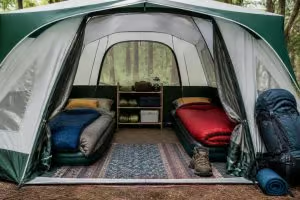
Select furniture designed for outdoor environments. Beds should accommodate quality mattresses (minimum 15cm thick) and include moisture barriers beneath. Platform beds with storage drawers maximize space efficiency in smaller glamping tent layouts.
Seating areas require weather-resistant furniture that complements the tent's aesthetic. Consider pieces that serve multiple functions, like storage ottomans or fold-down desks. Lighting design should include ambient, task, and accent layers using LED fixtures with warm color temperatures.
En-suite bathrooms significantly enhance guest satisfaction. Portable chemical toilets provide basic functionality, while composting toilet systems offer eco-friendly solutions without plumbing requirements. For permanent glamping tent sites, traditional plumbing connected to septic or municipal systems delivers maximum convenience.
Kitchen amenities range from simple outdoor cooking areas to fully equipped units. Mini-refrigerators, two-burner stoves, and basic food preparation surfaces meet most guest needs. Ensure proper ventilation for any indoor cooking equipment.
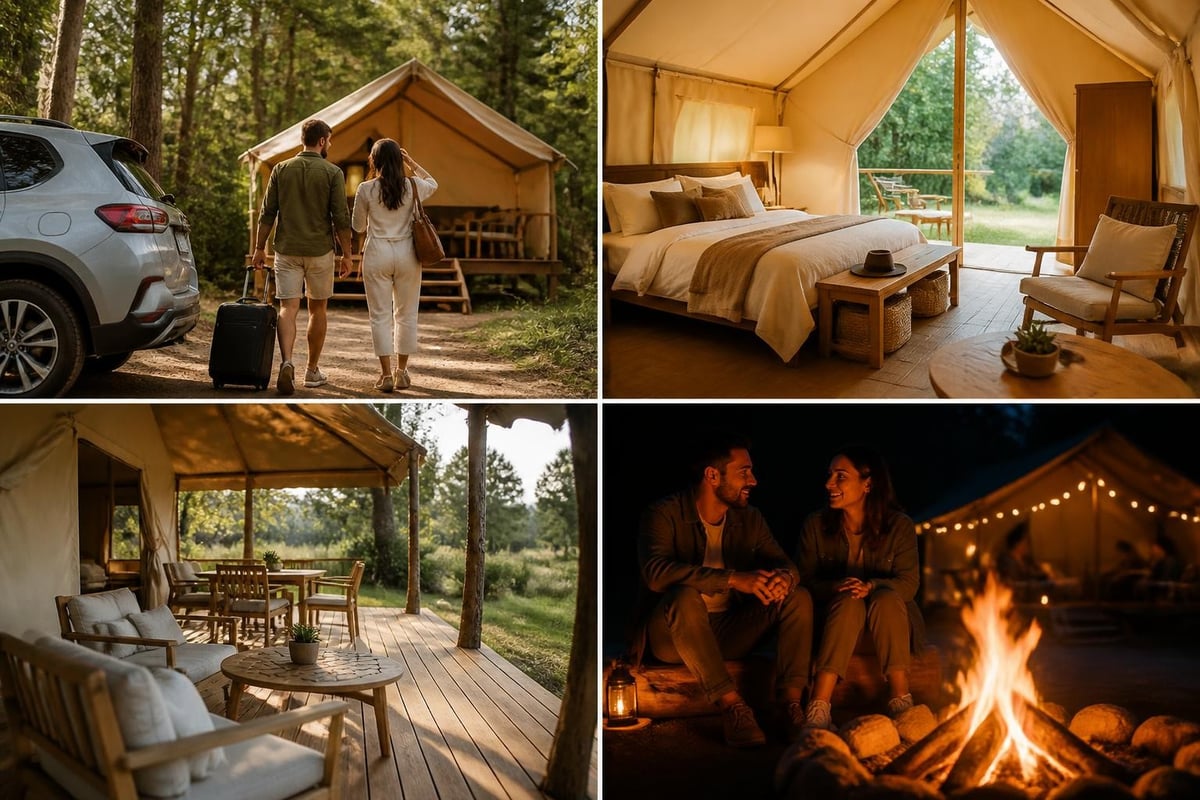
A quality glamping tent must perform reliably across weather extremes. Understanding material behavior and reinforcement strategies protects your investment and ensures guest safety.
All seams require proper sealing using heat-welding or waterproof tape applications. Canvas glamping tents need periodic reproofing treatments to maintain water resistance. Apply silicone-based waterproofing products during dry seasons, ensuring complete fabric saturation.
Roof pitch significantly affects rain shedding. Maintain minimum slopes of 30 degrees on main roof surfaces. Steeper pitches prevent water accumulation and reduce stress on fabric and seams.
Engineer your glamping tent installation for maximum expected wind speeds in your region. Guy line systems should attach to buried anchors rated for soil type and anticipated loads. Space anchors at recommended intervals and maintain proper angle tensions.
Before storm events, remove loose exterior items and ensure all windows and doors seal completely. Consider removable panels for extreme weather, allowing wind passage while protecting the main structure.
Regular maintenance extends glamping tent life and prevents expensive emergency repairs. Establish systematic inspection schedules covering all critical components.
Staff should perform quick visual inspections after guest checkout, checking for fabric damage, hardware looseness, and interior moisture issues. Weekly detailed inspections cover:
Plan comprehensive maintenance during off-seasons or slower booking periods. This includes fabric cleaning with appropriate products, hardware lubrication, frame inspection for corrosion or stress fractures, and complete waterproofing renewal.
Document all maintenance activities and track fabric condition over time. This data helps predict replacement needs and optimize procurement timing. Quality outdoor fabrics properly maintained can deliver 7-10 years of service in demanding environments.
Operating glamping tent accommodations involves meeting various regulatory requirements. Research local building codes, fire safety regulations, and hospitality licensing before installation.
Many jurisdictions require flame-retardant fabric for overnight accommodation tents. Verify your glamping tent material meets relevant standards. Install smoke detectors and fire extinguishers in all units. Create and mark clear egress routes, ensuring guests can exit quickly during emergencies.
Establish minimum setbacks between individual glamping tents to prevent fire spread. The specific distance varies by jurisdiction but typically ranges from 3 to 6 meters.
Design at least some glamping tent units to accommodate guests with mobility limitations. This includes wider doorways, level access entries, reinforced floors for wheelchair navigation, and accessible bathroom facilities. These accommodations expand your market while meeting legal requirements in many regions.
Understanding the economics of glamping tent operations helps set realistic expectations and guides investment decisions. The State of Glamping Report 2026 provides valuable benchmarking data for operators planning new ventures.
Glamping tent costs vary significantly based on size, materials, and included amenities. Basic canvas structures start around $3,000-$5,000 for materials and frame. Fully furnished luxury units with en-suite facilities can exceed $25,000 per unit.
Budget categories to consider:
Successful glamping operations typically achieve higher nightly rates than traditional campgrounds while maintaining strong occupancy. Premium positioning allows rates 2-4 times higher than standard camping fees. Focus marketing on unique experiences, local partnerships, and seasonal activities that justify premium pricing.
Dynamic pricing based on demand, seasons, and booking windows maximizes revenue. Minimum stay requirements during peak periods improve profitability by reducing turnover costs.
Small details separate adequate glamping tent accommodations from exceptional ones. Focus on elements that create memorable moments and encourage social sharing.
Extend usable area beyond the glamping tent footprint with well-designed outdoor spaces. Private decks or patios with comfortable seating encourage guests to spend time outdoors. Fire pits create gathering spots and extend evening activities.
Consider outdoor showers or bathtubs positioned for privacy while offering nature views. These unique amenities generate social media content and differentiate your property.
Thoughtful lighting design transforms glamping tent spaces after dark. String lights create magical evening atmospheres. Solar-powered pathway lights guide guests safely while minimizing energy costs. Inside, dimmable fixtures allow guests to adjust lighting to preference.
Lanterns and candles (in safe holders) add romantic ambiance that electric lighting cannot replicate. Provide adequate task lighting near beds and seating areas for reading comfort.
Modern travelers increasingly value environmental responsibility. Operating glamping tent accommodations sustainably appeals to eco-conscious guests while reducing long-term costs.
Solar panels paired with battery systems provide off-grid power for glamping tent operations. This investment reduces ongoing utility costs while supporting sustainability messaging. Low-flow plumbing fixtures and water recycling systems minimize water consumption.
Composting systems convert waste into usable soil amendments, reducing disposal costs and environmental impact. Greywater systems allow reuse of shower and sink water for landscaping irrigation.
Design glamping tent installations to minimize permanent site alterations. Raised platforms reduce ground disturbance and allow natural vegetation to persist beneath structures. Choose native landscaping plants that require minimal irrigation and maintenance.
When selecting locations, prioritize previously disturbed areas over pristine sites. This approach preserves natural areas while utilizing spaces already impacted by human activity.
Effective marketing connects your glamping tent offerings with travelers seeking unique experiences. Digital strategies dominate modern hospitality promotion.
Professional photography showcasing your glamping tent interiors, surroundings, and guest experiences drives booking decisions. Invest in shoots during golden hour and include lifestyle images showing guests enjoying amenities. Virtual tours allow prospective guests to explore units remotely.
Encourage guest-generated content through Instagram-worthy design elements and photo opportunities. Create designated photo spots with natural framing and attractive backdrops.
Maintain strong presence on glamping-specific booking platforms alongside traditional accommodation sites. Develop a mobile-optimized website with easy booking functionality. Share compelling stories about your location, sustainability efforts, and unique experiences.
Social media marketing works exceptionally well for visual glamping tent products. Regular posting maintains engagement while showcasing seasonal changes and special events. Respond promptly to inquiries and reviews to build reputation and trust.
Selecting and operating glamping tent accommodations requires understanding materials, design principles, and guest expectations that define successful outdoor hospitality. Quality construction using appropriate fabrics, proper site preparation, and thoughtful amenity integration create experiences that command premium rates while delighting guests. Whether you're establishing a safari-style retreat or expanding existing outdoor offerings, Ejenti Outdoor provides the durable tents, quality materials, and outdoor solutions needed to build lasting glamping operations suited to South African conditions and beyond.