
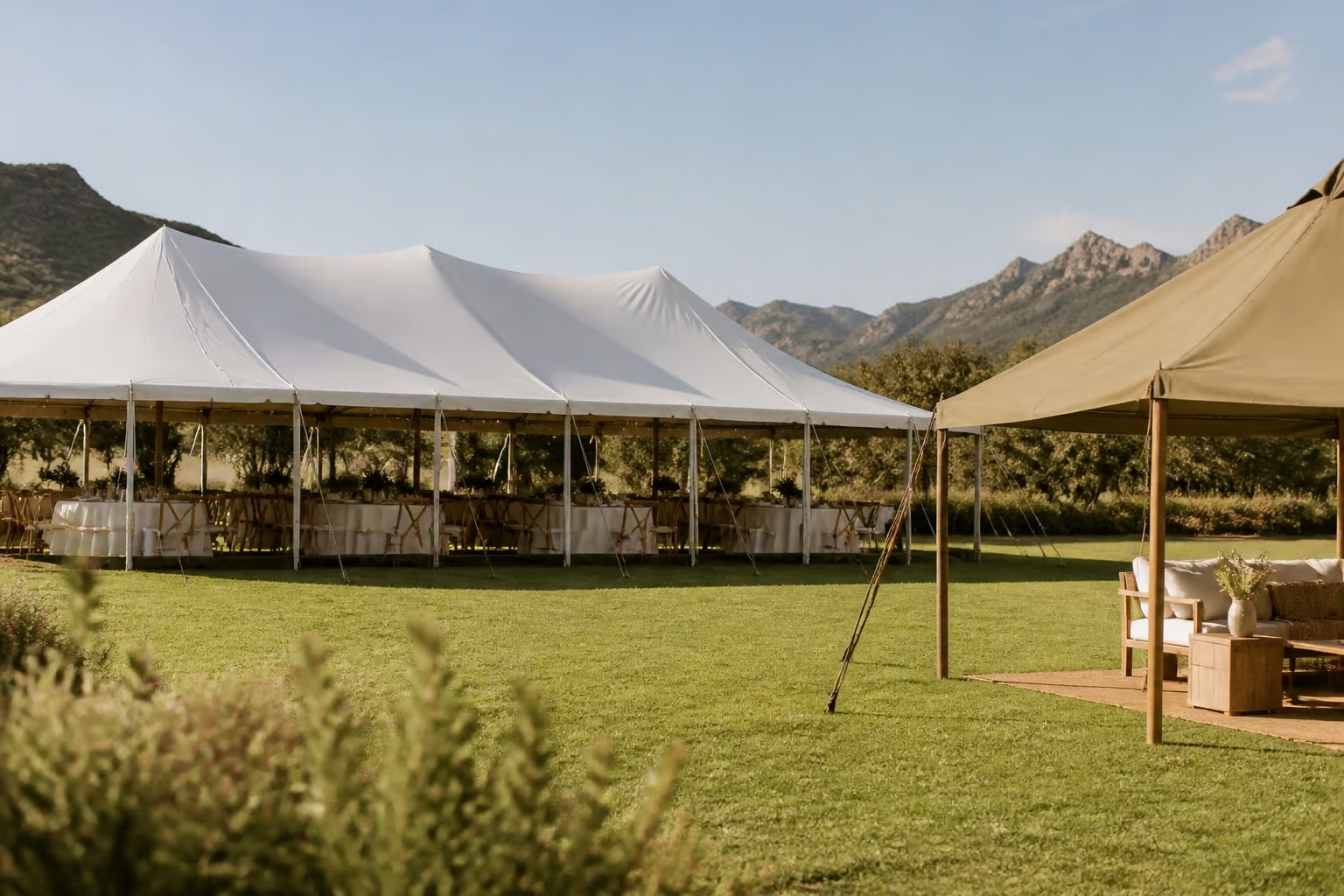
The right tent hire option depends on two things: how many guests you expect and whether they will sit, stand or move around. A 20-by-20-foot frame tent suits a small garden gathering, a 20-by-40 covers a typical wedding dinner or small corporate function, and larger sizes are for big festivals and weddings. This guide compares the main tent types by event and size, shows how to calculate the space you need, and explains when buying a durable tent makes more sense than renting one.
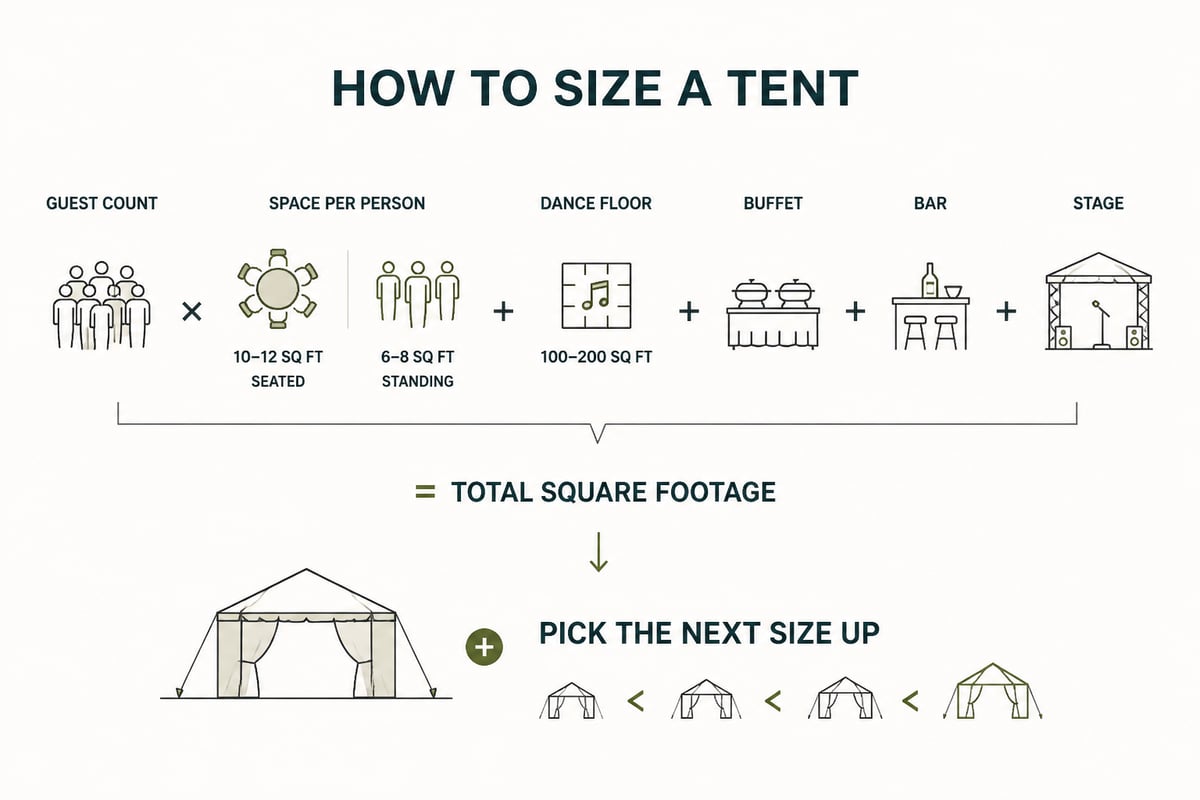
Size a tent by guest count multiplied by the floor space each guest needs, then add room for anything else under the roof. A rental planning guide from R&R Rental recommends 10 to 12 square feet per person for seated dinners and 6 to 8 square feet per person for standing cocktail events.
Furniture changes the numbers quickly. The same guide notes that a 60-inch round table seats eight and uses about 100 square feet once chairs and walking space are counted. A dance floor adds another 100 to 200 square feet, depending on the crowd.
A quick checklist before you request a quote:
A 20-by-20 frame tent is the entry point for tent hire and suits gatherings of up to roughly 40 seated or 65 standing guests. The R&R guide estimates it holds 30 to 40 seated dinner guests or 50 to 65 standing guests.
A 20-by-40 frame tent is the workhorse for mid-sized events, covering about 60 to 80 seated guests or 100 to 130 standing. Rental operators cited by Rentopus list a 20×40 as seating around 64 to 80 guests.
Large clearspan marquees give column-free interiors, which matters when sight lines, stages or dance floors are central to the event. A 30×60 is listed at $1,500 to $3,600 in the US price pages, and a 40×60 seats roughly 200 to 240 guests according to the operator capacity notes the same guide cites.
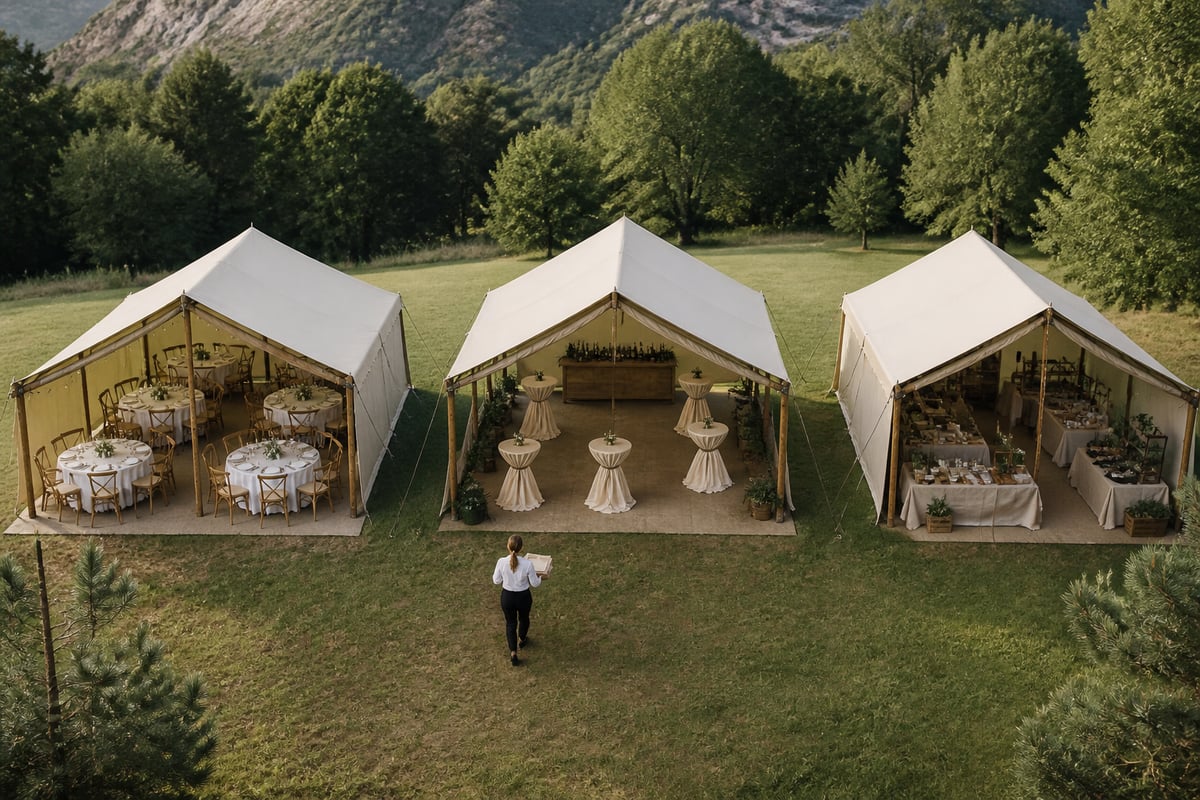
Pole tents and stretch tents work where a rigid frame will not: sloping lawns, tight garden corners and sites with trees. Pole tents rely on centre poles and perimeter stakes, so they need soft ground and cannot sit on paving. Stretch tents use flexible fabric that can be pitched in odd shapes, which suits farm weddings, bush venues and safari lodge gatherings.
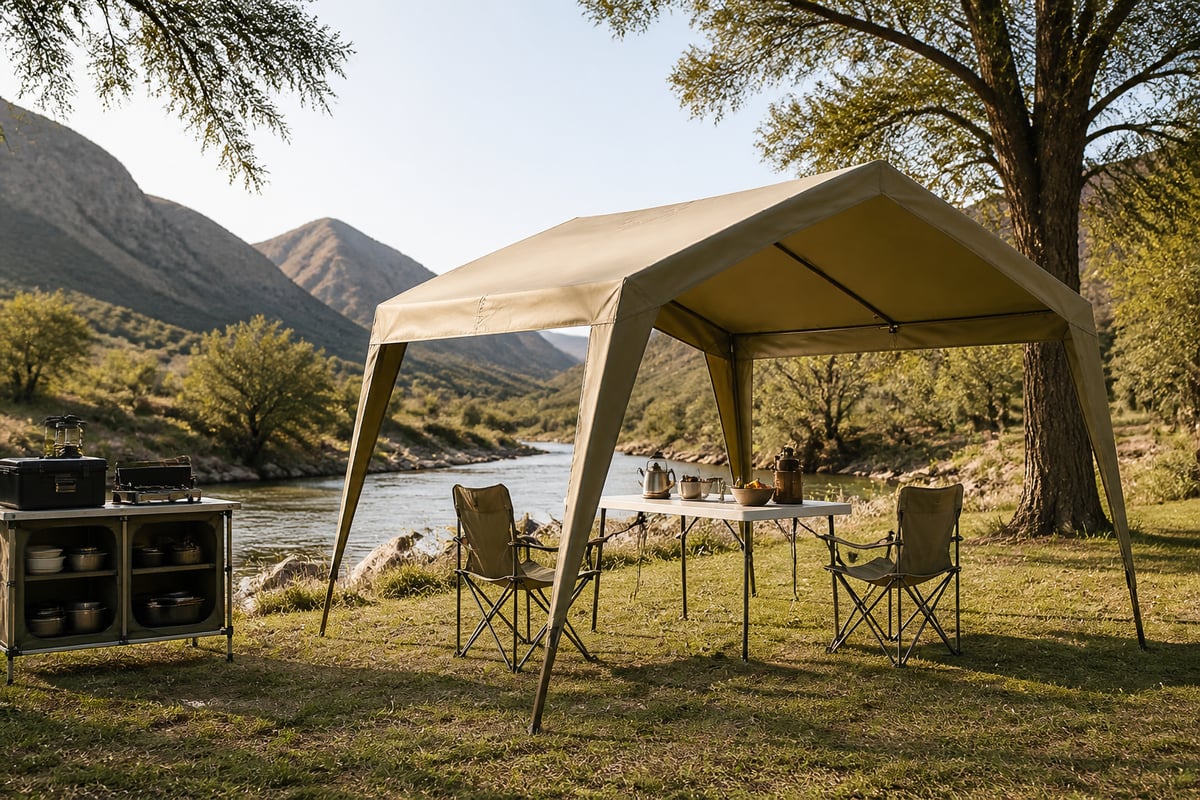
The Ejenti Outdoor Canvas Gazebo is a small heavy-duty shelter built to be owned rather than rented, which makes sense when you set up the same space several times a season.
The 5m x 10m PVC Marquee Tent is a heavy-duty event tent made by Ejenti Outdoor for South African conditions, and it fits businesses and organisers who would otherwise rent the same size again and again.
The table below sets the main options side by side so you can see where each one fits. Capacity figures come from the R&R Rental sizing guide and the operator capacity notes cited by Rentopus, and the price signals are US rental-company listings reviewed in October 2026, so treat them as a way to compare tiers rather than a South African quote.
| Option | Approx. size | Seated / standing capacity | Best event fit | Price signal |
|---|---|---|---|---|
| Small frame tent | 20 x 20 ft | 30-40 / 50-65 | Garden parties, birthdays | $240-$650 (US data) |
| Mid-size frame tent | 20 x 40 ft | 60-80 / 100-130 | Weddings, corporate functions | $375-$1,200 (US data) |
| Large clearspan marquee | 30 x 60 ft+ | 200-240 at 40 x 60 | Festivals, big weddings | $1,500-$3,600 for 30 x 60 (US data) |
| Pole or stretch tent | Varies | Varies by layout | Rustic or sloping sites | Quote-based |
| Canvas Gazebo (Ejenti Outdoor) | Compact | Small groups | Stalls, camp setups | See product page |
| 5m x 10m PVC Marquee (Ejenti Outdoor) | 5 x 10 m | Larger gatherings | Regular community or business events | See product page |
Match the row to the event first, then check the capacity against your layout. A dinner for 64 guests sits at the top of what a 20×40 comfortably handles, and once you add a dance floor of 100 to 200 square feet, the next size up is the safer choice. A cocktail evening for 100 standing guests can fit the same 20×40, because standing guests need only 6 to 8 square feet each. The same footprint can therefore serve two very different guest counts depending on whether chairs are involved.
Price tiers also scale faster than floor area. Moving from a 20×40 to a 30×60 raises the listed range from $375–$1,200 to $1,500–$3,600, so a modest increase in guests can mean a large jump in cost. Before you move up a size, check whether a tighter layout, such as fewer tables or a buffet outside the tent, solves the space problem.
Irregular sites change the answer more than guest count does. A sloping lawn or a garden with mature trees points toward pole or stretch tents, while a flat paved courtyard rules out anything that needs stakes. Finally, think about frequency. If the same event repeats every season, the two Ejenti Outdoor options in the table are built for ownership, which shifts the comparison from price per event to price over several years.
Tent hire is the better deal for one-off events, while buying wins once you would rent the same size three or four times in a few years. Hiring covers delivery, installation and removal, which matters for large clearspan structures. Owning a mid-size marquee or gazebo removes booking pressure in peak season, lets you leave the structure at a camp or venue between uses and avoids repeat delivery fees.
Hypothetical example: an organiser who hires a tent for several events a year pays the hire fee each time. Comparing that total against the purchase price of a durable tent shows the break-even point quickly. If a standard size does not fit your site, Ejenti Outdoor builds to custom requirements, so ask about a made-to-order option on the tents and outdoor range before committing to repeated hire.
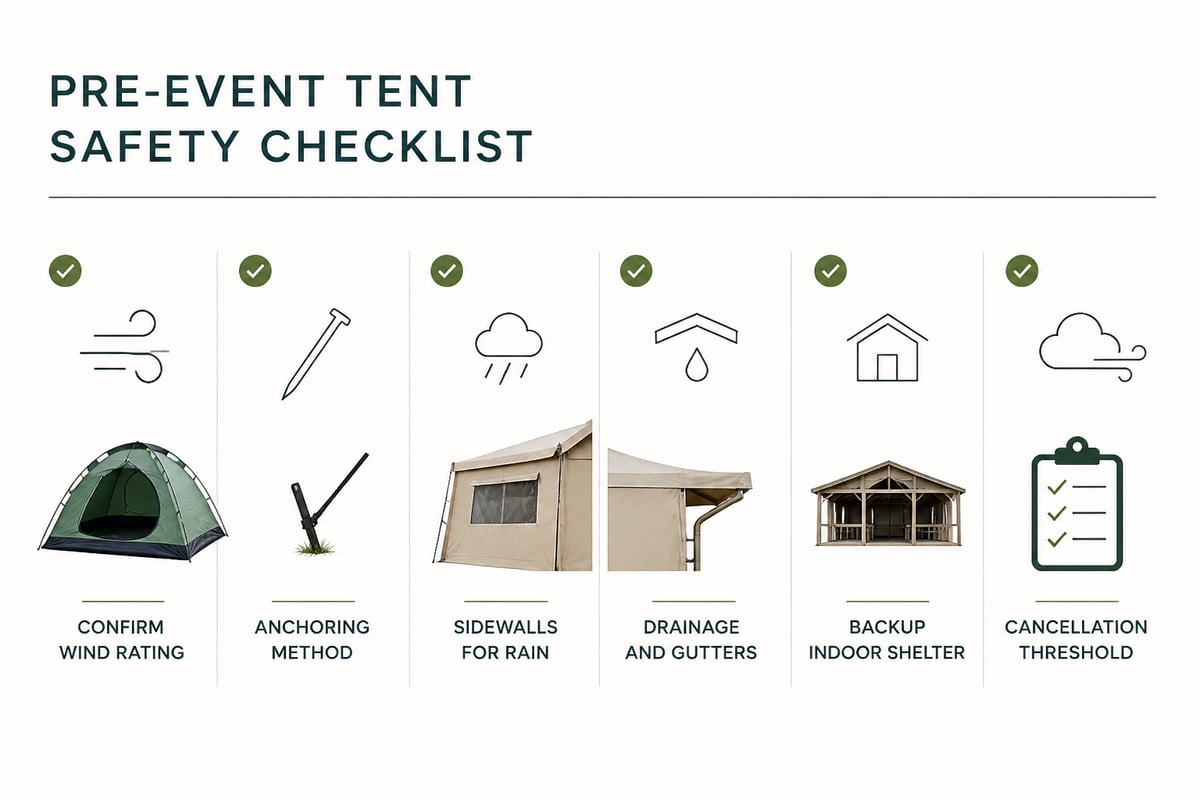
Ask for the tent's wind limit in writing and agree on a cancellation threshold before the event. The National Weather Service advises organizers to monitor the forecast, identify shelter locations, set postponement or cancellation thresholds and know the wind limits of tents and other temporary structures. In practice, that means settling three things days ahead: who watches the forecast, what reading triggers a decision, and where guests go if the tent has to be cleared. A nearby building, a hall or a covered area works as the shelter location, and guests should know where it is before the first drink is poured.
Practical points for South African conditions:
Also confirm the setup time. A tent that arrives an hour before guests leaves no room to fix a problem, so ask the crew to finish the day before when the weather is uncertain. On the day, walk the structure once: check that every anchor point is secure, that exits are clear and that nothing hangs from the frame beyond what the supplier allows.
Ask what is included in the quoted price, because tent hire quotes often cover the structure only. Add-ons such as sidewalls, flooring, lighting and tables can double the total.
For campers and families, the same logic applies at a smaller scale. A durable canvas shelter from the Ejenti Outdoor adventure camping range keeps rain out season after season, while the specials page lists current offers on outdoor gear.
Before you request quotes, count your guests, decide whether they will be seated or standing, and write down the tent size that gives you 10 to 12 square feet per seated guest. If you host often enough that repeated hire adds up, Ejenti Outdoor is a proudly South African company based in Pretoria that manufactures its own heavy-duty canvas and PVC shelters, including the 5m x 10m PVC Marquee Tent and custom builds to your requirements. Explore the full range at Ejenti Outdoor and shop now for a tent that stays dry for years.