
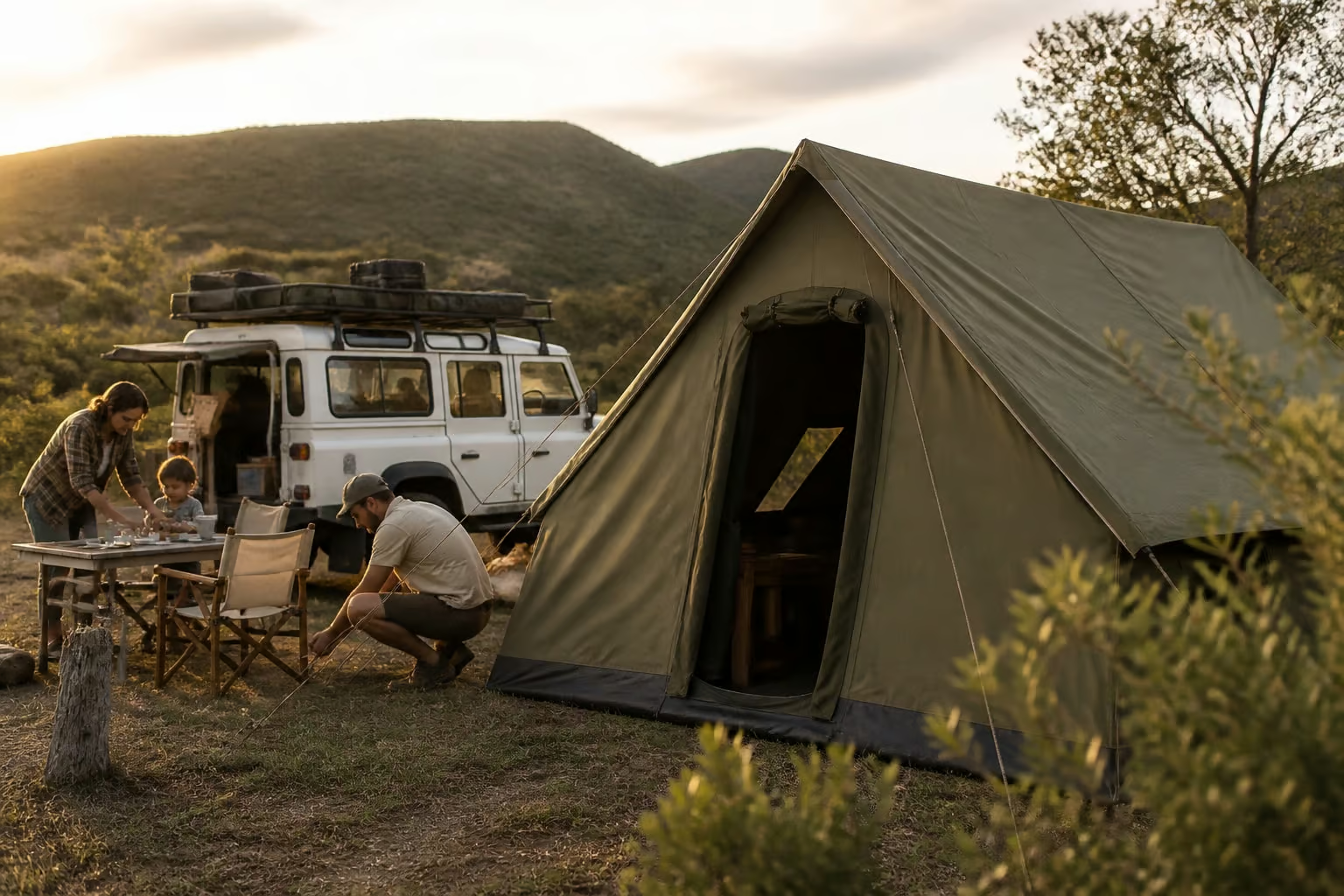
If you are searching for tents for sale near me, the quickest route is to decide on capacity, season and fabric first, then compare local stockists against makers who build to order. Retail shelves are full of lightweight nylon tents sold by the person, while campers in South Africa who face summer thunderstorms, strong wind and months of UV often get better value from canvas or ripstop shelters. The guide below covers the main tent types, what to check before you pay, and six tents worth shortlisting.
Most tents sold today fall into five types, and each suits a different way of camping.
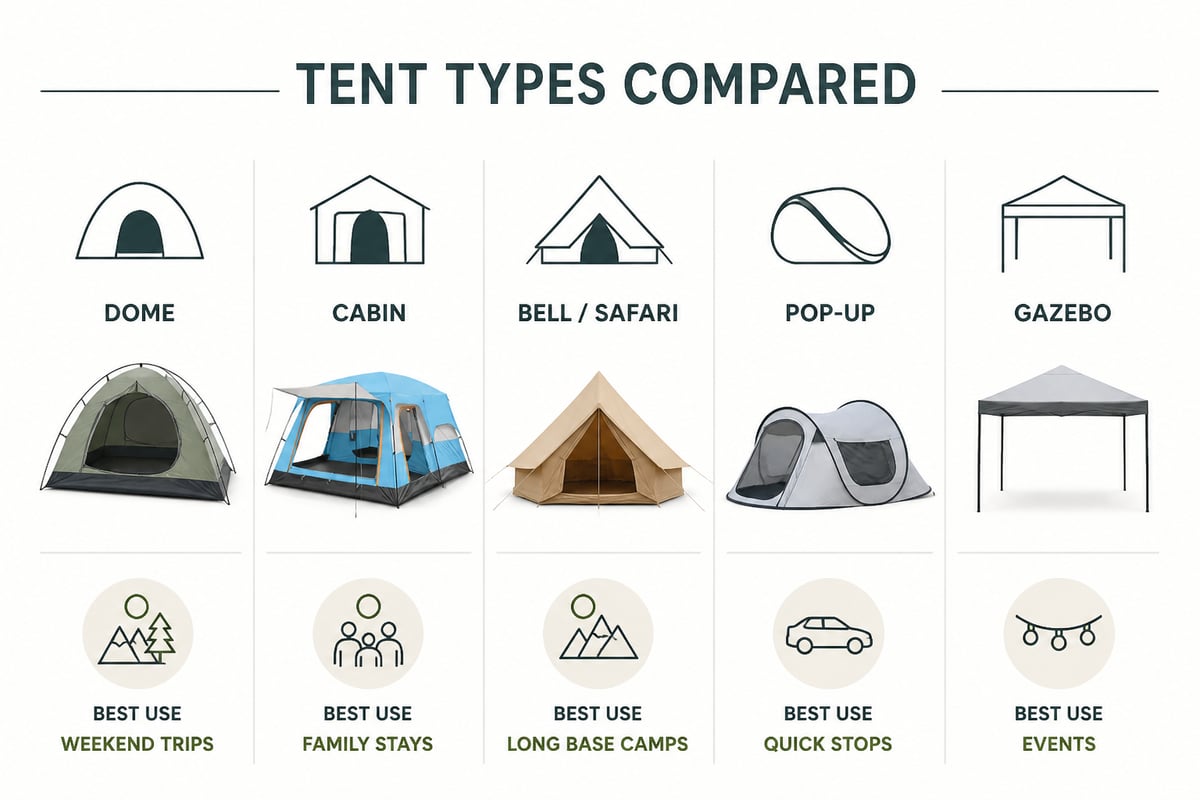
Choose the tent by matching capacity, fabric, waterproofing and ventilation to how often and where you camp. Work through these points in order:
The North Face Wawona 6 is a roomy six-person car-camping tent built around extra vestibule space.
Suits: Families or small groups who drive to a campsite and want space for bags and boots under cover. At nearly 22 lb it is a vehicle-based tent, not something to carry.
Verdict: A comfortable family base if you value gear storage.
The REI Co-op Base Camp 6 is a sturdy six-person tent designed for poor weather.
Suits: Campers who expect wind and rain and want standing room plus two doors for easy movement.
Verdict: Strong protection in bad weather, with a price to match.
The Marmot Tungsten 4P is a four-person tent light enough to double as a backpacking shelter.
Suits: Campers who split time between car camps and short hikes. Its low peak height means less headroom than a cabin tent.
Verdict: A flexible middle ground, though pricey for its size.
The Coleman Skydome 4 is a budget four-person dome for casual trips.
Suits: Occasional campers on a tight budget who camp in fair weather. Expect lighter materials than canvas.
Verdict: A low-cost way to start camping.
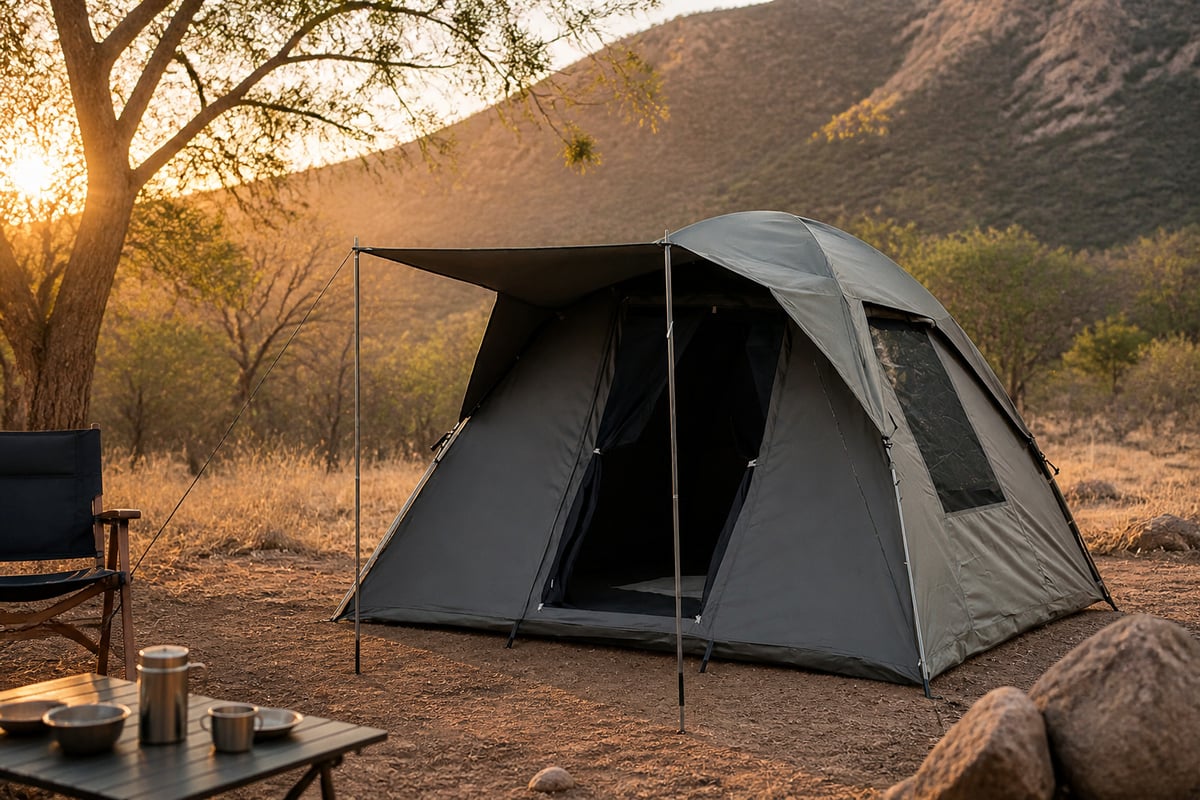
The Premium Heavy-Duty Canvas Dome Tent is a canvas dome shelter engineered for the African climate, from SANParks sites to remote 4×4 trails. Ejenti Outdoor is a Pretoria-based South African company that manufactures its own products using heavy-duty canvas and ripstop fabrics that are waterproof and UV-treated.
Suits: Campers who want a dome's wind-shedding shape with canvas durability over many seasons. Check the product page for sizes and pricing, as they are not listed here.
Verdict: A good fit for local conditions, since canvas copes with sun and storms better than thin synthetics.
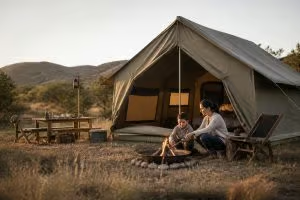
The 3m x 6m Safari Lodge Tent Two Room is a waterproof canvas tent made for outdoor accommodation, camping and safari setups in South Africa.
Suits: Safari operators, lodges and event organisers who need accommodation or large shelters for longer stays, as well as families planning extended base camps. Contact Ejenti Outdoor for pricing.
Verdict: The best option here for commercial or long-stay use, and strong for families too.
| Tent | Capacity | Key spec | Best use |
|---|---|---|---|
| The North Face Wawona 6 | 6 | 80 sq ft floor, 21.9 lb | Family car camping |
| REI Co-op Base Camp 6 | 6 | 84 sq ft, 74 in. peak | Bad-weather protection |
| Marmot Tungsten 4P | 4 | 52.7 sq ft, 9 lb 3.8 oz | Car camping and light hiking |
| Coleman Skydome 4 | 4 | 96 × 84 × 56 in. | Budget casual trips |
| Premium Heavy-Duty Canvas Dome Tent | See product page | Waterproof, UV-treated canvas | Durable local camping |
| 3m x 6m Safari Lodge Tent | Two rooms | 300 GSM ripstop canvas | Lodges, events, long stays |
Price and weight separate these tents quickly. The Coleman Skydome 4 is the cheapest at $190, while the Marmot Tungsten 4P costs $449 for the same four-person rating. The extra money buys a much lighter tent at 9 lb 3.8 oz, which only matters if you ever carry it. For drive-up camping the two sleep the same number of people, so the Coleman is the sensible pick on a tight budget.
At six persons, the two big-brand options are close. The REI Co-op Base Camp 6 gives you 84 sq ft of floor, a 74 in. peak and two doors for $569, against 80 sq ft and a 21.9 lb weight for the Wawona 6 at $585. Standing room and a second door count for more in a long wet weekend than a few dollars either way.
The two Ejenti Outdoor tents sit in a different category because they are built from canvas and ripstop for local sun and storms, and the capacity and price columns point you to the product page or to the maker. If you plan to pitch the same tent for many seasons, or to hire it out, compare how long each fabric will last, not only the upfront price. Whichever you pick, add one or two persons to the stated capacity before you buy.
Canvas generally stands up well to strong UV, storms and rough ground. Synthetic tents can lose strength under prolonged sun, and their coatings may degrade over time. Heavy-duty canvas and ripstop weaves resist tearing, and a UV-treated finish slows fading. Ripstop adds a reinforcing grid to the weave, so a small puncture from a thorn branch or a flying peg stays small instead of running across the panel.
Canvas also breathes, so the interior stays cooler on hot days than a sealed nylon tent. That breathability matters on humid Lowveld nights and coastal mornings, when a sealed tent collects condensation on the walls and drips onto bedding. Canvas lets moisture pass through the fabric, which cuts that problem without relying only on vents.
Waterproofing works differently as well. Canvas sheds rain because the fibers swell when wet and close the gaps in the weave, which is why a new canvas tent may drip lightly on its first wetting and then seal. Thunderstorm downpours are brief but heavy, and a tent that has been wetted and dried once handles them well. Touching the inside wall during rain can pull water through, so keep bedding off the fabric.
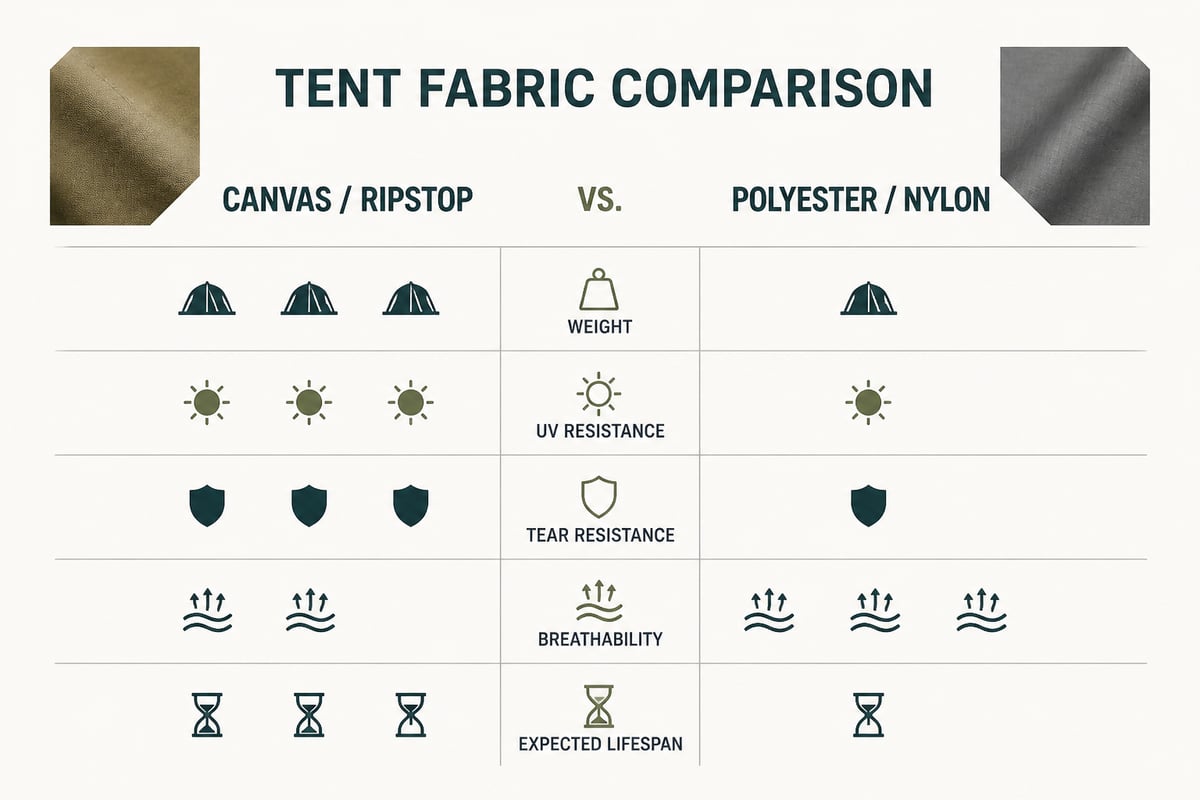
The trade-off is weight. Canvas tents are heavy, so they suit vehicle-based camping and fixed bases rather than carrying on your back. A 4×4 trail trip, a SANParks campsite you drive into, or a lodge or event setup that stays up for weeks all suit canvas, because the tent is pitched once and the weight never matters again.
Searching for tents for sale near me often leads to big-box retailers, but a local maker can offer something shelves cannot: a tent built to your size. Ejenti Outdoor offers custom builds made to your exact requirements, so ask them what they can make for your size and use. Ask any seller these questions:
Browsing a maker's online range is often faster than driving between shops. Ejenti Outdoor's camping gear collection lists tents and accessories, and the automatic waterproof 5-person camping tent is one example of a quick-pitch option.
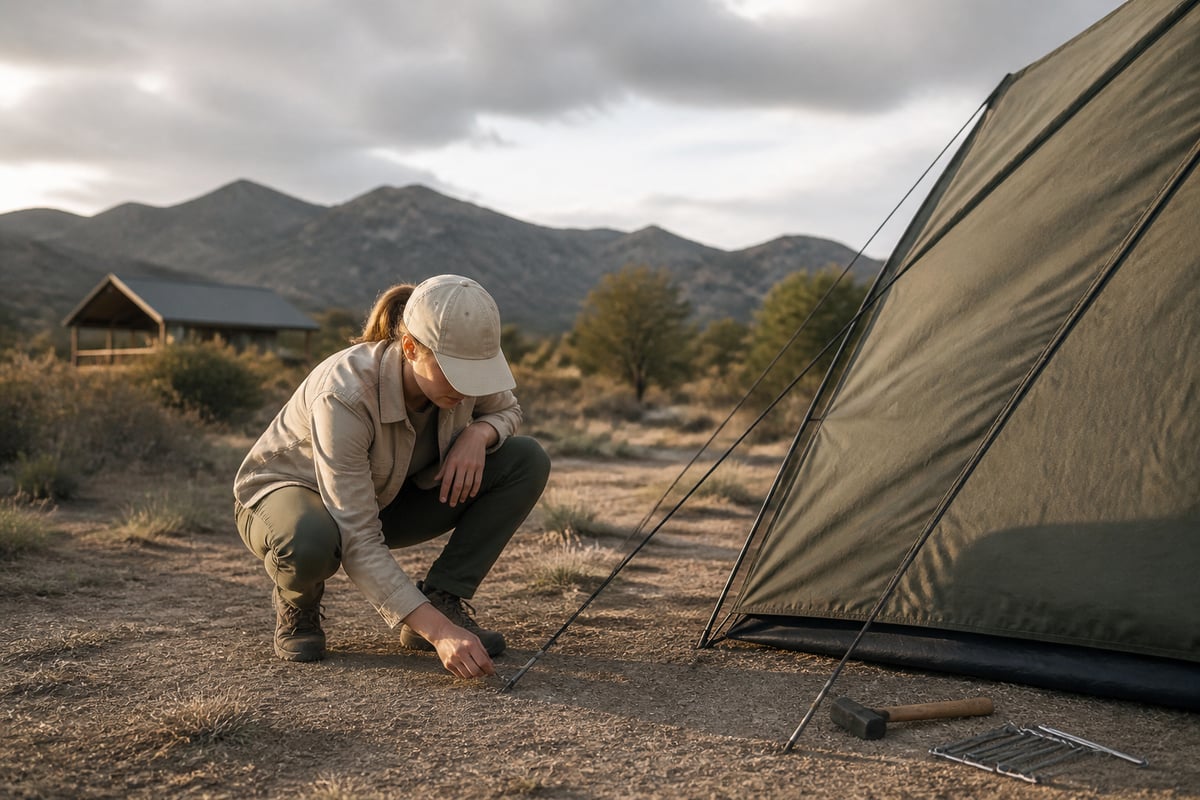
A few habits add years to any tent:
Season a new canvas tent as the maker advises, since weave-based waterproofing often needs a first wetting. A common approach is to pitch the tent, wet the canvas thoroughly with a hose or sprinkler, and let it dry in the shade so the fibers swell and settle before its first real storm. Sponge off bird droppings, tree sap and mud with clean water and a soft brush, and skip harsh detergents, which can strip the treatment from the fabric.
How big a tent do I need? Add one or two persons to the stated capacity. A family of four is more comfortable in a six-person tent.
Is canvas worth the extra cost? For frequent use or commercial hire, yes, because it lasts longer. For two trips a year, a budget dome may be enough.
Can I get a tent made to size? Some South African makers build custom tents. Ejenti Outdoor offers custom builds; contact them for what is possible.
Before buying, measure the space your tent needs to fill and write down your capacity, season and fabric priorities, so every quote is easy to compare. If you want durable shelter built for local weather, Ejenti Outdoor makes canvas and ripstop tents in Pretoria, including the 3m x 6m Safari Lodge Tent Two Room, and builds custom to your requirements. Visit Ejenti Outdoor to browse the range and shop now for a tent that will stay dry for seasons to come.