
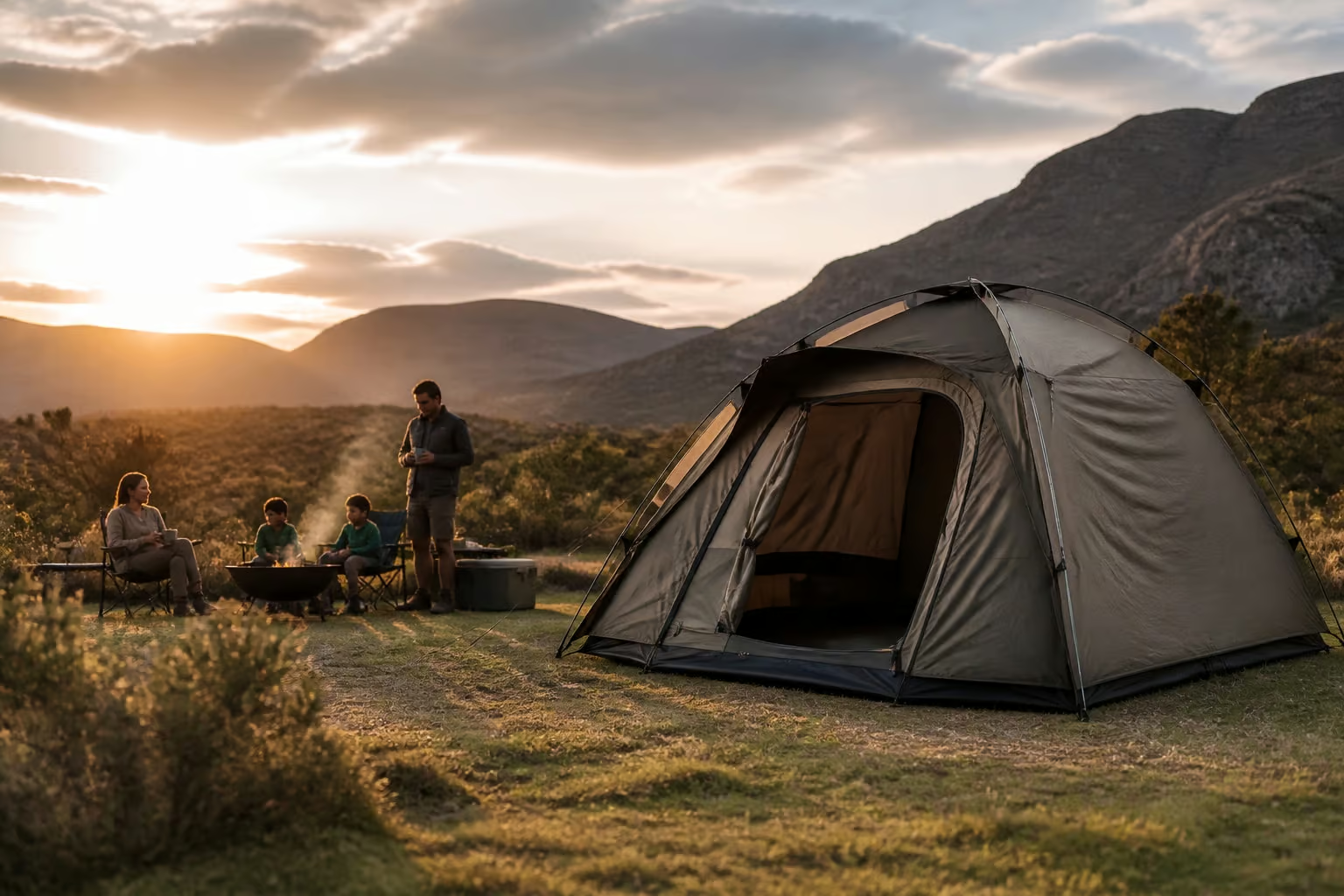
If you want a tent buy near me search to end with a tent that actually stays dry, start with three places: a local outdoor retailer where you can touch the fabric, a South African tent maker who builds in-country, and an online shop that ships to your door. Each suits a different buyer, and the right choice depends on how often you camp, what weather you face and how long you expect the tent to last.
This guide walks you through where to look, what to inspect in the shop, which specifications matter for South African conditions and how to avoid the mistakes that lead to a leaking tent on the first wet weekend.
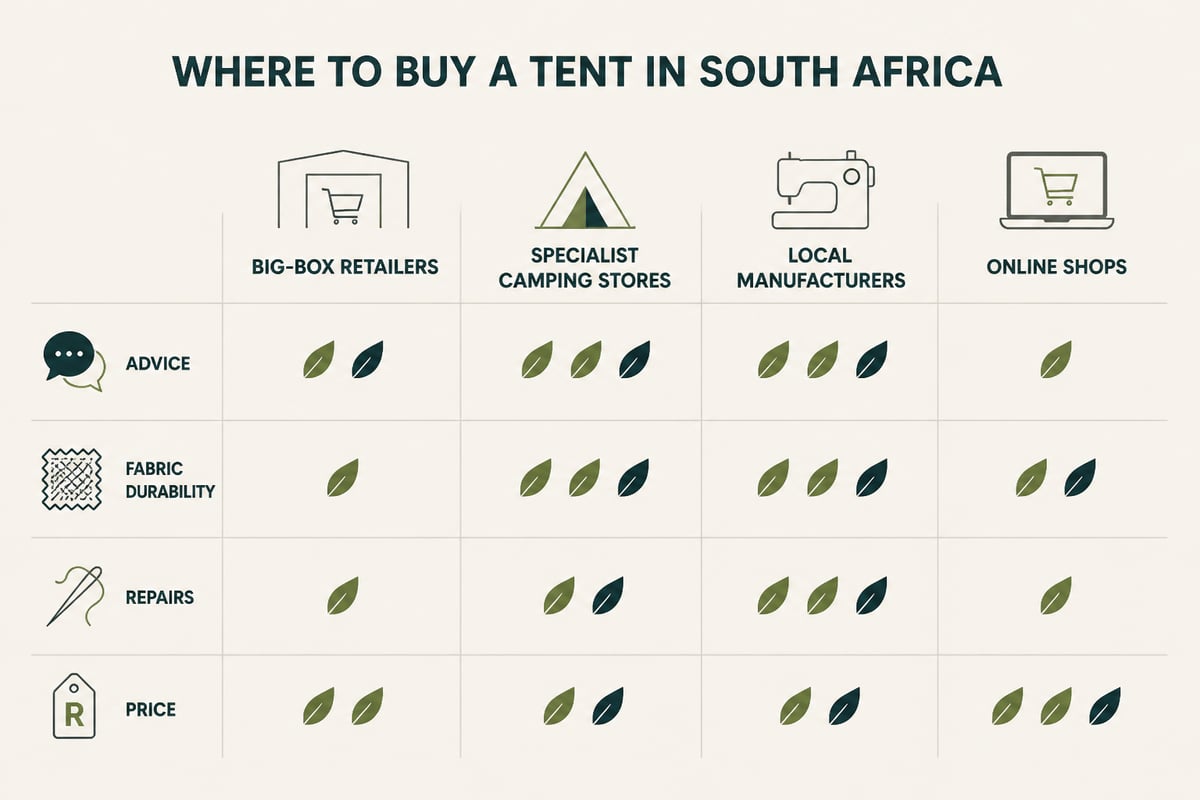
You can buy a tent from four main sources: big-box outdoor retailers, specialist camping stores, local tent manufacturers and online shops. Each has trade-offs in price, choice, advice and after-sales support.
| Source | Strengths | Weaknesses | Best suited to |
|---|---|---|---|
| Big-box and sports retailers | Many brands, frequent sales, easy returns | Little technical advice, mostly mass-produced nylon tents | Occasional campers on a budget |
| Specialist camping stores | Knowledgeable staff, tents on display | Higher prices, limited canvas range | Buyers who want to compare models in person |
| Local manufacturers | Heavy-duty fabrics, repairs, custom sizes | Fewer showroom hours, longer lead times for custom work | Families wanting a multi-season tent |
| Online shops | Widest choice, easy price comparison | You cannot inspect fabric or seams first | Buyers who already know the model they want |
A mix often works best. Visit a store to see how different tents feel and pitch, then decide whether to buy there or order from a manufacturer.
Buying from a South African seller gives you easier warranty claims, faster repairs and gear designed for local weather, which usually outweighs a small saving on an imported budget tent.
Local conditions are harder on tents than many shoppers expect. Summer thunderstorms on the Highveld, strong UV across the Karoo and Kalahari, and coastal wind along the Cape can all punish thin fabric and weak stitching. A tent built or tested for these conditions tends to last more seasons than a lightweight import.
There are also practical benefits:
If you want to understand who actually makes tents in the country, this overview of tent manufacturers explains what separates a maker from a reseller.
Choose your tent by matching its size, fabric and structure to how many people sleep in it, how many nights a year you camp and the worst weather you expect.
Start with these questions:
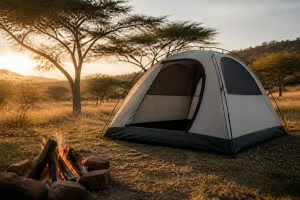
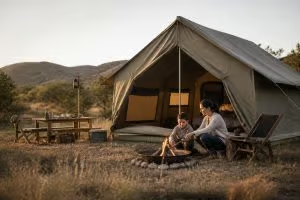
Common structures include dome tents (quick to pitch, good in wind), cabin tents (more headroom for families) and bell tents (spacious, best for base camps). For a plain explanation of how tents are used across camping styles, see this guide to the tent in camping.
This guide is aimed at campers who want a shelter that holds up for several seasons. If you carry everything on your back, you need a different kind of product, and a heavy-duty canvas tent is not the right fit.
Canvas and ripstop suit long-term family camping in South Africa because they breathe better, handle UV longer and survive repeated wet-dry cycles, while thin nylon is lighter but tends to wear out faster in strong sun.
Here is how the main options compare:
Ask the seller whether the fabric is waterproofed and UV-treated, and what the stated fabric weight is. If a salesperson cannot answer, that tells you something about the product.
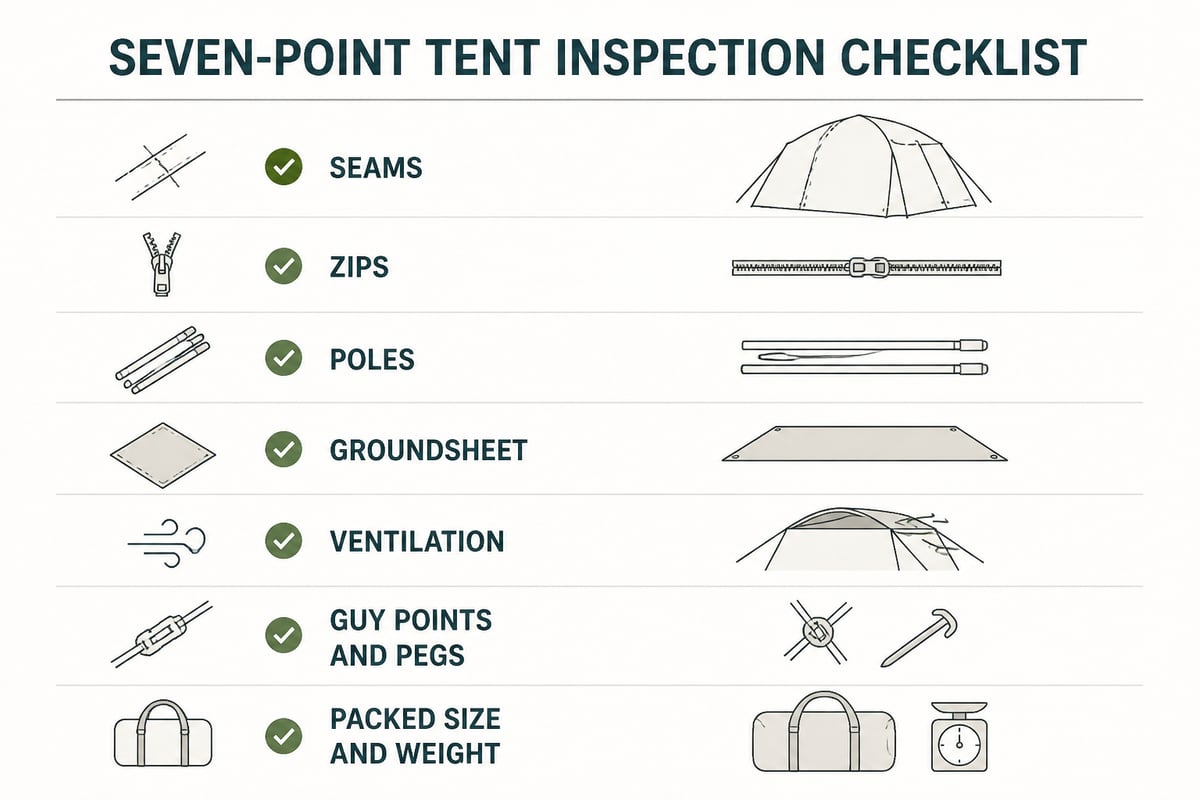
Pitch or at least unpack the display model and inspect seams, zips, poles and groundsheet, because these four parts fail first and are easy to judge in a shop.
Work through this checklist:
Also ask about spare parts and repairs. A tent with replaceable components can run for a decade, while a sealed, disposable design often cannot.
Online buying gives you wider choice and easier price comparison, while a local shop lets you inspect fabric and ask questions; the safest approach is to research online and confirm details with the seller before paying.
If you order online, protect yourself:
Many South African makers publish their full range online and accept custom requests by phone or form. That gives you the convenience of a web order with the accountability of a local business.
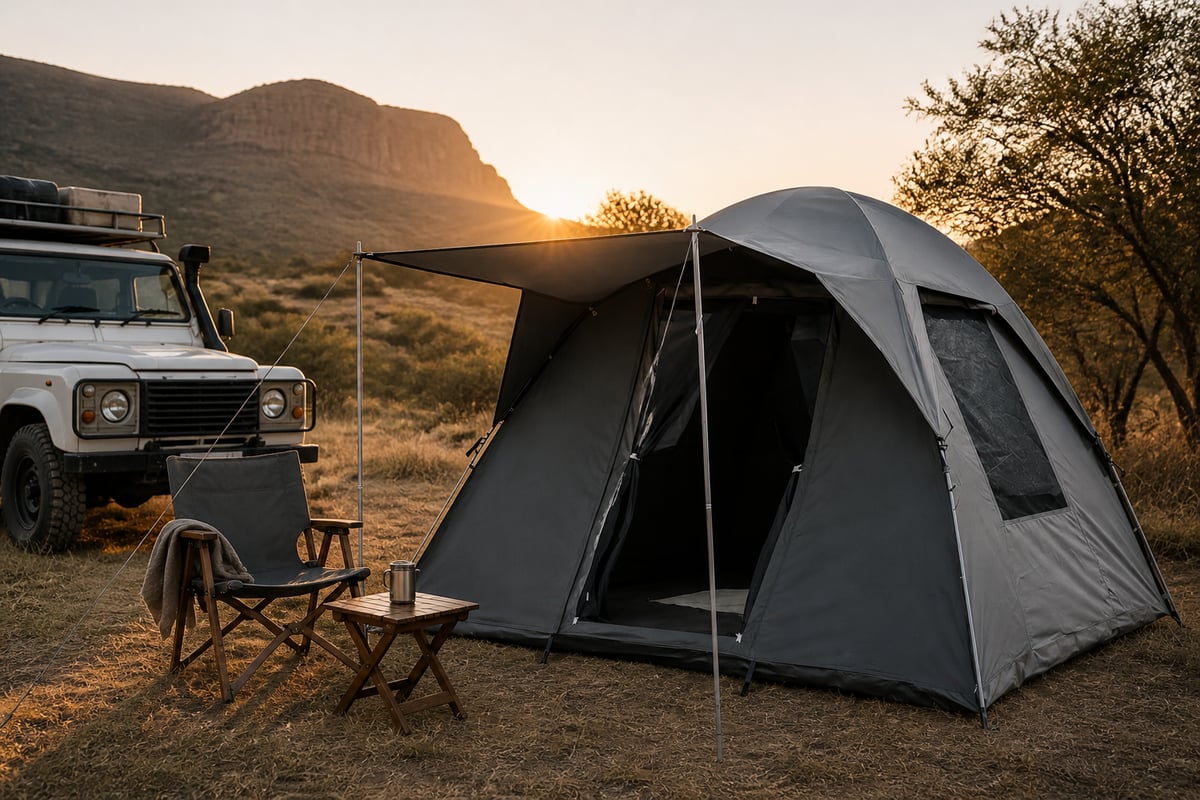
A heavy-duty canvas dome tent is a strong choice for families who camp often and want a shelter that handles sun, wind and rain over several seasons.
One example is the Premium Heavy-Duty Canvas Dome Tent from Ejenti Outdoor, a Pretoria-based company that makes its own outdoor products from heavy-duty, waterproof and UV-treated canvas and ripstop fabrics. It is engineered for the harsh African climate, whether you are at a campsite or on a remote 4×4 trail. Check the product page for current sizes, specifications and pricing before you decide.
If none of the standard sizes fit your plans, ask about custom builds. Ejenti Outdoor builds custom tents to your exact requirements, so a specific footprint or configuration is a reasonable request to put to them directly.
A tent keeps off rain and wind but is not a shelter from lightning, and fire hazards are among the most serious camping risks, so follow official guidance on both.
The National Park Service says tents are not safe places to shelter during thunderstorms, and advises waiting 30 minutes after the last thunder before returning to the campsite. Move to a hard-topped vehicle or sturdy building where possible. Storms can arrive quickly in the afternoon, so plan your day with a safe retreat in mind.
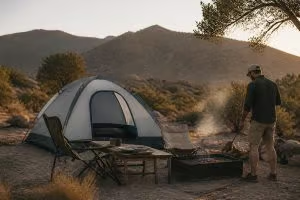
Fire safety matters just as much. The U.S. Consumer Product Safety Commission advises keeping stoves, lanterns and candles out of tents and placing campfires and stoves away from tents and sleeping gear. Canvas that has been treated for waterproofing can still burn, so cook and light fires well clear of the tent.
Food storage is another practical point. The National Park Service offers recommendations for safe campground practices, including storing food away from sleeping areas, which helps reduce wildlife visits at night.
Buy a footprint or ground cover, spare pegs, extra guy ropes and a repair kit alongside the tent, because these cheap items protect the floor and save a trip when something breaks.
Useful extras include:
If you sew or repair your own gear, local suppliers stock the materials. You can browse fabric and zippers and sliders to keep an older tent in service.
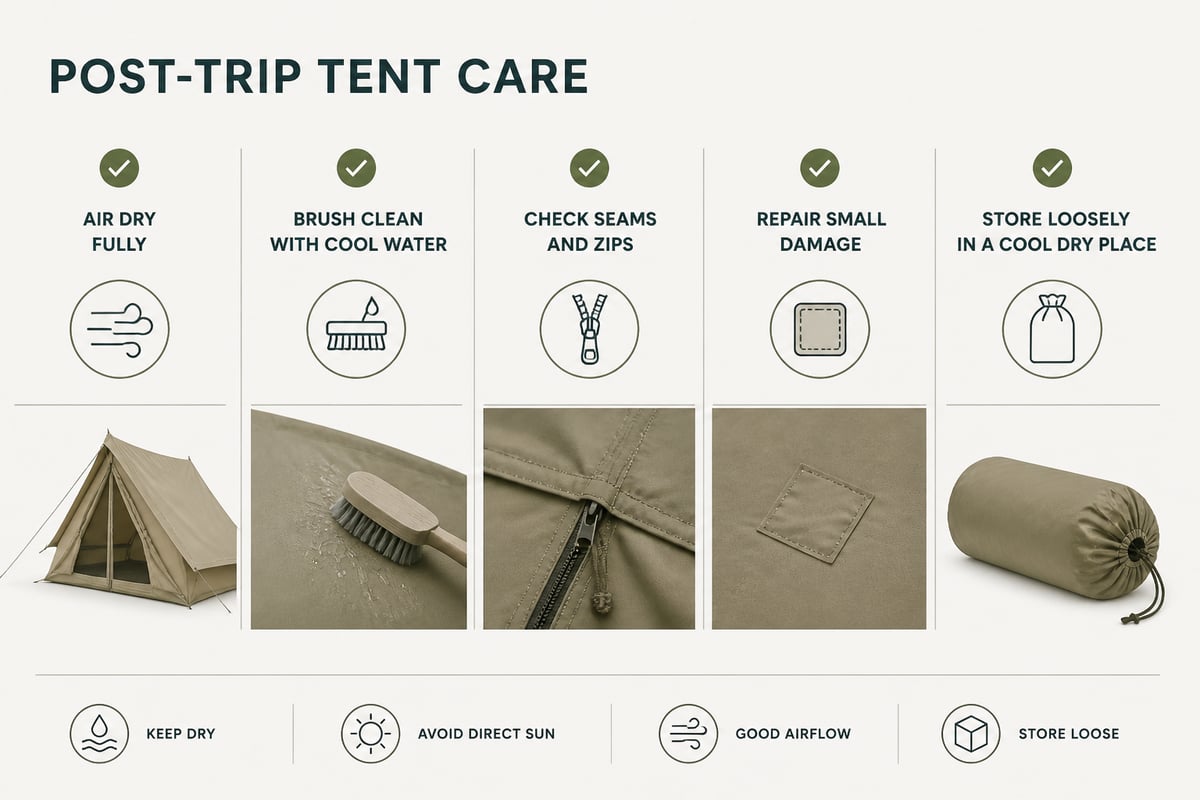
You make a tent last by drying it fully before storage, pitching it correctly and fixing small damage early.
Follow these habits:
A little care after each trip is the difference between a tent that lasts two seasons and one that lasts ten.
Ask about fabric specification, waterproofing and UV treatment, spare parts, repair services and warranty terms, and get the answers in writing or on the product page.
Here is a short list to take with you:
For anything involving Ejenti Outdoor's own sizes, lead times, pricing or warranty, check the relevant product page or use the contact page rather than relying on general assumptions. A good seller will welcome the questions.
If you search for a tent buy near me deal and find a price far below everything else, be cautious. Very cheap tents often use thin fabric and weak stitching that fail in the first heavy rain. Paying more for a tent that lasts several seasons usually costs less over time.
A sensible budget is the amount that buys durable fabric, solid hardware and a seller who will repair it, not the lowest price on the shelf.
Think in cost per season rather than cost per tent. A cheap tent that fails after one or two trips costs more than a sturdier one that serves for years. Set your budget after you decide on size and fabric, then compare quotes from a few South African sellers. Ask each for the full specification so you compare like with like.
Prices change often, so confirm current figures on the seller's own product page instead of relying on figures you read elsewhere.
Before you visit any store this week, write down your group size, your typical camping season and the worst weather you have camped in, then use that list to compare two or three tents side by side. If you want a tent built for several seasons of South African weather, the Premium Heavy-Duty Canvas Dome Tent is a good starting point, and Ejenti Outdoor can also discuss custom sizes. You can explore the full range and shop now with Ejenti Outdoor to find the shelter that suits your next trip.